Ellen Greene can still do a killer Audrey.
In conversation, she seamlessly slips in and out of that singular voice — a little breathy, a little squeaky, a little lispy, a little New York — that made her “Little Shop of Horrors” heroine an instant icon. It wasn’t a register she’d planned on hitting at the audition. It just came out of her in the moment, and it stuck.
“I didn’t think about it,” Greene, 75, said in a recent interview with The Associated Press. “It was weird, I mean, I don’t know where half of this stuff came from.”
In her long and robust career on the stage and screen, Audrey is perhaps Greene’s defining role. Her tragicomic shopgirl of skid row belted her way into audiences’ hearts off-Broadway in 1982, and then in Frank Oz’s 1986 film opposite Rick Moranis.
The catchy musical about that flesh-eating plant is never too far in the rearview either. Every few years it seems she’s beckoned for an encore. In 2015, she reprised the role for three sold-out shows, with Jake Gyllenhaal playing Seymour.
Starting this weekend, she'll be making stops around the country for the next few months for 40th anniversary screenings, from Seattle (Aug. 18) to Atlanta (Nov. 13). Performances of “Somewhere That’s Green” have been promised too.
That aching ballad about wanting more, aside from being one of the big showstoppers, holds a special place for Greene. She remembers first listening to it on the unemployment line, waiting to get her check, and quietly singing along.
“I just knew there was an Audrey inside of me waiting to be born,” Greene said.
She carried that feeling to the audition where composer Alan Menken jumped in to play the piano with lyricist Howard Ashman, already her great friend, looking on. When she finished, everyone was in tears.
Getting the role wasn’t any sort of immediate windfall either. When they started at the WPA Theatre in New York, she was being paid $50 a week for a month of rehearsals and two months of shows off-Broadway. But it was a hit. One night, Steve Martin, who would later play Audrey’s abusive dentist boyfriend in the film, even came to see it with Mary Tyler Moore.
On the stage, she performed “Somewhere That's Green” sitting on a trash can. For the film, Ashman wrote the number to be staged like the Leslie Caron and Cyd Charisse numbers they both loved, where a character walks into a room and suddenly they’re in a different outfit for the song.
“You would think I would just have been floored and so excited that he gave me this gift,” she said. “Instead, I call him up and I’m crying my eyes out. And I’m saying, wait for this, ‘Where’s my trash can?’”
Ashman, she said, just laughed and assured her that they’d elicit the same response when the camera pans out to reveal she’s still on skid row. Ironically, this whole exchange happened before she’d even officially been cast in the movie.
The story of how the film was made is long and bumpy. John Landis was originally attached to direct, then, briefly, Martin Scorsese, before it found its way to Oz. Greene’s participation was never a given, either. Producer David Geffen wanted to get a “bigger name,” like Cyndi Lauper, on screen.
“I never thought I would have gotten the film,” Greene said.
But it’s hard to imagine anyone else turning in a performance as distinctive. Test audiences loved her Audrey so much that they wholly rejected an ending in which she dies.
“I love that death scene, personally,” Greene said. “But I had an inkling, you see, because Frank directed the Audrey for the screen more heroine-like.”
He’d taken out lines from the play like “you don’t meet nice boys when you live on skid row,” she said in Audrey-speak. She thinks it set her up a little differently. Then at the end, there’s the line “when I die, which should be very shortly.” On stage, she said it to the audience. In the film, she says it to Seymour. It's more intimate and serious.
“Frank thinks it’s because we didn’t take a bow, like in the play, but I think it’s because it’s just the line is interpreted two different ways. One sets it up that this is silly and I’m OK, and the other one is it’s real and it’s touching,” she said.
Oz ultimately relented and they shot a happier conclusion. Now, Greene just likes that they both exist (the original in a director’s cut).
Remembering “Little Shop” is also a way to remember Ashman, who died of complications related to AIDS in 1991. Their friendship was one of many laughs, songs and adventures. He even took her on her first trip to Paris.
“We got into my room and he put on a bubble bath, because he knows I love bubble baths. I got into the bath, he gave me Champagne, he gave me caviar, he put on Piaf,” she said. “We had separate rooms, of course, but we were close, so what can you do? And I’m from the theater, so I’m not modest.”
He also looked out for her. When they were drawing up contracts for the “Little Shop” stage run, all she could think about was making sure London was in there. Unbeknownst to her, Ashman had also given her a half point of the profit, “because I created Audrey,” she said.
“That’s how generous and kind he was and how much he loved me,” she said. “Everybody loves Audrey because we, I, loved her first. And everybody loves “Little Shop” because we put so much love in it … I am so grateful and very humble because when they love ‘Little Shop’, they keep it alive, and they keep Howard Ashman alive.”
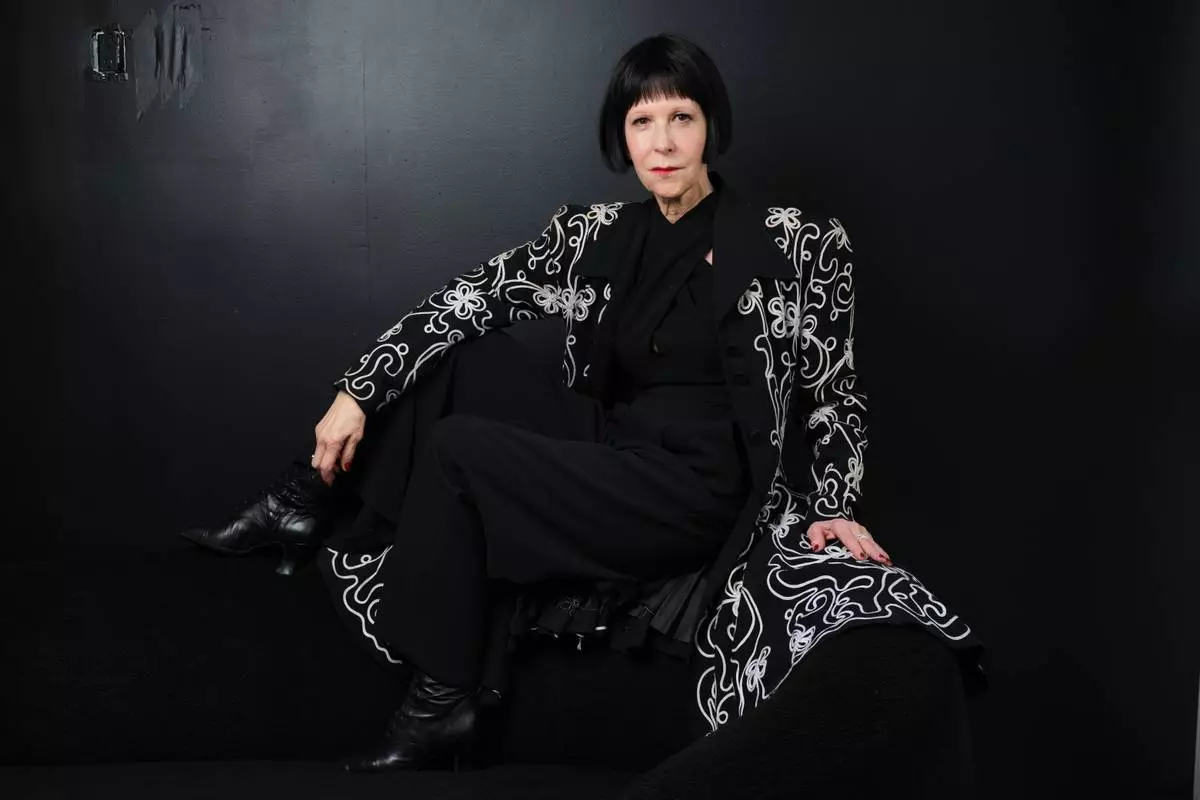
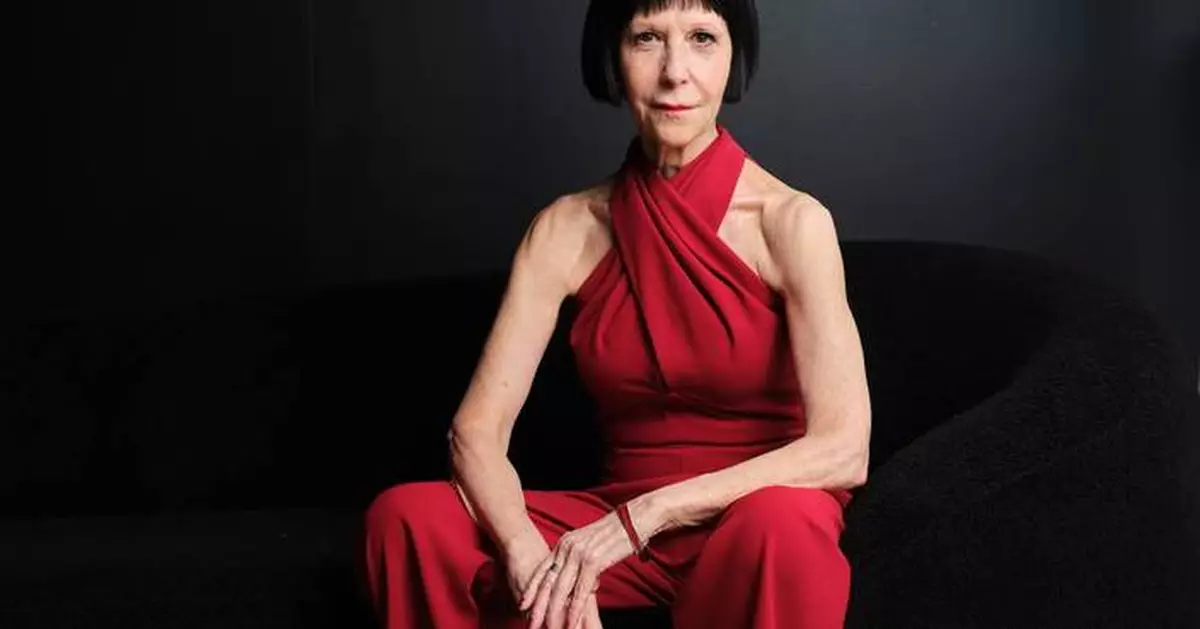
Ellen Greene poses for a portrait on Tuesday, Aug. 11, 2026, in Los Angeles. (Photo by Birdie Thompson/Invision/AP)
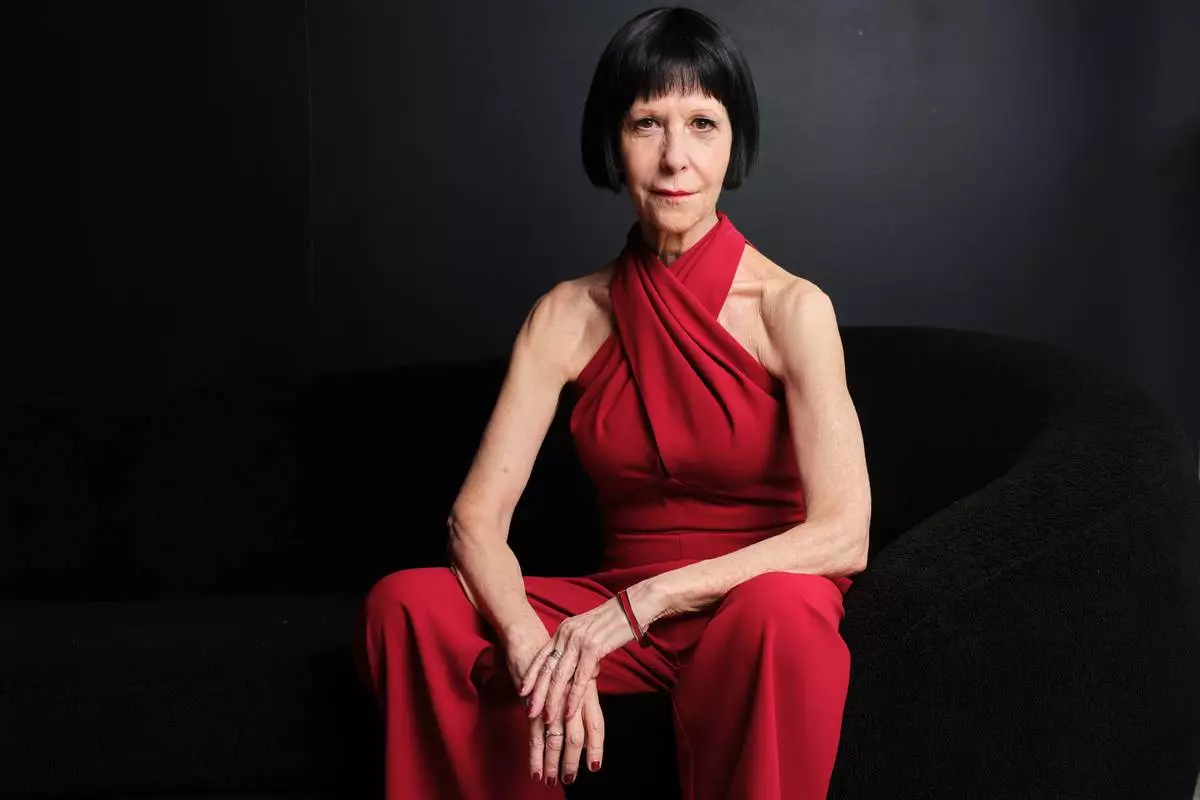
Ellen Greene poses for a portrait on Tuesday, Aug. 11, 2026, in Los Angeles. (Photo by Birdie Thompson/Invision/AP)
ARLINGTON, Iowa (AP) — Farmer Tim Burrack had concerns about the Republican nominee for Iowa governor — and he wasn't the only one.
The conservative voter from northeast Iowa said he didn't know Zach Lahn before the political newcomer “came out of nowhere" with a surprise GOP primary win over the candidate endorsed by President Donald Trump. So when Lahn came to his farm last week, Burrack questioned him on his approach to agriculture.
“I hit him pretty hard,” said Burrack, who was considering whether to vote for Lahn in November or not vote at all.
It wasn't the first skeptical audience for the self-described “change candidate” in the state led by Republicans.
Lahn won the June primary even though an “entire establishment was set up against me,” he said. He criticizes politicians in both parties, accusing them of being bought by corporate interests. His bid for governor will test how an anti-establishment conservative fares with a general electorate — and with traditional Republicans — a decade after Trump’s own brand of populism reshaped the GOP.
While Iowa Republicans have an electoral advantage, Lahn entered the general election with a lower public profile than his Democratic opponent, state Auditor Rob Sand. Democrats see an opportunity to win this cycle in once-competitive Iowa, where high costs, health clinic closures, manufacturing job losses and a struggling agricultural economy weigh on voters.
Lahn talks about bringing a “different message” to Iowans who aren't satisfied with the trajectory of Iowa's small towns, public education or cancer rates, even after years of Republican control of state government. But only three months before Election Day, Lahn acknowledged he needs to keep getting out in front of people to address their questions and concerns.
“I think, for the most part, a lot of people just have never heard my message,” Lahn said after the event at Burrack's farm in Arlington. “The more we’ve met with people, the more they understand where our priorities lie, the more they say, ‘We are with you.’”
Some of Lahn's ideas challenge the Republican Party's status quo. Among them is his approach to agriculture and embrace of the “Make America Healthy Again” movement, which has prompted questions in the state that's among the nation's top producers of corn, soybeans, red meat and ethanol. Lahn promotes regenerative farming; emphasizes a link between high nitrate-loaded water and cancer; and questions the safety of agrochemicals.
Before Lahn took the stage in Arlington to talk agriculture, farmer Lance Lillibridge, a former president of the Iowa Corn Growers Association, told the couple hundred Iowans there that the goal was to “get the air clear."
In front of a huge American flag and sandwiched between two freshly washed John Deere tractors, Lahn said, “We farm a bit weird” on his own Iowa acres, growing oats, alfalfa and einkorn along with corn and beans.
But he told the crowd he wants to fund farmers’ efforts to diversify their operations, not force Iowans to farm like him. He said targeting “big ag” means filing antitrust lawsuits against corporate conglomerates that sell seed and fertilizer and taxing out-of-state investors consolidating Iowa acres, not stepping on family farms. He wants to see more incentives to improve water quality but wouldn’t try to outright ban agrochemicals.
Burrack, like Lahn, says that they won’t agree on everything. But after talking with Lahn, he called himself a supporter.
At another stop, a few dozen faces crowded at the back of a coffee shop in Hampton, Iowa, just after the lunch rush. Many of them were familiar with each other but less so with the candidate they came to see. Among them were Jay and Sally Van Wert, retired farmer and teacher, who said Lahn seemed like a nice guy, but they didn't know much else.
Several Iowans attending some of Lahn's first publicly advertised events since the primary said they only knew what they’ve seen in advertisements from Sand's campaign. The ads call Lahn a “part-time Iowan" and reference dozens of occasions where Lahn piloted his private plane to and from Kansas since launching his campaign.
“Is he going all the time to Kansas?” asked Larry Streicher, 84, a Republican farmer in the front row in Arlington. “We don’t know anything about him.”
Lahn said he left Iowa for college like so many others but wanted to come home, amplifying a nostalgia for Iowa culture and heritage that resonated with voters, not unlike Trump's “Make America Great Again” message.
He left Iowa again to start a private school funded by the Koch family, which opened in Kansas in 2018. He co-founded the school with his now-wife, Annie, who had been married to Chase Koch, son of conservative billionaire Charles Koch.
Lahn told the crowds he and Annie moved into their Belle Plaine, Iowa, homestead in 2023 after finishing renovations. Lahn bought the farm that had been in his family for a century but sold it after his great-grandmother died.
Douglas Puffett, a farmer from Strawberry Point and member of his county’s GOP central committee, said Lahn's story is like so many other Iowans’ and his vision for Iowa is driven by what drew him back.
“That’s how you inspire the next generation,” said the 40-year-old, who appreciates that Lahn, also 40, is young and has young kids.
Lahn has explained that trips to Kansas are due to his blended family, which includes children from his and Annie’s previous marriages. He doesn't comment on whether he would travel or use taxpayer resources to do so if elected governor, saying it would not impact his ability to govern.
Puffett, who attended Lahn’s Arlington event, thinks 10 years of Republican trifecta have given Sand an opening to appeal to people who might be unhappy with the “Republican establishment,” he said, but Lahn “stacks up really nice” with his calls for reform.
“I think it’s time to kind of roll over the leadership of the Republican Party here in Iowa," he said.
Gov. Kim Reynolds’ decision to not seek a third term gave Republicans their first wide-open primary since 2010, and five candidates were on the ballot. Lahn overtook U.S. Rep. Randy Feenstra by less than a percentage point, or about 1,650 more votes.
Lahn told crowds that he only met Reynolds after the primary, a signal of his distance from Iowa politics. Speaking at the state party’s fundraiser in July, he joked about all the donors who “haven’t been returning my calls” all being in one room.
Since his primary win, Lahn has met with party leaders and Iowa's prominent industry groups. His campaign spent the summer ramping up fundraising, staff and organizing infrastructure.
State Rep. Bobby Kaufmann, who is the majority leader of House Republicans, said there may be some differences of opinion or “curiosities, not concerns" about Lahn's positions, but added that's always the case.
Kaufmann met Lahn earlier this year, voted for him in June and said there's been a “full embrace” of the nominee. He said Lahn is not a traditional candidate, but that's what makes his campaign energizing for Republicans who are “constantly craving new leadership."
“I think it began back in 2016 with President Trump,” Kaufmann said. “Republicans don’t rest on our laurels."
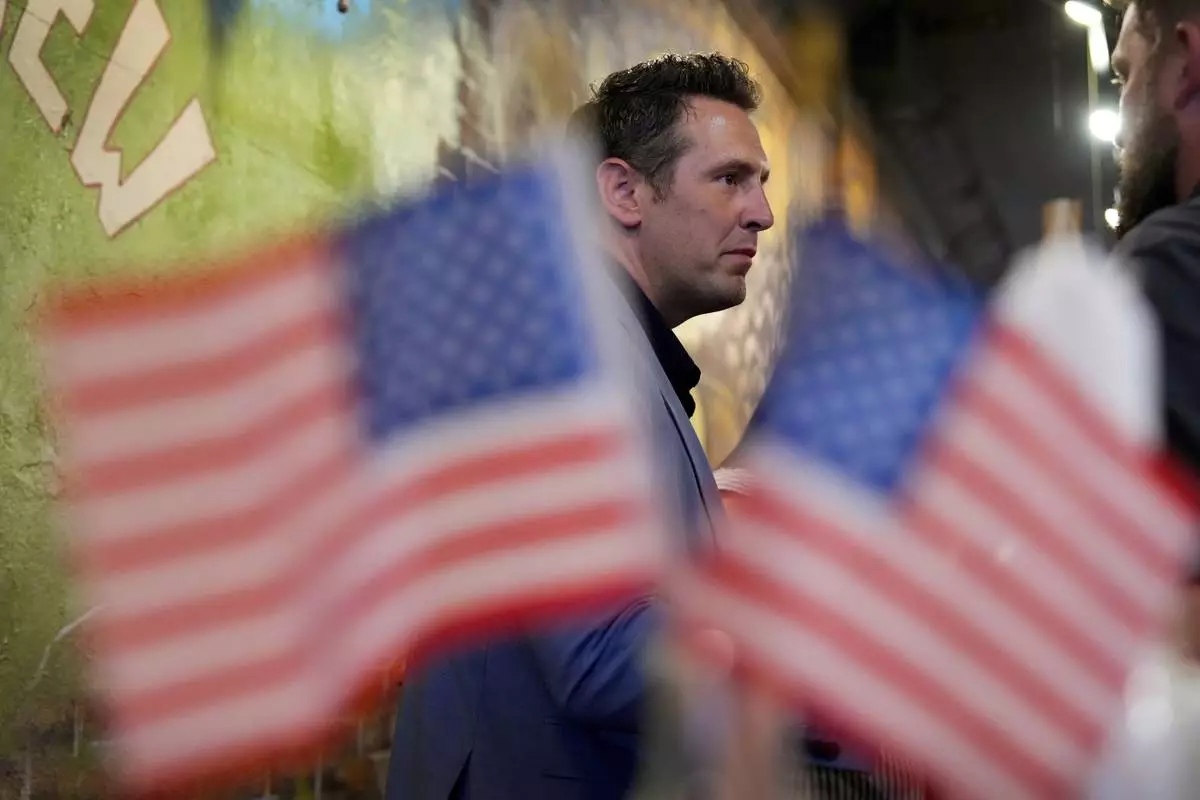
Zach Lahn, Republican candidate for Iowa governor, speaks to local residents during a meet and greet, Tuesday, Aug. 4, 2026, in Hampton, Iowa. (AP Photo/Charlie Neibergall)