NEW YORK (AP) — It flies. It heals all wounds. It can be of the essence, and it can be money. We thrill in the best of it, lament the worst. We're warned not to waste it, since we can't turn it back — even as we try to make up for when it's lost.
And probably more than anything when it comes to time, most of us try to manage it — in our everyday lives and on a global scale, from the biology of our circadian rhythms to what constitutes a work day. Clocks. Calendars. Pendulums. Hourglasses. Sundials. Time zones.
For something that's been a pretty universal impulse to mark the shift of light and dark, the movement of the stars and the rhythms of the tides, the cycles of summer heat and winter cold, one might assume there's been a universal way of measuring time. That assumption would be wrong.
Take the shifting of the clock twice a year in most of the United States, once forward and then back again, a system that “moves” the time to let people enjoy daylight hours later into the evening.
While people love the light, a lot of them loathe having to make the change. So much so that the House of Representatives last month overwhelmingly passed legislation calling for the shift to become permanent year-round. Its prospects for passage in the Senate aren’t high, and when the country tried it in the 1970s it was wildly unpopular and short-lived. But it continues to be brought up, an indication that the way we keep the clock counts.
The methods different peoples and communities have used to track their lives haven't existed in a vacuum. They've been impacted by culture, by religion, by economics and technology, by the governing principles both within nations and among them.
Turns out, like pretty much anything where people are involved, there’s a politics to time.
“Every measurement of time is arbitrary,” says Elizabeth Cohen, a political science professor at Boston University who has written about how we chronicle time and how it impacts the way people relate to each other. “Every deadline could have been a fraction of a second or a large increment of time different than it was,” she says. “None of it is natural.”
Take calendars. We use them to give a structure to our lives, but the spectrum of what that has looked like is vast through human existence. Some followed the sun, others the moon, and others still a combination of both. Maybe all the months were the same length, maybe they weren’t. What we call a seven-day week might have had four, or six, or some other number of days in other timekeeping systems.
Even today, when the main calendar in use globally is what we know as the Gregorian calendar, with its 12 months and leap years, other calendars are still consulted for religious or cultural purposes in places from Israel to Thailand. And daylight saving time? With its connection to our perceptions of what hours of light become available to us, it reflects “a desire for natural time,” says Michael O’Malley, professor of history at George Mason University.
People “are outside longer, so they feel it as a connection to nature,” he says. “But it only makes sense in a society that’s completely hypnotized by clocks so you think the clock is time.”
It's not just about the how. When we think about how culture evolved around time, there's also the why.
For most of human history, there were ties to the rhythms of the natural world: the phases of the moon, the rising and setting of the sun, the ebb and flow of the tides. And in agricultural societies, the importance of when to plant and when to harvest.
Tracking the sun's journey across the sky was a local endeavor. While the idea of a day broken down into 24 equal segments was important to groups like astronomers or seafarers, daily life was broken into “systems that tended to expand and contract based on the time of year and the location,” says Kevin Birth, a professor of anthropology at Queens College.
“But since people weren’t really traveling back and forth with any great rapidity back," he says, "then it really didn’t matter.”
Industrialization — in the form of the Industrial Revolution that started in 18th-century England and spread — pushed people to shift notions of time. No longer was it about the sun's cycle or the turn of the seasons. Industrial production meant schedules — people paying attention to the clock because they were due for specific shifts.
“It was one of the goals of industrialization to instill in people this regular, unvarying sense of time,” O'Malley says.
Contrast that to a preindustrial farmer, he says. “You could have an ethic of hard work, but that work is not going to be governed by a clock. It’s typically going to governed by natural cues. The clock establishes this external authority that’s not you."
In the United States, by the mid-1800s, another issue arose: time zones. There were more than 40 based around cities, which O'Malley says forced railroad companies to switch dynamically as trains traveled.
Worried that other entities would standardize the zones and disrupt their businesses, the companies acted. “The American Railway Association got all the American railroads to agree that on Nov. 18, 1883, they would declare a four-zone system in effect in America,” O'Malley says. “And they just announced it.”
It's hardly the only occasion where the perception of time has involved national or global concerns.
Take the Prime Meridian, the entirely made-up longitude line running from the North Pole to the South Pole, that divides Earth into eastern and western hemispheres and is used as the basis for global timekeeping as well as navigation.
It runs through Greenwich, England, and was selected at an international conference in 1884. Was that because Greenwich was the ideal place? No, Birth says — it simply was established during “a period when the British Empire was one of the dominant empires in the world.”
Time zones themselves “are about politics,” he says, pointing out that they are not divided in a standard format. Countries decide their own, and in the U.S., the individual states can decide if they observe Daylight Saving or not.
A prime example is China, which stretches more than 3,000 miles (5,000 kilometers) across Asia. It has one official time zone for the country, instituted when the Communist Party took power in 1949 as a form of national unity.
The entire country runs officially on Beijing time, but the reality on the ground when the sun rises in eastern China hours before it rises in western China is people adjust with their own local times for daily life, Birth says.
Time can also be a tool used in a society to manage dissent and protest, Cohen says. She pointed to examples like governments instituting curfews or protesters engaging in slowdowns or strikes.
“Time has a lot of power," she says, “and people are battling over it to try and impose themselves on others or remove the yoke that has been imposed on them.”
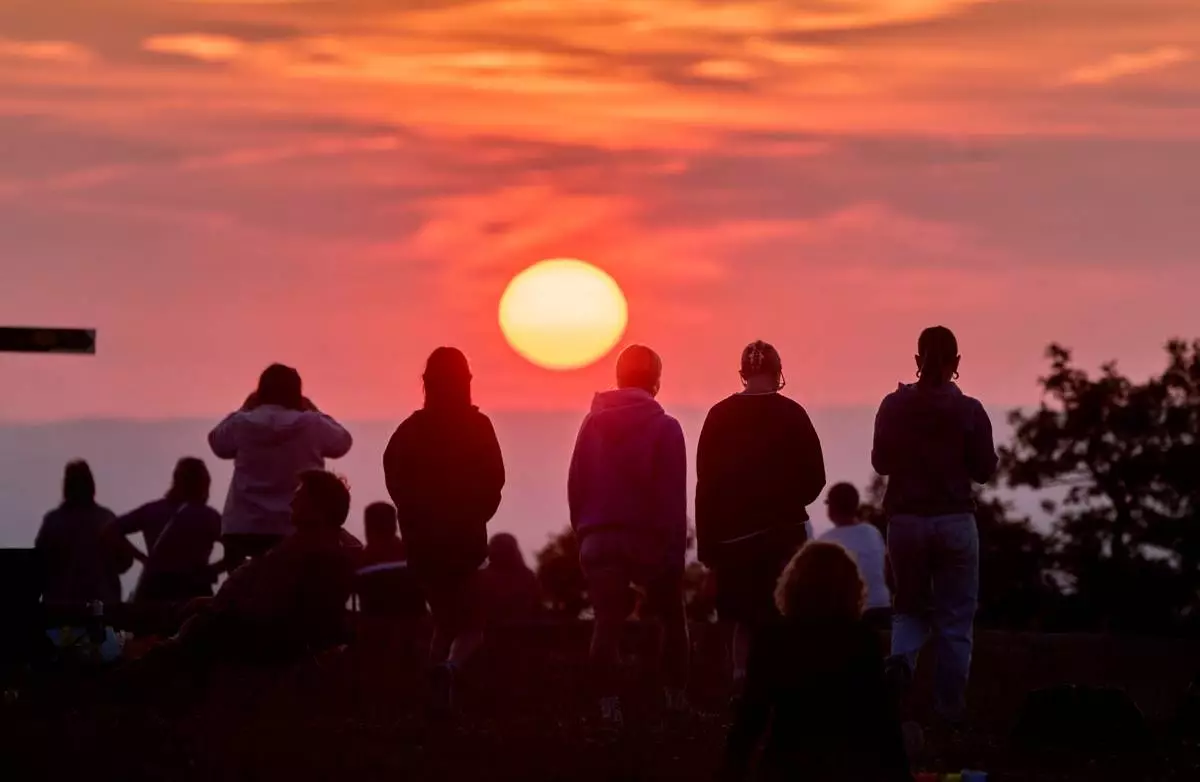
FILE - People gather on top of the Feldberg mountain to watch the sunset near Frankfurt, Germany, June 21, 2025. (AP Photo/Michael Probst, File)
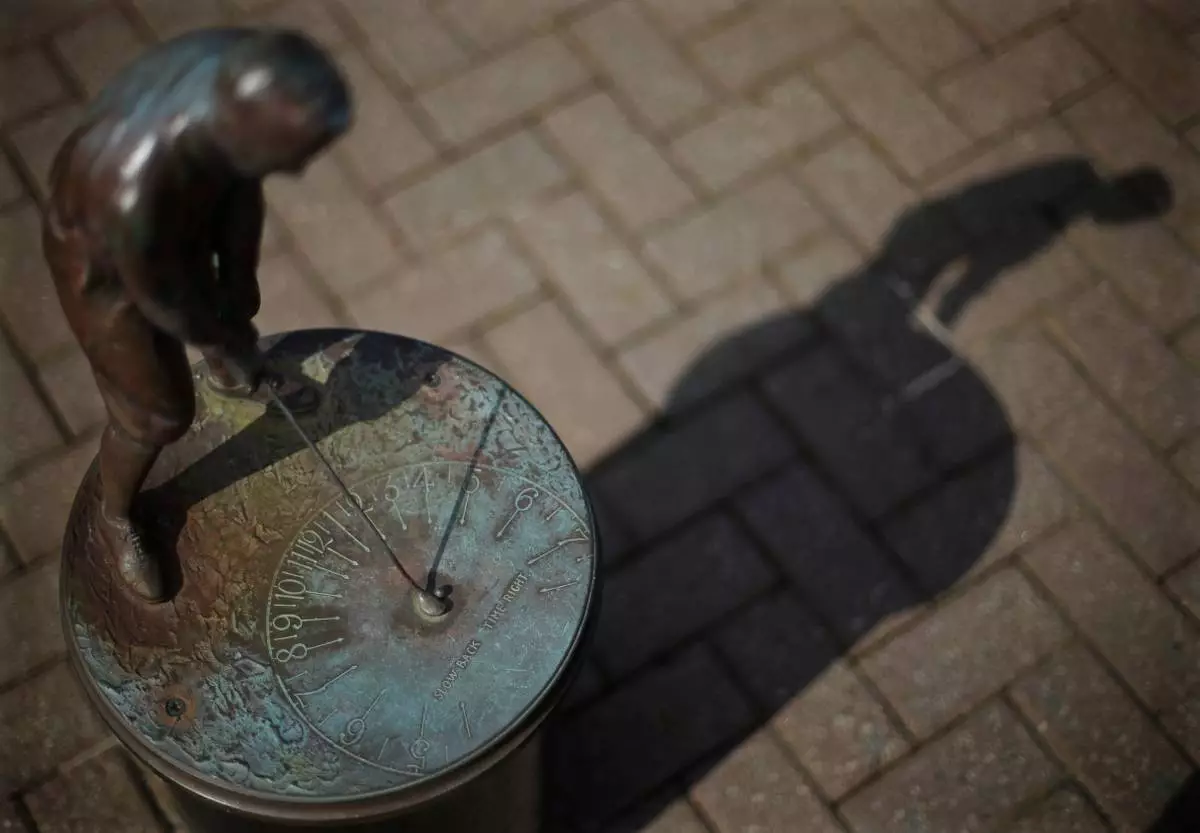
FILE - A sundial of golfer Bobby Jones sits outside the Augusta National Golf Club house during a practice round for the Masters golf tournament April 9, 2013, in Augusta, Ga. (AP Photo/David Goldman, File)
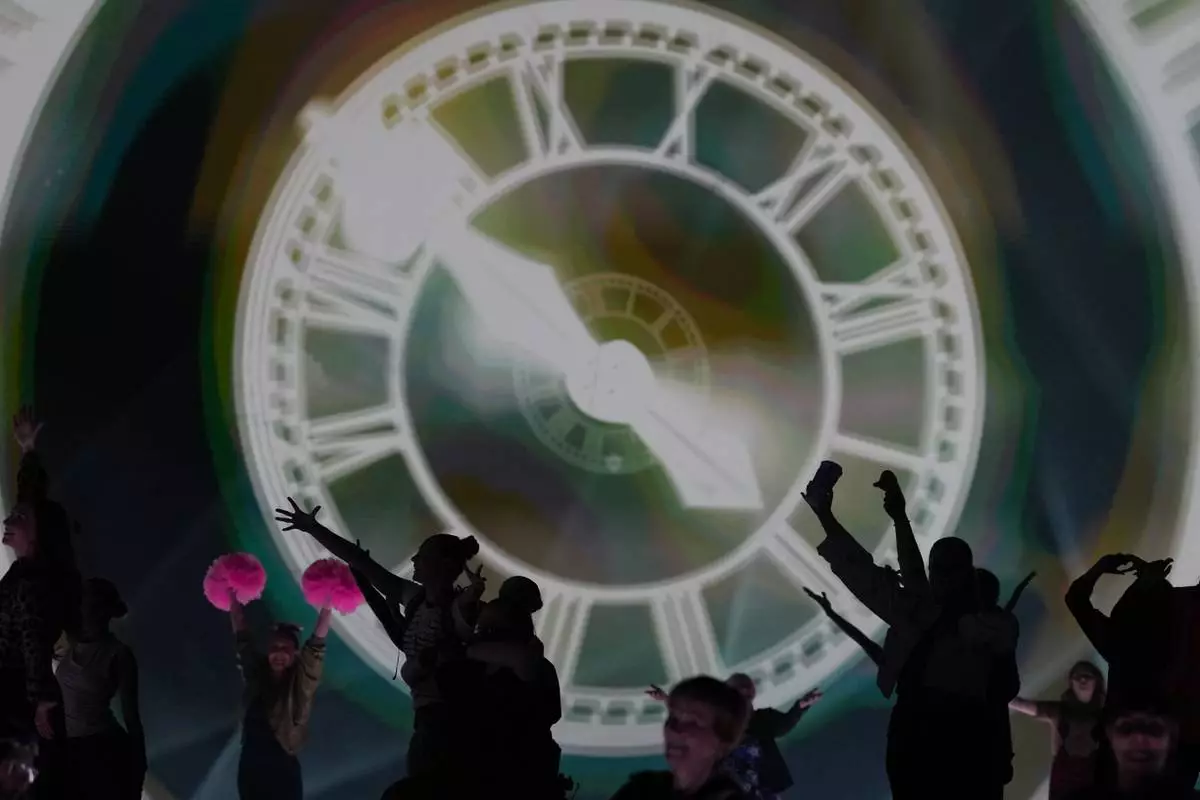
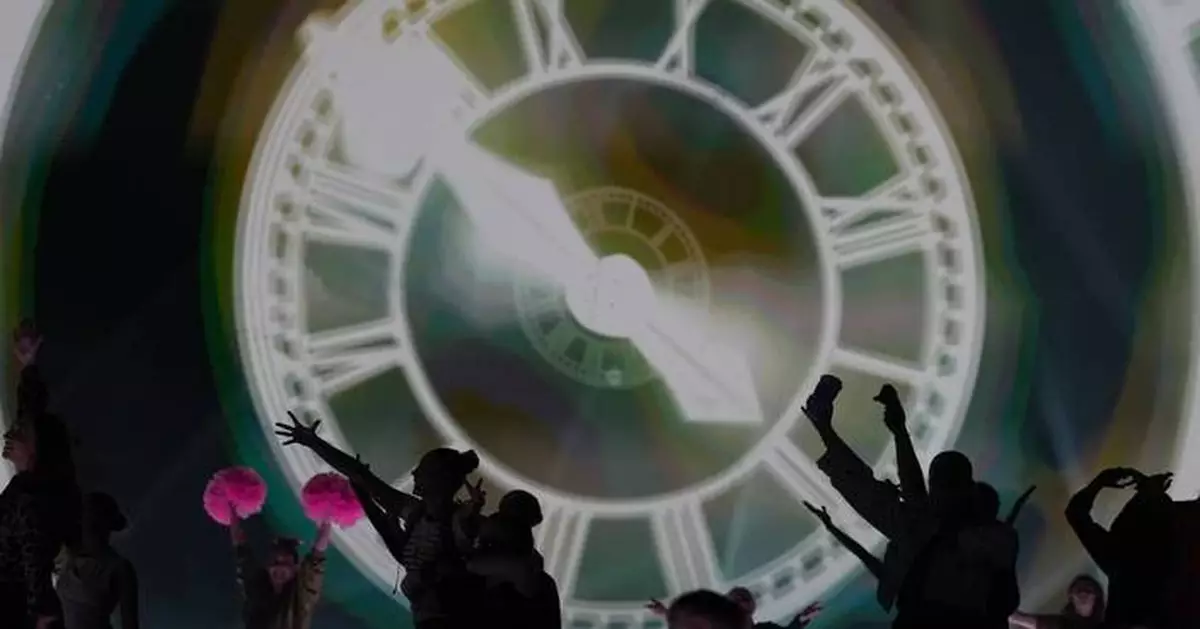
FILE - Performers celebrate the Glasgow Central railway station clock during the Commonwealth Games opening ceremony in Glasgow, Scotland, July 23, 2026. (AP Photo/Kin Cheung, File)
MOUNT TABOR, Israel (AP) — Sister Mayela wears her black veil and habit as she walks to work near where another Catholic nun was violently attacked in Jerusalem’s Old City — but she’s now accompanied by a Jewish volunteer for protection.
Many Christians in Israel, who make up less than 2% of the country’s population, are worried visible signs of their faith will draw harassment, which has increased as multiple conflicts grip the region.
“I’m scared after the sister was beat up,” said Sister Mayela, a Mexican nun who’s lived in Jerusalem on and off for more than two decades. “Before, one could live with more confidence. Some people spat, some said hi. Now we have to live trusting in God.”
She finds resilience in her faith — and in support from Israelis like the volunteers. Even that, though, didn’t prevent a teen from spitting right behind her as they passed a group of ultra-Orthodox Jews recently. The teen said she was only clearing her throat, but the volunteer reported it to police.
Incidents like that are among the challenges for Christians in Israel, particularly since the Hamas-led attack on Oct. 7, 2023, plunged the country back into war and polarization. But interfaith leaders and researchers are encouraged by better policing and prosecution as well as the recent appointment of a government envoy to the Christian world, who is Greek Orthodox.
In northern Israel, many Christians say they feel the state isn’t doing enough to protect them from crime because they’re not Jewish. But those concerns didn’t stop groups of Catholics from joining a recent joyous pilgrimage on Mount Tabor, where the Gospels say Jesus appeared transfigured alongside the Jewish prophets Moses and Elijah.
“In a world where darkness is filling the hearts of people, we need to diffuse God’s light to other people,” said Sister Muna, the nun who led one youth group.
For many Christians and Jews, protecting coexistence in the Holy Land is a moral imperative after their own long histories of religious persecution.
“I don’t want Christians to go out of their house in Jerusalem … and have fear,” said Yisca Harani, the Jewish Israeli educator and activist who escorted Sister Mayela. “I’ve gone through this 2,000 years in my Jewish history. I’m not going to let that happen.”
In the Old City, Jewish men in black hats and tzitzit tassels, Muslim women in hijabs and Christian priests in flowing robes walk past each other daily in the maze of stone alleyways. Many are headed to pray at the Western Wall, the Church of the Holy Sepulchre or the Al-Aqsa Mosque compound. These are some of the most sacred sites respectively for Judaism, Christianity and Islam, and they are close to each other.
“If you stroll around in your habit, sooner or later you’ll get some spitting next to you,” said the Rev. Alberto Pari, who leads interfaith dialogue and Christian-Jewish relations as secretary to the Custody of the Holy Land, the Catholic order ministering to holy sites across the region. “But it’s important not to generalize, because that unleashes antisemitism.”
Religious Freedom Data Center, the organization that Harani founded to track harassment of Christians, has recorded a near-tripling of incidents in Jerusalem from four years ago to the last three months recorded — about one a day now — virtually all by Jewish religious nationalists.
A Jewish man from a settlement in the occupied West Bank was indicted in the violent attack on the nun in April. The French Biblical and Archeological School of Jerusalem where the nun is a researcher expects “effective prosecution at the criminal and civil levels,” said the school’s director, Friar Olivier Poquillon.
Among those reaching out to Catholic leaders to denounce the attack and offer support was Ambassador George Deek, Israel's new envoy tasked with building what he calls the “special relationship” between Christians and the country, to both keep Christians safe and partner on issues like fighting antisemitism.
“We believe that every incident against Christians is immoral, illegal and should be prosecuted. That’s exactly what we are going to do,” Deek told The Associated Press. “We want to make sure that Israel continues to prosper and grow as a place where Christians can not only survive, but they can thrive.”
Around the time that the nun was attacked, two other incidents drew global condemnation. An Israeli soldier smashed a crucifix in a family garden and another stuck a cigarette in the mouth of a statue of the Virgin Mary in southern Lebanon, where the military is fighting Hezbollah militants. The soldiers involved received military prison sentences.
Most Israelis find harassment unacceptable. But Jewish religious nationalists, particularly uneducated young men, remain a threat, said John Munayer of the Rossing Center for Education and Dialogue, an interreligious organization in Jerusalem.
Their hostility to Christians is grounded in the history of persecution of Jews in Christian-majority European countries, in faith practices they see as idol-worshipping, and in a “general intolerance” for anyone who’s not Jewish near sacred areas like the Western Wall, Munayer said.
Then there’s the overhanging trauma of the Israeli-Palestinian conflict, since most local Christians in Israel and the occupied West Bank are Palestinian.
In Taybeh, the last entirely Christian village in the West Bank, Jewish settlers recently cut through house fences and destroyed fruit and vegetable gardens, said the Rev. Bashar Fawadleh, parish priest of Christ the Redeemer Catholic Church.
“All the people here are afraid,” he said. “Settlers come and go every day.”
Israel’s army declared the village a closed military zone earlier this week to curb the attacks. But concerns about Israel’s ability and willingness to rein in the settlers remain even among evangelicals, who are among the staunchest Christian supporters of Israel.
“What happens in Taybeh is really troubling,” said David Parsons, spokesperson for International Christian Embassy Jerusalem. “Israeli leaders have realized for some time that Christian support for their nation is not only vital, it’s a strategic interest.”
And yet since the Oct. 7, 2023, attack, “generalized fear and skepticism” pervaded all interreligious work, Pari said. The interfaith music institute he directs, Magnificat, was invited to play at a peace march in Jerusalem. But when the Palestinian members saw that the stage had been set up by an Old City gate flanked by Israeli flags, they refused to play.
“I felt a real failure,” Pari said. “We think that as Christians, we have a very important role to patch things back together. ... It will be difficult, but we can do it.”
That faith-grounded resilience prevailed among the Mount Tabor pilgrims, who gathered on the mountain to celebrate the feast of the Transfiguration last week. Rising interfaith tensions and crime have driven many of the area’s Christians to emigrate, several said.
“It’s very difficult that we keep our identity as Christians in the Middle East, but it’s the most important,” said John Akleh, 20, who came with Sister Muna’s group.
Ten pilgrims from nearby Nazareth — where Jesus grew up — started the climb at 4:15 a.m. led by the Rev. Fadi Shallufi in a yearly tradition they’ve maintained even in wartime.
“We will have a lot of sacrifice, but you will be sure in this land something will change,” Shallufi told them as he celebrated Mass in the mountaintop basilica.
Associated Press journalists Ibrahim Hazboun and Moshe Edri contributed from Jerusalem.
Associated Press religion coverage receives support through the AP’s collaboration with The Conversation US, with funding from Lilly Endowment Inc. The AP is solely responsible for this content.
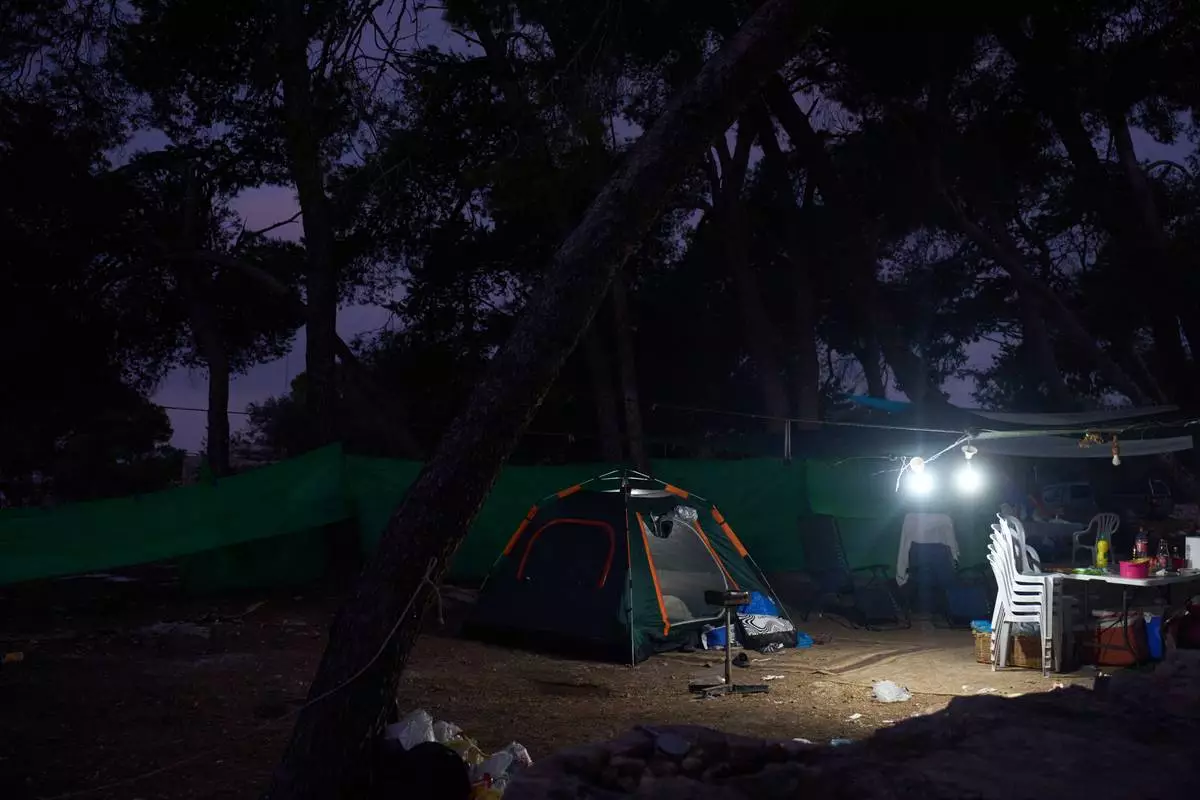
Tents of Christian pilgrims who spent overnight in the forest next to the Basilica of the Transfiguration on Mount Tabor, northern Israel, on Aug. 6, 2026. (AP Photo/Ariel Schalit)
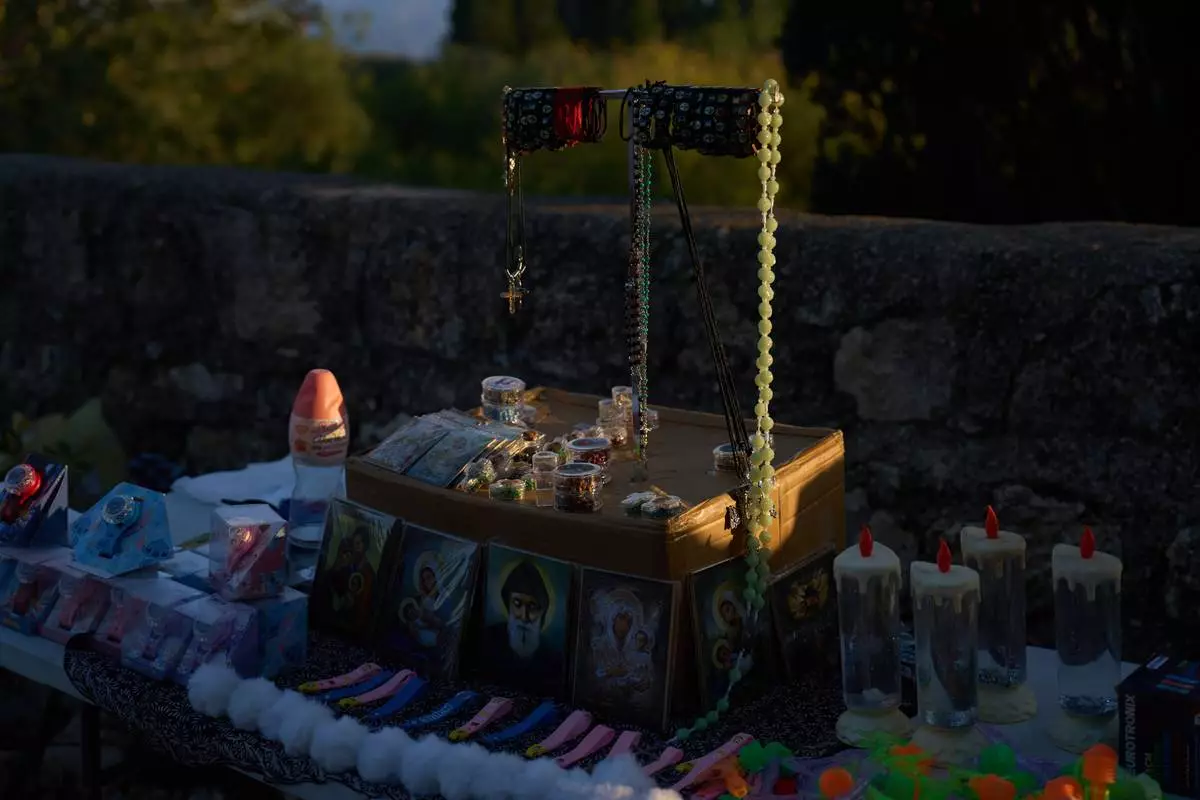
Religious souvenirs for sale are placed on a stand for Christian pilgrims who climb to the Basilica of the Transfiguration on Mount Tabor, northern Israel, on Aug. 6, 2026. (AP Photo/Ariel Schalit)
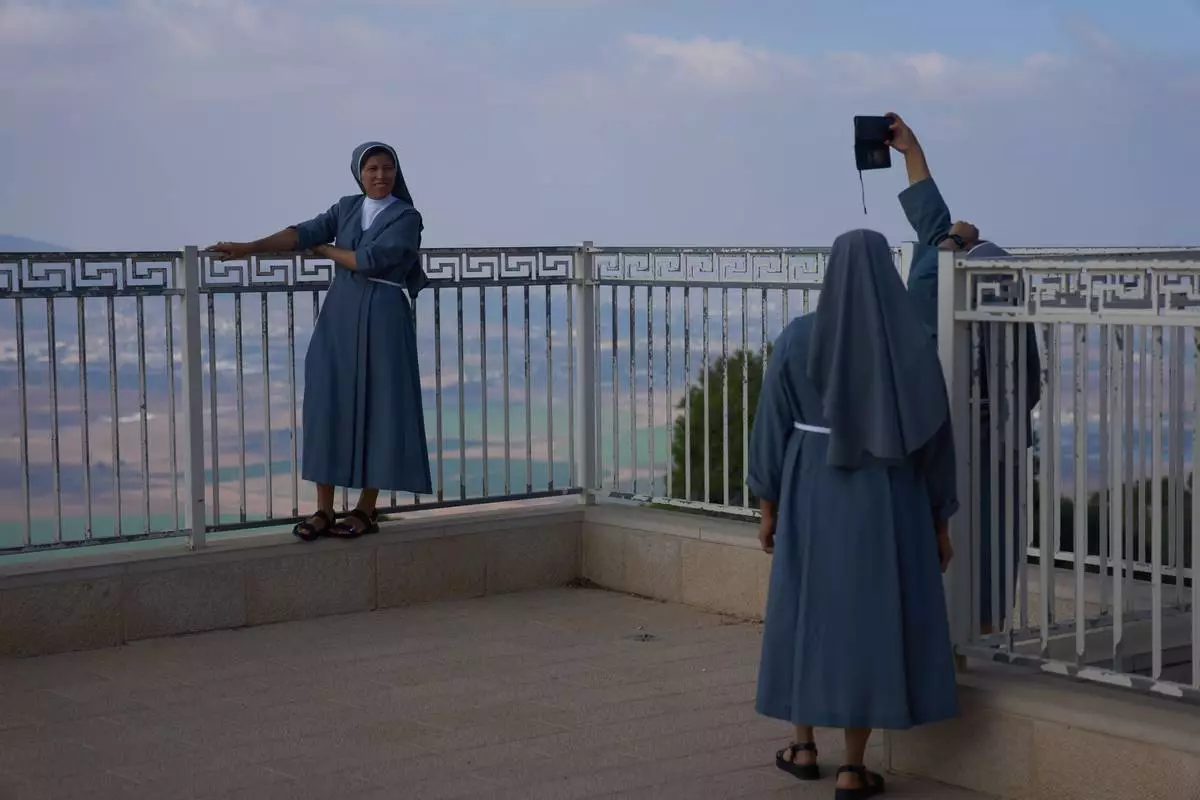
Nuns pose for photograph with the view from the Basilica of the Transfiguration on Mount Tabor, northern Israel, Aug. 6, 2026. (AP Photo/Ariel Schalit)
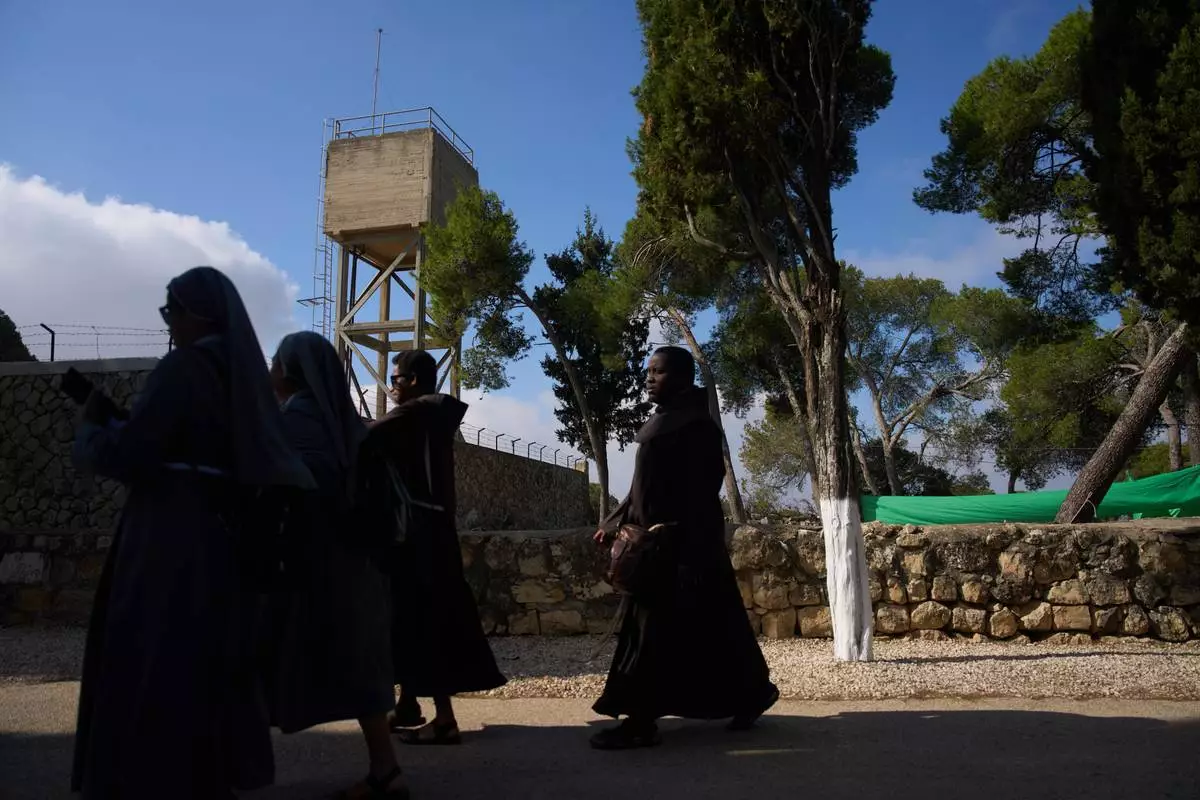
Priests and nuns make their way to the Basilica of the Transfiguration on Mount Tabor, northern Israel, on Aug. 6, 2026. (AP Photo/Ariel Schalit)
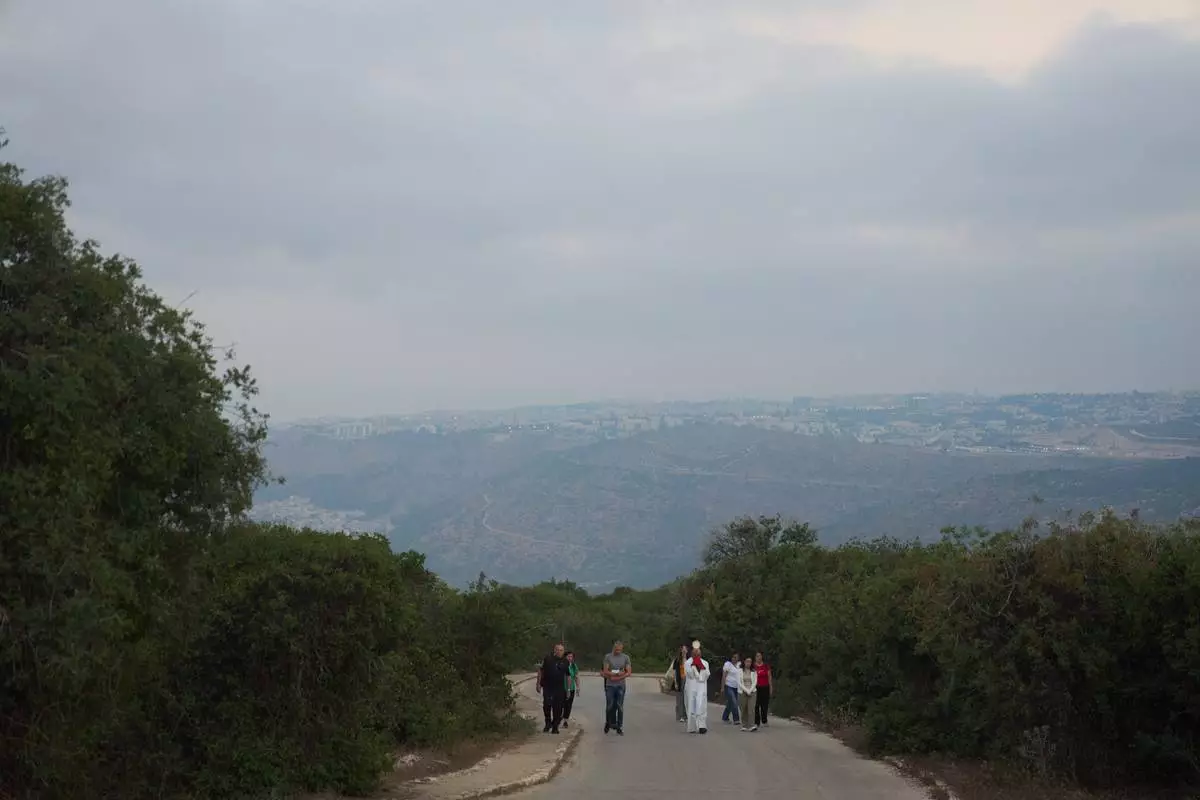
Rev. Fadi Shallufi leads Catholic pilgrims on a Eucharistic procession climbing to the Basilica of the Transfiguration on Mount Tabor, northern Israel, on Aug. 6, 2026. (AP Photo/Ariel Schalit)
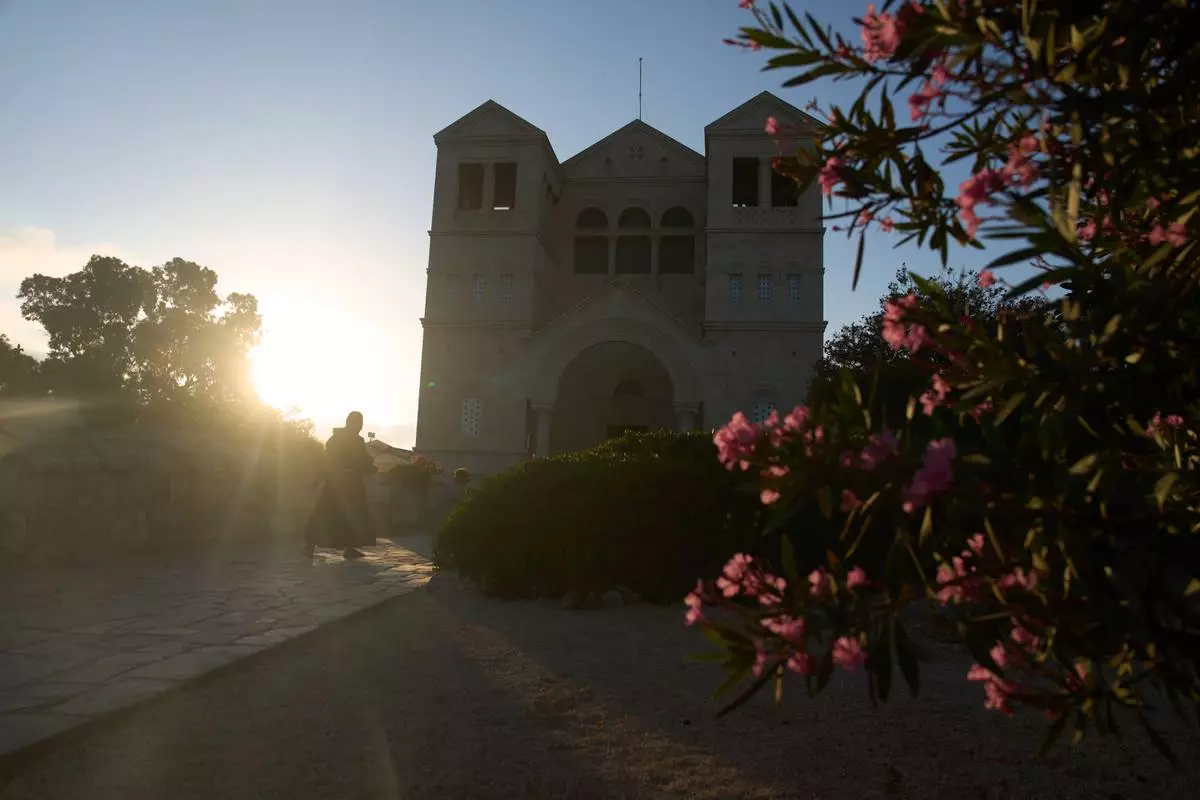
A priest enters the Basilica of the Transfiguration on Mount Tabor, northern Israel, on Aug. 6, 2026. (AP Photo/Ariel Schalit)
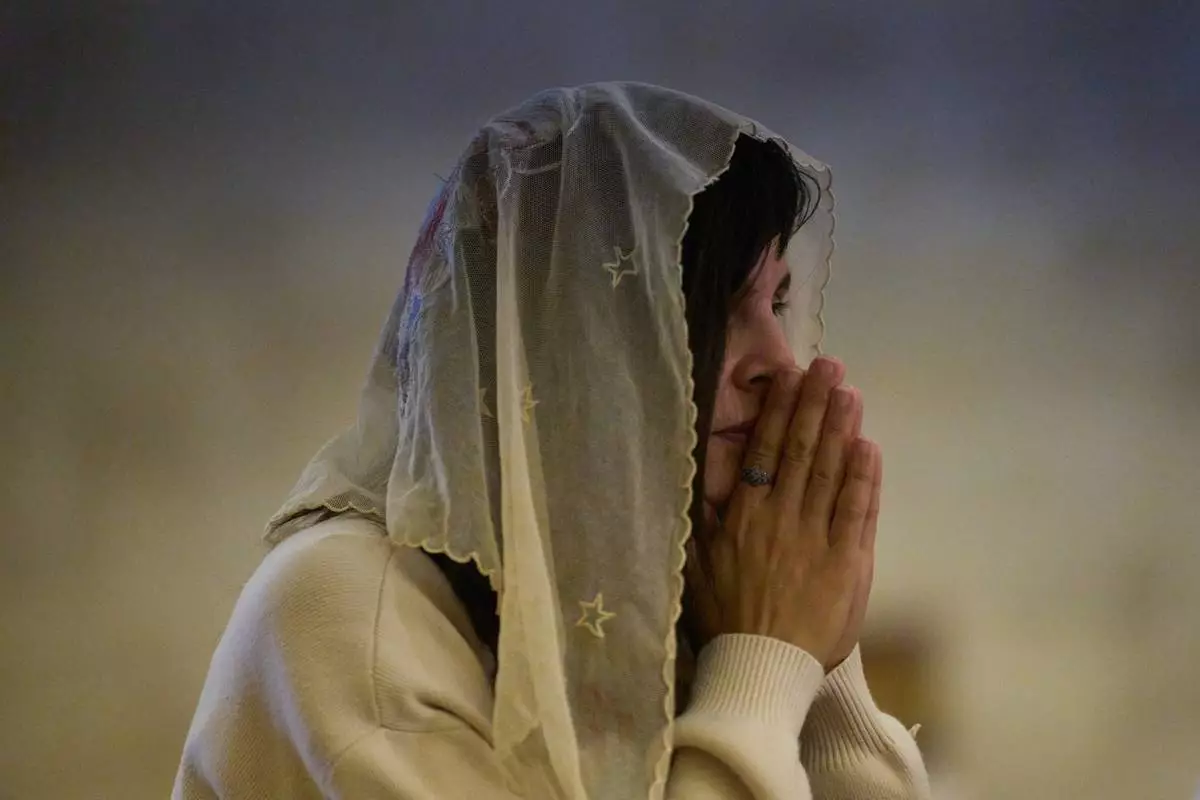
A Christian pilgrim attends a Mass in the Basilica of the Transfiguration on Mount Tabor, northern Israel, Aug. 6, 2026. (AP Photo/Ariel Schalit)