The younger generations of Americans are unlikely to view China as a threat as they pay more attention to domestic woes such as rising living costs and economic challenges, according to a report released on Wednesday.
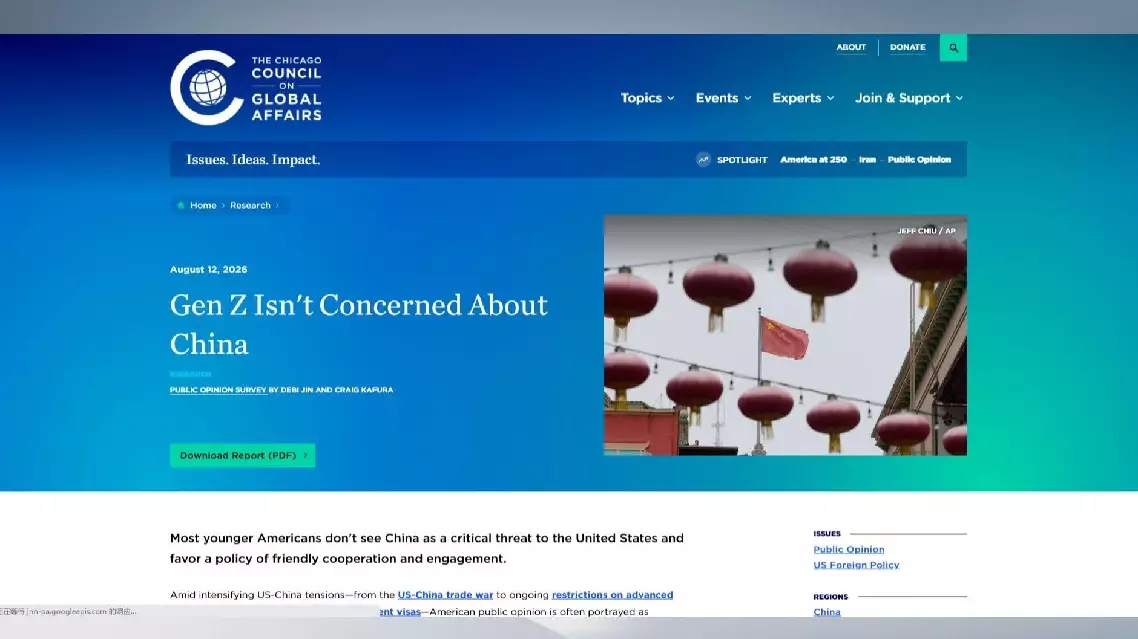
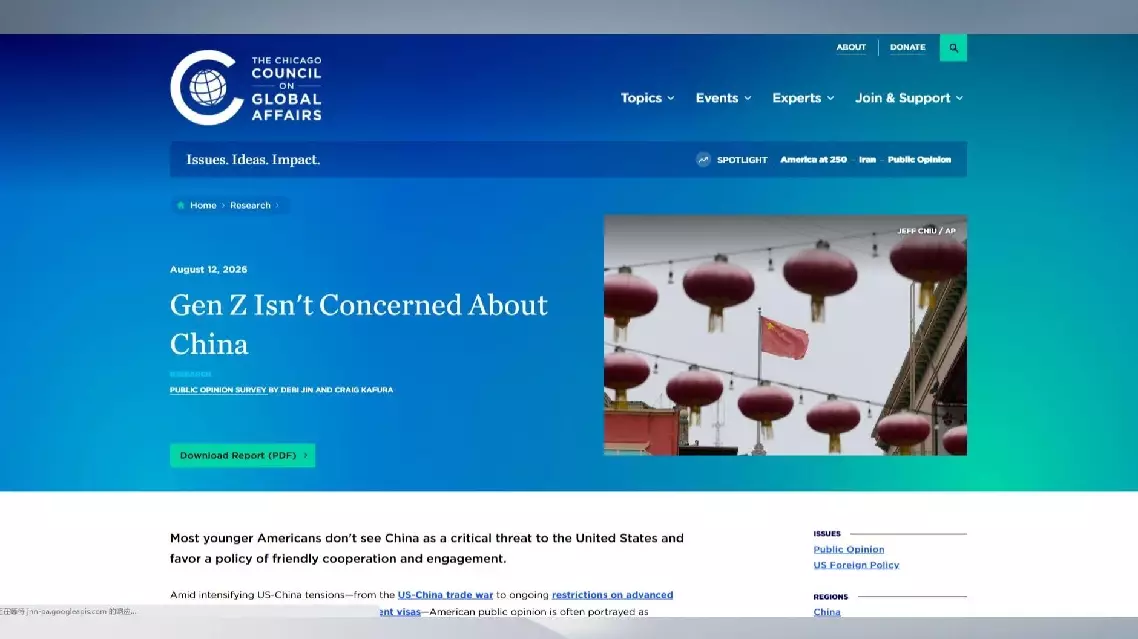
In the report "Gen Z Isn't Concerned About China" released on Wednesday, the Chicago Council on Global Affairs said that attitudes toward China among Americans of different age groups are becoming increasingly polarized.
It said most young Americans do not view China as a "threat" to the United States and instead favor policies of friendly cooperation and engagement.
The report's conclusions are based on data from two public opinion polls: one is a nationwide survey jointly conducted by the Chicago Council on Global Affairs, National Public Radio (NPR), and global polling research firm Ipsos from March 13 to 15 of this year, with a sample of 1,025 adults across all age groups; the other is a 2025 survey by the Chicago Council on Global Affairs involving 2,148 respondents nationwide.
The polls define Generation Z as those born between 1997 and 2013, and Millennials as those born between 1981 and 1996.
The report said that the prevalence of social media has made it commonplace for the younger generation in the United States to be exposed to Chinese culture.
It drew several key conclusions, including that the younger generation in the United States is less likely to view China's development as a threat.
At the same time, young Americans generally oppose hardline policies toward China: 64 percent of Gen Z and 65 percent of Millennials oppose restricting Chinese overseas students; 66 percent of them oppose imposing additional tariffs on China; and 69 percent of Gen Z and Millennials do not support reducing the scale of U.S.-China trade.
The report said that despite differences on economic policies toward China, people across all age groups largely believe that tariffs on China have driven up living costs in the United States.
The report concludes that young Americans are unlikely to view China as a threat, are not inclined to adopt a competitive stance, and are unwilling to bear the costs of such competition. To some extent, this reflects that young Americans are focused on domestic living costs and economic challenges rather than geopolitical competition.
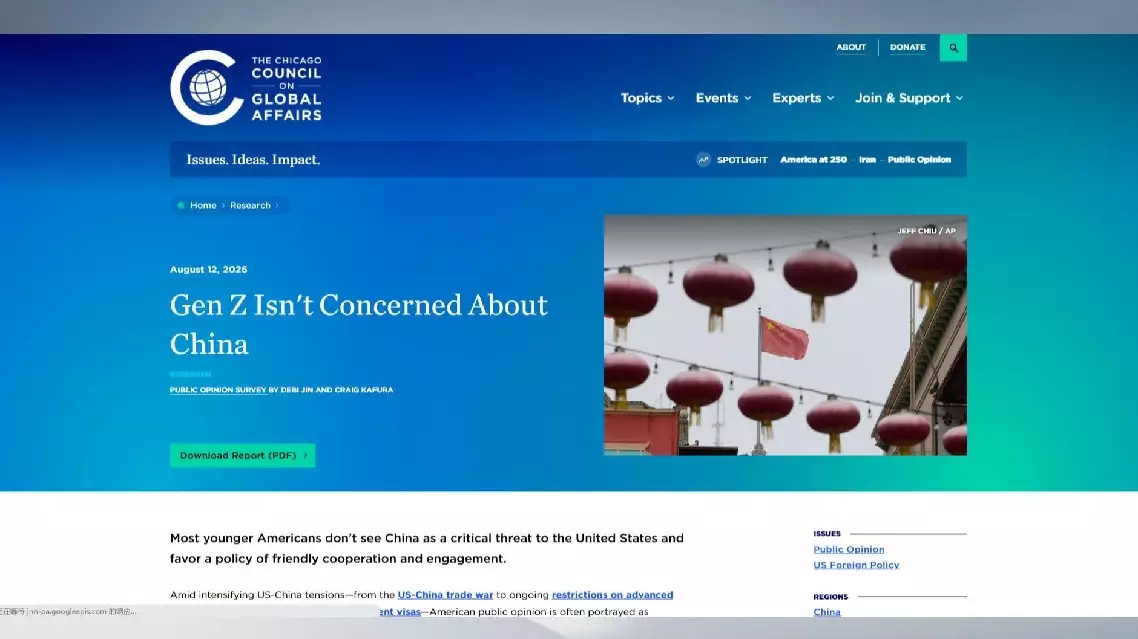
Young Americans unlikely to view China as threat: report
Young Americans unlikely to view China as threat: report
Young Americans unlikely to view China as threat: report