Rescuers raced Friday to seal a levee breach on the east bank of the Jialu River in Zhoukou, central China's Henan Province, after upstream flooding and backflow from the Shaying River triggered the collapse.
The breach, a break in the river embankment that lets floodwater escape, expanded rapidly as water flow intensified.
Authorities from the Ministry of Emergency Management dispatched 200 rescue workers from China Anneng Group, along with 110 pieces of heavy machinery, including amphibious excavators, loaders, and pontoon bridges, to seal the gap.
After an overnight operation, more than 70 meters of the breach have been filled.
Rescuers worked from both ends of the breach simultaneously, reinforcing the base with containers and filling the center with rocks. To overcome narrow embankment roads that blocked heavy trucks, they built five passing bays overnight to keep supplies moving.
Traffic control was tightened along a four‑kilometer stretch, with personnel stationed to coordinate vehicle flow and ensure a steady supply of materials.
Rescuers are currently working in rotating shifts, with heavy machinery running around the clock. Multiple teams are coordinating closely to speed up the final closure of the breach.
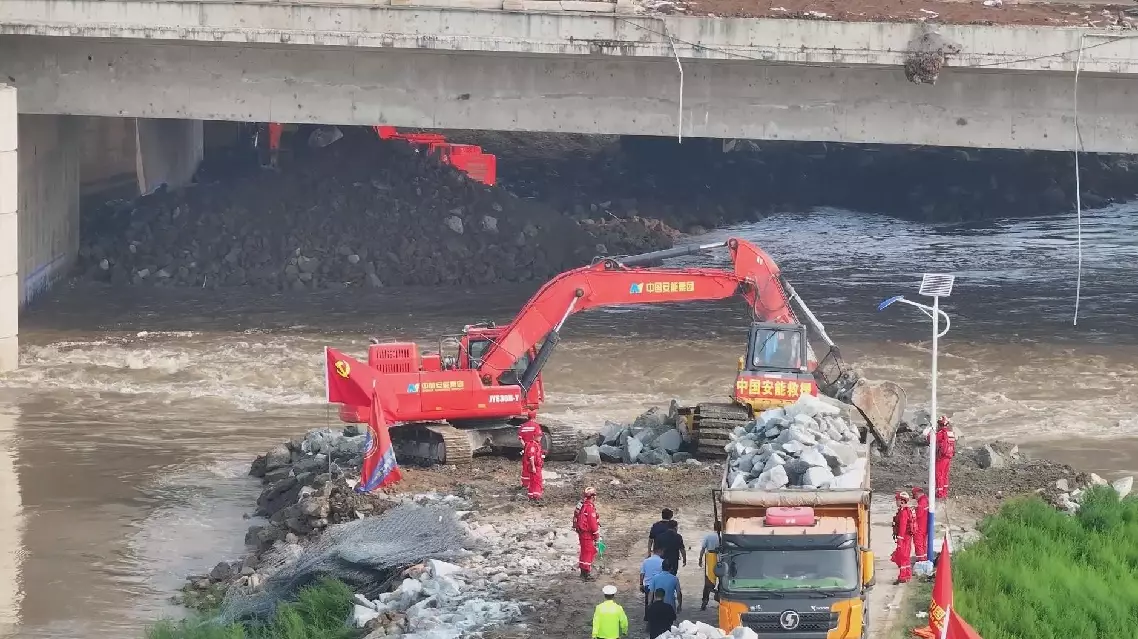
Rescuers race to seal levee breach in central China's Henan
China's outstanding aggregate financing to the real economy stood at 468.17 trillion yuan (about 69.96 trillion U.S. dollars) at the end of August, maintaining a reasonable growth rate of 7.1 percent year on year, central bank data showed on Wednesday.
M2, a broad measure of money supply that covers cash in circulation and all deposits, had increased by 7.2 percent year on year to 359.63 trillion yuan by the end of last month, according to the People's Bank of China (PBOC).
The growth rates of both aggregates align with the projected targets for economic growth and general price levels, indicating reasonable growth in the total volume of finance and supporting the economy's sustained development toward new, better, and more positive outcomes, according to the PBOC.
In the first three quarters, combined financing from bonds and stocks accounted for 49.5 percent of the total increase in aggregate financing to the real economy, surpassing the share of loans by nearly 7 percentage points, reflecting accelerated bond and equity financing and increasingly diversified financing channels.
During the same period, RMB loans increased by 11.52 trillion yuan, with funds increasingly flowing into technological innovation, green development, and micro, small, and medium enterprises.

China’s aggregate financial volume sees reasonable growth in September: central bank