China's ambitious "fitness for all" nationwide public health campaign and its determined drive to become a leading sporting nation are unlocking vast opportunities for sportswear businesses in the country's massive consumer market, said Adidas CEO Bjorn Gulden.
Speaking in an interview with China Global Television Network (CGTN) in Shanghai, Gulden said the German sportswear giant's localized approach to the Chinese market is a direct response to competition from stronger-than-ever local brands.
Under its "In China, For China" strategy, the company has delegated full product and creative control to its China team, which now designs and develops roughly half of Adidas products locally to match regional fashion trends and consumer preferences, with a shorter supply chain made possible by producing on the ground.
"Competition forces you to be better. And I'm sure that the reason why we have chosen to do 'In China, For China' model is because of competition. The old days when Adidas and all the brands were just exporting, I would say, concepts into China that were the same as in Europe and in America is over. That's why we have designers and creatives that work in China on a supply chain that is shorter because you can produce here. And that is of course to compete also against the local brands by making sure that we are better," he said.
Noting the evolution of sportswear from functional attire to everyday fashion, Gulden welcomed China's policies encouraging people to get active, saying they are bringing more consumers into the sportswear industry.
"Most sports products today are not being used for sports. They're being used as a comfort shoe or as a lifestyle item, and it's part of our life. It's very, very good that China is pushing sports more. The more people that do sports, the more importance sports get both from selling products, but also to widen the audience for sports culture products," Gulden said.
China's "fitness for all" strategy aims to get around 40 percent of the population exercising regularly by the end of the decade, backed by thousands of new and upgraded community sports facilities, expanded venue space and "15-minute fitness circles" designed to put public exercise areas within a short walk of every urban and rural resident.

China's push to become leading sports nation benefits sportswear businesses: Adidas CEO
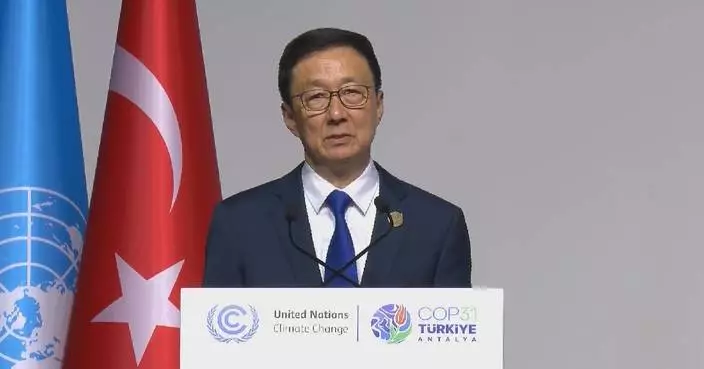
China unveiled its MAZU all-in-one device, an intelligent meteorological early-warning solution, to the world on Wednesday at a China Pavilion side event during the 31st United Nations Climate Change Conference (COP31) in Antalya, Türkiye, offering a Chinese solution for global meteorological disaster prevention and reduction.
MAZU, short for multi-hazard, alert, zero-gap and universal, is an AI-driven meteorological early-warning platform named after Mazu, the traditional Chinese goddess of the sea and protector of sailors.
The device looks like a carry-on suitcase and weighs about 20 kilograms, which is easy to ship anywhere and deploy quickly on site. Once online, it draws on global meteorological data via China's self-developed cloud-based early-warning system to deliver a complete meteorological service solution for local users.
As a comprehensive solution launched by China in response to the UN Early Warnings for All initiative, MAZU combines China's cloud resources with local data from each country, tailoring its approach to each nation's specific needs.
The MAZU solution has so far been deployed in eight countries, including Pakistan, Ethiopia and Sri Lanka, and has been tested through cloud-based trials in more than 50 countries. It has become a global public service product for disaster prevention and mitigation, helping more developing countries improve their climate governance capacity.
"We will share basic knowledge of managing disaster prevention and mitigation, experience in inter-agency coordination and government decision-making, as well as the most advanced forecasting software, satellite monitoring technology and artificial intelligence technology for disaster prevention and mitigation, along with personnel training, truly 'teaching people how to fish'," said Zhang Xingying, director of the Department of International Cooperation at the China Meteorological Administration.
"That will help us to get into people's hands with early warning. And they can make decisions, whether it's in agriculture, whether it's in mining, whether it's in tourism, or infrastructure, or in health. We like that very much," said Gilbert Siame, minister of Green Economy and Environment of Zambia.
"Its partners don't just receive this system; they build it with China. That's what South-South cooperation looks like. Who looks forward to working with China to align MAZU with each country's national early warning road-mode is WMO," said Josefina Bunge, chief of staff at the World Meteorological Organization (WMO).
COP31 opened Monday with a focus on translating global climate commitments into concrete action. According to the organizers, it will focus on three key areas: implementing emissions reduction targets, delivering climate finance to developing countries, and strengthening adaptation and resilience, with the aim of turning commitments made at previous climate summits into tangible outcomes.
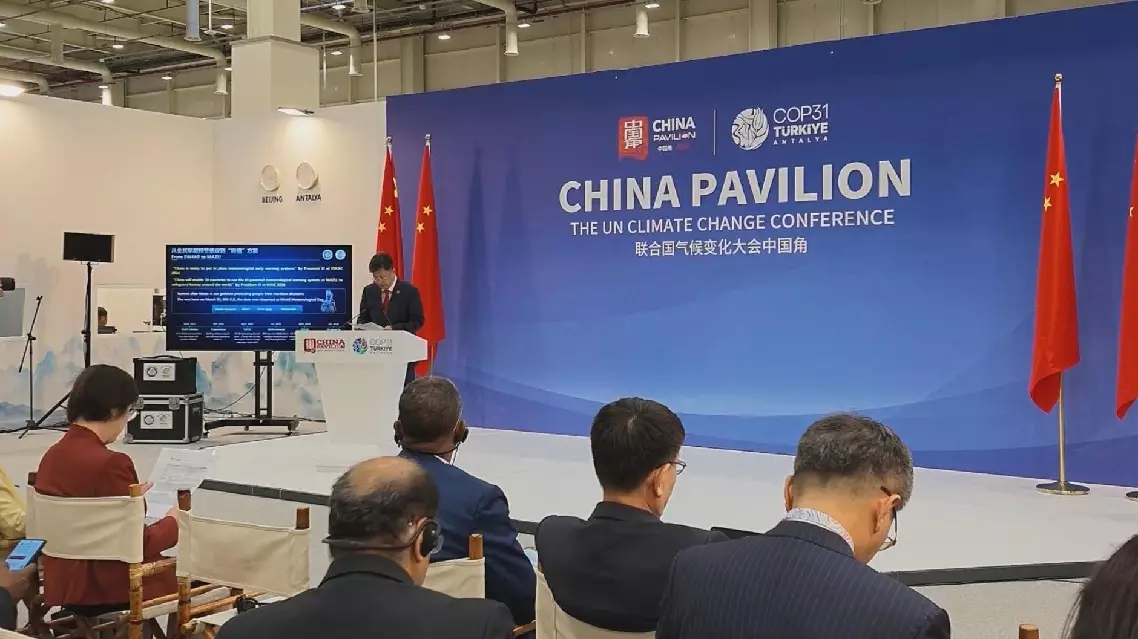
MAZU early warning device makes global debut at COP31