China's ecological achievements, driven by strong political will and long‑term planning, provide valuable wisdom for global environmental governance and sustainable development, said a United Nations (UN) official in a recent interview.
Speaking to China Media Group (CMG) in Beijing, Yasmine Fouad, Executive Secretary of the United Nations Convention to Combat Desertification (UNCCD), said China has formulated a long‑term plan for ecological conservation. She noted the strategy charts an effective path for green and low‑carbon development in developing countries.
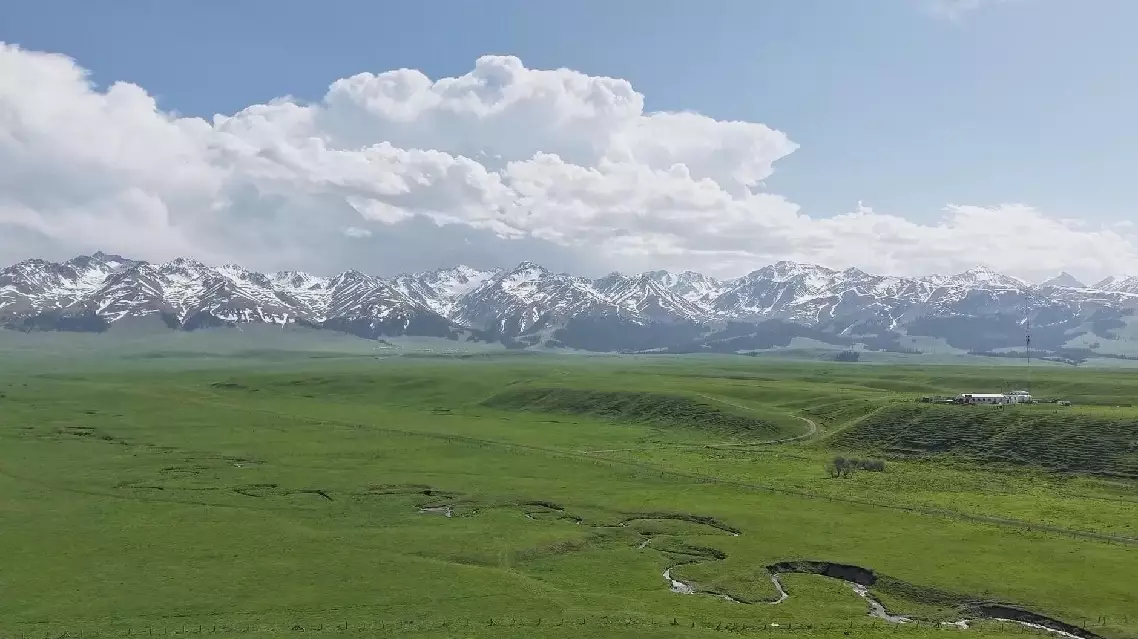
Citing the Taklimakan Desert sand-blocking green belt project as an example, she said that China's political will is its greatest strength in desertification control.
"The defining strengths, I would say political will, that's number one. In any process if you are exceeding or excelling you would have a long strong political will and a commitment. Secondly, long term planning is a strength for China because it builds on every step it does and being ambitious also involved in that Greenbelt and how we can do that. And I think that this story also is something that we can work on with other countries. There are for example, in Africa, and there is that strategic relationship between China and Africa called the Great Green Wall. I think we need to accelerate that and to include more experiences and technology and showcasing from China," she said.
Guided by Chinese President Xi Jinping's thought on ecological civilization, China has become a leading force for global desertification control.
UNCCD chief scientist Barron Joseph Orr said that the broad significance of the Three-North Shelter belt Forest Program projects, the world's largest ecological reservation project, is not only the scale of the restoration but also the long-term political commitment behind it.
Fouad echoed the point, stressing that beyond scale, China's ecological programs stand out for their ability to deliver results within set timeframes through persistence and adaptive execution.
"It's not only the scale, but the ability to make that happen during a certain period of time. I saw today in the park, something very interesting. They wanted to restore, but when they started to plan the cypress tree, it didn't work out. And then they didn't give up on that. They started to see what best can be there until they found out that the oak tree, for an example, is more suitable to that and can survive with the robinia tree that is there. The story of this or the moral behind that story is beside the political will, the persistence to make things happen within the duration that you want to make it happen," said Fouad.
"Lucid waters and lush mountains are invaluable assets" is a core concept of Xi Jinping Thought on Ecological Civilization, emphasizing that environmental protection and economic development can go hand in hand. Fouad underscored the global relevance of this concept.
"It's very much relevant at all areas. You cannot continue degrading natural resources or damaging the environment and expect that you will still gain at the economic development. That principle has already been outdated because you will gain at a very short span of time as at the economic, but you will lose a lot over a bigger period and simply the solutions are there. What is very much needed is to have a strong stand in being proactive rather than reacting to the crisis," she said.
China charts effective path for low‑carbon growth: UNCCD chief