Skip to Content Facebook Feature Image

Ukraine takes aim at Russia’s economy and morale by attacking online retailer

News

Ukraine takes aim at Russia’s economy and morale by attacking online retailer
News

News

Ukraine takes aim at Russia’s economy and morale by attacking online retailer

2026-08-17 12:05 Last Updated At:12:21

The attacks began on a July weekend and have continued for a month, stretching from Moscow and St. Petersburg, to cities in the south, and eastward to the Ural Mountains. The targets weren't oil refineries, maritime hubs or arms plants hit by other Ukrainian strikes, but warehouses that bring the convenience of online shopping across the breadth of Russia.

Ukraine's drones have pummeled the giant depots belonging to Wildberries, Russia’s biggest online retailer, burning billions of dollars’ worth of merchandise and bringing the war home to the broad public.

More Images
A billboard advertising 10% off an order from online retailer Wildberries looms over a main street in Moscow, Russia, late Wednesday, Aug. 12, 2026. (AP Photo/Alexander Zemlianichenko)
A billboard advertising 10% off an order from online retailer Wildberries looms over a main street in Moscow, Russia, late Wednesday, Aug. 12, 2026. (AP Photo/Alexander Zemlianichenko)

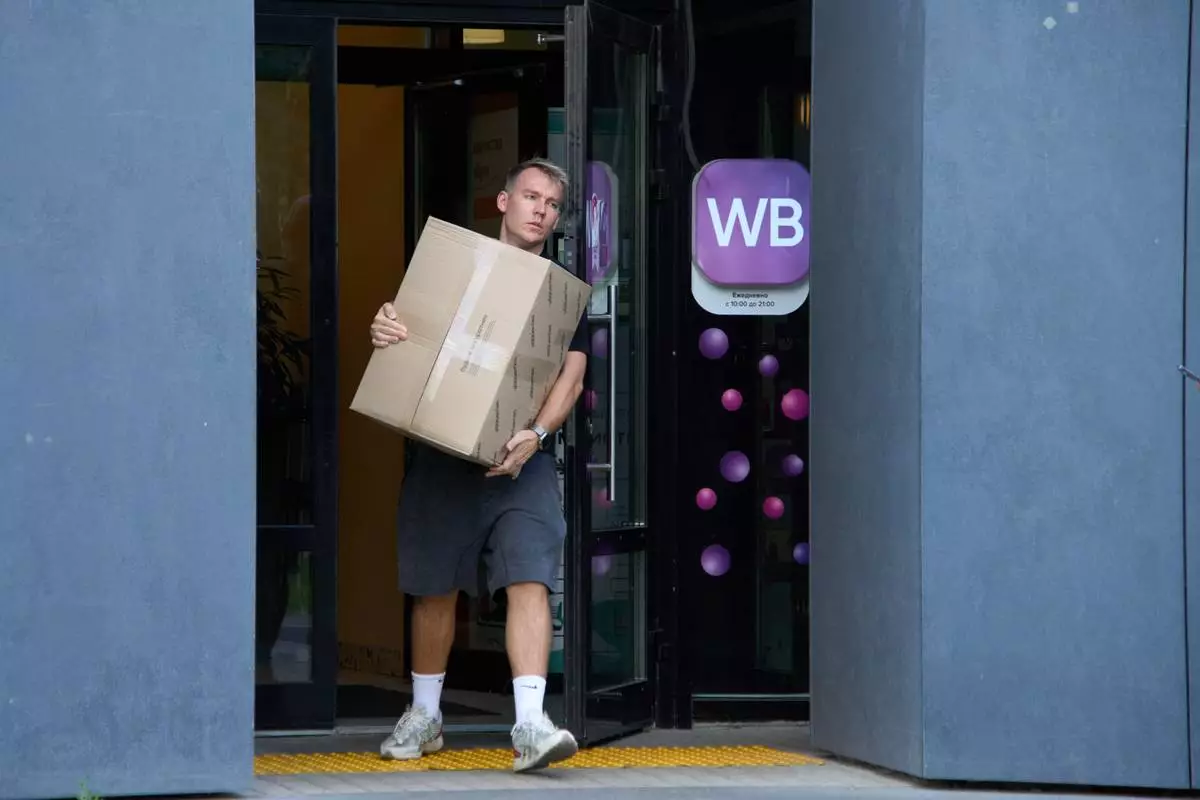
FILE - A man carrying a package leaves a pickup point for online retailer Wildberries in Moscow on Wednesday, July 22, 2026. (AP Photo/Alexander Zemlianichenko, File)
FILE - A man carrying a package leaves a pickup point for online retailer Wildberries in Moscow on Wednesday, July 22, 2026. (AP Photo/Alexander Zemlianichenko, File)

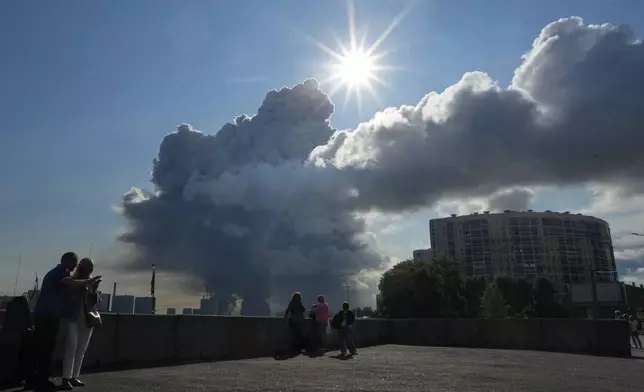
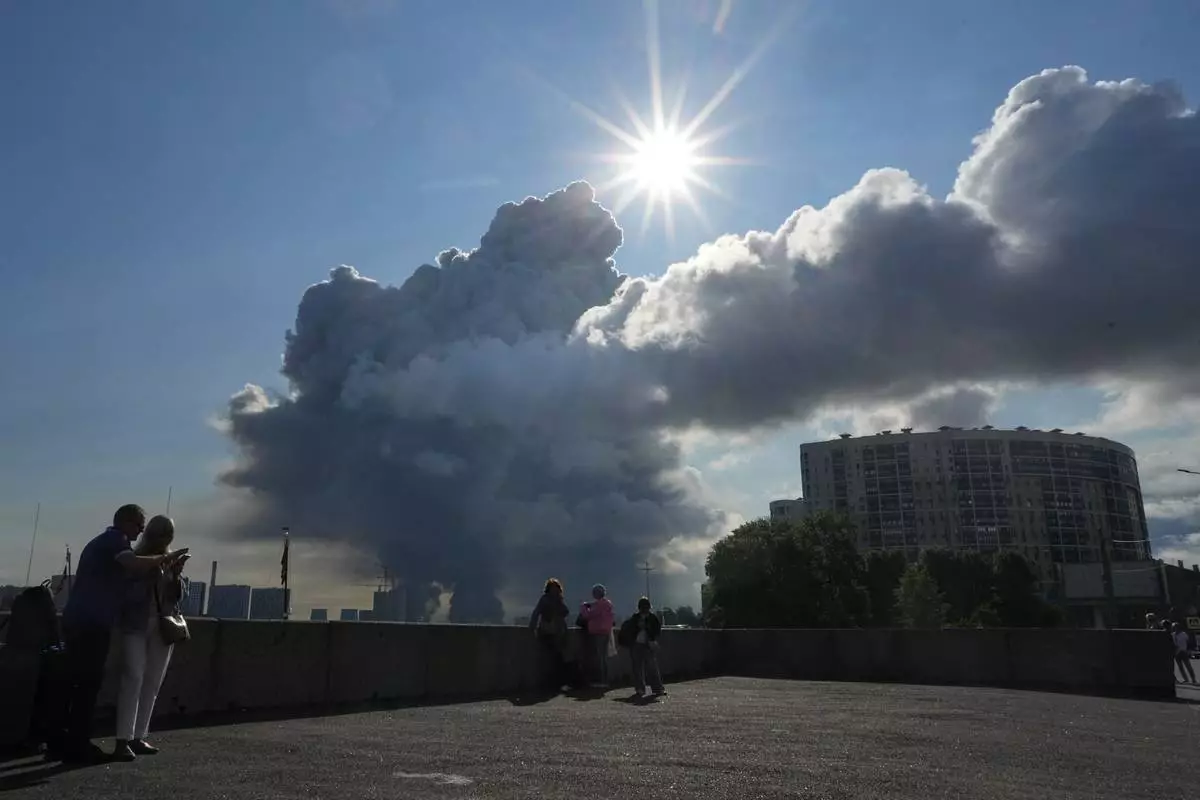
FILE - Smoke rises following a Ukrainian drone strike on a warehouse belonging to online retailer Wildberries, in St. Petersburg, Russia, on Friday, July 24, 2026. (UGC via AP, File)

FILE - Smoke rises following a Ukrainian drone strike on a warehouse belonging to online retailer Wildberries, in St. Petersburg, Russia, on Friday, July 24, 2026. (UGC via AP, File)

In this photo released by the Roscongress Foundation, Tatyana Kim, the owner of online retailer Wildberries, speaks on the sidelines of the Eastern Economic Forum in Vladivostok, Russia, on Saturday, Sept. 6, 2025. (Alexey Aleksandronok/Roscongress Foundation via AP)

In this photo released by the Roscongress Foundation, Tatyana Kim, the owner of online retailer Wildberries, speaks on the sidelines of the Eastern Economic Forum in Vladivostok, Russia, on Saturday, Sept. 6, 2025. (Alexey Aleksandronok/Roscongress Foundation via AP)

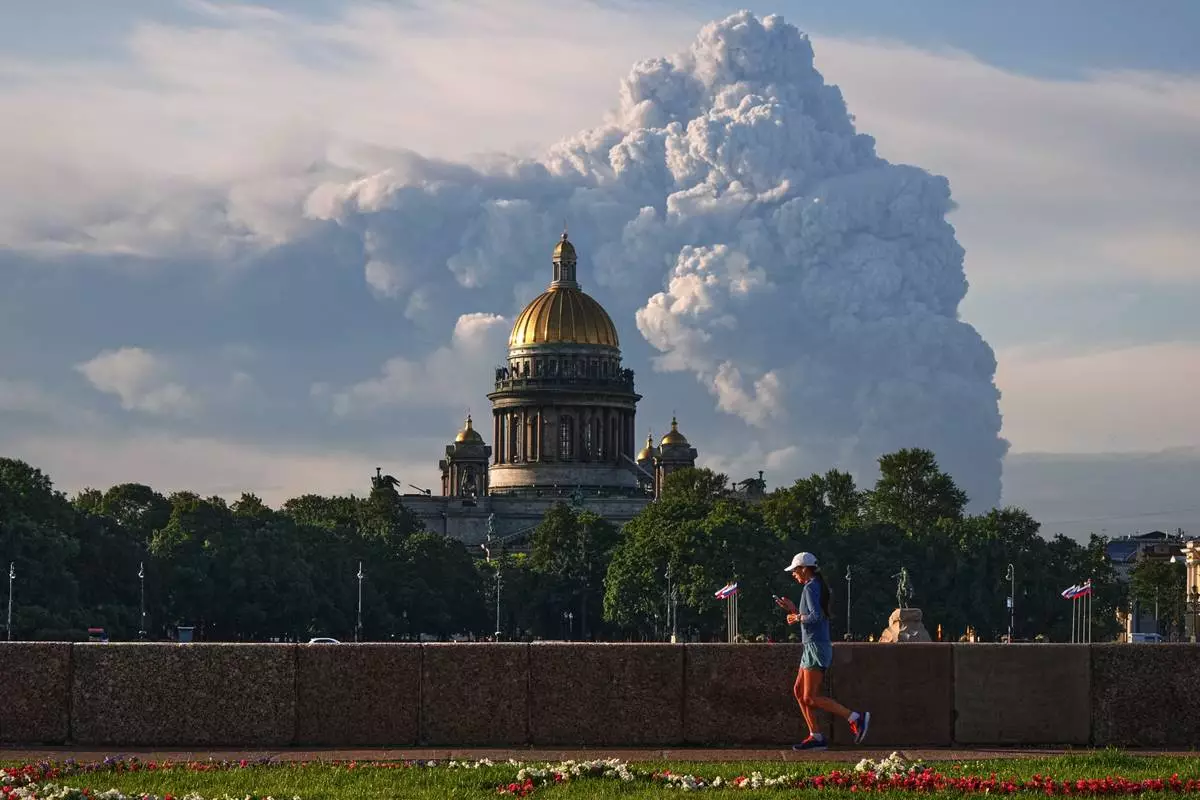
FILE - Smoke rises following a Ukrainian drone attack on a warehouse for online retailer Wildberries in St. Petersburg, Russia on Friday, July 24, 2026, with St. Isaac's Cathedral seen in foreground. (UGC via AP, File)

FILE - Smoke rises following a Ukrainian drone attack on a warehouse for online retailer Wildberries in St. Petersburg, Russia on Friday, July 24, 2026, with St. Isaac's Cathedral seen in foreground. (UGC via AP, File)

The attacks on about 20 Wildberries facilities have underlined Kyiv’s ability to strike far and wide inside Russia and posed a new challenge to President Vladimir Putin nearly 4½ years into his full-scale invasion of Ukraine.

They have badly shaken the empire built by Tatyana Kim, the country’s richest female entrepreneur, whose fortune has been estimated at $8.1 billion.

Hundreds of thousands of individual sellers have lost their merchandise, sending shock waves across Russia’s economy. Wildberries has drawn massive loans from VTB and other banks as it expanded and likely will have trouble repaying them, putting more pressure on the financial system.

Kim, 50, was born in Grozny, the capital of the province of Chechnya, to an ethnic Korean family of an engineer and a teacher. She launched Wildberries in 2004 from her Moscow apartment soon after giving birth to her first child while working as an English teacher.

“The idea was born from my own needs, and turned out to be needed by hundreds of thousands,” said Kim, now a mother of seven. “If a product or service makes your own life easier, you’re on the right track.”

Wildberries initially sold clothing before expanding to appliances, household items, cosmetics, books and more. The platform with its distinct purple logo has become an undisputed leader in e-commerce, accounting for about half of all online orders in Russia. Businesses big and small use it to store, ship and deliver merchandise across the country's 11 time zones.

An estimated 500,000 to 800,000 sellers use Wildberries, often described as Russia's Amazon. After Western brands fled following the war in Ukraine, online retailers filled the void with merchandise from China, Turkey, the United Arab Emirates and elsewhere.

The company also acquired a bank, expanded to tourism and even considered buying an airline.

In 2024, Kim divorced her husband, Vladislav Bakalchuk, triggering a fight for control of the company. Bakalchuk sought the support of Chechen leader Ramzan Kadyrov and his feared paramilitary forces but eventually lost the battle, which peaked in a shootout at a business center near the Kremlin that left two people dead and several wounded.

The company has prided itself on relying on about two dozen mammoth warehouses as the core of its vast logistical network stockpiling the goods before shipping to about 100,000 storefront distribution points nationwide.

Rival online retailers Ozon and Yandex Market use smaller depots spread over a wider network.

As Ukraine embarked on a strategy of using long-range drones to attack deep inside Russia, it has expanded from striking military bases, oil refineries and other infrastructure to Wildberries warehouses, which provided particularly soft targets.

Since the first attack July 18 in Elektrostal, just east of Moscow, and in the southwestern Tambov region, Wildberries depots burned one after another in massive fires that flooded social media.

The depots, some as big as 300,000 square meters (about 3.2 million square feet) were unprotected and easy to set ablaze. It took three days to extinguish the fire in the Elektrostal depot, the Moscow region's main hub.

“These are not military and high-value political targets, therefore they’re not especially secured, they’re not really built to be able to shrug off drone strikes,” said podcaster Mark Galeotti, a Russia expert who heads the Mayak Intelligence consultancy.

The strikes have stretched from the European part of Russia to Yekaterinburg, over 2,000 kilometers (about 1,250 miles) from Ukraine's border.

There's scarce public data, but some estimates indicate that up to 20% of the company's total warehouse space has been destroyed, with assessments of losses running as high as $6 billion.

Kim said Wildberries’ sites have been “reinforced and strengthened” defensively, but the attacks continued. Some warehouses suffered only minor damage, and Ukraine tried to hit them again.

Wildberries said it's rearranging supply chains to create “partner hubs” for storing merchandise — a long and challenging process, given its dependence on big depots.

Ukrainian officials have said Wildberries sells gear and technical components, including drones, to the military. Moscow denied it, but such dual-use items as drone components, flak jackets or thermal weapon sights remain available on the platform.

Mykhailo Podolyak, an adviser to Ukrainian President Volodymyr Zelenskyy, said the attacks were designed to disrupt military supplies, breed popular discontent and cause a domino effect in the Russian economy by putting stress on major banks, including VTB and Sberbank, that made massive loans to Wildberries.

Wildberries’ debts were estimated at the equivalent of about $15 billion at the end of 2025.

Russia's small and medium businesses already have been hit hard by tax increases, regulatory hurdles and, most recently, a fuel crisis from attacks on oil refineries.

The strikes on Wildberries have further exacerbated the business environment, said Chris Weafer, CEO of Macro-Advisory Ltd. Consultancy.

“I wouldn’t say it’s a nail in the coffin because we’re not there yet, but it’s certainly another enormous difficulty on top of what has already been a very difficult situation for small enterprises,” Weafer said.

Wildberries had recently changed its seller policy, exempting it from liability for stock damaged by a “force majeure” that includes drone attacks.

Kim pledged to support sellers with discounts on storage, free transfer of goods to other sites, discounted loans and other measures. Wildberries also issued some reimbursements but they covered only a fraction of the losses.

Russia’s Central Bank has asked lenders to restructure loans to small and medium businesses that lost merchandise.

Meanwhile, many owners of Wildberries pickup points face lost revenue amid the plunging deliveries. Some vented frustrations on social media about going out of business.

The lost goods mean tens of thousands of small businesses can't continue to operate, service their loans or pay taxes. Many are pleading for government support.

Galeotti said the strikes reflected Kyiv's effort to bring the war home to Russia.

“It’s not just about seeing great clouds of black smoke over your cities because of some oil refinery on the outskirts being hit," he said. "You might be a small business whose inventory has just gone up in smoke in one of the Wildberries’ warehouses. Or else you just simply might be an ordinary consumer who just suddenly is no longer going to get the goods that you plan to buy.”

Some analysts warn that instead of provoking discontent, the attacks could fuel stronger anti-Ukrainian and anti-Western fervor.

The Wildberries attacks have played into the hands of Russian hawks who urge escalating the war, said pro-Kremlin political expert Sergei Markov.

“It strengthens the view that it’s necessary to hit Europe,” he said. “And better sooner than later.”

Former President Dmitry Medvedev sought to stir up anger at Ukraine for trying to destroy an essential part of daily routine for millions.

“Our enemy is fighting not the Russian leadership or the army, but ordinary citizens,” he said.

A billboard advertising 10% off an order from online retailer Wildberries looms over a main street in Moscow, Russia, late Wednesday, Aug. 12, 2026. (AP Photo/Alexander Zemlianichenko)
A billboard advertising 10% off an order from online retailer Wildberries looms over a main street in Moscow, Russia, late Wednesday, Aug. 12, 2026. (AP Photo/Alexander Zemlianichenko)

FILE - A man carrying a package leaves a pickup point for online retailer Wildberries in Moscow on Wednesday, July 22, 2026. (AP Photo/Alexander Zemlianichenko, File)
FILE - A man carrying a package leaves a pickup point for online retailer Wildberries in Moscow on Wednesday, July 22, 2026. (AP Photo/Alexander Zemlianichenko, File)

FILE - Smoke rises following a Ukrainian drone strike on a warehouse belonging to online retailer Wildberries, in St. Petersburg, Russia, on Friday, July 24, 2026. (UGC via AP, File)

FILE - Smoke rises following a Ukrainian drone strike on a warehouse belonging to online retailer Wildberries, in St. Petersburg, Russia, on Friday, July 24, 2026. (UGC via AP, File)

In this photo released by the Roscongress Foundation, Tatyana Kim, the owner of online retailer Wildberries, speaks on the sidelines of the Eastern Economic Forum in Vladivostok, Russia, on Saturday, Sept. 6, 2025. (Alexey Aleksandronok/Roscongress Foundation via AP)
In this photo released by the Roscongress Foundation, Tatyana Kim, the owner of online retailer Wildberries, speaks on the sidelines of the Eastern Economic Forum in Vladivostok, Russia, on Saturday, Sept. 6, 2025. (Alexey Aleksandronok/Roscongress Foundation via AP)

FILE - Smoke rises following a Ukrainian drone attack on a warehouse for online retailer Wildberries in St. Petersburg, Russia on Friday, July 24, 2026, with St. Isaac's Cathedral seen in foreground. (UGC via AP, File)

FILE - Smoke rises following a Ukrainian drone attack on a warehouse for online retailer Wildberries in St. Petersburg, Russia on Friday, July 24, 2026, with St. Isaac's Cathedral seen in foreground. (UGC via AP, File)
KAMPONG PRAHOK, Cambodia (AP) — Sou Sreynich dreams of becoming a teacher. But she knows she's far behind.

The 13-year-old first entered a classroom at 10, an age when most Cambodian children already have been in school for years. Her mother waited until she was old enough to swim, fearing the boat to school could capsize — a decision familiar to many parents on Cambodia's Tonle Sap, the largest freshwater lake in Southeast Asia.

Now, the price of gasoline has spiked because of the Iran war, an additional burden. Unlike outright school closures during COVID-19, the Iran war’s impact on education is less visible. But it is falling first and hardest on the poorest families. Soaring fuel prices are making it more expensive for children and teachers to get to school, and for governments to fund education as national budgets come under strain.

On the lake, getting anywhere has always meant navigating the water. Climate change is making it harder, with increasingly unpredictable floods and droughts. Teachers at her school say 10 students have drowned over the years.

If the war continues, it could push up to 23.4 million more children like Sreynich into poverty by the end of the year, according to a recent United Nations Children’s Fund report. About 80% of those children would be in Africa and Asia.

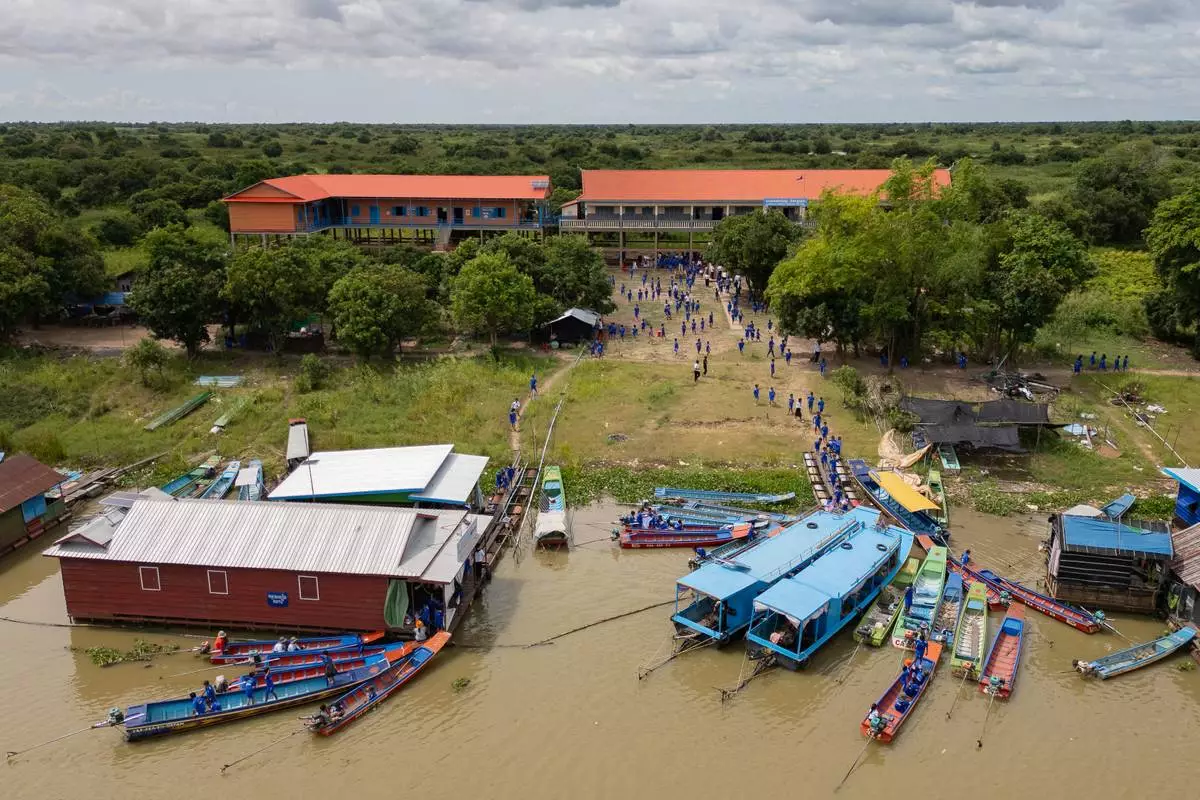
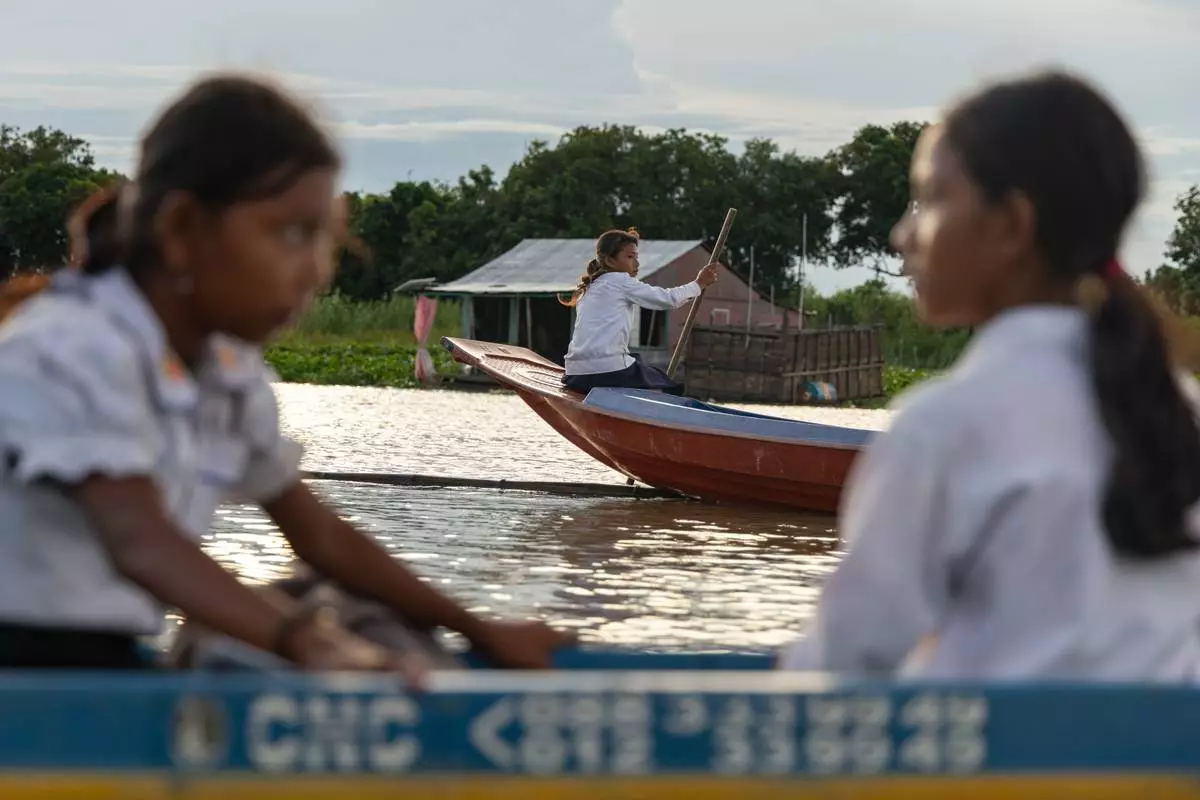
Most mornings, a gas-powered boat chugs through Kampong Prahok, steered by students often no older than those climbing aboard. They pull up alongside floating homes, as peers in crisp uniforms clamber aboard, careful to keep their backpacks dry.

Like most on Tonle Sap, Sreynich’s family relies on fishing to survive. They earn some money picking chili peppers and gutting fish for others. Rising fuel prices because of the Iran war mean the family can't afford to travel to deeper waters where fish are more plentiful.

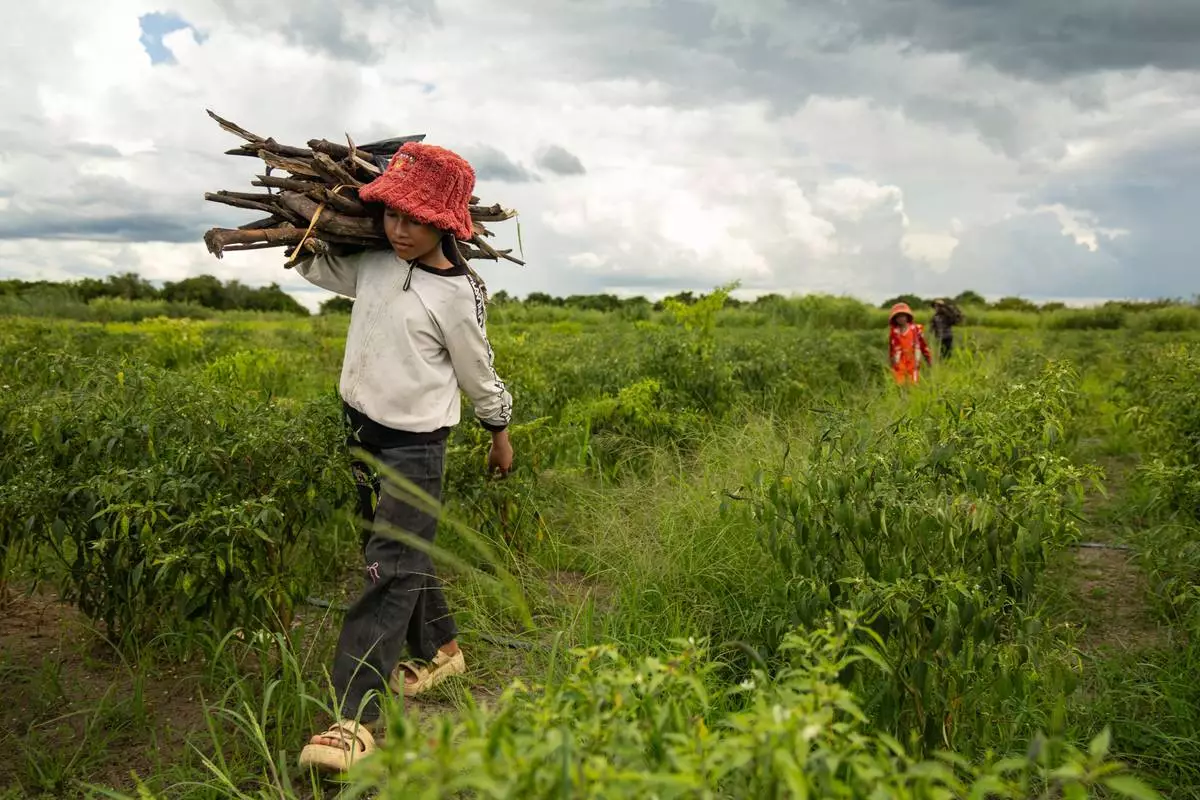
When money is tight, Sreynich skips a day or two of school to work alongside her parents. She dreads every absence. “I want to complete my studies,” she said.

For families already living on the edge, the war’s ripple effects are forcing difficult choices: whether to pay for food, fuel, rent and electricity, or keep every child in school.

“The Iran war is likely going to force millions of children out of school and could force millions of children to make the decision not to enroll in the first place,” said Sabrina Hervey of the Qatar-based Education Above All Foundation.

Some children in Southeast Asia are dropping out of school to work.

Ly, 16, and her sister Nhi, 13, two of nine children from a fishing family on Vietnam’s rocky northern coast, have long drifted in and out of school as the family struggled to make ends meet.

They are identified by their first names only because of Vietnamese laws protecting vulnerable minors.

Their father lost his fishing job after the war pushed diesel prices so high that boat owners could not afford to go out to sea. Already burdened by debt, the family was surviving on his odd jobs. It wasn't enough to keep all nine children fed and in school.

The girls dropped out of school and moved to Vietnam's capital Hanoi to work long hours in a restaurant, where they were exposed to sharp tools, hot surfaces and heavy lifting.

For 13-year-old Nhi it was also illegal because of child labor laws.

In April, the Hanoi-based nonprofit Blue Dragon Children’s Foundation intervened and the two returned to school.

The war's impact has unfolded slowly but is devastating, said Michael Brosowski with the foundation.

When families reach a financial breaking point, they tend to go into triage — keeping some children enrolled while pulling others out to work, he said. The children not in school are far more vulnerable to exploitation, trafficking and homelessness.

“It’s the tipping point for a lot of families,” Brosowski said.

Higher fuel prices are driving up costs of nearly every part of education, from getting students and teachers to school to stocking classrooms with pencils and chalk. It's more expensive for teachers and aid workers to reach remote communities. Governments are also grappling with rising food and energy bills, leaving less money for education.

In Cambodia, everything already costs more on Tonle Sap since supplies have to be brought in by boat.

“Even the electricity to run this lab is 10-times higher,” said Samphors Vorn of the nonprofit Aide et Action, which supports the school.

Developing countries reliant on imported energy have been the most exposed to disruptions from the war. Rising fertilizer costs and falling remittances also are straining these smaller economies.

The war is threatening years of progress in education and poverty reduction in Bangladesh, whose economy already was under strain.

Pressure on the government’s finances, driven by rising costs for fuel and subsidies, could leave it with less money to spend on health care and education, warned a report by the U.N. Development Programme.

In some South Asian nations, girls are likely to be affected more because families tend to prioritize sons, said Arshad Malik of the nonprofit Save the Children International. Economic hardships could mean more girls dropping out of school and an increase in child marriages, he said.

South Asia accounts for 45% of the world’s child brides, the highest share of any region, according to UNICEF.

More than 466 million children worldwide receive at least one meal a day at school, according to the U.N. World Food Programme. These meals help keep children in school, improve their ability to learn and concentrate, and support healthy brain development.

Such programs also could come under pressure as the conflict disrupts fertilizer shipments and raises transport costs, especially in countries in West and Central Africa that rely heavily on imported food, said Hervey, with Education Above All.

Across northern Nigeria, it is becoming more common for children to relapse into malnutrition, according to local health and aid workers.

“I’m really afraid to see what’s going to happen,” Hervey said.

The Associated Press’ climate and environmental coverage receives financial support from multiple private foundations. The AP is solely responsible for all content. Find AP’s standards for working with philanthropies, a list of supporters and funded coverage areas at AP.org.

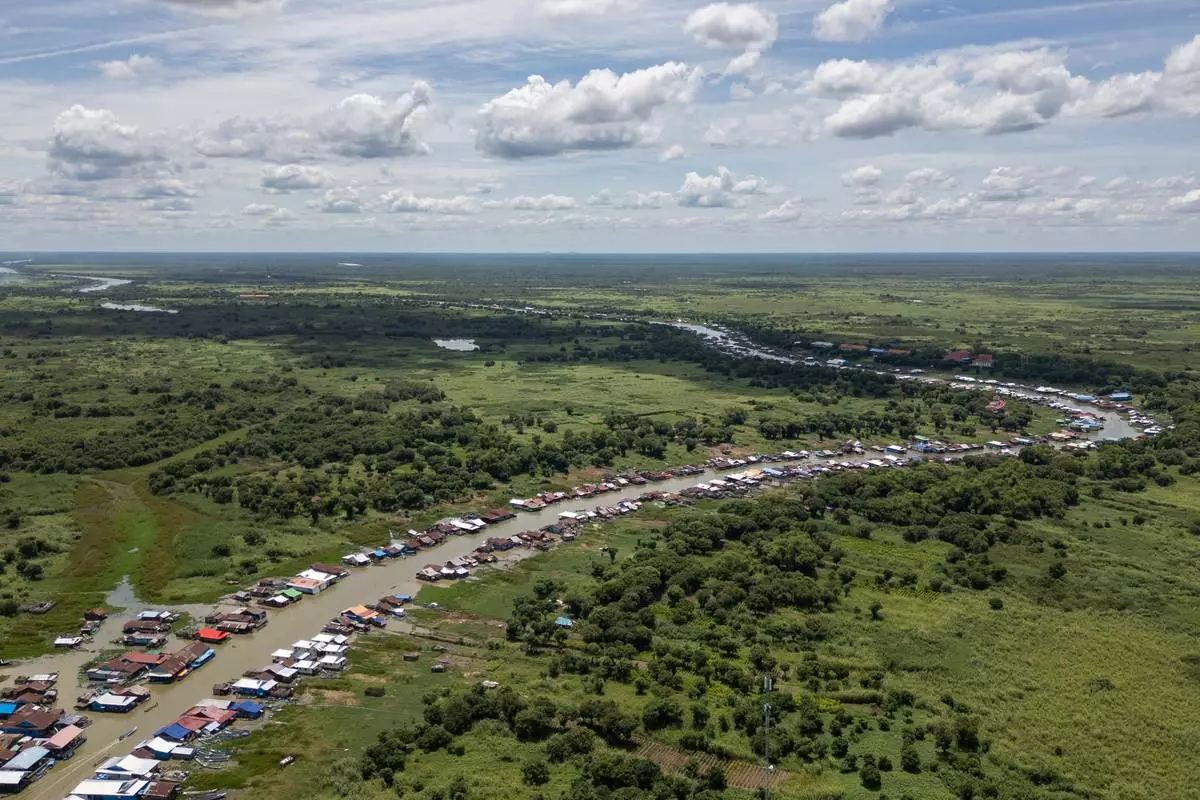
The floating village of Kampong Prahok on the Tonle Sap Lake, Cambodia, Monday, June 29, 2026. (AP Photo/Anton L. Delgado)

The floating village of Kampong Prahok on the Tonle Sap Lake, Cambodia, Monday, June 29, 2026. (AP Photo/Anton L. Delgado)

Students board school boats to return to their homes in a floating village on Cambodia's Tonle Sap Lake on Monday, June 29, 2026. (AP Photo/Anton L. Delgado)

Students board school boats to return to their homes in a floating village on Cambodia's Tonle Sap Lake on Monday, June 29, 2026. (AP Photo/Anton L. Delgado)

Sou Sreynich collects firewood with her family near their home in a floating village on Cambodia's Tonle Sap Lake on Monday, June 29, 2026. (AP Photo/Anton L. Delgado)

Sou Sreynich collects firewood with her family near their home in a floating village on Cambodia's Tonle Sap Lake on Monday, June 29, 2026. (AP Photo/Anton L. Delgado)

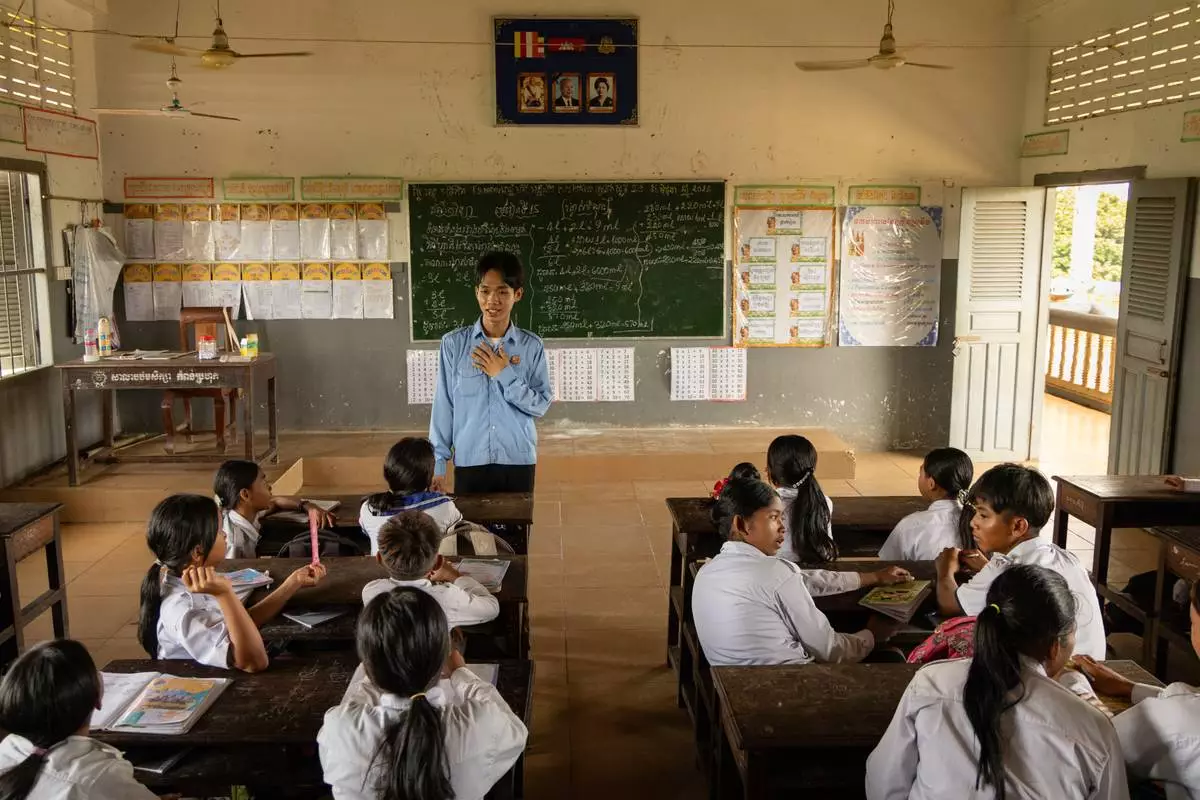
A teacher addresses students at a school in one of the floating villages of Cambodia's Tonle Sap Lake on Monday, June 29, 2026. (AP Photo/Anton L. Delgado)

A teacher addresses students at a school in one of the floating villages of Cambodia's Tonle Sap Lake on Monday, June 29, 2026. (AP Photo/Anton L. Delgado)

Students arrive at a school in a floating village on the Tonle Sap Lake, Cambodia, Tuesday, June 30, 2026. (AP Photo/Anton L. Delgado)

Students arrive at a school in a floating village on the Tonle Sap Lake, Cambodia, Tuesday, June 30, 2026. (AP Photo/Anton L. Delgado)

Recommended Articles