Skip to Content Facebook Feature Image

US stocks edge further from their record after oil prices rise

Business

US stocks edge further from their record after oil prices rise
Business

Business

US stocks edge further from their record after oil prices rise

2026-08-18 04:18 Last Updated At:11:42

NEWYORK (AP) — U.S. stocks edged further from their record heights on Monday after rising oil prices cranked up the pressure on inflation and financial markets.

The S&P 500 fell 0.5% but remains near its all-time high set Thursday. The Dow Jones Industrial Average dropped 272 points, or 0.5%, and the Nasdaq composite slipped 0.3%.

More Images
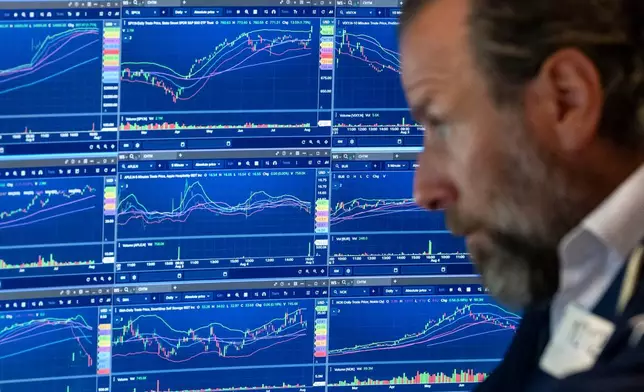
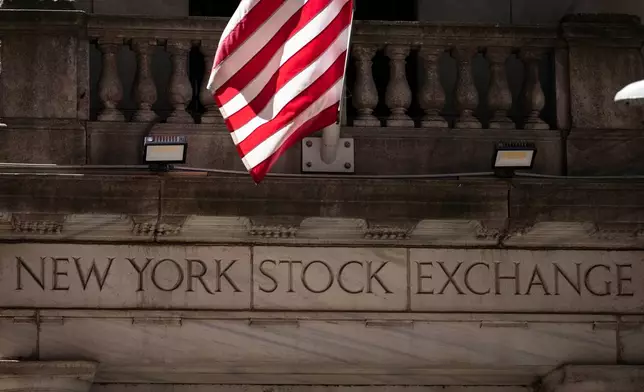
Specialist Michael Pistillo works on the floor of the New York Stock Exchange, Wednesday, Aug.. 5, 2026, in New York. (AP Photo/Yuki Iwamura)
Specialist Michael Pistillo works on the floor of the New York Stock Exchange, Wednesday, Aug.. 5, 2026, in New York. (AP Photo/Yuki Iwamura)

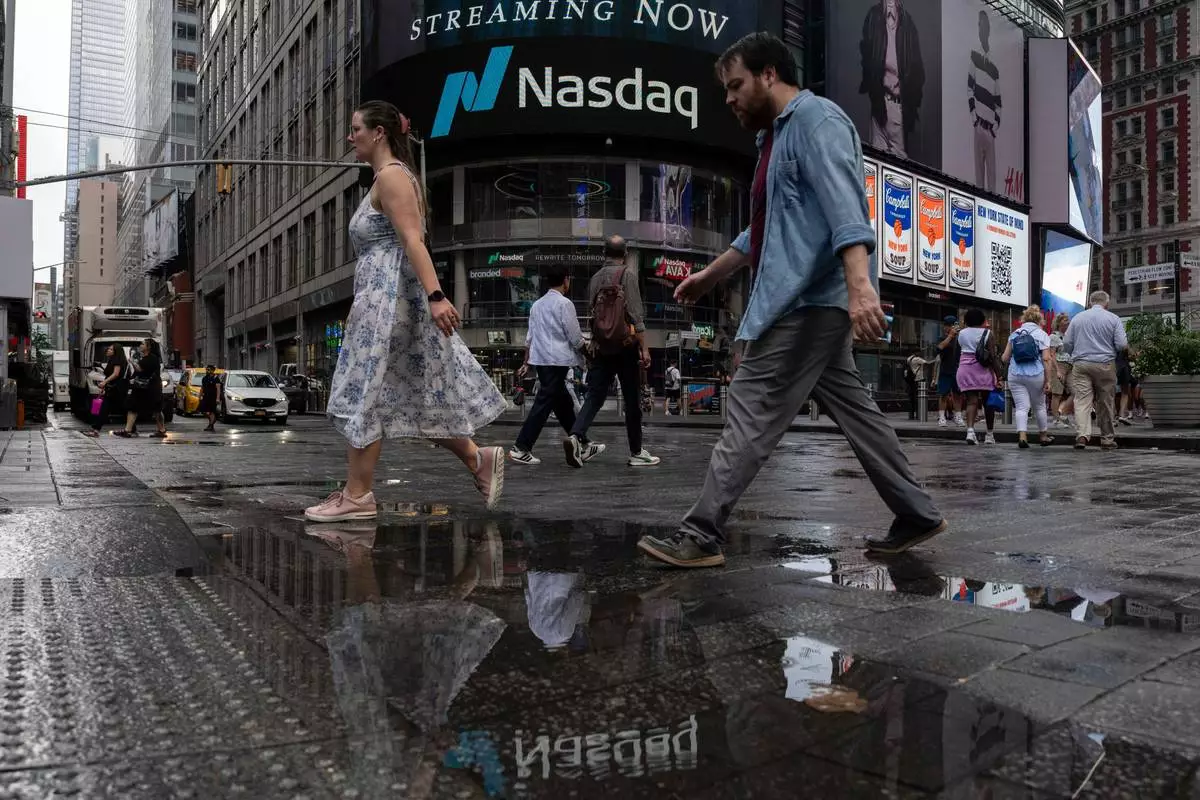
People walk past the Nasdaq MarketSite, Thursday, Aug. 6, 2026, in New York. (AP Photo/Yuki Iwamura)
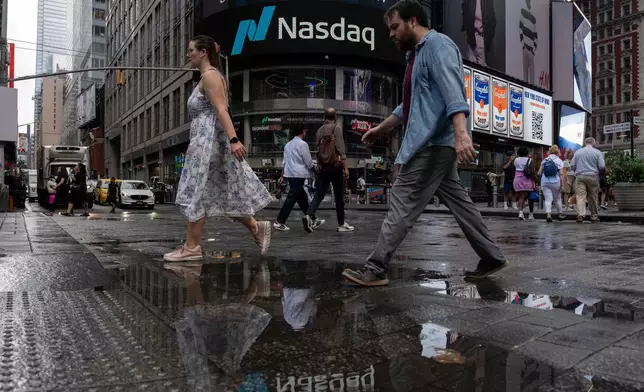
People walk past the Nasdaq MarketSite, Thursday, Aug. 6, 2026, in New York. (AP Photo/Yuki Iwamura)

A general view shows the New York Stock Exchange, Friday, Aug. 7, 2026, in New York. (AP Photo/Yuki Iwamura)

A general view shows the New York Stock Exchange, Friday, Aug. 7, 2026, in New York. (AP Photo/Yuki Iwamura)

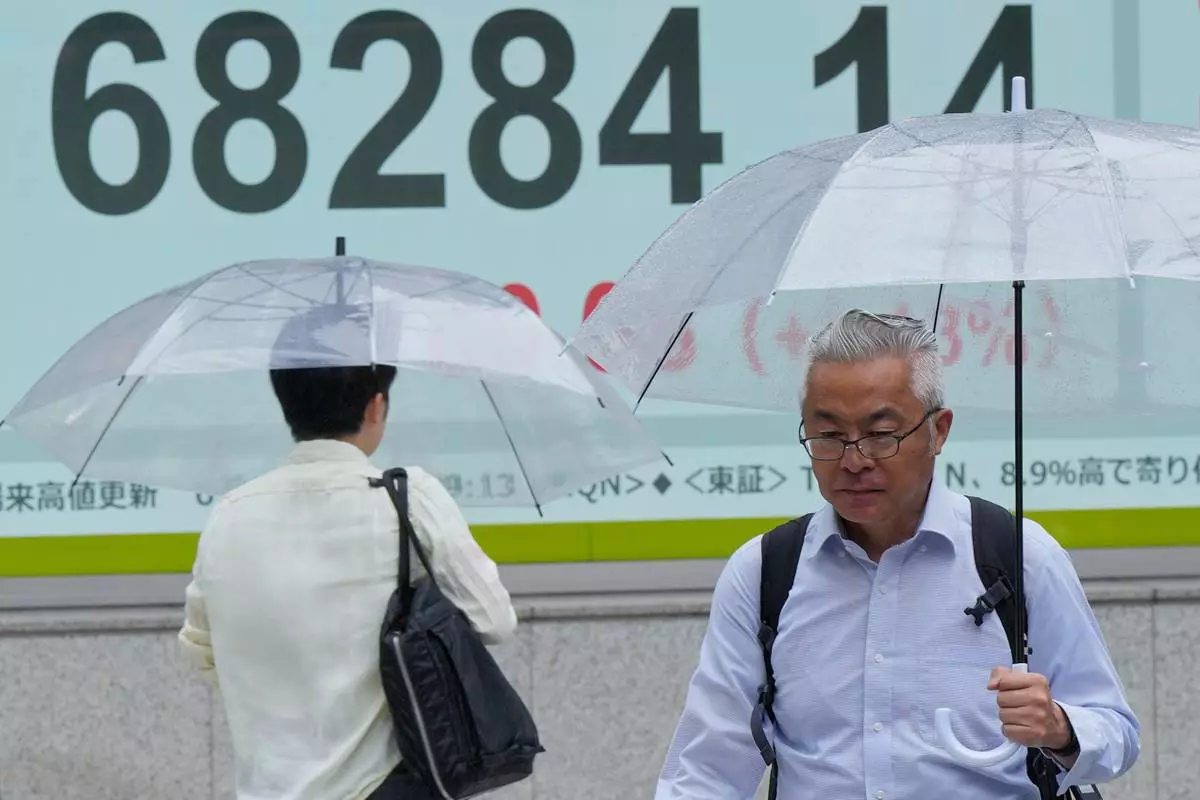
People walk in the rain near electronic stock board showing Japan's Nikkei index at a securities firm Thursday, Aug. 13, 2026, in Tokyo. (AP Photo/Eugene Hoshiko)
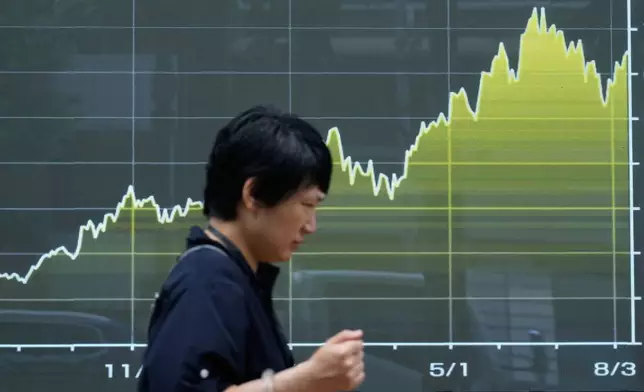
People walk in the rain near electronic stock board showing Japan's Nikkei index at a securities firm Thursday, Aug. 13, 2026, in Tokyo. (AP Photo/Eugene Hoshiko)

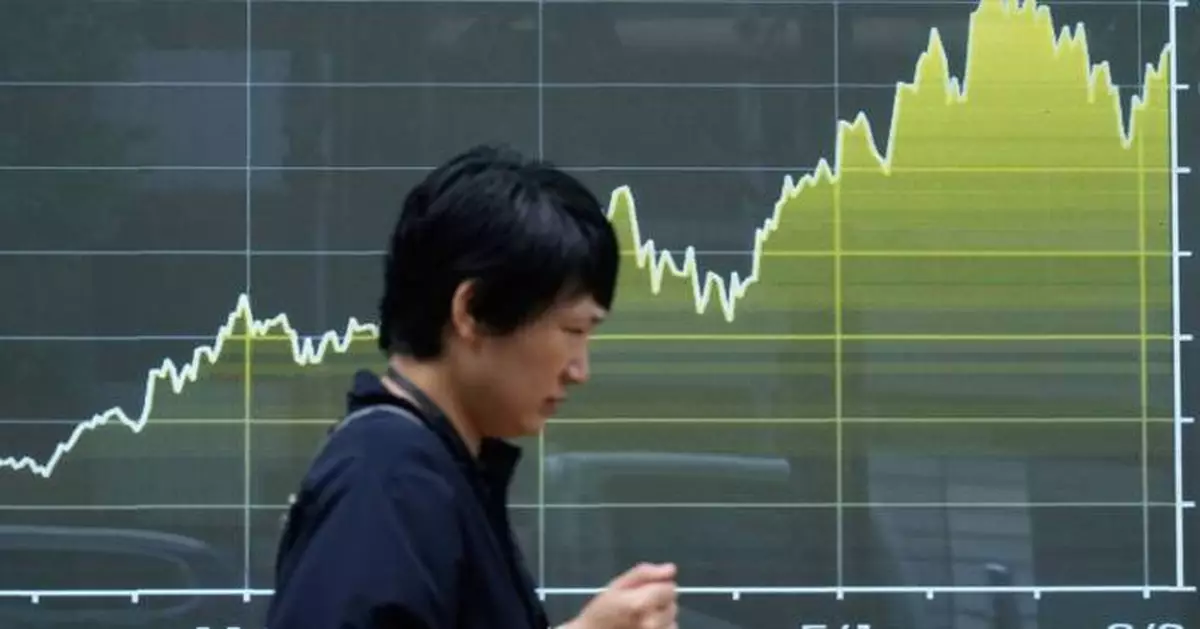
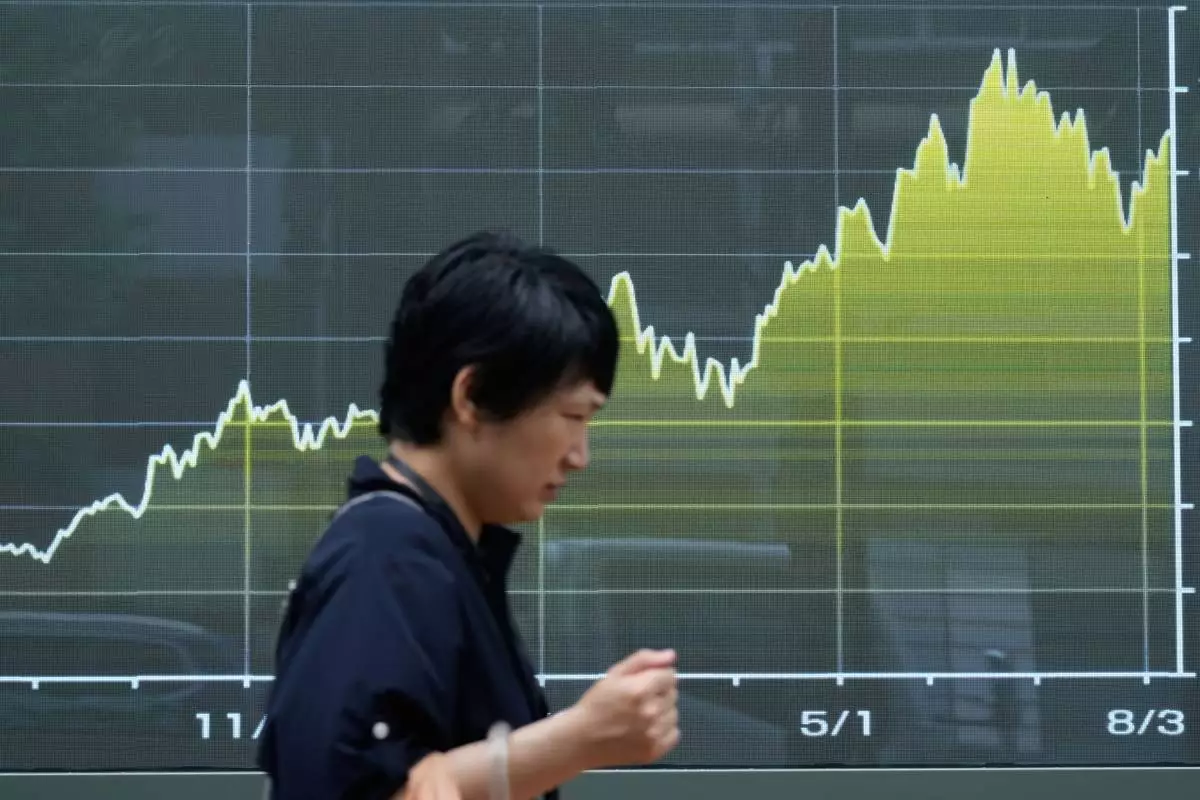
A person walk in front of an electronic stock chart board showing Japan's Nikkei index at a securities firm Thursday, Aug. 13, 2026, in Tokyo. (AP Photo/Eugene Hoshiko)

A person walk in front of an electronic stock chart board showing Japan's Nikkei index at a securities firm Thursday, Aug. 13, 2026, in Tokyo. (AP Photo/Eugene Hoshiko)

Wall Street’s losses solidified in the afternoon when oil prices accelerated upward. The price for a barrel of Brent crude, the international standard, rose 2.7% to $90.87.

It’s been careening back and forth because of uncertainty about what the war with Iran will do to the global flow of crude. Last month alone, Brent zigzagged between $72 and $102 as hopes rose and fell that the United States and Iran could reach a deal that would allow oil tankers to freely exit the Persian Gulf again.

Monday’s rally for oil prices sent Treasury yields in the bond market higher, which in turn raised the pressure on the economy and prices for all kinds of investments.

The yield on the 10-year Treasury climbed to 4.72% from 4.68% late Friday. It has shot up from just 3.97% before the war with Iran, largely because higher oil prices are worsening inflation and upping the probability that the Federal Reserve will have to hike interest rates.

Higher rates could keep a lid on inflation, but they do so by intentionally slowing the economy. The average long-term U.S. mortgage rate has already jumped near its highest level in a year because of the rise in the 10-year Treasury yield, though reports last week said that inflation in July was not as bad as earlier in the summer.

Usually around this time of year, anticipation is building on Wall Street to hear from the head of the Federal Reserve about where it may take interest rates. But the Fed’s new chairman, Kevin Warsh, may give little insight at this year’s economic symposium in Jackson Hole, Wyoming, at the end of this month, according to Thierry Wizman, a strategist at Macquarie Group

Warsh has been adamant about giving Wall Street less guidance about the Fed’s plans for interest rates.

Wall Street has run to records despite high inflation in large part because profits are booming for U.S. companies.

Those in the S&P 500 index are on track to deliver growth of roughly 50% for earnings per share in the spring from a year earlier, according to FactSet. That’s much better than analysts expected and would be the best since five years ago, when the economy was erupting out of the chasm created by the COVID pandemic.

Nearly all the companies in the S&P 500 have turned in their profit reports for the spring. Still to come are big retailers, including reports this week from Home Depot, Target and Walmart.

They’re facing pressure. Their customers’ incomes may be turning iffier after U.S. employers surprisingly cut more jobs last month than they added. At the same time, their customers are continuing to see bills rise quickly as inflation remains much higher than anyone would like.

A report last week said that shoppers surprisingly spent less at U.S. retailers last month than in June, and CEOs for retailers could give color this week on what they’re seeing.

On Wall Street, trading was relatively quiet Monday.

L3Harris Technologies fell 4.6% after the defense company said Christopher Kubasik stepped down as its CEO and chairman following “certain conduct by Kubasik that was not consistent with the values of the Company.” It gave few details but said the conduct was not related to its financial reporting, controls, customer relationships or operational performance.

Alphabet dipped 0.5% even though Berkshire Hathaway said it increased its investment in Google’s parent company, along with several homebuilders. Berkshire built a reputation for buying stocks at affordable prices under its former CEO, famed investor Warren Buffett.

Constellation Brands fell 6.2% after Berkshire said it sold all its holdings in the seller of Modelo beer and Robert Mondavi wine.

All told, the S&P 500 fell 40.70 points to 7,745.06. The Dow Jones Industrial Average dropped 272.63 to 53,459.78, and the Nasdaq composite slipped 84.25 to 26,644.91.

In stock markets abroad, indexes dipped in Europe following a stronger finish in Asia.

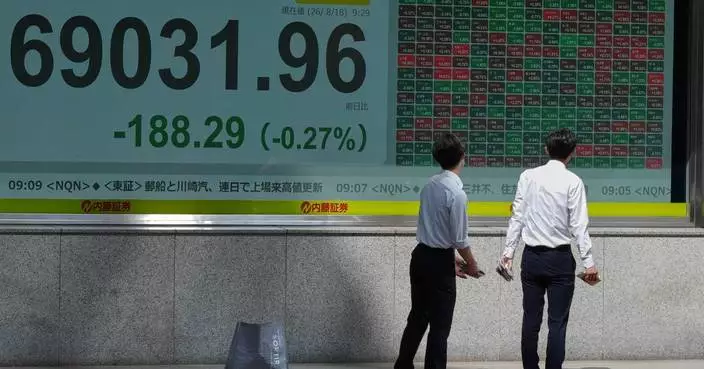
Tokyo’s Nikkei 225 rose 0.7% after a report said Japan’s economy grew at a slower pace in the April-June quarter than economists expected. Indexes jumped 1.3% in Hong Kong and 1.4% in Shanghai for some of the world’s biggest moves.

AP Business Writers Yuri Kageyama and Michelle Champan contributed to this report.

Earlier versions of this story incorrectly reported that Japan’s economy grew slightly faster than expected in the April-June quarter.
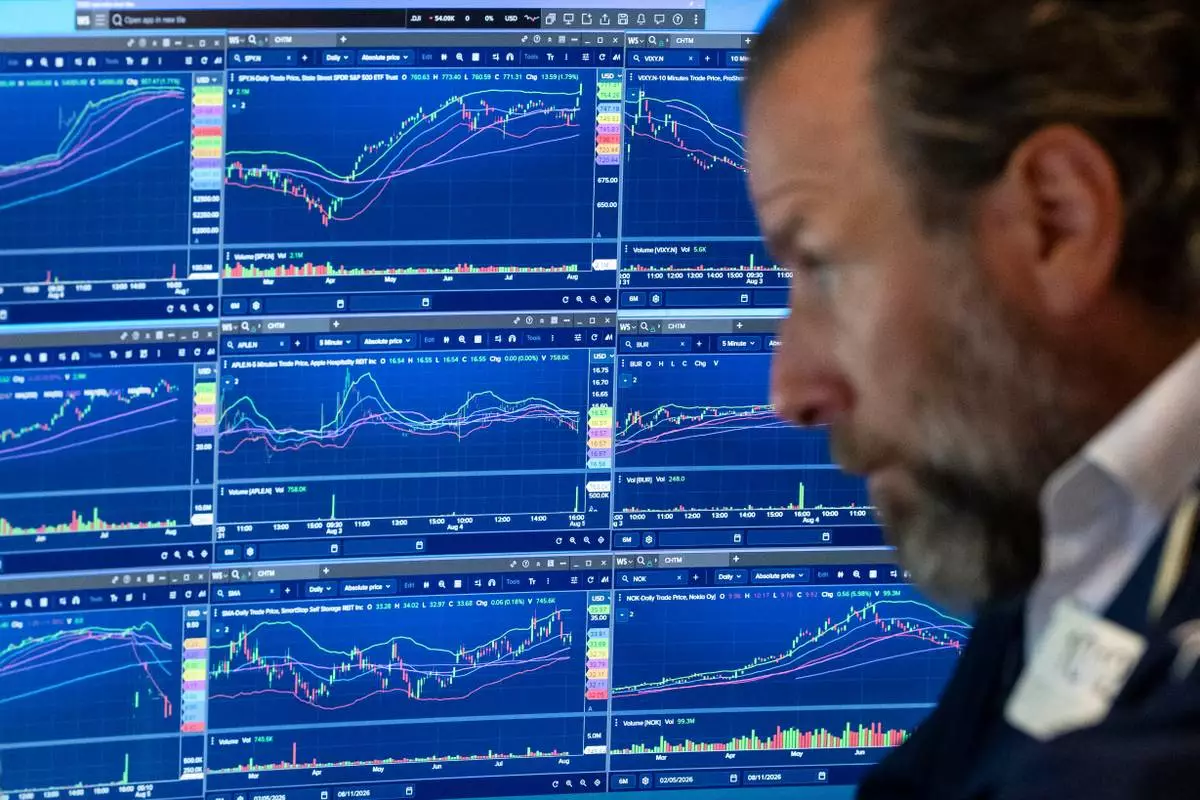
Specialist Michael Pistillo works on the floor of the New York Stock Exchange, Wednesday, Aug.. 5, 2026, in New York. (AP Photo/Yuki Iwamura)
Specialist Michael Pistillo works on the floor of the New York Stock Exchange, Wednesday, Aug.. 5, 2026, in New York. (AP Photo/Yuki Iwamura)

People walk past the Nasdaq MarketSite, Thursday, Aug. 6, 2026, in New York. (AP Photo/Yuki Iwamura)
People walk past the Nasdaq MarketSite, Thursday, Aug. 6, 2026, in New York. (AP Photo/Yuki Iwamura)

A general view shows the New York Stock Exchange, Friday, Aug. 7, 2026, in New York. (AP Photo/Yuki Iwamura)
A general view shows the New York Stock Exchange, Friday, Aug. 7, 2026, in New York. (AP Photo/Yuki Iwamura)

People walk in the rain near electronic stock board showing Japan's Nikkei index at a securities firm Thursday, Aug. 13, 2026, in Tokyo. (AP Photo/Eugene Hoshiko)
People walk in the rain near electronic stock board showing Japan's Nikkei index at a securities firm Thursday, Aug. 13, 2026, in Tokyo. (AP Photo/Eugene Hoshiko)

A person walk in front of an electronic stock chart board showing Japan's Nikkei index at a securities firm Thursday, Aug. 13, 2026, in Tokyo. (AP Photo/Eugene Hoshiko)

A person walk in front of an electronic stock chart board showing Japan's Nikkei index at a securities firm Thursday, Aug. 13, 2026, in Tokyo. (AP Photo/Eugene Hoshiko)
U.S. President Donald Trump said Tuesday the U.S. has no talks planned with Iran but insisted the Strait of Hormuz remains “open and operating,” despite limited traffic and a reported strike on a ship exiting the waterway.

Earlier this week, Trump also threatened to bomb Oman as the country sought a deal with Iran to manage shipping traffic through the strait, two regional officials said Tuesday, a day after Trump leveled the threat. Iran says the waterway will not be reopened until the U.S. meets its conditions.

As talks between Iran and Oman continue, a projectile hit a ship in the strait and Iran-backed Houthi rebels claimed they fired drones at an oil refinery in Saudi Arabia.

Here’s a look at the latest developments Tuesday in the Iran war and the wider Middle East. Full coverage can be found here.

As Oman and Iran say they are nearing a deal to reopen the Strait of Hormuz, Trump said on social media Tuesday that the U.S. blockade of Iranian ports remains “in full force and effect,” and asserted that all water mines have been removed.

Trump posted a map depicting the strait as U.S. territory.

Iranian Deputy Foreign Minister Kazem Gharibabadi appeared to respond to Trump’s post.

“Just as Trump correctly wrote the name of the eternal Persian Gulf, soon his delusion regarding the Strait of Hormuz will either be corrected or we will correct the delusions of this deluded man," he wrote on X.

The Trump administration has told Oman it opposes parts of the yet-to-be-announced deal, according to officials briefed on the U.S. position. Those include joint Iranian and Omani management of the passage's exit route and the collection of voluntary fees from vessels, even if the money is used for security and maritime environmental protection.

The officials spoke on condition of anonymity because they were not authorized to talk to journalists.

The White House on Tuesday referred to Trump’s remarks in the Oval Office and declined to comment further about Oman.

— By Samy Magdy in Cairo

The Egyptian Foreign Ministry said Tuesday that the Iranian-Omani deal could pave the way for Washington and Tehran to return to negotiations for a “comprehensive and permanent deal that addresses all concerns and enhances regional security and stability.”

The statement came after a meeting between Egyptian Foreign Minister Badr Abdelatty and Omani counterpart Badr al-Busaidi. But it did not address Trump’s latest threat against Oman.

The 60-day negotiating period ended this week between the U.S. and Iran with no clear end to the war in sight.

Ship traffic through the Strait of Hormuz dropped significantly last week with confirmed crossings falling 19.5% to 95 transits. Only three vessels made it through the waterway on Sunday, according to shipping data platform Kpler.

The ships used the Iranian-designated route, with no crossings recorded through the Omani routes.

Crossings through the Bab el-Mandeb Strait increased 6.7% to 254 transits, while so-called dark transits, in which ships turn off the transponders that broadcast their location, fell from 40 to 16, Kpler said.

An unidentified projectile damaged the engine room of a ship in the Strait of Hormuz near Oman and “resulted in a crew casualty," according to the British military’s UK Maritime Trade Operations center.

The maritime monitoring agency did not release any details about the ship or its cargo, and it was not clear whether the crew member was killed or wounded.

No environmental damage has been reported and the agency said the Omani Coast Guard was assisting other crew members and authorities were investigating.

Yemen’s Iran-backed Houthi rebels claimed they fired drones at an oil refinery in neighboring Saudi Arabia, the latest attack threatening to reignite Yemen’s civil war and open another front in the Middle East.

The attack targeted a facility run by Saudi Aramco, Saudi Arabia’s state-owned oil company, according to a report by the Houthi-run SABA news agency. There were no immediate reports of damage or comment from Saudi Arabia.

The Houthis have escalated attacks against government forces in Yemen and oil facilities in Saudi Arabia, which supports the Yemeni government, and the kingdom’s shipping in the Red Sea, an important alternative to the Strait of Hormuz.

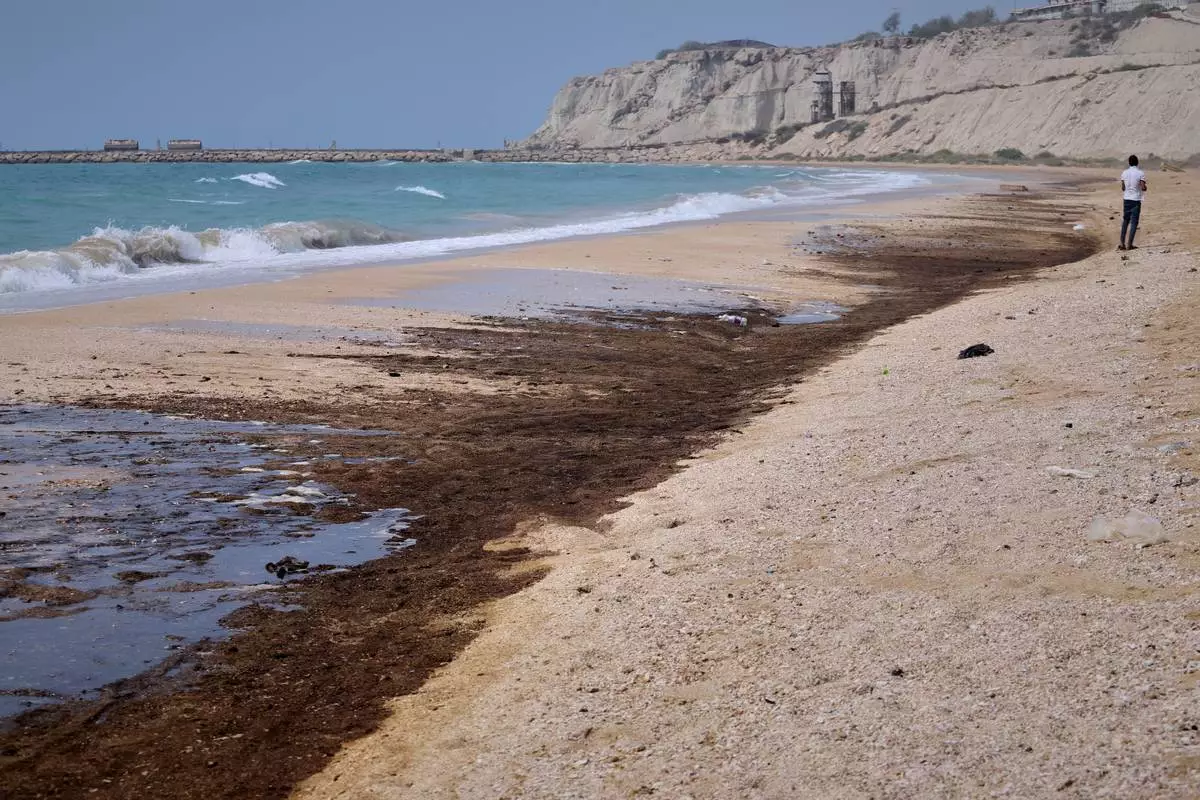
Dark oil residue covers parts of the shoreline at Shib Deraz Beach on Qeshm Island, Iran, Thursday, Aug. 13, 2026, amid ongoing wartime attacks on vessels and infrastructure in and around the Strait of Hormuz, though the spill’s source has not been independently determined. (Amirhosein Khorgooei/ISNA)

Dark oil residue covers parts of the shoreline at Shib Deraz Beach on Qeshm Island, Iran, Thursday, Aug. 13, 2026, amid ongoing wartime attacks on vessels and infrastructure in and around the Strait of Hormuz, though the spill’s source has not been independently determined. (Amirhosein Khorgooei/ISNA)

Recommended Articles