China has made steady progress on a number of key railway projects as investment in railway construction continued to expand in 2026, propelling regional economic and social development, the national railway operator said on Monday.
Fixed-asset investment in the railway sector totaled 440.6 billion yuan (about 65 billion U.S. dollars) in the first seven months of the year, up 1.8 percent year on year, according to China State Railway Group.
Major recent projects have focused on easing travel between nearby cities and within metropolitan clusters, making daily commutes more feasible.
In south China, a landmark project was the opening of Foshan Station on the Guangzhou-Zhanjiang high-speed railway in Guangdong Province. The stop enables a 20-minute daily commute for thousands of passengers who previously had to drive over an hour each way between the neighboring cities of Foshan and Guangzhou.
Another achievement was the full-line testing on the Xi'an-Ankang high-speed railway in northwest China. Traversing the Qinling Mountains, the line will slash the previous three-hour distance to just one hour between the two cities in northwestern China's Shaanxi, making a daily commute feasible.
The railway operator said it will continue to advance major railway projects and enhance the quality and efficiency of railway investment to support China's high-quality development.
China has built the world's largest high-speed railway network. By the end of 2025, the country's total operating railway mileage had reached 165,000 km, including more than 50,000 km of high-speed rail.
The State Railway Group noted that the country's operational railway mileage is expected to reach 180,000 km by 2030, including about 60,000 km of high-speed rail.
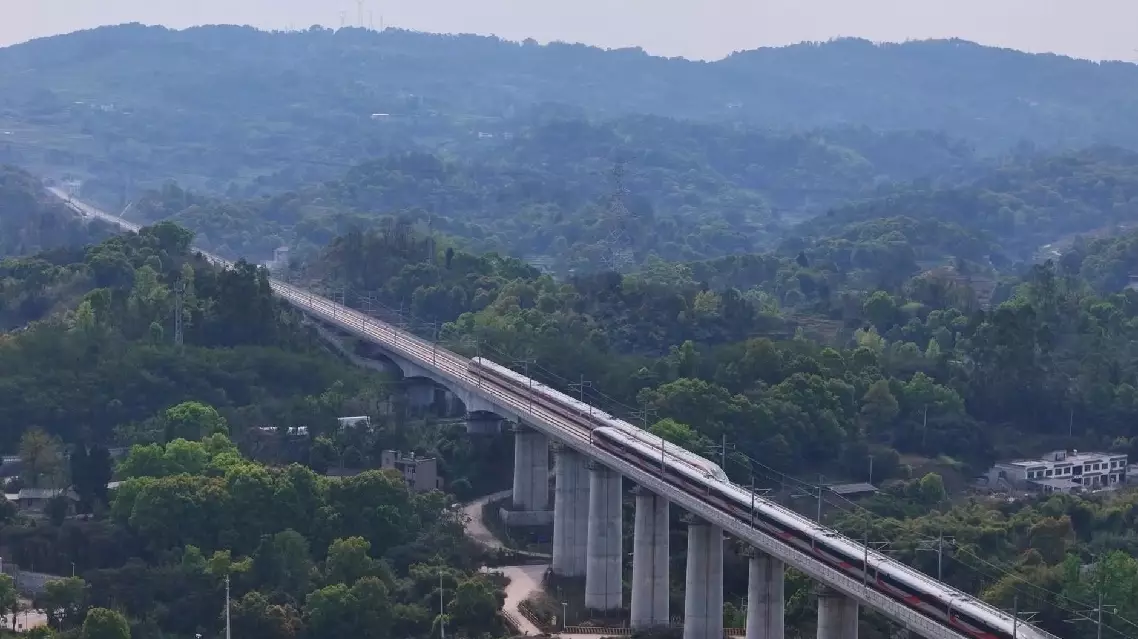
China's railway investment ticks up in first seven months as key projects progress
Fishermen in south China's tropical island province of Hainan set sail for fishing in the South China Sea on Sunday, following the conclusion of the annual three-and-a-half-month summer fishing moratorium.
The annual seasonal ban, which ran from May 1 to August 16, is intended to protect fishery stocks by restricting commercial fishing across designated waters.
In Sansha City, fishing vessels from various islands and reefs set out for fishing operations in the South China Sea, with 18 newly-added fishery support vessels, which will work alongside the fishing fleet to extend operating time at sea, reduce costs, and improve overall fishing efficiency.
The waters around Sansha are rich in grouper, tuna and other fish species. The fishing vessels will operate within 30 nautical miles (55 kilometers) of Beidao Island -- a small coral island located in the Qilianyu archipelago of Sansha City, with the first batch expected to return after about 15 days at sea. Once landed, fresh catches from the South China Sea will be transported through a cold-chain distribution network to markets across the country.
"In the new fishing season, my biggest wish is for calm seas and safe voyages, and for our boats to return with good catches every time," said Huang Yaojian, a fisherman from the Lingyang Reef.
"All vessel inspections have been completed, our fishing gear is ready, and all safety checks have been carried out thoroughly," said Luo Xiaoqin, a crew member of Sansha Xisha Fishery Fishing Co., Ltd.
Fishing operations officially commenced at noon in Danzhou, another city in Hainan, with a cerenomy at the Baimajing Central Fishing Port.
"We hope for a good catch. We are prepared for this voyage," said Fu Yingzhao, a fisherman.
Meanwhile, at the Tanmen Central Fishing Port in Qionghai City, multiple large and medium-sized fishing vessels managed to depart in an orderly fashion. A total of 1,081 fishing vessels from Qionghai set sail this year.
"Next, we will keep monitoring the weather changes at sea and vessel movements, strengthen supervision over fishing vessels at sea, and ensure their safety," said Li Yuezhou, an official from the Qionghai Municipal Bureau of Agriculture and Rural Affairs.
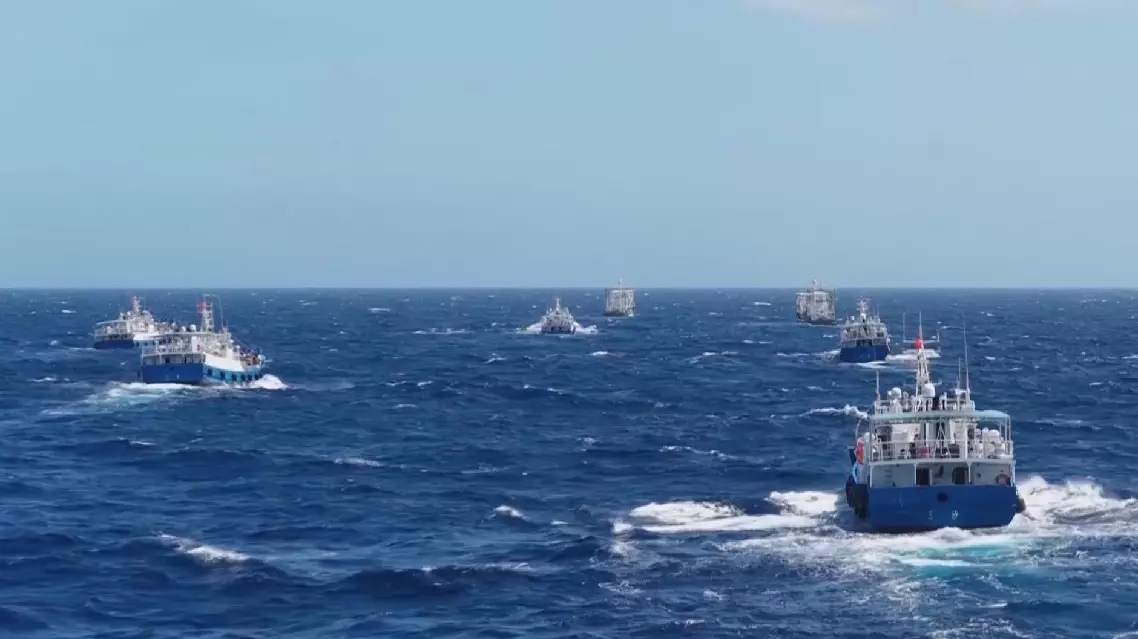
Fishermen in south China's Hainan set sail after summer moratorium ends