The Kinastra-1 Upper Stage, independently developed by CAS Space, a leading Chinese commercial space company, has undergone a series of dynamical system tests, and is expected to make its maiden flight in the first quarter of next year.
An upper stage is usually installed between a rocket and the spacecraft it carries. After the rocket sends the spacecraft into space, it will depend on the upper stage to complete the entry-into-orbit work.
After months of tests, the Kinastra-1 Upper Stage has cumulatively completed an engine ignition test of 5,211 seconds, signifying that it has met the conditions for entering the stage of flight tests.
"After the rocket sends it to the starting point in space, the upper stage will take over the flight mission to specifically transport satellite payloads between orbits, sending the satellites to designated points one by one, and then unloading them," said Yang Haoliang, chief designer of the Kinastra-1 Upper Stage.
In addition, the upper stage can distribute multiple satellites to different orbits in a single launch, and the satellites do not need to consume fuel to climb into orbits, which can extend their in-orbit lifespan.
In the future, it can be used in conjunction with multiple types of rockets such as the Kinetica-2.
"The Kinetica-2 rocket, if paired with the Kinastra-1 Upper Stage, will greatly enrich rocket missions and make it possible for private medium and large-sized rockets to carry out deep space exploration. The combination can also undertake customized launch missions for special orbits, meeting the demands of the vast majority of commercial satellite launches, and at the same time has the capability to participate in major national space engineering applications," Yang said.
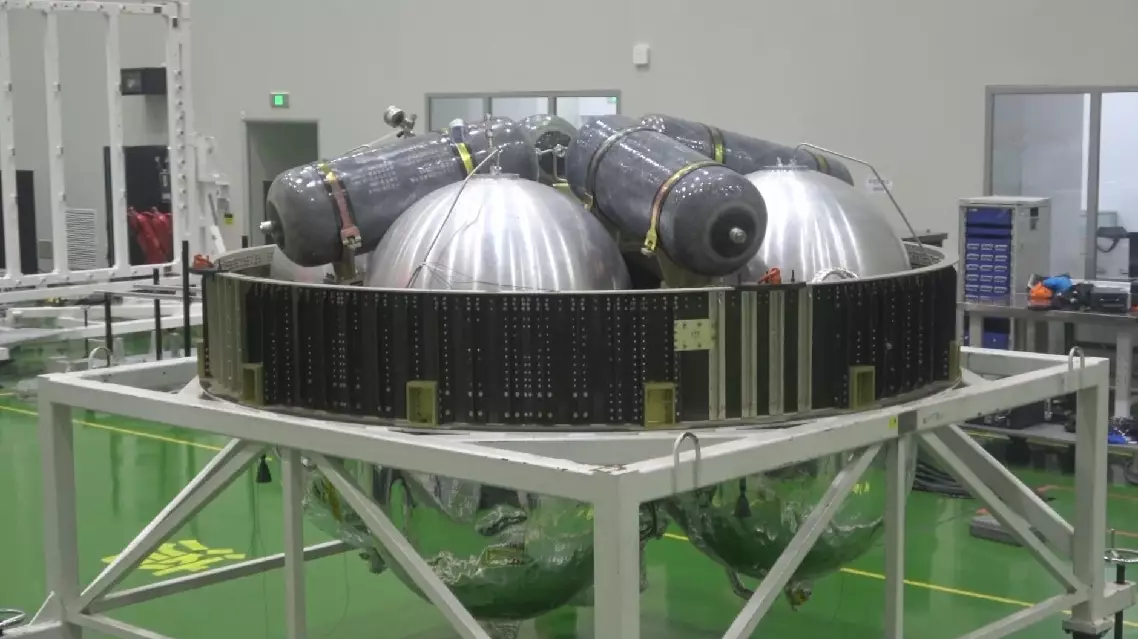
China's Kinastra-1 Upper Stage expected to make maiden flight next year