
RAMALLAH, West Bank (AP) — The Palestinian American whose home in the occupied West Bank has been besieged for more than a week confronted Israeli settlers on Tuesday and demanded Israeli forces remove them from his property.
But on his first day back at his home in the village of Qusra, Loui Ridi was ultimately told to go back inside because the area was a closed military zone.
Click to Gallery
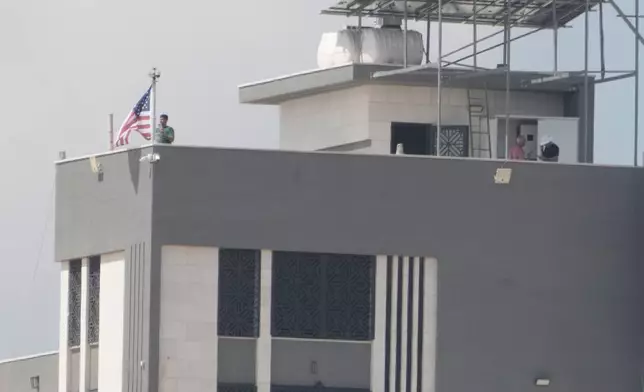
Ohio-based Palestinian-American landlord Loui Ridi, raised the American flag on the roof of his house that is besieged by Israeli settlers for over a week, in the occupied West Bank village of Qusra, south of Nablus, Tuesday, Aug. 18, 2026. (AP Photo/Majdi Mohammed)
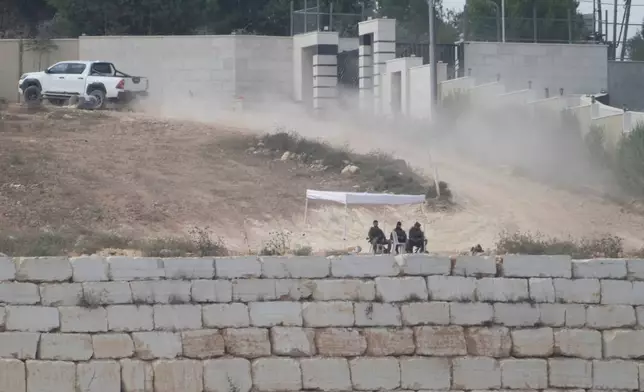
Israeli soldiers sit under a tent in front of the house of Ohio-based Palestinian-American landlord Loui Ridi, that is besieged by Israeli settlers for over a week, in the occupied West Bank village of Qusra, south of Nablus, Tuesday, Aug. 18, 2026. (AP Photo/Majdi Mohammed)
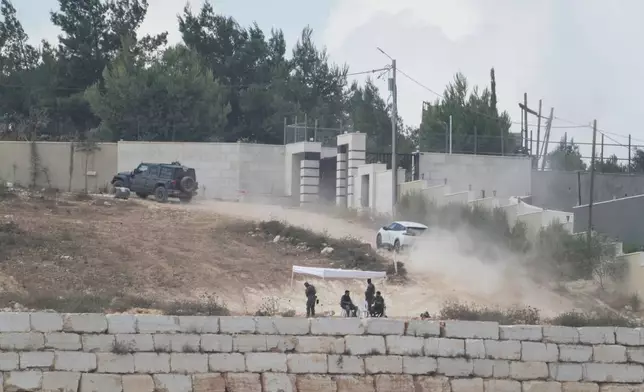
Israeli soldiers sit under a tent in front of the house of Ohio-based Palestinian-American landlord Loui Ridi, that is besieged by Israeli settlers for over a week, in the occupied West Bank village of Qusra, south of Nablus, Tuesday, Aug. 18, 2026. (AP Photo/Majdi Mohammed)

Loui Ridi, an Ohio-based Palestinian-American landlord of one of the homes besieged by Israeli settlers for over a week, arrives at his parent's home upon his return from the U.S., in the occupied West Bank village of Qusra, south of Nablus, Monday, Aug. 17, 2026. (AP Photo/Majdi Mohammed)
Israeli soldiers asked the settlers to leave the area as well, but Ridi said he saw at least three settlers close enough to return and threaten his family if the army leaves.
“If I need to walk outside of my house, I’m not able. I have to get a permission and coordination and it’s going to take hours if it’s even possible to leave,” Ridi said.
Ridi yelled at one of the settlers to get off his property and pleaded with the soldiers to remove them, according to video he shared with The Associated Press. He told the settler that he wasn’t allowed to be there and called him a terrorist.
The soldiers who told Ridi to get back inside his home also pleaded with settlers to leave peacefully.
For Ridi, the exchange extinguished any sense of victory remaining after he managed, with the aid of a military escort, to enter his home on Monday. He said the encounter epitomized how the army has been unable or unwilling to clear the area of settlers.
“As soon as (Israeli soldiers) leave — like if they leave today — probably on the same day or a couple hours later, the settlers may come back and build the same tent in front of my house,” he said.
Some 2.8 million Palestinians live under Israeli military rule in the West Bank, with the Palestinian Authority exercising limited autonomy in population centers. Roughly 560,000 Israeli settlers who live in a growing number of communities and farming outposts across the territory. Emboldened by Prime Minister Benjamin Netanyahu’s right-wing government, extremist settlers have routinely attacked villages and set homes, cars and mosques ablaze in the occupied West Bank this year.
The international community largely considers Israeli settlements to be illegal and obstacles to peace.
Few episodes garner as much international attention as the siege in Qusra. However, settlers have staged takeovers of other Palestinian homes in the occupied West Bank. In the neighboring village of Jalud, settlers surrounded a home last month and prevented Palestinians from entering or exiting until they decided to escape and not come back.
Palestinian officials report 87 Palestinians have been killed by Israeli settlers or soldiers this year. Three Israelis have been killed including two in a nearby clash last month.
Much like in Qusra, violent settlers rarely face arrest by Israeli police or prosecution in Israeli courts.
Ridi, a 46-year-old who lives with his family in Ohio but has a second home in the Qusra, arrived on Monday, climbing his stairs and raising an American flag on his roof.
The United States — Israel’s closest ally — has condemned the ongoing siege in Qusra, now in its tenth day. President Donald Trump has said he opposes Israeli efforts to annex the West Bank but signaled broad acceptance of settlements and, at the start of his second term, lifted sanctions on settlers accused of violence.
Ridi said he can’t go out to buy groceries without permission and has asked U.S. officials to help guarantee he can bring supplies back to his home in the closed military zone on Qusra's outskirts.
Ridi said he slept for four hours in a room where he kept the shutters closed because settlers had previously thrown rocks toward the windows.
When he woke up Tuesday and went outside to confront the settlers and soldiers, one settler demanded in Hebrew that the soldiers make him go back inside, saying Ridi’s yard belonged to them.
“Take them to their home. You said it’s a closed military zone,” the settler told an Israeli soldier, according to Ridi’s video.
The soldiers told everyone to leave, saying, “We don’t need this commotion.”
Israel's military said Tuesday that the closed military zone had been cleared but did not answer questions about settlers' presence in and around the Palestinian village.
Soldiers have repeatedly dismantled their tents and shades in the area only to have the settlers return to area on the outskirts of a village 10 miles (16 kilometers) from the Palestinian city of Nablus.
One settler was detained last week but Israeli police have not reported any arrests. Ridi fears settlers could ramp up attacks on his home moments after Israeli soldiers leave, much like other areas where settlers have staged takeovers of Palestinian homes.
Ridi said his two daughters in Ohio have stayed up past their bedtimes worried for his safety, texting that they miss him and asking if he is all right.
“I have to lie and say, ‘No, I’m safe. I’m OK. It’s safe here,’ because I want her to sleep,” he said.
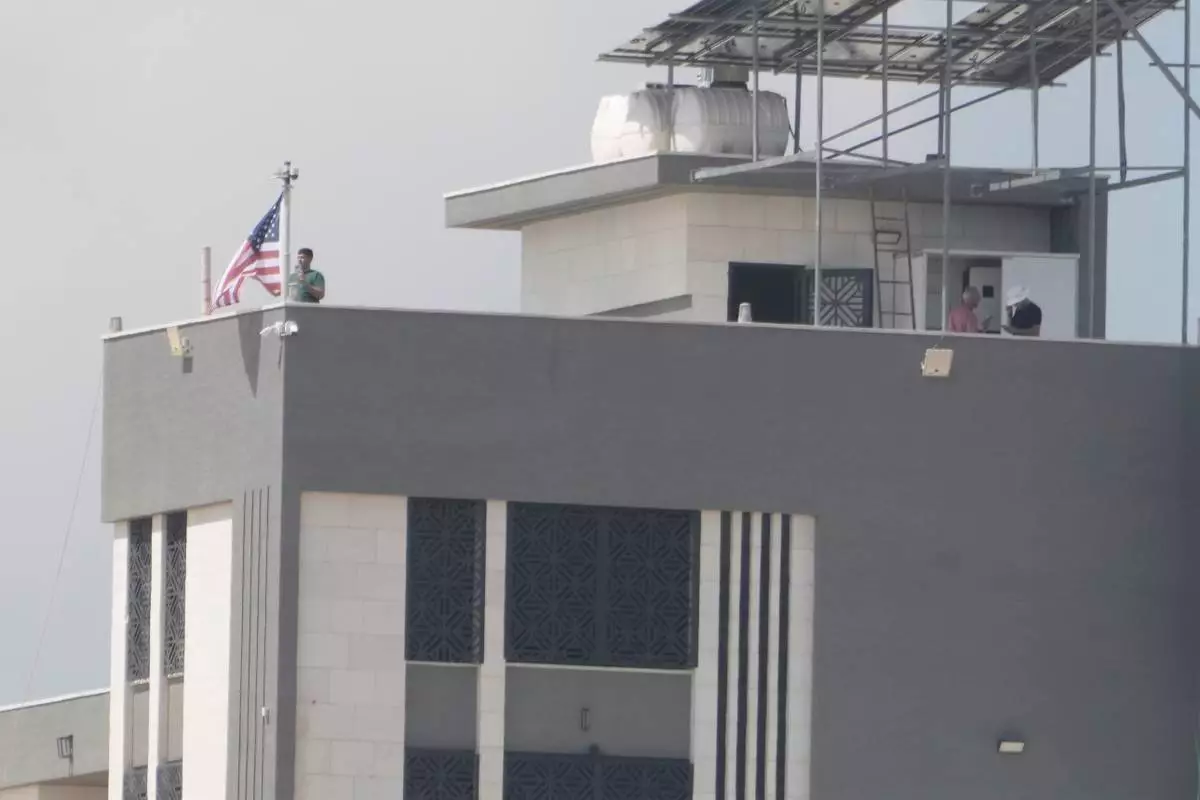
Ohio-based Palestinian-American landlord Loui Ridi, raised the American flag on the roof of his house that is besieged by Israeli settlers for over a week, in the occupied West Bank village of Qusra, south of Nablus, Tuesday, Aug. 18, 2026. (AP Photo/Majdi Mohammed)
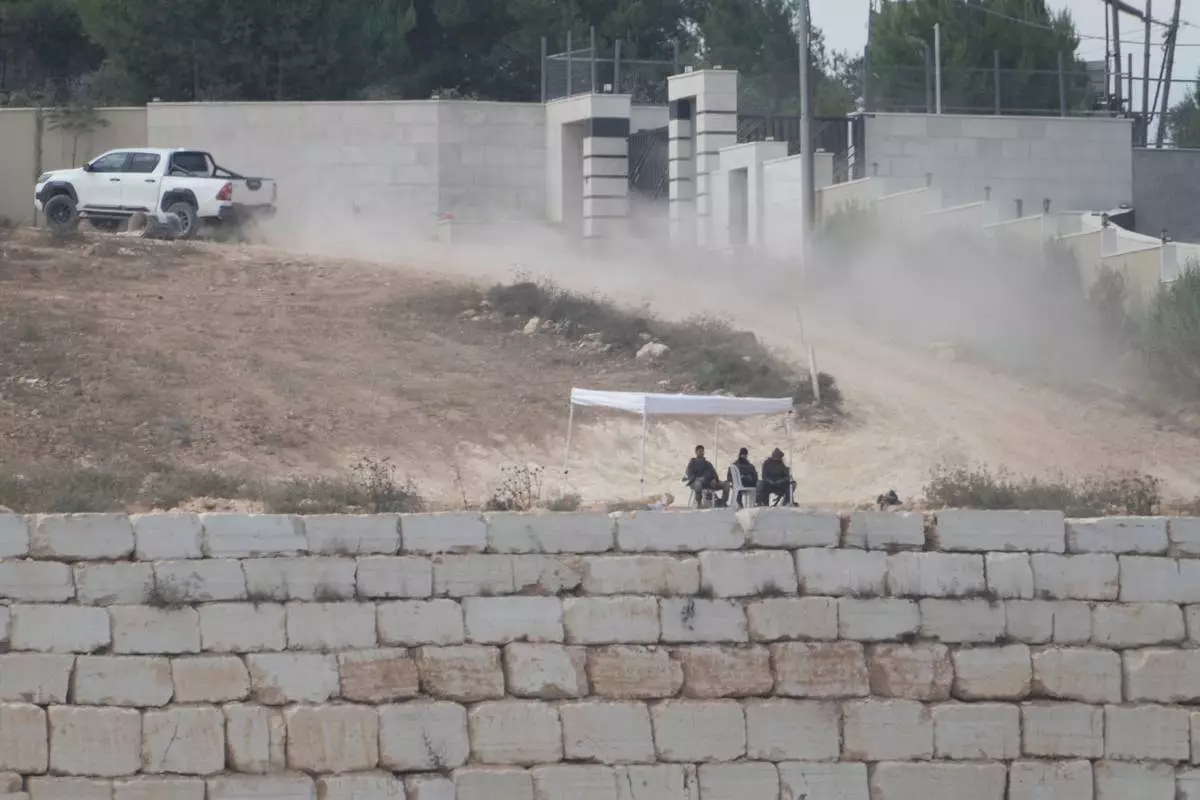
Israeli soldiers sit under a tent in front of the house of Ohio-based Palestinian-American landlord Loui Ridi, that is besieged by Israeli settlers for over a week, in the occupied West Bank village of Qusra, south of Nablus, Tuesday, Aug. 18, 2026. (AP Photo/Majdi Mohammed)
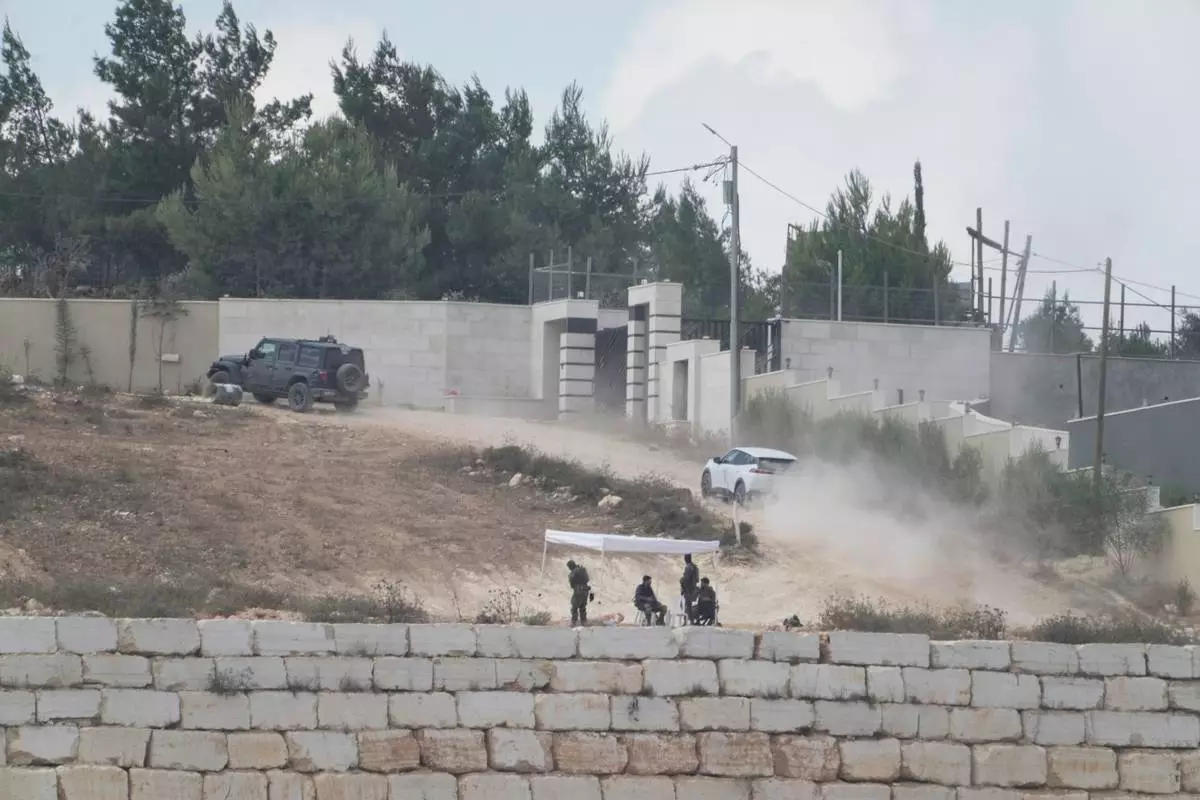
Israeli soldiers sit under a tent in front of the house of Ohio-based Palestinian-American landlord Loui Ridi, that is besieged by Israeli settlers for over a week, in the occupied West Bank village of Qusra, south of Nablus, Tuesday, Aug. 18, 2026. (AP Photo/Majdi Mohammed)

Loui Ridi, an Ohio-based Palestinian-American landlord of one of the homes besieged by Israeli settlers for over a week, arrives at his parent's home upon his return from the U.S., in the occupied West Bank village of Qusra, south of Nablus, Monday, Aug. 17, 2026. (AP Photo/Majdi Mohammed)