Chinese President Xi Jinping held a welcome ceremony for visiting President of the Republic of Ecuador Daniel Roy-Gilchrist Noboa Azin at the Great Hall of the People in Beijing on Tuesday afternoon.
At the invitation of Xi, Noboa is on an eight-day state visit to China starting Sunday. This is his first state visit to China.
A 21-gun salute was fired at the Tian'anmen Square.
A military band performed the anthems of Ecuador and China, respectively.
Noboa, accompanied by Xi, reviewed the Guard of Honor of the Chinese People's Liberation Army.
The two heads of state then returned to the reviewing stand to watch a march-past performed by the Guard of Honor.
Noboa's entourage include Ecuador's minister of foreign affairs and human mobility, secretary general of public administration, planning, and cabinet of the presidency, among others.
Wang Yi, a member of the Political Bureau of the Communist Party of China (CPC) Central Committee and director of the Office of the Foreign Affairs Commission of the CPC Central Committee, and other Chinese officials also attended the welcome ceremony.
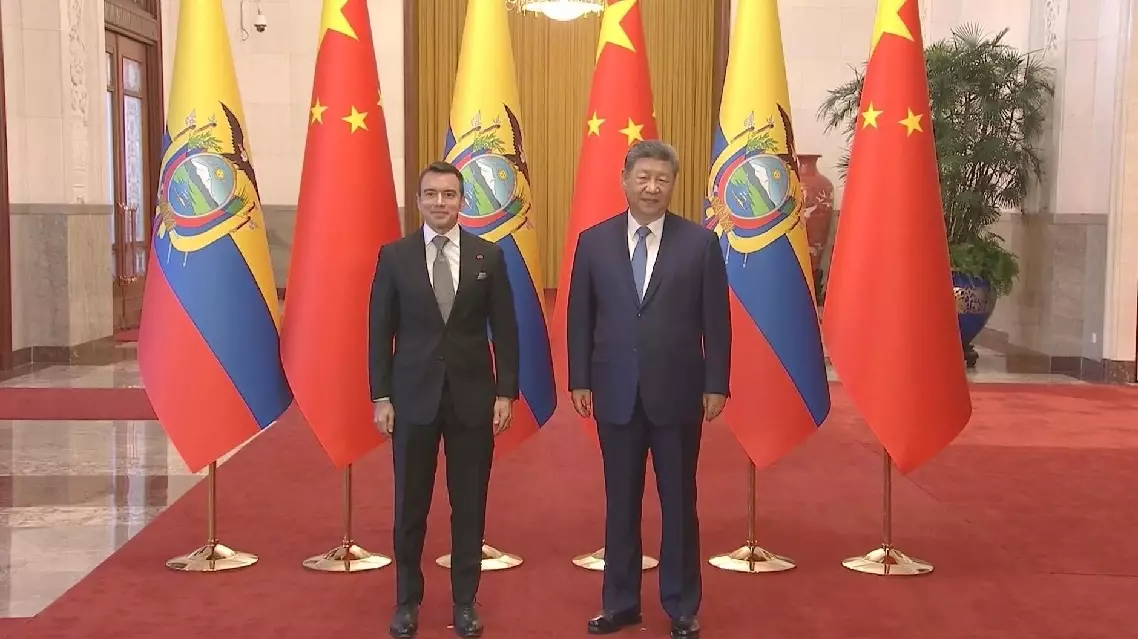
Xi holds welcome ceremony for Ecuadorian president
A Canadian artist's bonsai studio has become a popular tourist attraction this summer in Chongzhou City, Sichuan Province, southwest China, boosting the local bonsai trade and contributing to rural revitalization.
Bonsai, the art of creating miniature natural landscapes by arranging soil, stones, moss, and plants on a tray, has deep cultural roots in Chongzhou.
In 2019, Canadian artist Chad Sinclair rented a small courtyard and launched his own bonsai studio in the city. Sinclair has developed a unique bonsai style, blending Western simplicity with the artistic essence of traditional Chinese design.
Small and lightweight, his bonsai works are popular, driving more than 300 local residents to switch to miniature bonsai cultivation and increasing each of their annual incomes by 50,000 yuan (about 7,415 U.S. dollars).
"It's great. It makes me feel like I'm helping the village out, since they've helped me out in a lot of ways. I'm somehow giving back to them. They're able to make a better living for themselves and a better life," said Sinclair.
Relying on Sichuan-style bonsai, Chongzhou has developed industries including bonsai cultivation and art study tours, extending the city's industrial chain from bonsai sales to rural tourism.
"We run multiple services such as catering, study tours, bonsai sales and bonsai DIY experiences, which have boosted our annual income to 180,000 to 200,000 yuan," said Guo Min, a local bonsai garden manager.
In 2025, Sinclair was honored as an Outstanding Talent for Rural Revitalization by local authorities, making him the first foreigner to receive this title.
"We will provide special subsidies for these selected rural talents, alongside policy support covering production, daily life, entrepreneurship and employment. Chongzhou has certified more than 200 rural revitalization talents," said Lu Jiao, a local official.
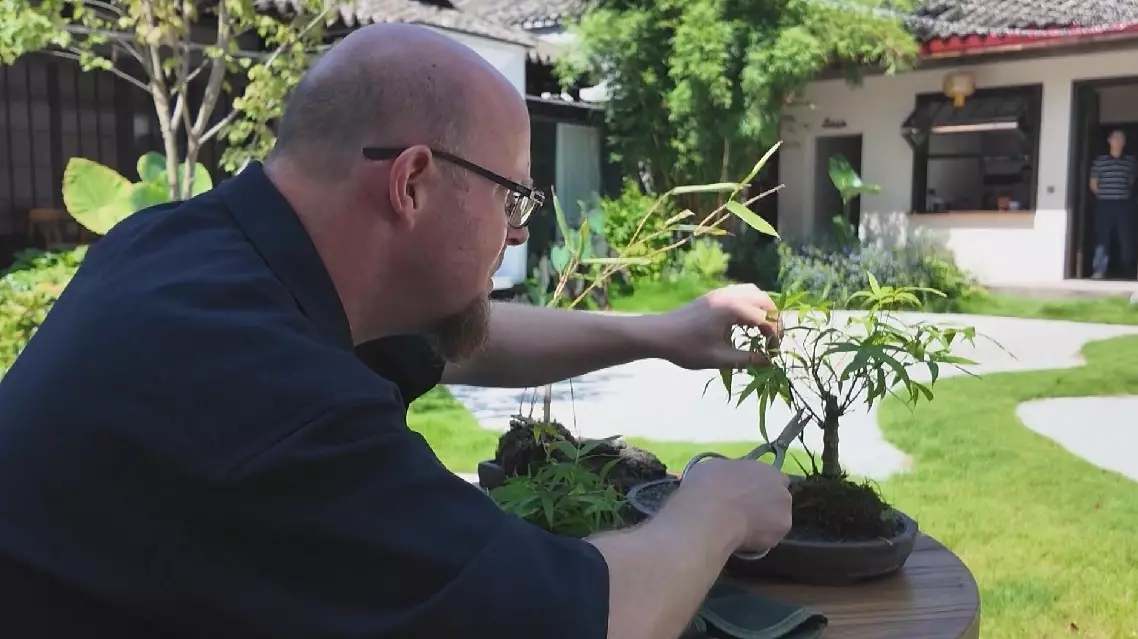
Canadian artist's bonsai studio sparks new growth in Sichuan's rural industries
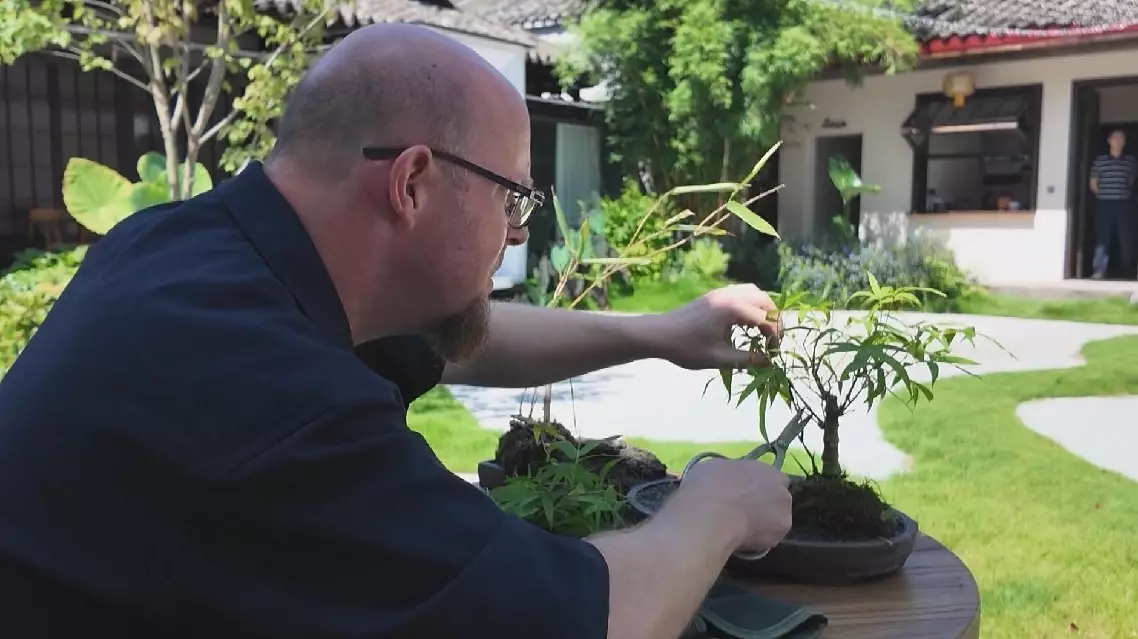
Canadian artist's bonsai studio sparks bonsai trade and tourism boom in Sichuan city