Skip to Content Facebook Feature Image

Watchdog calls for US import ban as forced labor persists in Dominican sugarcane fields

News

Watchdog calls for US import ban as forced labor persists in Dominican sugarcane fields
News

News

Watchdog calls for US import ban as forced labor persists in Dominican sugarcane fields

2026-08-19 03:00 Last Updated At:03:10

SAN JUAN, Puerto Rico (AP) — A report released Tuesday by a human rights group found that forced labor persists on massive sugarcane plantations across the Dominican Republic, which exports sugar and other products to the U.S. — its largest market.

The nonprofit Corporate Accountability Lab said it spent more than three years investigating the working conditions on plantations owned by Central Romana Corporation, Ltd., the largest employer and landowner in the Dominican Republic. Its owners have ties to U.S. President Donald Trump and U.S. Secretary of State Marco Rubio, the report noted.

Central Romana Corporation was previously investigated by U.S. Customs and Border Protection, which accused the company of isolating workers, withholding wages, fostering abusive working and living conditions and pushing for excessive overtime. In 2022, the U.S. imposed a ban on imports of sugar and related products made by the company, but the ban was reversed last year under the Trump administration.

One of the owners of Central Romana is the Florida-based Fanjul Corp., which owns Florida Crystals. The Fanjul family has close ties to Trump and the Dominican government, the report stated.

The human rights group called on the U.S. government to reinstate the ban.

“As long as sugar and other well-positioned interests enjoy the benefits of such market access while ignoring labor rights abuses in their supply chains, U.S. policy will remain complicit in the very kinds of abuse it claims to oppose,” the nonprofit said.

Local civil society groups estimate that up to 8,000 workers toil in the company’s sugarcane fields that span more than 173,700 acres.

They have long complained about a lack of wages and of being forced to live in cramped housing that often lacks water or electricity, as verified by Associated Press journalists in recent years. Many of them are Haitian migrants or descendants of them, who, despite being born in the Dominican Republic, do not have citizenship.

The report quoted one unidentified worker as saying that he doesn’t have any documents to get another job: “Why would we stay? This way we are their slaves.”

Corporate Accountability Lab called on Central Romana Corporation to enroll workers in the country’s social security system; pay them at least the minimum day wage; allow them to join an independent union and protect their health, among other things.

One unidentified worker was quoted as saying that company employees assign jobs and make decisions about how much someone is owed: “They are always underpaying us, but we can’t fight for them to pay us justly because we don’t have that kind of power.”

The nonprofit asserted that a “climate of fear … pervades the industry” as it called on sugar customers to adhere to a proposed code of conduct that would be developed by workers.

“I want to complain every week, but since everyone is so scared, nobody will support you,” one unidentified worker was quoted as saying.

Such fears were reflected in a recent study by the U.S. Department of Labor, with the U.S. government also describing living conditions on plantations as “inhumane” and “abusive.”

The report by Corporate Accountability Lab included comment from Central Romana Corporation, which was quoted as saying that the report was “riddled with inaccuracies and untruths” and that the company had not violated local laws or international labor standards.

The company did not immediately respond to a request seeking additional comment.

Corporate Accountability Lab called on the Dominican government to regularize the immigration status of all those recruited to work on sugarcane fields, to disburse owed pensions and enforce labor and environmental laws.

The organization found that two types of workers are most vulnerable: elderly canecutters who have not received their retirement benefits and those who are stateless.

“Governments of all countries should prohibit the importation of sugar and sugar-based products made with forced labor in the Dominican Republic,” the nonprofit said.

Follow AP’s Latin America coverage at https://apnews.com/hub/latin-america
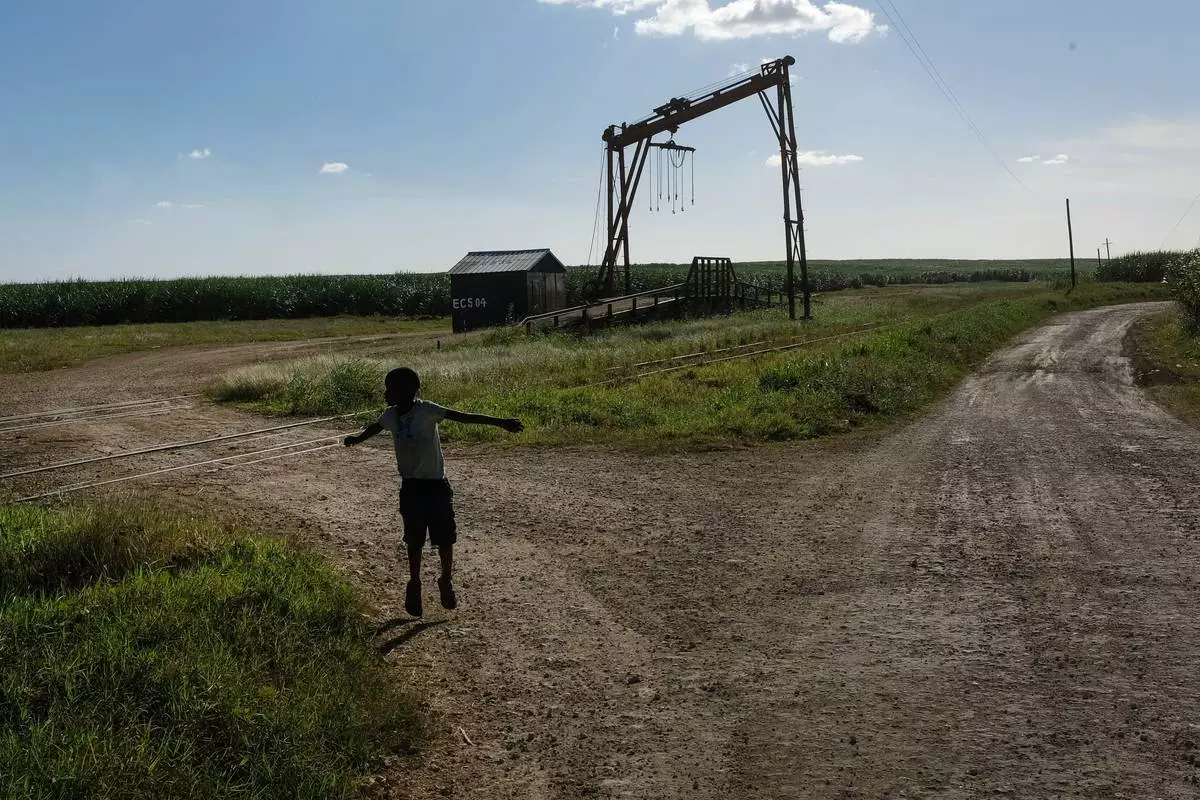
FILE - A youth plays near the machine where the sugar cane is weighed in the Lima batey, or neighborhood, in La Romana, where Central Romana Corporation, Ltd. operates its sugar operations in Dominican Republic, Nov. 17, 2021. (AP Photo/Matias Delacroix, File)

FILE - A youth plays near the machine where the sugar cane is weighed in the Lima batey, or neighborhood, in La Romana, where Central Romana Corporation, Ltd. operates its sugar operations in Dominican Republic, Nov. 17, 2021. (AP Photo/Matias Delacroix, File)

ALBUQUERQUE, N.M. (AP) — The Trump administration announced Tuesday it is moving ahead with plans to rescind a quarter-century-old rule that blocked logging, road building and other development on national forest lands, drawing the ire of environmentalists nationwide.

The U.S. Forest Service is filing a proposal that would scrap the so called roadless rule adopted in the last days of Bill Clinton’s presidency in 2001. The agency described the rule as a one-size-fits-all restriction that has frustrated land managers and served as a barrier to reducing wildfire risks in the nation’s forests.

“Our forests can’t afford another decade of inaction. Across the country, we’ve watched preventable conditions — overgrown stands, insect outbreaks and disease — turn healthy landscapes into tinderboxes,” U.S. Agriculture Secretary Brooke Rollins said in a statement.

Scientists say that worsening wildfires are driven by a combination of climate change that warms and dries out forests, less logging and decades of fire suppression that has allowed fuels to build up.

Clinton had signed the rule to safeguard undeveloped national forest land from commercial logging and mineral leasing, with a goal of keeping ecosystems pristine and protecting water supplies.

Calling the roadless rule a failure, Rollins said the proposal calls for restoring authority to local forest managers and removing barriers that have kept them from improving forest health across millions of acres.

The roadless rule has affected 30% of national forest lands nationwide, or about 59 million acres (24 million hectares), according to the U.S. Department of Agriculture, the agency over the Forest Service.

The Forest Service will gather public comment on the proposal and on a draft of the environmental impact statement that was filed Tuesday in the Federal Register. While the rescission removes national designation of roadless areas, officials say it doesn't mandate timber cutting or road construction.

The filing of the proposal comes as no surprise as the Trump administration first announced its intention to get rid of the rule during a meeting last summer of Western governors in New Mexico.

Environmentalists have been sounding the alarm since then and reiterated Tuesday that lifting protections would have detrimental effects for old growth forests, wildlife and water supplies.

“Americans across the political spectrum have made it crystal clear that they don’t want political appointees removing protections from public lands,” said Chris Krupp, an attorney with the group WildEarth Guardians. “It would be a gross misreading of public sentiment to take the roadless rule away from Americans and our wildlife, and politicians do so at their jeopardy.”

The Alaska Wilderness League and other groups raised concerns about what a rescission could mean for places such as Alaska’s Tongass National Forest, the nation's largest national forest and a lightning rod for litigation. State political leaders there have supported an exemption to the roadless rule that they argue impedes economic opportunities.

During the latter part of Trump’s first term, the federal government lifted restrictions on logging and road-building in the Tongass, something the Biden administration later reversed.

Emma Powell, the Alaska Wilderness League's government affairs manager, described the Tongass as a global treasure that serves as a home for salmon runs and abundant wildlife. She added that cultures and livelihoods are connected to the forest.

“From fisheries to tourism and outdoor recreation, these landscapes also support thousands of jobs and generate billions in economic activity each year,” Powell said.

Alex Craven, the Sierra Club's forest campaign manager, disputed officials' claims that getting rid of the rule would allow for more work to be done to reduce wildfire threats. Craven suggested more roads would lead to more fires and that it never prevented the Forest Service from doing targeted work to reduce wildfire fuels.

He vowed that the Sierra Club and other groups would fight the proposal at each step.

The deadline for comments is Sept. 21.

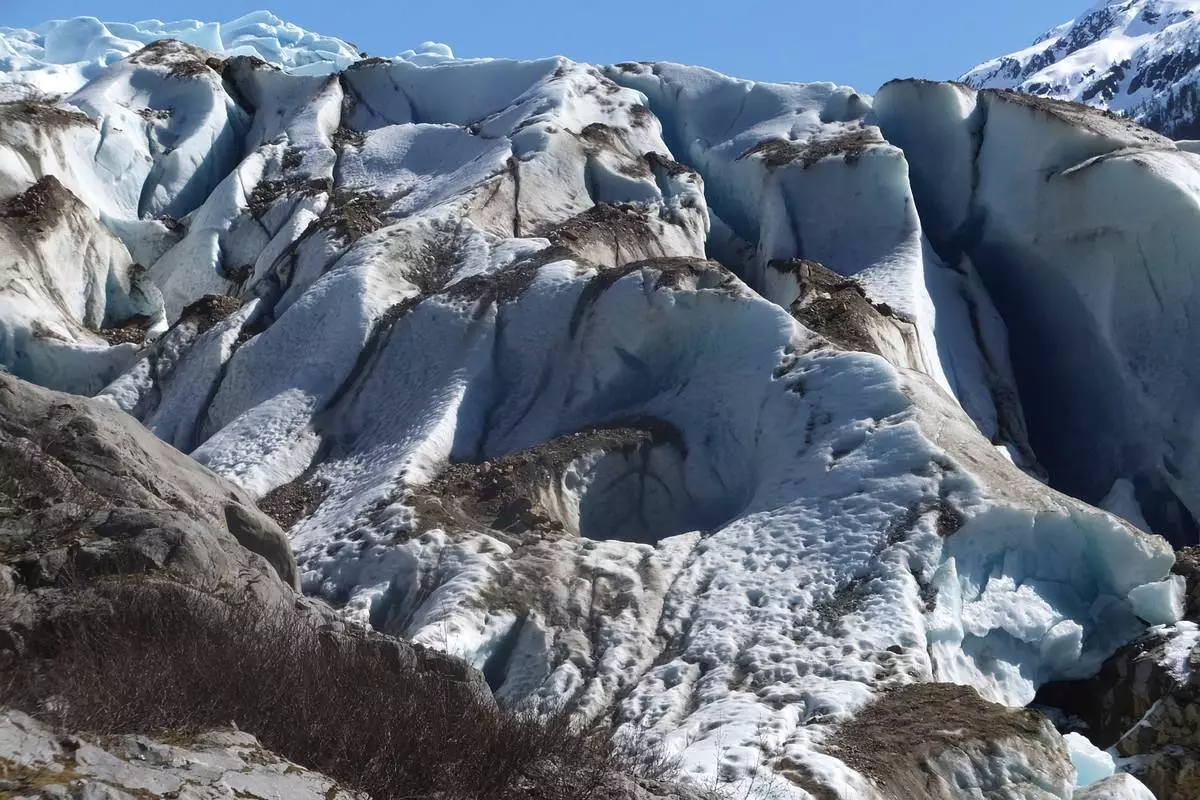
FILE - The Herbert Glacier is seen, April 23, 2017, near Juneau, Alaska, in the Tongass National Forest. (AP Photo/Becky Bohrer, File)

FILE - The Herbert Glacier is seen, April 23, 2017, near Juneau, Alaska, in the Tongass National Forest. (AP Photo/Becky Bohrer, File)

Recommended Articles