NAIROBI, Kenya (AP) — Kenya has tripled its long-term target for expanding its renewable energy capacity to meet surging demand and support its industrialization, but that might not result in more affordable power for consumers.
The plan calls for renewable power generating capacity of 5,500 megawatts, up from about 1,500 MW now. That would include 2,000 MW of nuclear power alongside 700 MW of hydropower and new geothermal projects.
Click to Gallery
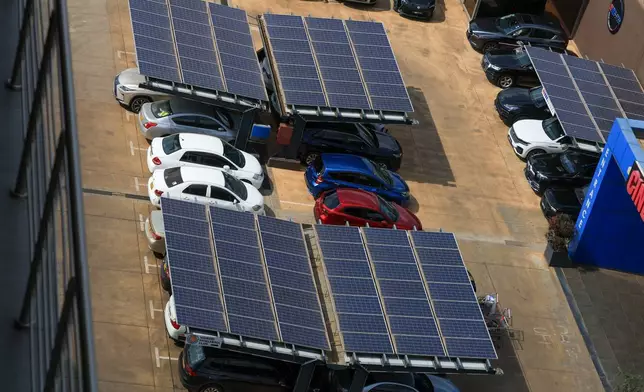
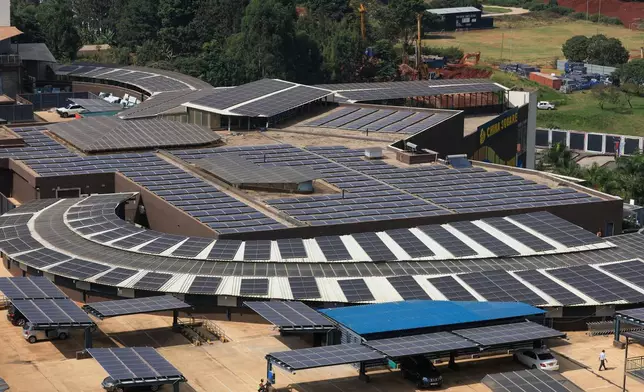
FILE - A solar power plant is seen at the car park of Two Rivers Complex in Nairobi, Kenya, July 16, 2026. (AP Photo/Andrew Kasuku, File)
FILE - A solar power plant is seen at the car park of Two Rivers Complex in Nairobi, Kenya, July 16, 2026. (AP Photo/Andrew Kasuku, File)
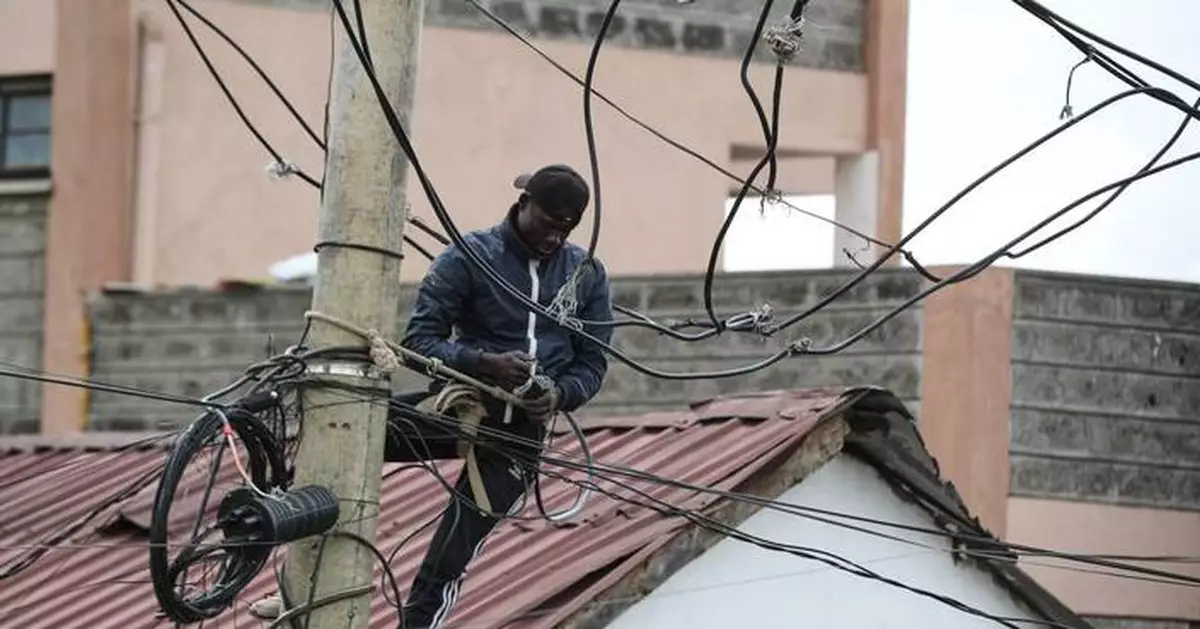
FILE -A view of electric wire poles and cables towering over the Kibera informal settlement in Nairobi, Kenya, March 31, 2026. (AP Photo/Henry Naminde, File)
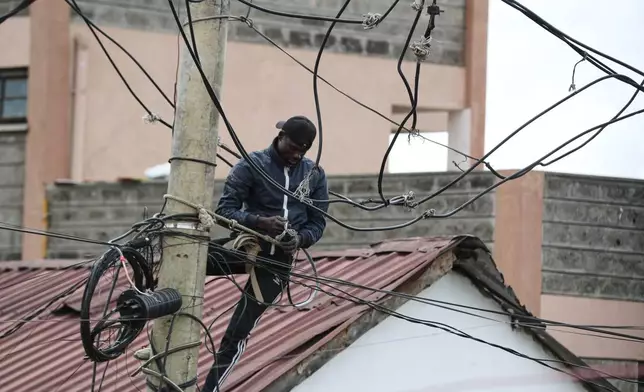
FILE -A man connects electric cables on a pole above the Kibera informal settlement in Nairobi, Kenya, March 31, 2026. (AP Photo/Henry Naminde, File)
That will strengthen the country’s position as a global leader in renewable energy. Kenya already produces 93% of its electricity using renewable sources. But experts say that reforms for utility contracts, electricity grids, financing and pricing are needed to translate clean energy growth into lower cost power for consumers.
"We have recalibrated our long-term growth trajectory from 1,500MW to a 5,500MW renewable energy development pipeline,” said Peter Njenga, CEO of KenGen, the state-owned utility that produces about 60% of Kenya's power.
Lawmakers have been pushing the government to reduce electricity rates. In July, the parliament directed Energy Minister Opiyo Wandayi to develop a policy for renegotiating electricity supply agreements with major power producers. Lawmakers said lower wholesale prices could create more leeway for Kenya Power to cut consumer rates without damaging its finances.
Energy experts say Kenya needs to focus less on building new generation capacity than on making electricity cheaper.
“The answer to this conundrum is not as straightforward as it may seem,” said Mugwe Manga, climate finance lead at the nonprofit FSD Kenya. “One must look at the entire energy system holistically to understand the drivers of the end cost of power.”
Unlike countries like Morocco, Egypt and China, Kenya provides limited direct subsidies to cushion electricity prices. While renewable generation costs are broadly competitive, consumers ultimately bear the burden of financing costs, transmission and distribution losses, taxes, and foreign exchange movements.
Latest data show that industrial consumers in Kenya pay between $0.18 and $0.23 per kilowatt-hour, compared with about $0.03 in South Africa and Egypt, and $0.05 in Morocco and Ethiopia.
“The perception that electricity is expensive is subjective,” Kenya Power CEO Joseph Siror said in an earlier interview. “The consumer prices are dependent on infrastructure costs, electricity tariff structures, and outstanding bill recoveries.”
Kenya’s heavy reliance on green energy sources adds to costs since the infrastructure required to generate such power is expensive to install and maintain, he said.
One of the biggest inefficiencies keeping electricity costs high lies in the distribution network itself, Manga said.
More than 20% of electricity is lost to technical failures and illegal connections, compared with a global average of 8%-10%," he said “That offers a great low-hanging fruit to improve efficiency and pass that efficiency dividend to end consumers through reduced tariffs.”
High financing costs are another problem. Renewable energy developers across Africa borrow at significantly higher interest rates than their counterparts in wealthier economies because investors perceive view projects as having greater risks. Those extra borrowing costs ultimately are passed on to consumers.
Kenya’s power purchase agreements have also come under renewed scrutiny. Independent power producers supply about 40% of total capacity under long-term contracts signed after electricity generation was liberalized in the late 1990s.
Some contracts include “take-or-pay” clauses that require Kenya to make agreed-upon payments even when contracted electricity is not fully consumed. Critics argue such arrangements force consumers to pay for surplus electricity, although Manga said such guarantees were necessary to secure financing for capital-intensive projects.
“Kenya’s renewable resource base is a major advantage, but electricity prices are determined by the whole system, not only by the cost of power generation,” said Albert Nganga, senior regulatory manager at CrossBoundary Energy. “They also reflect how power is contracted, transmitted, distributed and recovered.”
Recently proposed open-access electricity market reforms could increase competition by allowing large consumers to purchase electricity directly from power generators, he said.
The ambitious targets for expanding power generation require predictable investment policies and reforms, said Cynthia Angweya-Muhati, CEO of the Kenya Renewable Energy Association.
“The real test will be whether that additional clean generation is matched by reforms that lower electricity costs for consumers,” Angweya-Muhati said.
——-
The Associated Press’ climate and environmental coverage receives financial support from multiple private foundations. AP is solely responsible for all content. Find AP’s standards for working with philanthropies, a list of supporters and funded coverage areas at AP.org.
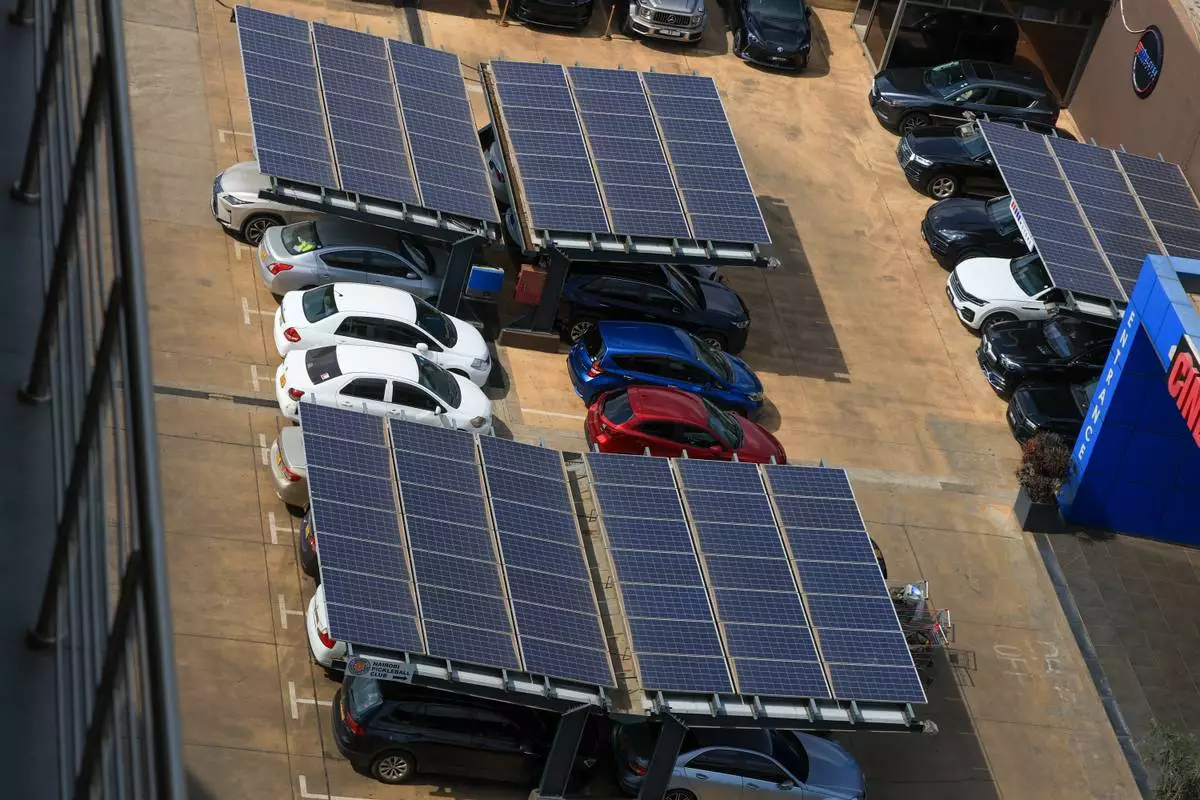
FILE - A solar power plant is seen at the car park of Two Rivers Complex in Nairobi, Kenya, July 16, 2026. (AP Photo/Andrew Kasuku, File)
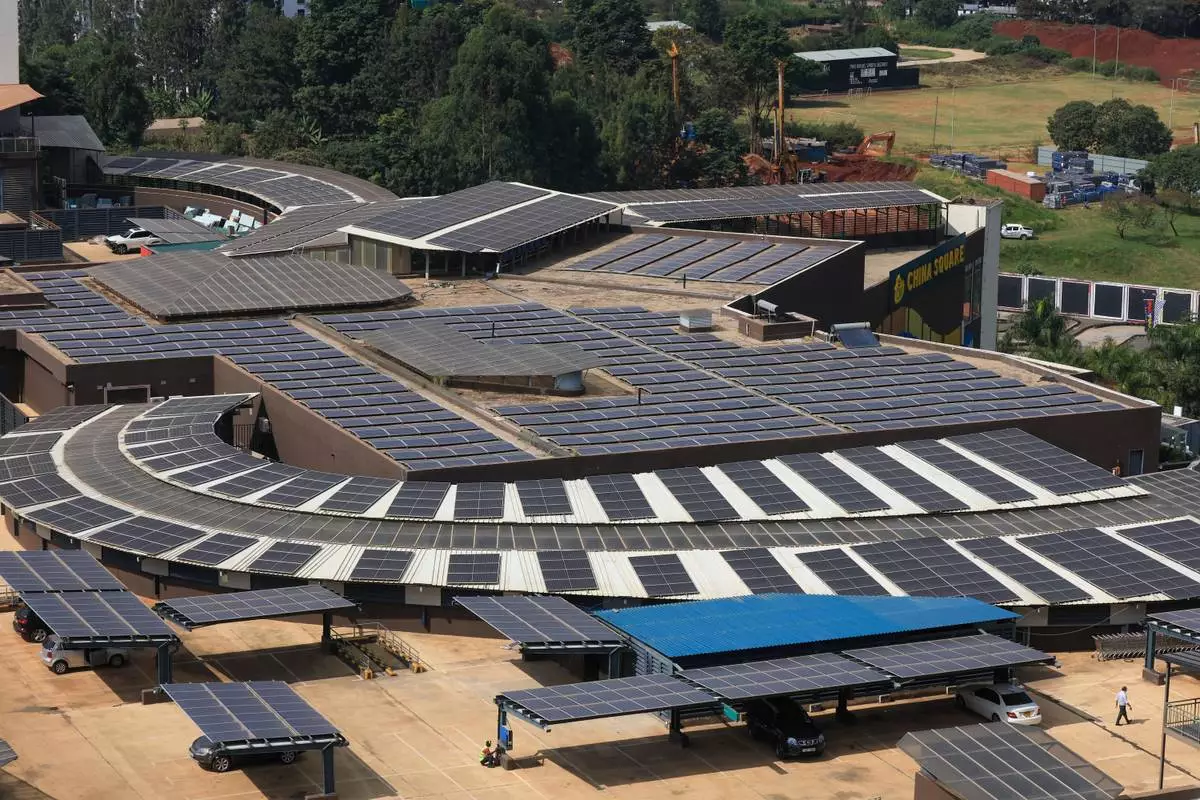
FILE - A solar power plant is seen at the car park of Two Rivers Complex in Nairobi, Kenya, July 16, 2026. (AP Photo/Andrew Kasuku, File)

FILE -A view of electric wire poles and cables towering over the Kibera informal settlement in Nairobi, Kenya, March 31, 2026. (AP Photo/Henry Naminde, File)
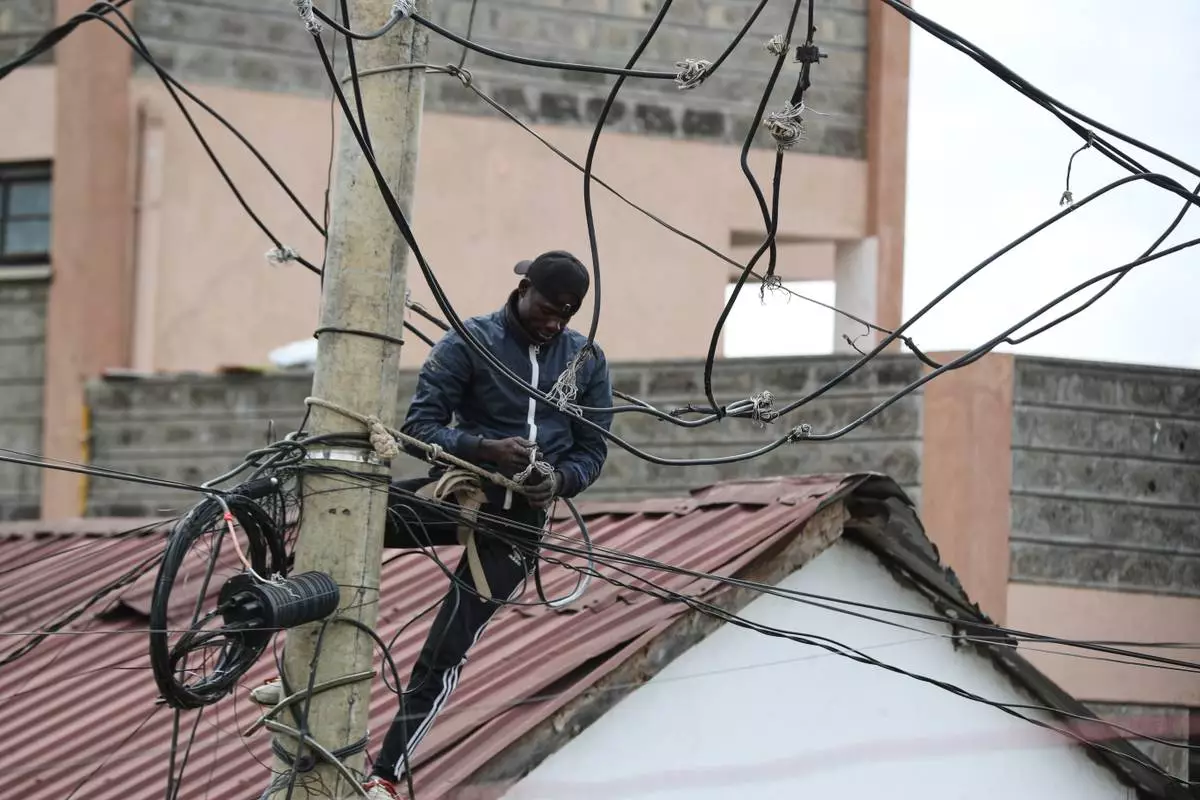
FILE -A man connects electric cables on a pole above the Kibera informal settlement in Nairobi, Kenya, March 31, 2026. (AP Photo/Henry Naminde, File)
JUNEAU, Alaska (AP) — Republican Sen. Dan Sullivan and Democratic former congresswoman Mary Peltola advanced to November’s general election on Tuesday, setting the stage for what is expected to be a costly fight for a seat that could determine the balance of power in the U.S. Senate.
Sullivan went on the attack against Peltola in the days leading to the primary, providing a possible preview of their coming matchup. He attempted to tie her to a progressive movement within the Democratic Party that has been ascendant throughout the primary season, claiming Peltola was aligned with Lower 48 “liberals.”
Peltola, who in 2022 became the first Alaska Native to serve in Congress, tried to steer a centrist path but shook up her campaign hierarchy just days before the primary, ousting her campaign manager.
Sullivan and Peltola have raised by far the most money to date in the race and have the greatest name recognition across Alaska, making them the leading contenders in November.
In the race for the state’s lone U.S. House seat, Republican Rep. Nick Begich advanced to the general election along with independent Bill Hill.
The campaign featured over a dozen contenders in each of the top races — for Senate, U.S. House and governor. Under Alaska’s open primary system, all candidates appeared on the same ballot, and the four who receive the most votes qualify for the ranked vote general election. It was too early to call all candidates advancing in the top races under the top-four format.
Tuesday's ballot also included state legislative candidates and a ballot initiative that would reimpose campaign contribution limits in state and local elections.
The highest-profile candidates in a field of 16 were Sen. Sullivan, a two-term Republican, and Peltola.
The race, which is among a handful that could help determine control of the Senate, drew significant attention from outside groups, with Republican and Democratic campaign organizations identifying it as a top target.
Peltola shook up her campaign leadership days before the primary, letting her campaign manager go and elevating a deputy to that role. In a statement, the campaign described the changes as “staffing updates as we transition into the general election.”
Sullivan, a veteran and ally of President Donald Trump, campaigned on supporting the military, opening more land for oil and gas extraction, and voting for Trump's signature tax and spending law. He told supporters Tuesday that his office is “getting big things done.”
He criticized Peltola as ineffective during her time in Congress, which spanned just over one term.
Peltola, who was elected in 2022, criticized a political system she said is rigged by special interests and allows politicians to enrich themselves. She said the Trump administration has brought challenges to Alaska including cuts to the federal workforce, and she blasted Sullivan for his support of Trump's tax and spending bill.
“We really need a champion for us in Washington, D.C., who gets us and will work hard for us,” Peltola told supporters Tuesday.
It was a third candidate, a Republican also named Dan Sullivan, who garnered much of the attention during the campaign.
Dan J. Sullivan won a legal fight to appear on the ballot despite claims by the senator and GOP allies that he was a sham candidate running at the behest of Democrats with the intent of causing confusion. Dan J. Sullivan, a retired teacher from the island community of Petersburg, denied that and said frustration with the incumbent prompted him to run.
He appeared on the ballot as Daniel J. Sullivan Jr., with no party affiliation — a decision that a state elections official said was intended to minimize possible confusion. Meanwhile the senator was listed as Dan S. Sullivan, Republican and incumbent. No other candidate seeking reelection had the “incumbent” label.
The drama involving the dueling Dan Sullivans caught the attention of Trump. In a social media post reiterating his support for the senator days before the primary, Trump called the other's candidacy an attempt to trick voters and urged his followers to vote for “SULLIVAN, DAN S.”
Dan J. Sullivan criticized the senator for embracing Trump's endorsement, calling the president “more interested in raising tariffs on our allies than in lowering the cost of groceries, housing and energy” and “more interested in punishing his enemies than bringing Americans together.”
The Senate race was a focal point for a number of voters.
Jeri Kissner said Congress must do more to push back against Trump.
“I’m so disappointed in our Congress to acquiesce to the president and his minions,” Kissner said. She favored Peltola because she did not like the other options.
Tom Dienst, who voted early and described himself as an “extremely staunch Reagan Republican,” said Trump needs allies to help carry out his agenda.
“When you look at all of the good Trump policies that will help the state, there’s just no doubt. We have to continue with Sullivan,” he said.
In the House race, the most prominent candidates were Begich, seeking a second term, and Hill, a fisherman and former educator from a small southwestern village.
Hill made affordability a key issue in his campaign. He said Alaskans are sick of paying high costs for healthcare, gas and groceries.
“Begich and his buddies think they can play by a different set of rules than we do,” he said after advancing Tuesday. “The Alaskans I know don’t think that’s right.”
Begich, who was endorsed by Trump, cast himself as hardworking and effective in his role. He said results from the primary show that Alaskans are ready to return him to Congress.
Progressive Democrat Matt Schultz suspended his campaign last month but remained on the ballot. His campaign said Schultz would withdraw as a general election candidate if he makes the primary’s top four. Schultz urged support for Hill.
The campaign for the state’s top executive office was an open race this year because Republican Gov. Mike Dunleavy was barred by term limits from seeking a third consecutive stint.
Two Democrats advanced to the general election from a crowded, largely Republican field: former state lawmakers Jonathan Kreiss-Tomkins and Tom Begich, who is Nick Begich's uncle. If either wins in November, he would become Alaska's first Democratic governor since Tony Knowles left office in 2002.
Republicans in the race included Bernadette Wilson, a businessperson and conservative activist; Click Bishop, a former state labor commissioner and lawmaker; Dave Bronson, former mayor of Anchorage; and Adam Crum and Treg Taylor, two former members of Dunleavy's Cabinet.
Former Gov. Bill Walker, an independent, also was on the ballot.
Voters overwhelming approved the lone ballot measure at stake, which asked them to reimpose campaign contribution limits, five years after a divided federal appeals court struck down a number of caps.
The measure imposes a $2,000 limit on how much individuals can give to candidates in state and local elections and a $5,000 cap on what they can give to political parties. It also limits spending by groups other than political parties and limits what individuals and groups can give to joint campaigns for governor and lieutenant governor.
Associated Press writer Mark Thiessen in Anchorage contributed.
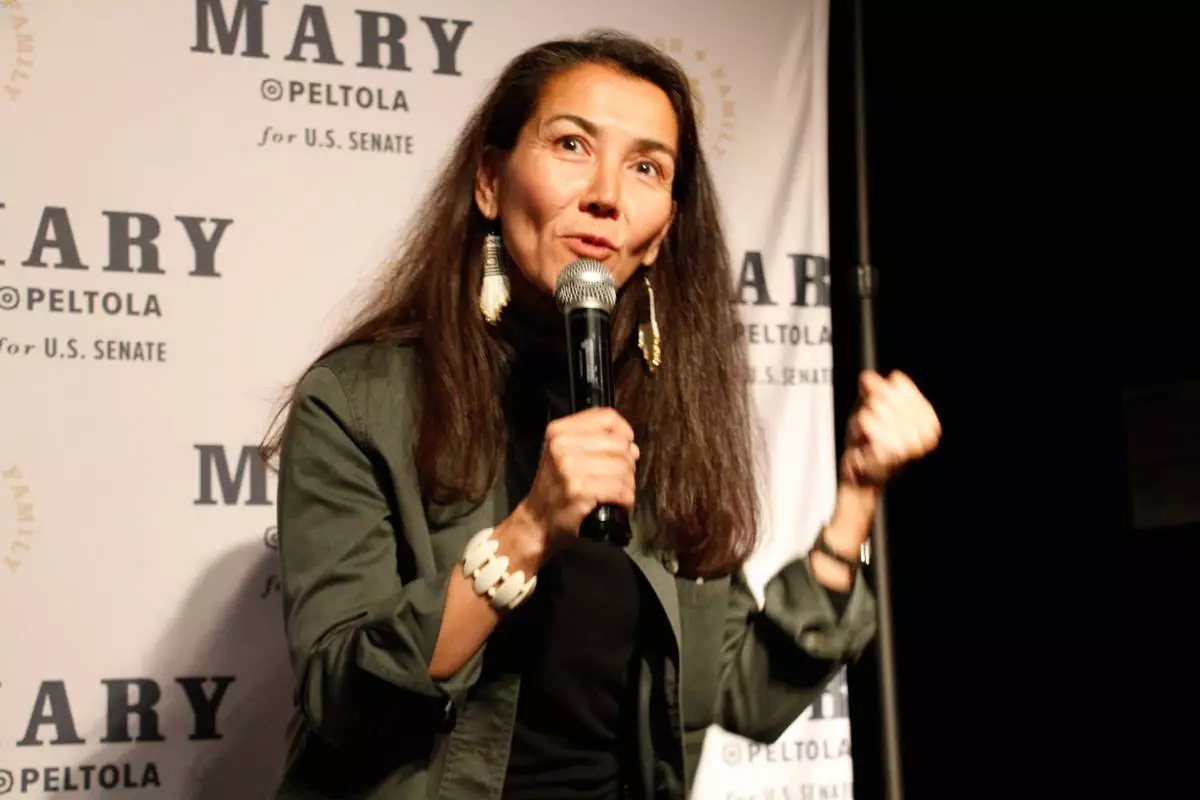
Mary Peltola, a Democrat running for the U.S. Senate seat in Alaska, addresses supporters at an election watch party Tuesday, Aug. 18, 2026, in Anchorage, Alaska. (AP Photo/Mark Thiessen)
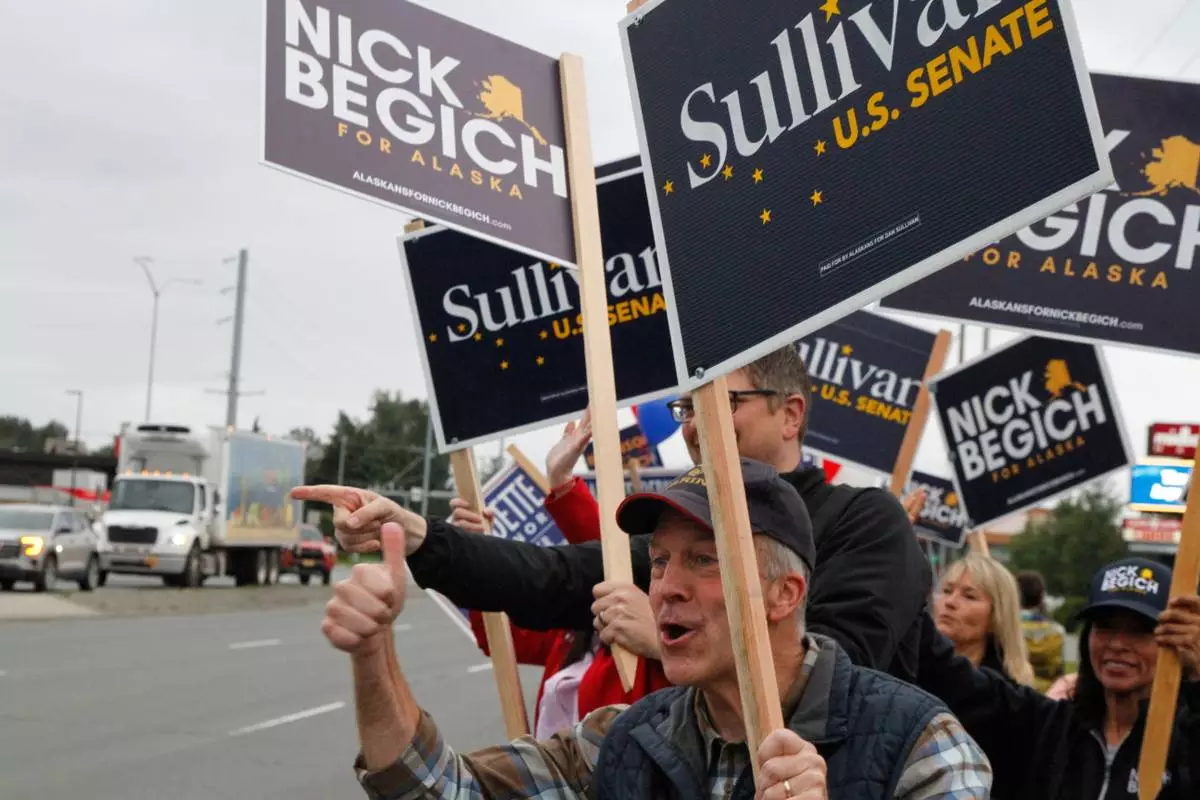
Sen. Dan Sullivan, R-Alaska, who is seeking a third term, flashes a thumbs up after a passing motorist honked during a sign waving event at an intersection on primary election day in Anchorage, Alaska, Tuesday, Aug. 18, 2026. (AP Photo/Mark Thiessen)

U.S. Sen. Dan Sullivan, R-Alaska, speaks at a get out the vote event held at farm in Palmer, Alaska, on Monday, Aug. 17, 2026. (AP Photo/Mark Thiessen)
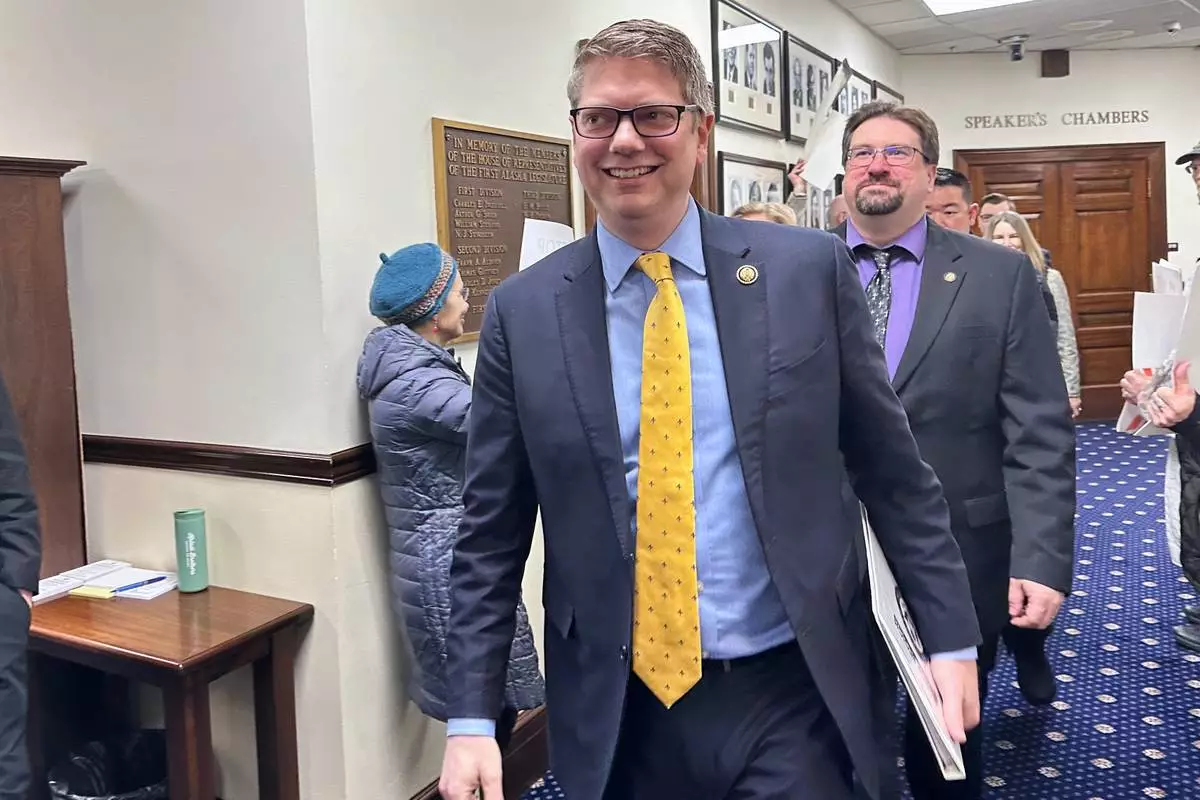
FILE - Alaska Republican U.S. Rep. Nick Begich walks down a corridor in the state Capitol before giving a speech to Alaska lawmakers, March 10, 2026, in Juneau, Alaska. (AP Photo/Becky Bohrer, File)

FILE - Alaska U.S. House candidate Bill Hill, an independent, speaks with people at a campaign fundraising event in Juneau, Alaska, June 4, 2026. (AP Photo/Becky Bohrer, File)

FILE - Dan Sullivan, a candidate in Alaska's U.S. Senate race who shares his name with the incumbent seeking reelection, talks with a reporter, July 3, 2026, in Petersburg, Alaska. (AP Photo/Becky Bohrer, File)
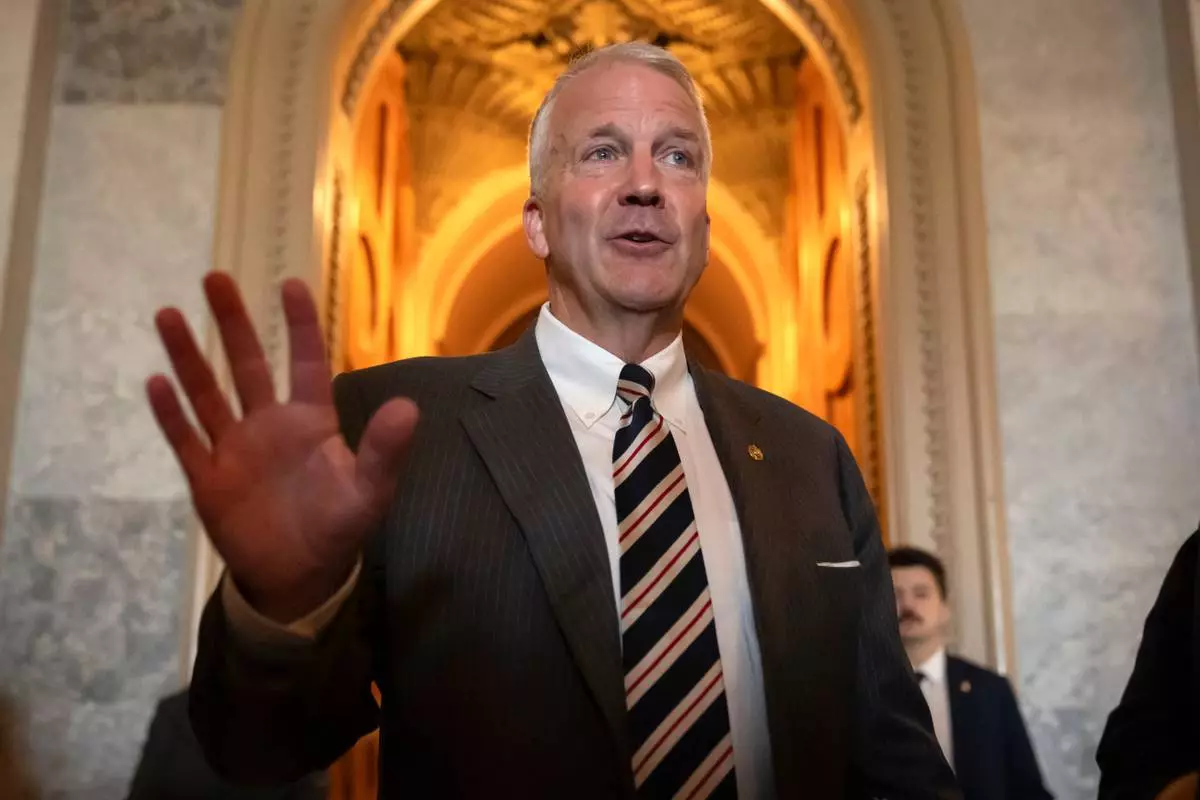
FILE - Sen. Dan Sullivan, R-Alaska, speaks to reporters at the Capitol in Washington, June 30, 2025. (AP Photo/Mark Schiefelbein)
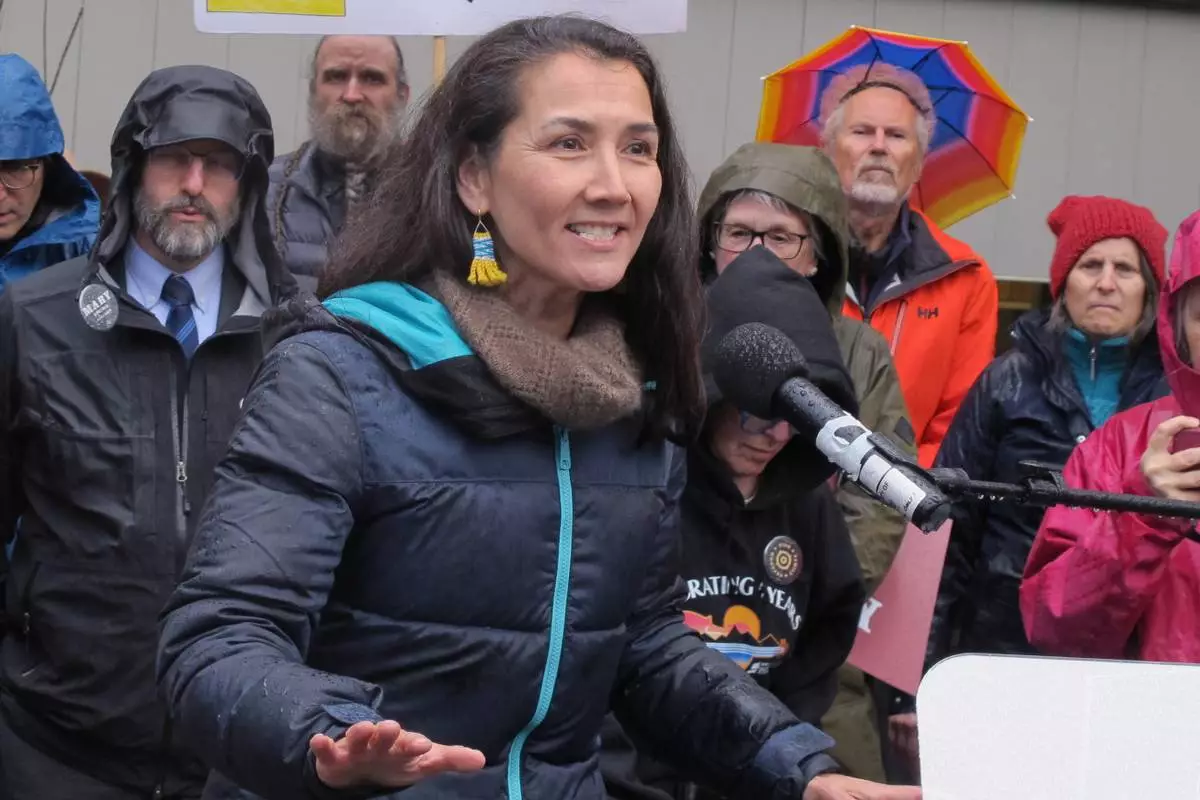
FILE - Alaska U.S. Senate candidate Mary Peltola, a Democrat, speaks during a campaign rally on May 14, 2026, in Juneau, Alaska. (AP Photo/Becky Bohrer, file)