SALT LAKE CITY (AP) — Prosecutors in Charlie Kirk 's killing pointed Tuesday to an engraved bullet, arguing that the inscription “Hey Facist! CATCH!” demonstrates that Kirk was targeted for how the defendant perceived his politics.
Whether defendant Tyler Robinson acted out of political animus could be key for prosecutors seeking the death penalty — or for his attorneys in taking that punishment off the table.
The prosecution and defense have filed dueling documents focused on whether the crime included aggravating factors that would make Robinson eligible for the death penalty if convicted. Those include political targeting and whether the shooting endangered thousands of others who attended Kirk's Sept. 10 event at Utah Valley University.
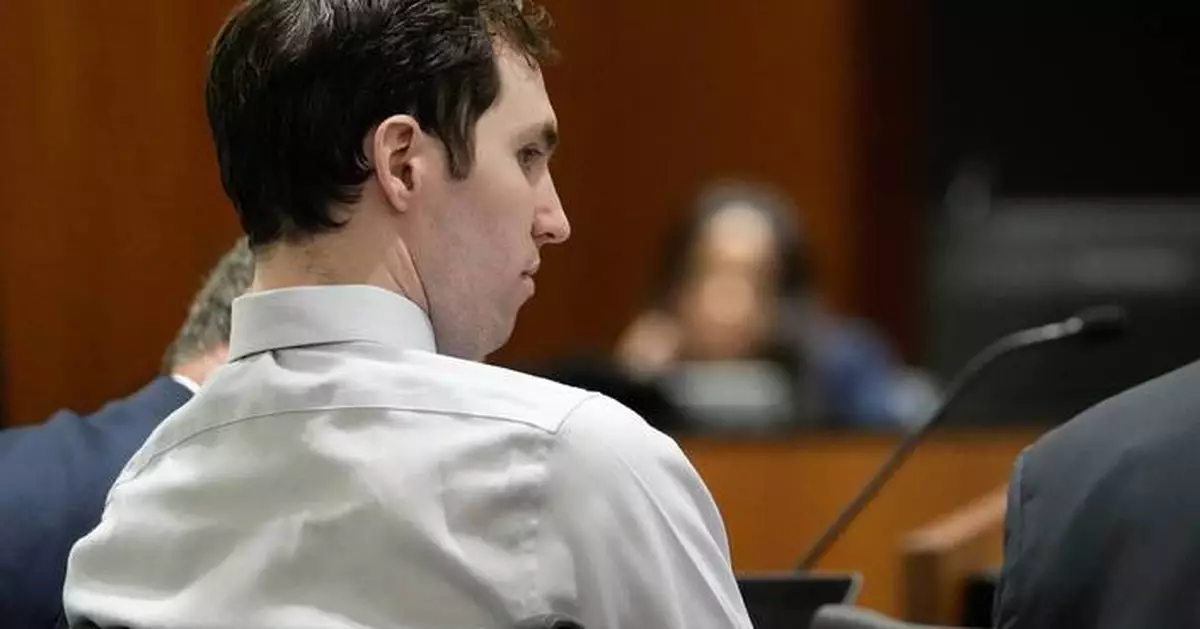
Robinson is charged with crimes including aggravated murder and has not yet entered a plea. The 23-year-old defendant turned himself in a day after the shooting.
The latest batch of court documents follows a five-day preliminary hearing in July, when prosecutors presented what they said was “overwhelming” evidence against Robinson, while defense attorneys worked to sow doubt about analysts’ findings.
Judge Tony Graf said he will decide if the case should advance to trial after he hears again from both sides on Sept. 1.
In a document filed late Tuesday, prosecutors argued the engraved bullet found in the suspected murder weapon was an “overt political reference." They also noted that Robinson allegedly wrote in a text message about Kirk: “I had enough of his hatred. Some hate can’t be negotiated out."
Robinson's attorneys have argued that the text message is not strong enough evidence to prove a political motivation. They did not immediately respond to a request for comment on prosecutors' new filing.
Before his death, Kirk and the organization he co-founded, Turning Point USA, galvanized the conservative youth vote to help President Donald Trump win a second term.
Prosecutors contend that Kirk’s opposition to same-sex marriage and gender-affirming care stood in sharp contrast to Robinson, who was reportedly in a romantic relationship with his roommate, Lance Twiggs. Twiggs told investigators he had considered a gender transition around the time of Kirk's killing, according to prosecutors.
A handwritten note that prosecutors allege Robinson left for Twiggs read in part, “I had the opportunity to take out Charlie Kirk, and I took it.”
In a recorded interview shown in court last month, Twiggs said he had never heard Robinson talk about Kirk before the shooting. Robinson also did not talk much about gender issues or LGBTQ+ rights, but he did sometimes talk about politics, including Trump, Twiggs told investigators.
The Associated Press emailed Twiggs’ attorney seeking comment.
During the July hearing, investigators presented DNA analyses that they said linked Robinson to both the suspected murder weapon and a tool he allegedly used to engrave the bullet cartridges. Robinson’s attorneys repeatedly questioned the reliability of DNA tests and other evidence.
Defense attorneys also have argued against a possible sentence enhancement for endangering others, saying the shooter “hit the intended target.” Prosecutors said numerous people were within a “zone of danger” around Kirk when he was shot from a rooftop.
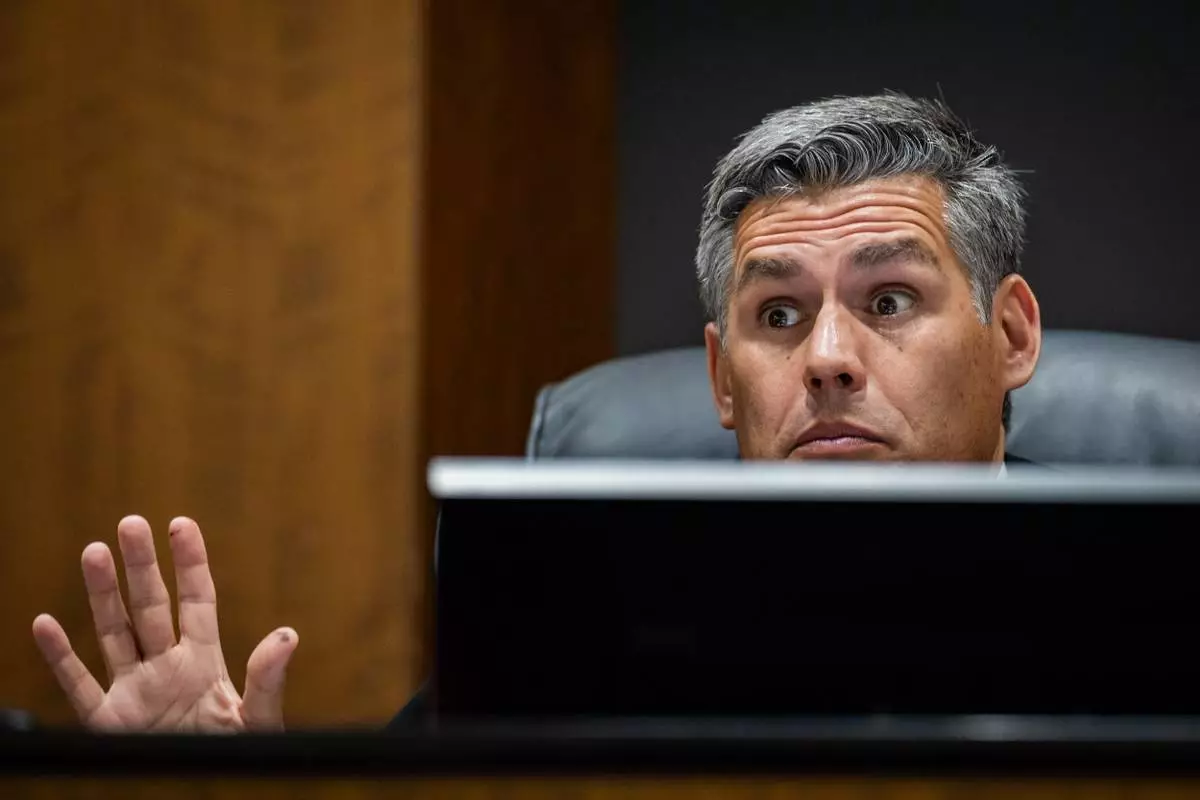
FILE - Fourth District Court Judge Tony Graf speaks during a preliminary hearing for Tyler Robinson, who is accused of fatally shooting Charlie Kirk, at the Fourth District Court in Provo, Utah, July 8, 2026. (Tess Crowley/The Deseret News via AP, Pool, File)
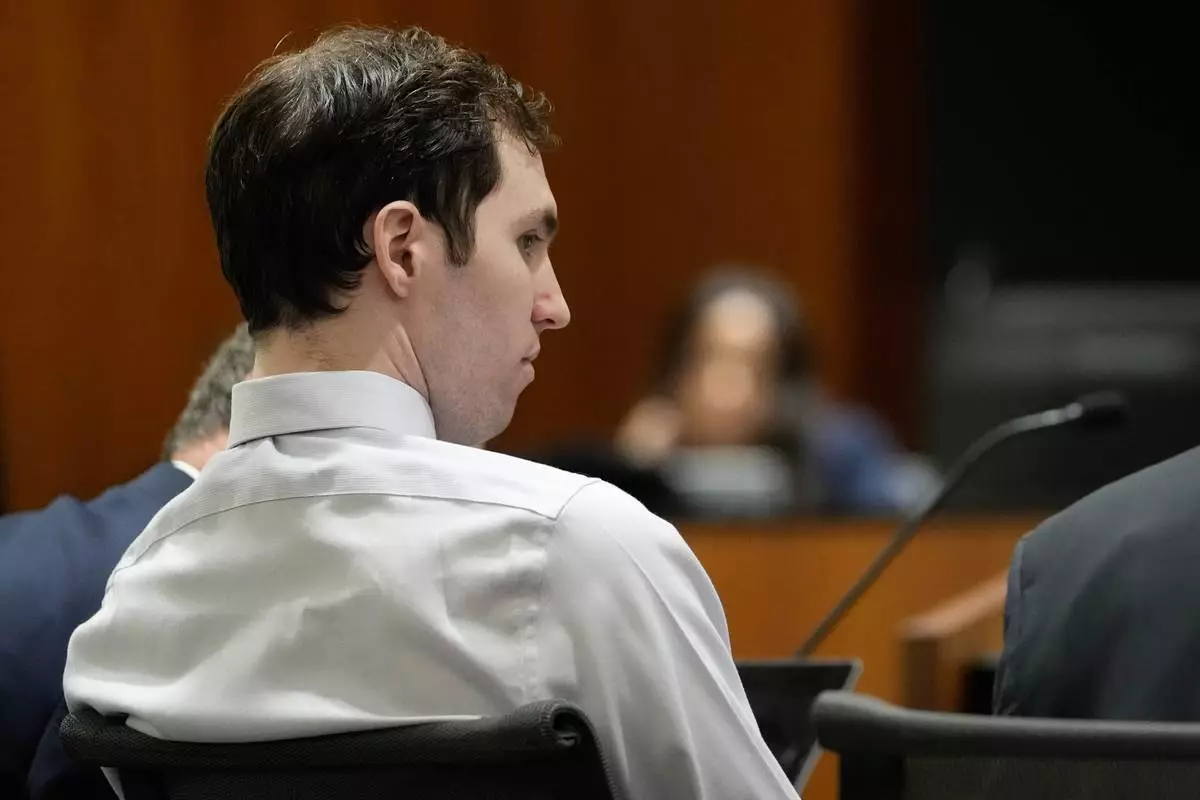
FILE - Tyler Robinson, accused of fatally shooting Charlie Kirk, appears during a hearing in 4th District Court in Provo, Utah, on June 12, 2026. (Francisco Kjolseth /The Salt Lake Tribune via AP, Pool, File)
JUNEAU, Alaska (AP) — Republican Sen. Dan Sullivan and Democratic former congresswoman Mary Peltola advanced to November’s general election on Tuesday, setting the stage for what is expected to be a costly fight for a seat that could determine the balance of power in the U.S. Senate.
Sullivan went on the attack against Peltola in the days leading to the primary, providing a possible preview of their coming matchup. He attempted to tie her to a progressive movement within the Democratic Party that has been ascendant throughout the primary season, claiming Peltola was aligned with Lower 48 “liberals.”
Peltola, who in 2022 became the first Alaska Native to serve in Congress, tried to steer a centrist path but shook up her campaign hierarchy just days before the primary, ousting her campaign manager.
Sullivan and Peltola have raised by far the most money to date in the race and have the greatest name recognition across Alaska, making them the leading contenders in November.
In the race for the state’s lone U.S. House seat, Republican Rep. Nick Begich advanced to the general election along with independent Bill Hill.
The campaign featured over a dozen contenders in each of the top races — for Senate, U.S. House and governor. Under Alaska’s open primary system, all candidates appeared on the same ballot, and the four who receive the most votes qualify for the ranked vote general election. It was too early to call all candidates advancing in the top races under the top-four format.
Tuesday's ballot also included state legislative candidates and a ballot initiative that would reimpose campaign contribution limits in state and local elections.
The highest-profile candidates in a field of 16 were Sen. Sullivan, a two-term Republican, and Peltola.
The race, which is among a handful that could help determine control of the Senate, drew significant attention from outside groups, with Republican and Democratic campaign organizations identifying it as a top target. Peltola shook up her campaign leadership days before the primary, letting her campaign manager go and elevating a deputy to that role. In a statement, the campaign described the changes as “staffing updates as we transition into the general election.”
Sullivan, a veteran and ally of President Donald Trump, campaigned on supporting the military, opening more land for oil and gas extraction, and voting for Trump's signature tax and spending law.
Peltola leaned into the “fish, family, freedom” slogan that first got her elected in 2022, and criticized a political system she said is rigged by special interests and allows politicians to enrich themselves.
But it was a third candidate, a Republican also named Dan Sullivan, who garnered much of the attention.
Dan J. Sullivan won a legal fight to appear on the ballot despite claims by the senator and GOP allies that he was a sham candidate running at the behest of Democrats with the intent of causing confusion. Dan J. Sullivan, a retired teacher from the island community of Petersburg, denied that and said frustration with the incumbent prompted him to run.
He appeared on the ballot as Daniel J. Sullivan Jr., with no party affiliation — a decision that a state elections official said was intended to minimize possible confusion. Meanwhile the senator was listed as Dan S. Sullivan, Republican and incumbent. No other candidate seeking reelection had the “incumbent” label.
The drama involving the dueling Dan Sullivans caught the attention of Trump. In a social media post reiterating his support for the senator days before the primary, Trump called the other's candidacy an attempt to trick voters and urged his followers to vote for “SULLIVAN, DAN S.”
Dan J. Sullivan criticized the senator for embracing Trump's endorsement, calling the president “more interested in raising tariffs on our allies than in lowering the cost of groceries, housing and energy” and “more interested in punishing his enemies than bringing Americans together.”
The Senate race was a focal point for a number of voters.
Jeri Kissner said Congress must do more to push back against Trump.
“I’m so disappointed in our Congress to acquiesce to the president and his minions,” Kissner said. She favored Peltola because she did not like the other options.
Tom Dienst, who voted early and described himself as an “extremely staunch Reagan Republican,” said Trump needs allies to help carry out his agenda.
“When you look at all of the good Trump policies that will help the state, there’s just no doubt. We have to continue with Sullivan,” he said.
In the House race, the most prominent candidates were Begich, seeking a second term, and Hill, a fisherman and former educator from a small southwestern village.
Hill made affordability a key issue in his campaign. He said Alaskans are sick of paying high costs for healthcare, gas and groceries.
“Begich and his buddies think they can play by a different set of rules than we do,” he said after advancing Tuesday. “The Alaskans I know don’t think that’s right.”
Progressive Democrat Matt Schultz suspended his campaign last month but remained on the ballot. His campaign said Schultz would withdraw as a general election candidate if he makes the primary's top four. Schultz urged support for Hill.
Begich, who was endorsed by Trump, cast himself as hardworking and effective in his role. House Speaker Mike Johnson appeared at a rally for Begich in a conservative part of the state this month, though the event was closed to news media.
The campaign for the state’s top executive office was an open race this year because Republican Gov. Mike Dunleavy was barred by term limits from seeking a third consecutive stint.
Two Democrats advanced to the general election from a crowded, largely Republican field: former state lawmakers Jonathan Kreiss-Tomkins and Tom Begich, who is Nick Begich's uncle. If either wins in November, he would become Alaska's first Democratic governor since Tony Knowles left office in 2002.
Republicans in the race included Bernadette Wilson, a businessperson and conservative activist; Click Bishop, a former state labor commissioner and lawmaker; Dave Bronson, former mayor of Anchorage; and Adam Crum and Treg Taylor, two former members of Dunleavy's Cabinet.
Former Gov. Bill Walker, an independent, also was on the ballot.
Voters overwhelming approved the lone ballot measure in the primary, which asked them to reimpose campaign contribution limits, five years after a divided federal appeals court struck down a number of caps.
The measure imposes a $2,000 limit on how much individuals can give to candidates in state and local elections and a $5,000 cap on what they can give to political parties. It also limits spending by groups other than political parties and limits what individuals and groups can give to joint campaigns for governor and lieutenant governor.
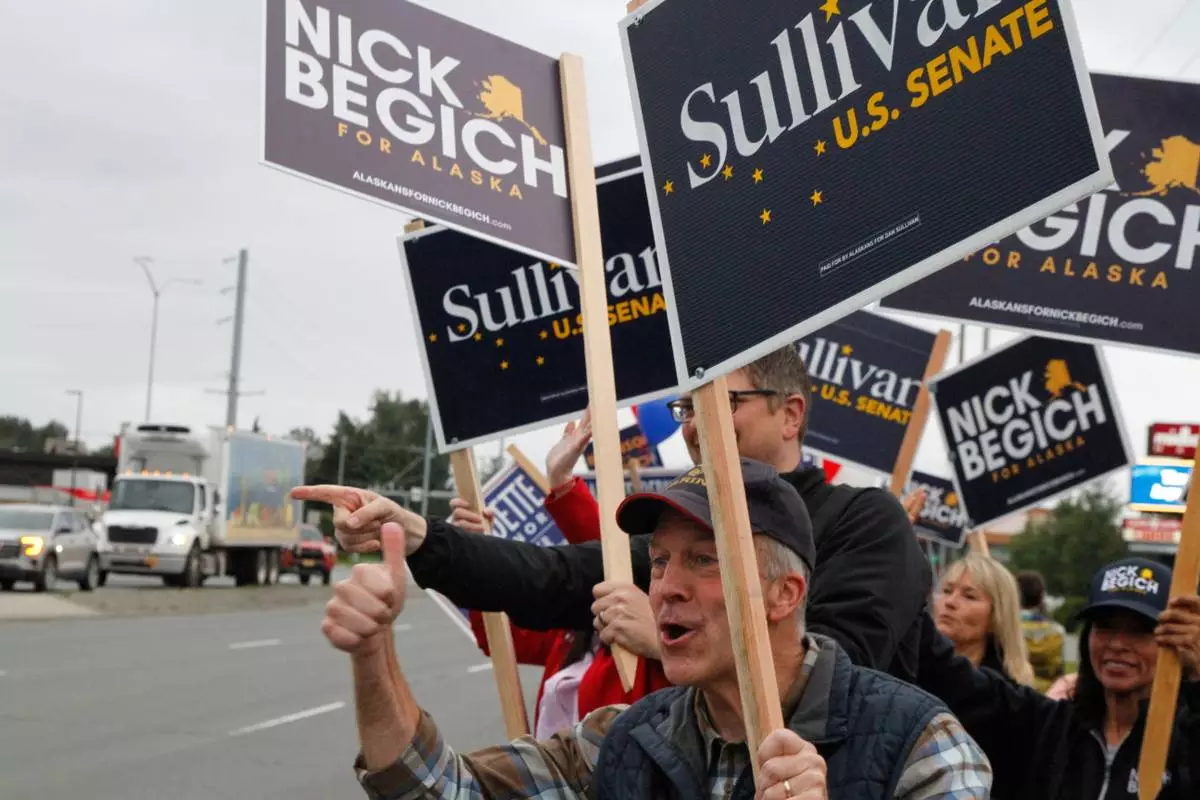
Sen. Dan Sullivan, R-Alaska, who is seeking a third term, flashes a thumbs up after a passing motorist honked during a sign waving event at an intersection on primary election day in Anchorage, Alaska, Tuesday, Aug. 18, 2026. (AP Photo/Mark Thiessen)

U.S. Sen. Dan Sullivan, R-Alaska, speaks at a get out the vote event held at farm in Palmer, Alaska, on Monday, Aug. 17, 2026. (AP Photo/Mark Thiessen)
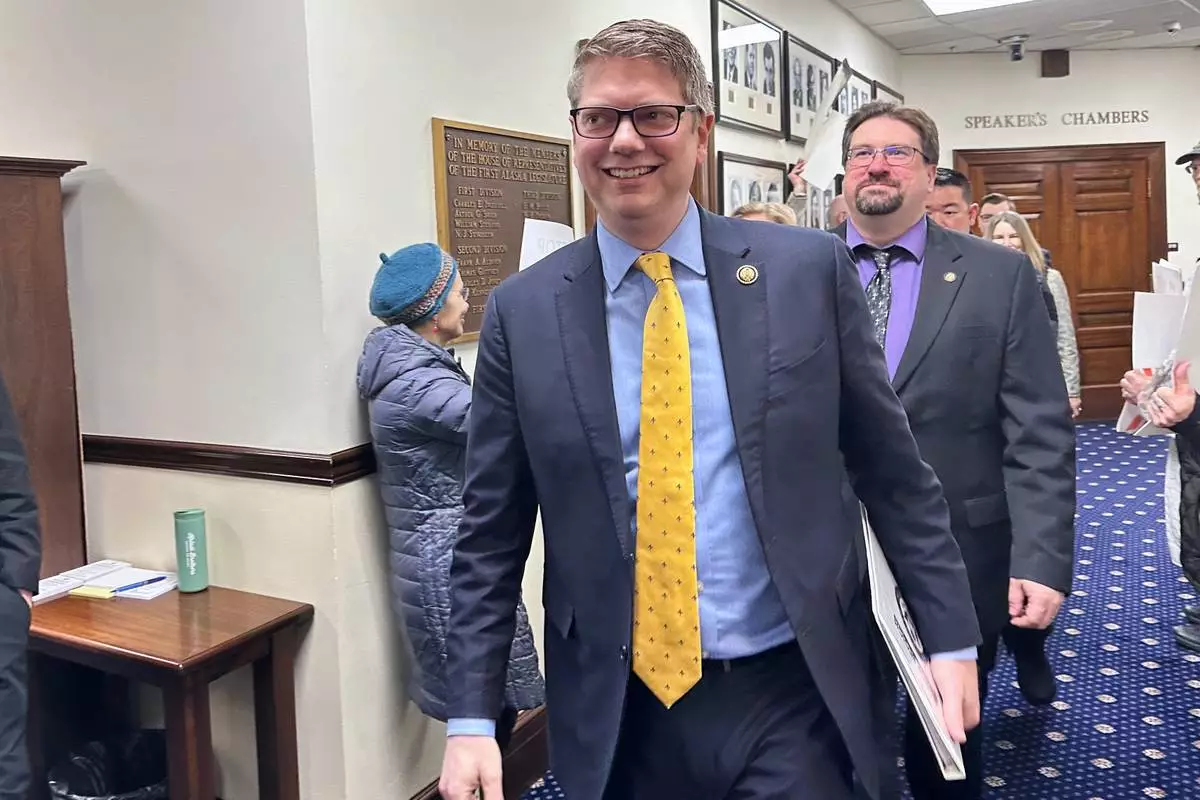
FILE - Alaska Republican U.S. Rep. Nick Begich walks down a corridor in the state Capitol before giving a speech to Alaska lawmakers, March 10, 2026, in Juneau, Alaska. (AP Photo/Becky Bohrer, File)
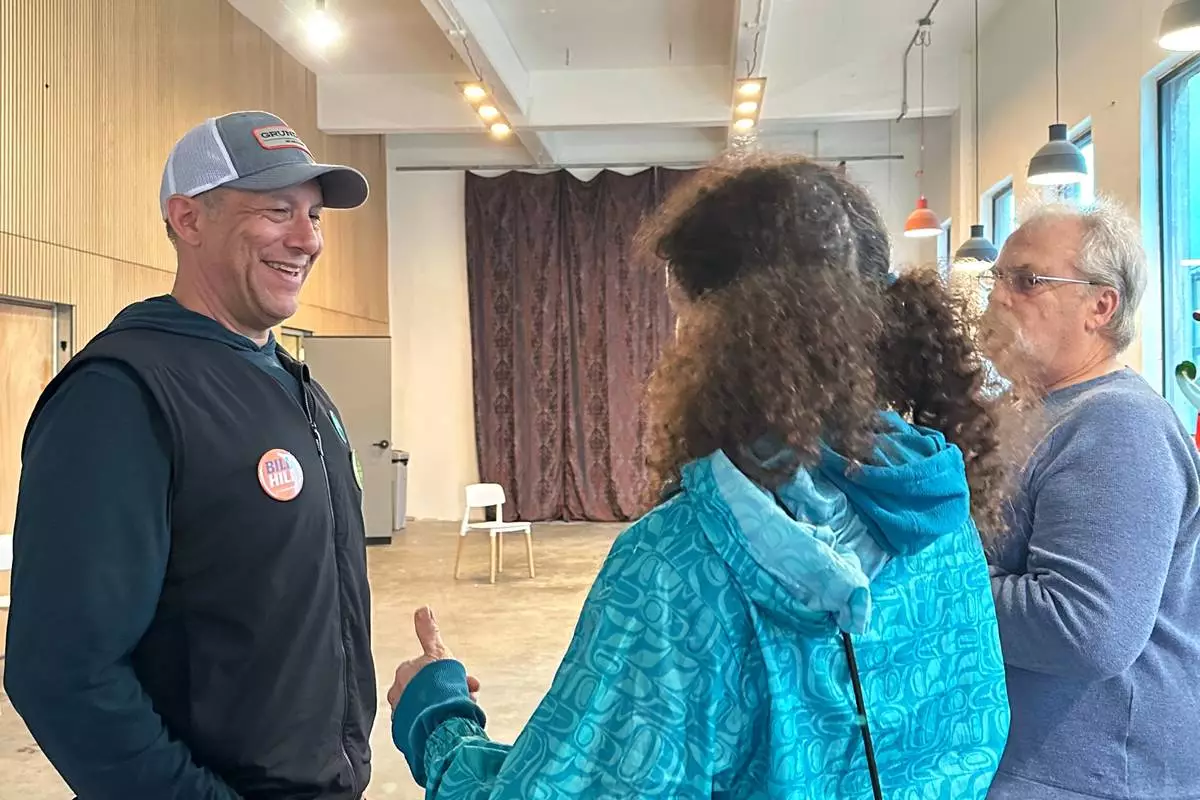
FILE - Alaska U.S. House candidate Bill Hill, an independent, speaks with people at a campaign fundraising event in Juneau, Alaska, June 4, 2026. (AP Photo/Becky Bohrer, File)

FILE - Dan Sullivan, a candidate in Alaska's U.S. Senate race who shares his name with the incumbent seeking reelection, talks with a reporter, July 3, 2026, in Petersburg, Alaska. (AP Photo/Becky Bohrer, File)
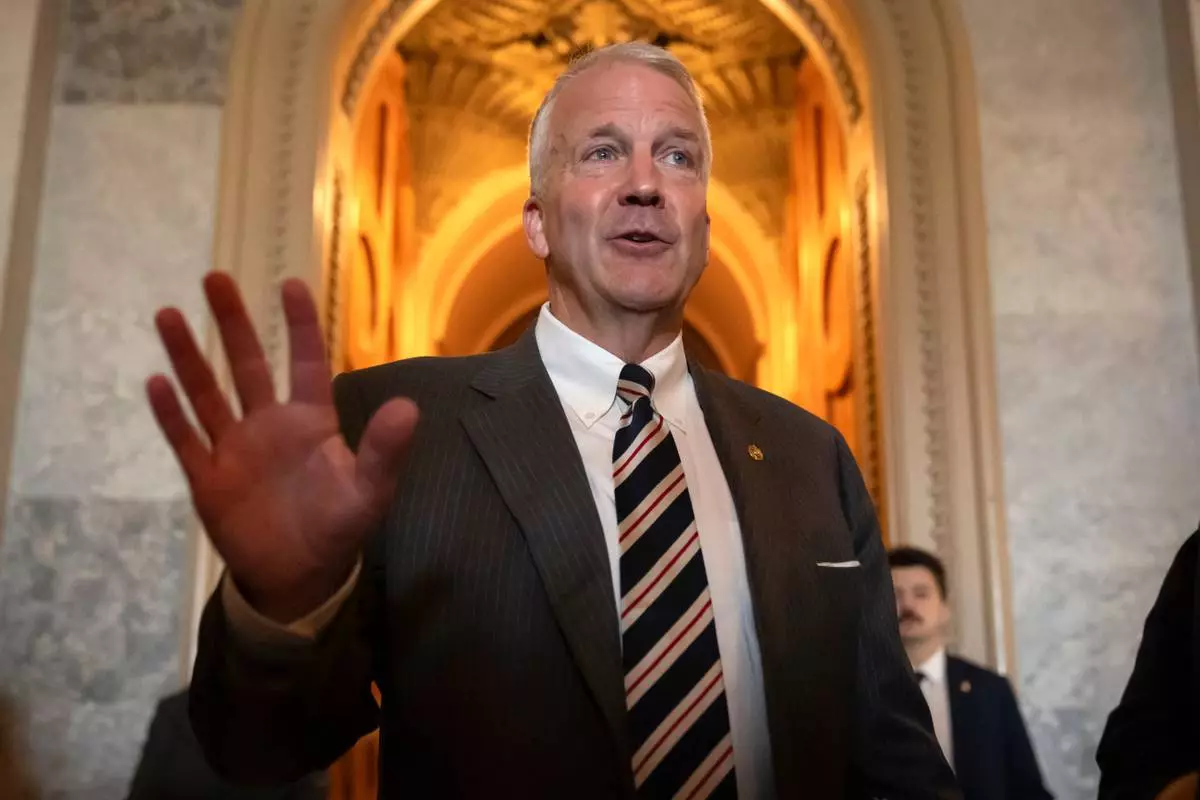
FILE - Sen. Dan Sullivan, R-Alaska, speaks to reporters at the Capitol in Washington, June 30, 2025. (AP Photo/Mark Schiefelbein)
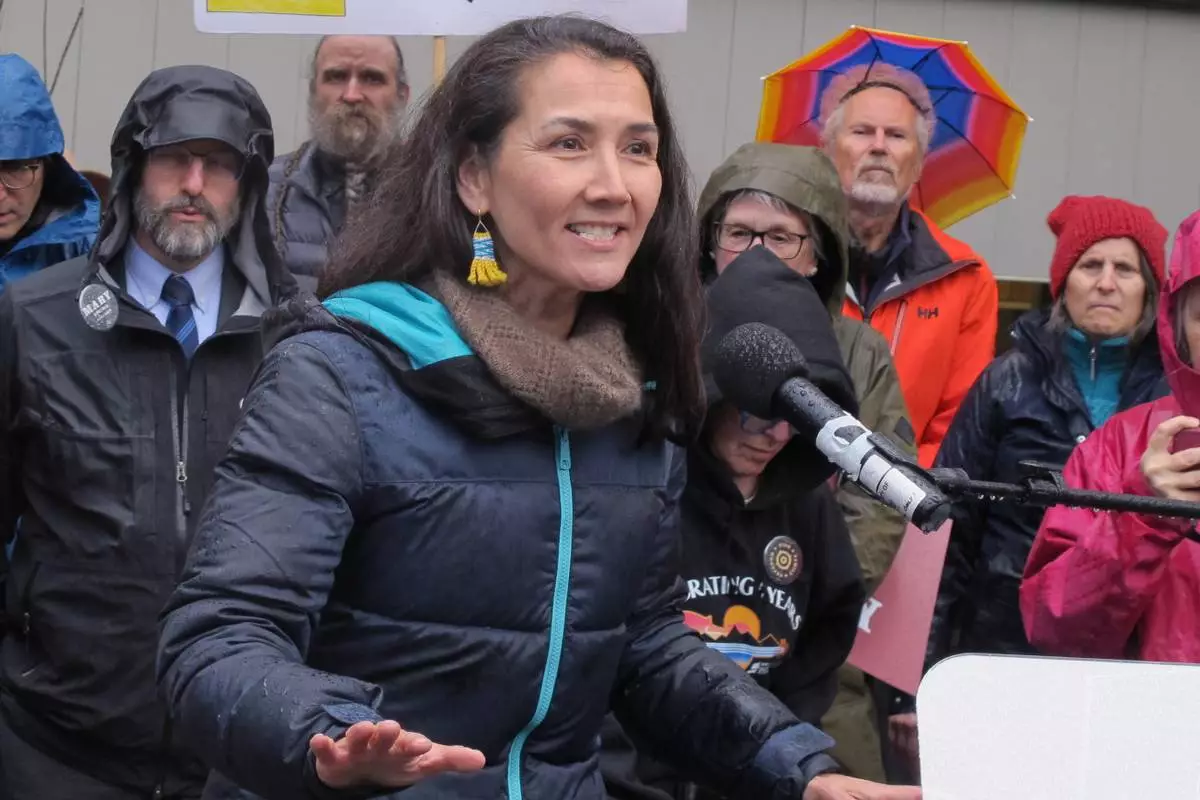
FILE - Alaska U.S. Senate candidate Mary Peltola, a Democrat, speaks during a campaign rally on May 14, 2026, in Juneau, Alaska. (AP Photo/Becky Bohrer, file)