Skip to Content Facebook Feature Image

In Israel, military service debate spotlights ultra-Orthodox Jews and their growing clout

News

In Israel, military service debate spotlights ultra-Orthodox Jews and their growing clout
News

News

In Israel, military service debate spotlights ultra-Orthodox Jews and their growing clout

2026-08-19 13:03 Last Updated At:13:50

JERUSALEM (AP) — Ultra-Orthodox Jewish families are an unmissable facet of Israeli life. Immediately recognizable, the men dress in black suits and hats, the women in modest long sleeves and skirts with wigs, turbans or scarves covering their hair, and numerous children tag along, often in matching outfits.

They are growing in numbers and in political and cultural clout. That’s bringing their vision of faith, Jewish identity and civic practices into conflict with other Israelis, both religious and secular. Distrust spirals on all sides.

More Images
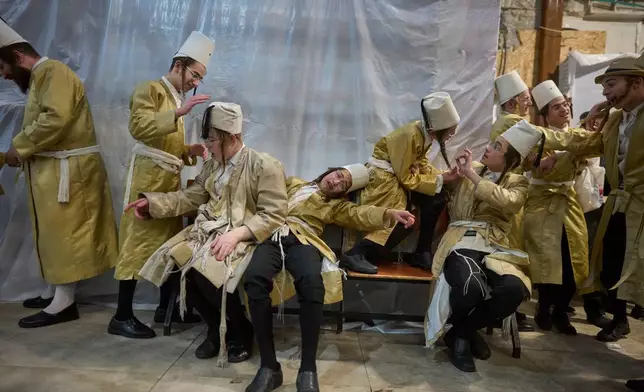
Ultra-Orthodox Jewish men celebrate the festival of Purim in Jerusalem, Wednesday, March 4, 2026. (AP Photo/Ohad Zwigenberg)
Ultra-Orthodox Jewish men celebrate the festival of Purim in Jerusalem, Wednesday, March 4, 2026. (AP Photo/Ohad Zwigenberg)

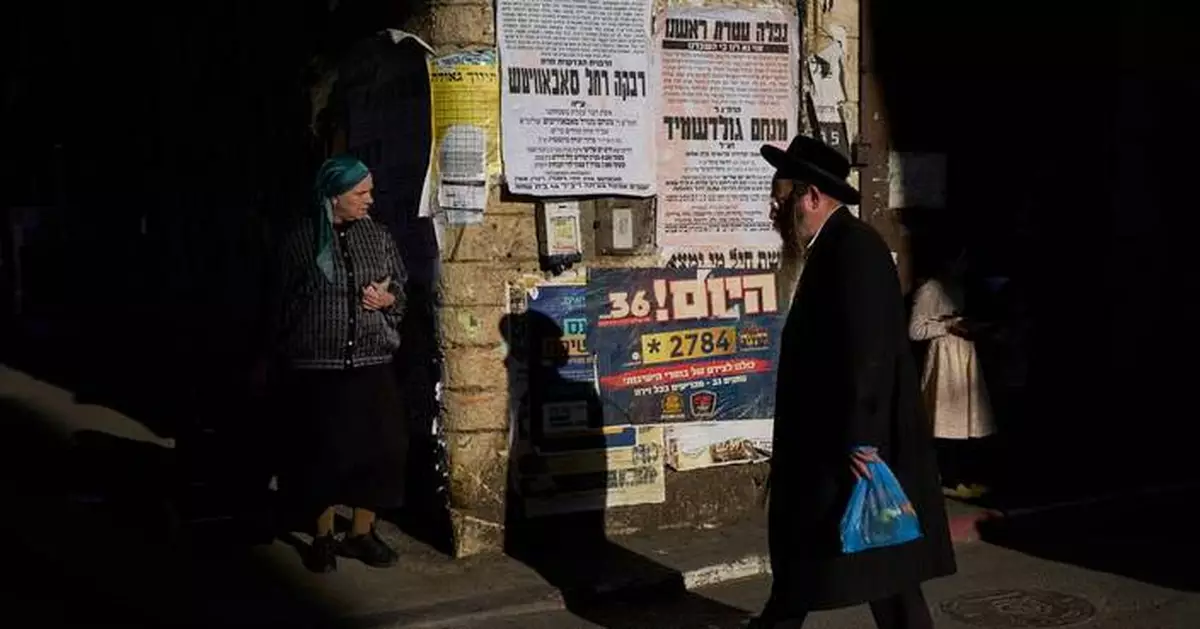
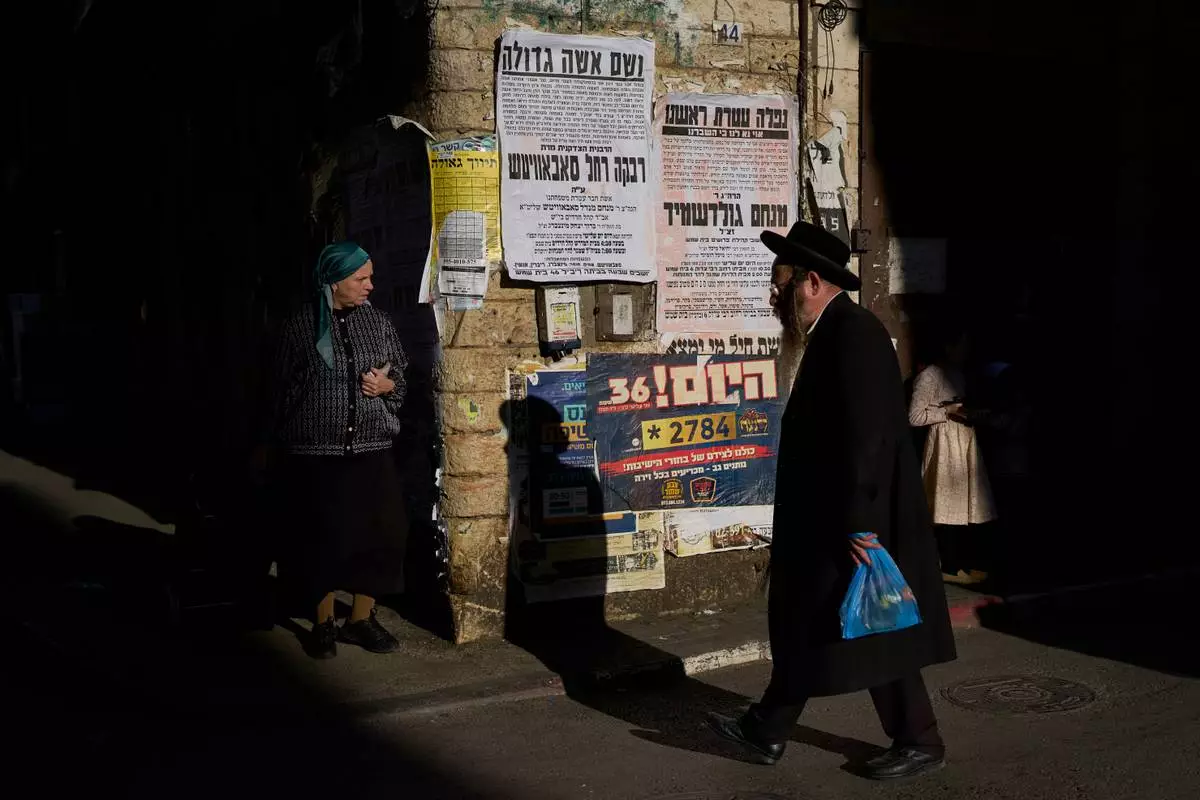
Ultra-Orthodox Jews walk past pashkevilim, posters used to publicize news and important messages in the ultra-Orthodox community, in the Mea Shearim neighborhood of Jerusalem, Wednesday, July 8, 2026. (AP Photo/Ohad Zwigenberg)
Ultra-Orthodox Jews walk past pashkevilim, posters used to publicize news and important messages in the ultra-Orthodox community, in the Mea Shearim neighborhood of Jerusalem, Wednesday, July 8, 2026. (AP Photo/Ohad Zwigenberg)

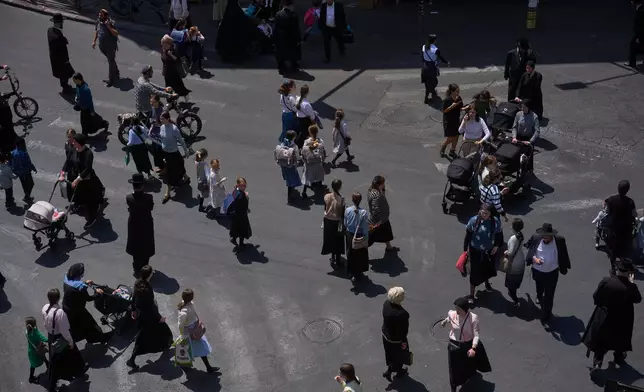
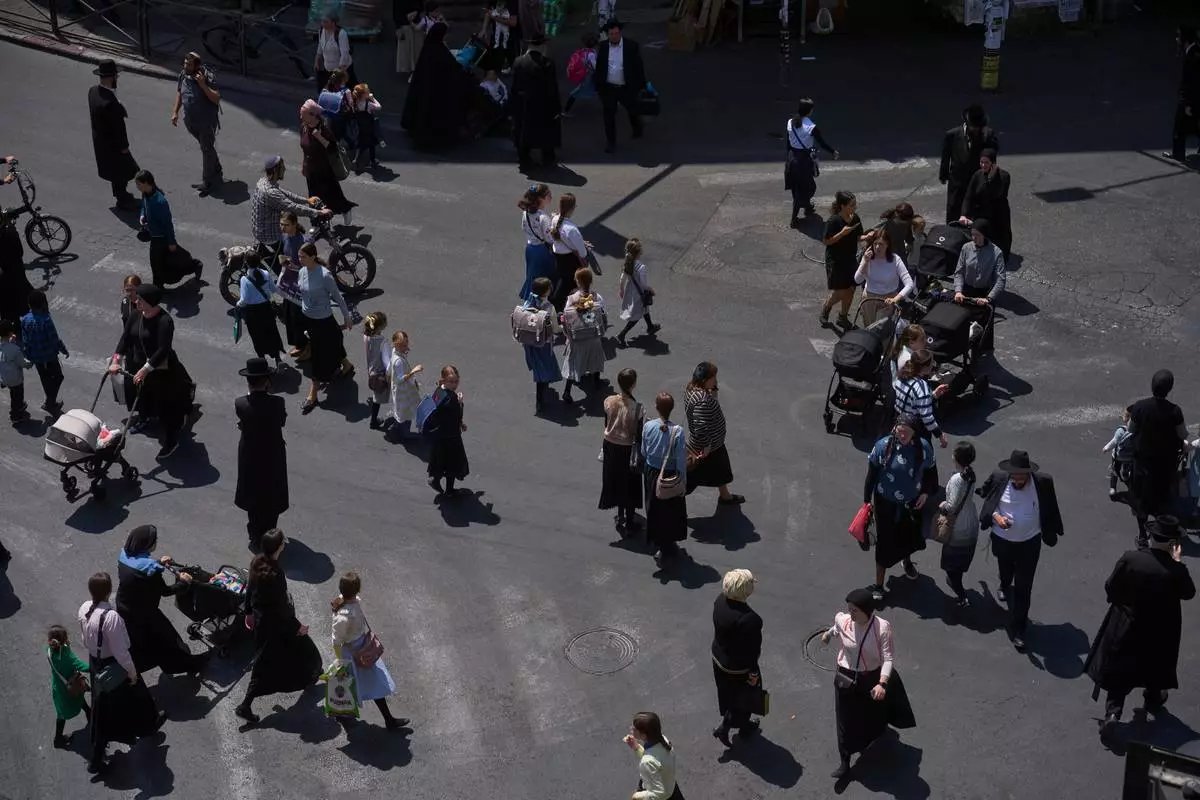
Ultra-Orthodox Jews cross a street in the Mea Shearim neighborhood of Jerusalem, Tuesday, Aug. 18, 2026. (AP Photo/Ohad Zwigenberg)
Ultra-Orthodox Jews cross a street in the Mea Shearim neighborhood of Jerusalem, Tuesday, Aug. 18, 2026. (AP Photo/Ohad Zwigenberg)

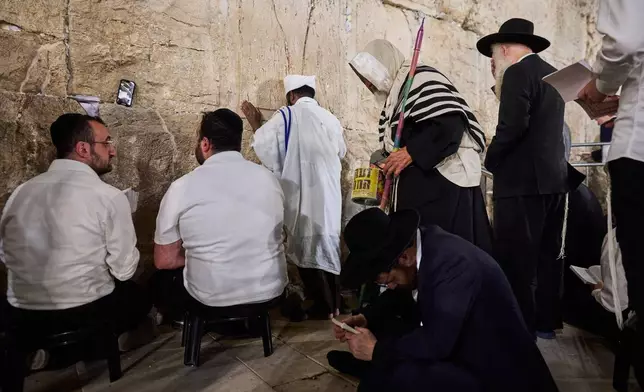
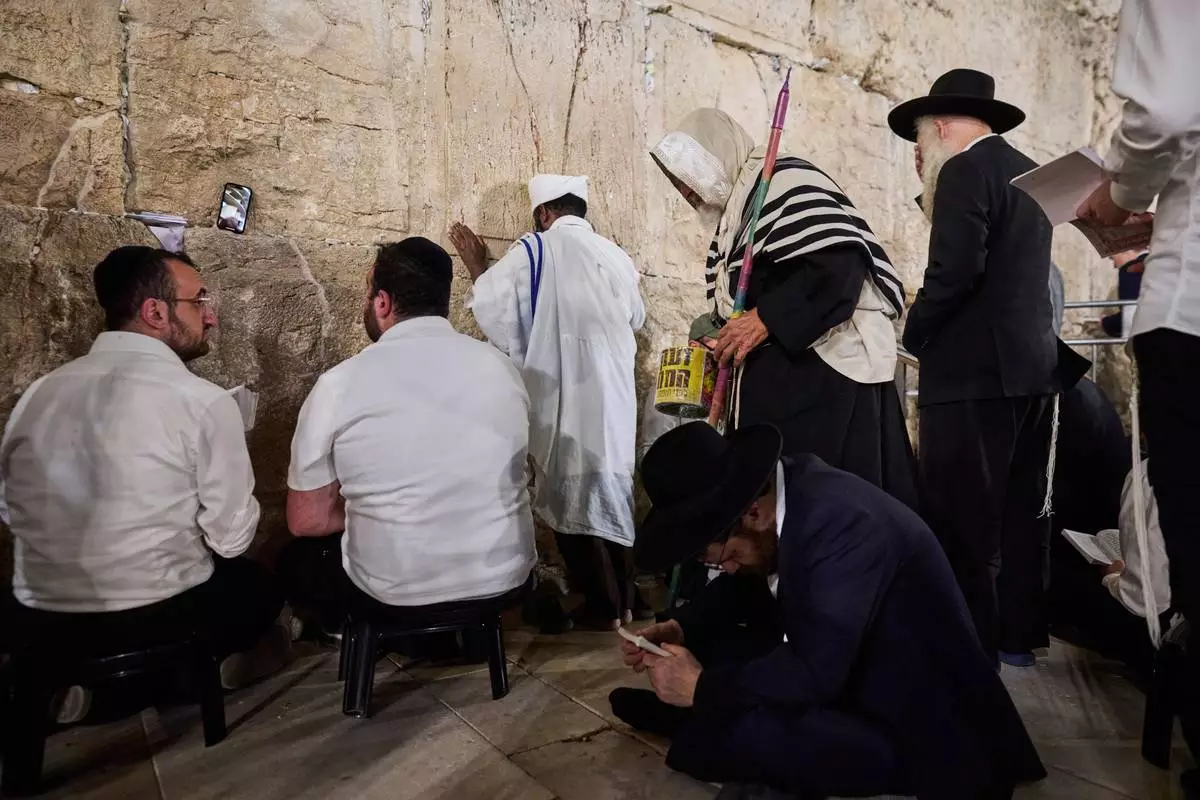
Ultra-orthodox Jewish men pray during the mourning ritual of Tisha B'Av at the Western Wall, Judaism's holiest site, in Jerusalem's Old City, Wednesday, July 22, 2026. (AP Photo/Ohad Zwigenberg)
Ultra-orthodox Jewish men pray during the mourning ritual of Tisha B'Av at the Western Wall, Judaism's holiest site, in Jerusalem's Old City, Wednesday, July 22, 2026. (AP Photo/Ohad Zwigenberg)

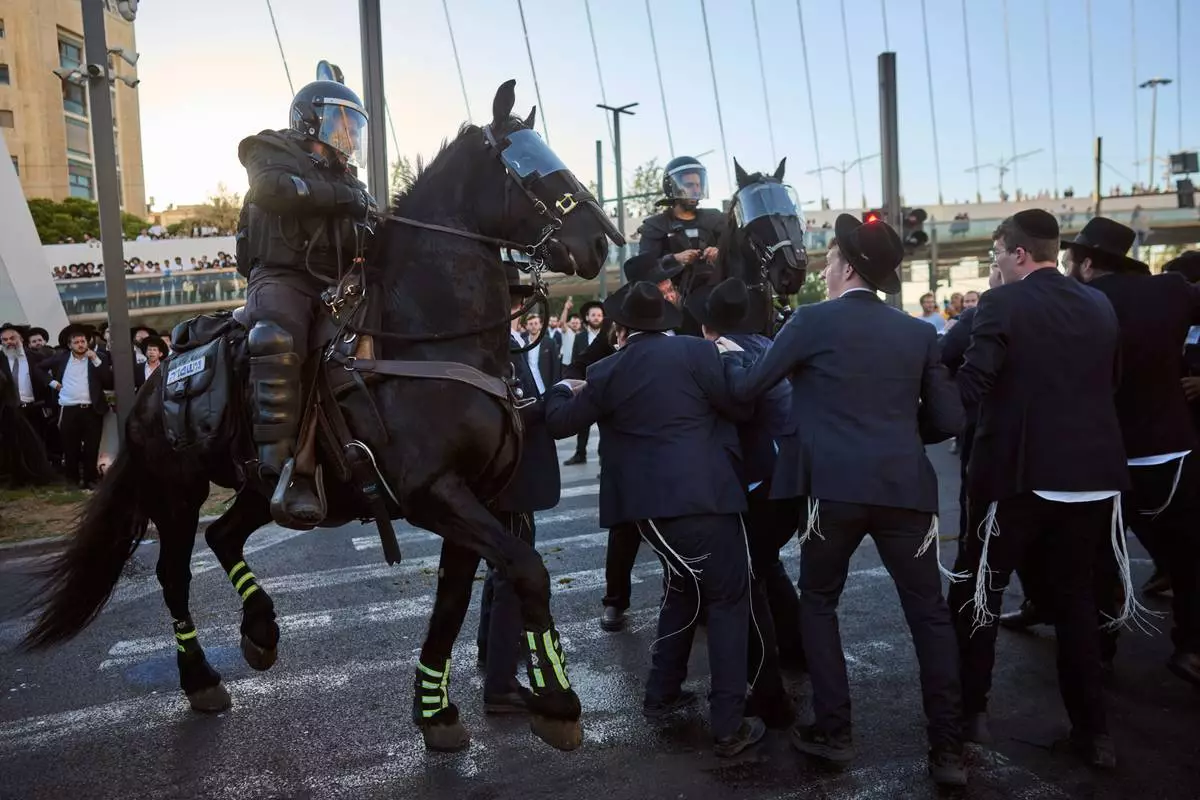
Israeli mounted police disperse Ultra-Orthodox Jews blocking a road during a protest against the army draft in Jerusalem, Monday, June 1, 2026. (AP Photo/Ohad Zwigenberg)
Israeli mounted police disperse Ultra-Orthodox Jews blocking a road during a protest against the army draft in Jerusalem, Monday, June 1, 2026. (AP Photo/Ohad Zwigenberg)

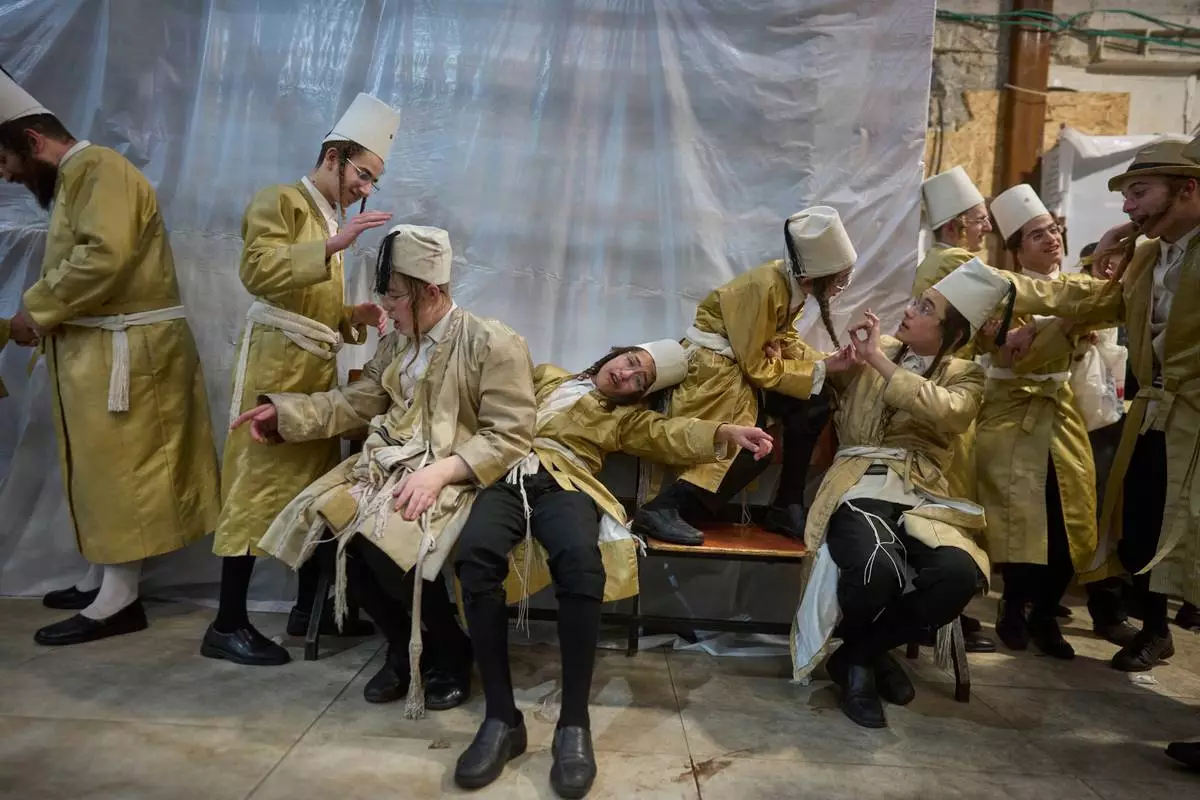
Ultra-Orthodox Jewish men celebrate the festival of Purim in Jerusalem, Wednesday, March 4, 2026. (AP Photo/Ohad Zwigenberg)
Ultra-Orthodox Jewish men celebrate the festival of Purim in Jerusalem, Wednesday, March 4, 2026. (AP Photo/Ohad Zwigenberg)

Ultra-Orthodox Jews walks past pashkevilim, posters used to publicize news and important messages in the ultra-Orthodox community, in the Mea Shearim neighborhood of Jerusalem, Wednesday, July 8, 2026. (AP Photo/Ohad Zwigenberg)

Ultra-Orthodox Jews walks past pashkevilim, posters used to publicize news and important messages in the ultra-Orthodox community, in the Mea Shearim neighborhood of Jerusalem, Wednesday, July 8, 2026. (AP Photo/Ohad Zwigenberg)

Mass protests over proposed changes to the exemption from the military draft for ultra-Orthodox men highlight the most contentious issue as the country approaches three years of war on multiple fronts — and national elections where ultra-Orthodox parties are likely to be kingmakers.

At the core of ultra-Orthodox doctrine is the belief that studying scripture — and teaching it to family and community — is the highest duty, above working or joining the armed forces even in wartime.

Judith Rosenblum, who has seven sons and one daughter, believes that ultra-Orthodox practice is under threat from secular culture, and that conscripting young men into the military can “compromise” their religious practice.

But when she ran into an acquaintance whose grandson lost two legs and an arm in the war in Gaza, she was proud to relay that three of her sons also signed up to serve after the Oct. 7, 2023, Hamas attack on Israel.

“If all my kids were cut out for full-time Torah learning and had the money to support themselves doing so, for sure that would be a preference,” Rosenblum said. “But my kids who left full-time Torah study are amazing human beings. And I believe that they did the right thing by going into the army and participating in the defense of the country.”

In Hebrew, the ultra-Orthodox are called Haredim. The term was first used in the late 19th century by several rabbis and is derived from the Prophet Isaiah’s description of being “fearful or astounded by the word of God,” according to Rabbi Beryl Gershenfeld.

"God’s word is not supposed to be intuitive; you have to look deeply,” said Gershenfeld, who grew up in Philadelphia but has lived in Israel, studying and teaching the Torah, for half a century. “Understanding the Torah is the crucial mission of life.”

He runs two Jerusalem yeshivas — or seminaries — for ultra-Orthodox boys and men.

Such institutions are “the beating heart of the community,” said Rabbi Heshy Grossman, an administrator at a prominent yeshiva in the Jerusalem neighborhood of Ramot.

Inside the residential yeshiva, students aged 17-22 in white shirts and black pants spend long days praying, studying and discussing sacred texts and commentaries. Etl Lovy, 22, is completing his five years of study at the age when families start matchmaking for marriage.

“We have a lot of belief in what we’re learning,” he said a day before the start of summer break.

Lovy enthusiastically described how days begin at 7 a.m. with a prayer and continue with Talmud studies until late evening, learning “all commands from God and how to get close to him.”

As he took a sip of water on the hot day, he whispered a prayer. “Everything comes from the one above,” he explained with a smile.

For the ultra-Orthodox, each commandment and each good deed is not just a God-given obligation, but a way to find fulfillment and holiness.

And the highest one is studying God’s word — especially for men. Women receive a broader education in secular subjects like math, and they are expected to work while also raising large families. Ultra-Orthodox Jews believe many forms of birth control are opposed to God’s will, a view held by other conservative faiths but not all branches of Judaism.

“My life is not about making money, or building a nice house,” said Lovy, who plans to continue to study the Torah while his future wife works.

For the ultra-Orthodox, “every second of life is devoted to God,” said Rabbi Emanuel Feldman, adding that other Jews will either follow suit or “disappear into the mainstream.”

“The Orthodox are fighting assimilation,” said Feldman, who in his late 90s has witnessed the growth of the practice and still writes columns for a popular Haredi weekly magazine. “If you don’t study Torah and observe the commands, you become like any other Mediterranean country.”

He added that the ultra-Orthodox follow civil law so long as it doesn’t interfere with religious belief, such as forbidding or “affecting” the study of the Torah.

Much of the Torah studies tradition was lost during the Holocaust. When the state of Israel was founded shortly after, it gave ultra-Orthodox scholars special rights so they could rebuild, said Shlomit Ravitsky Tur-Paz, director of the Israel Democracy Institute’s Religion and State Program.

That included an exemption from the military draft, originally for a few hundred scholars and in later decades broadened by conservative governments to everyone who wanted to engage in Torah learning full-time, she said. The same body of men was also largely outside the workforce.

But the ultra-Orthodox have grown rapidly, outpacing other Israelis. Ravitsky Tur-Paz estimates they will be about 25% of the population by 2050, and about 40% of the potential army draft.

“Israelis aren’t concerned about the Haredi way of life; they’re concerned about their way of life,” she said, adding that includes everything from welfare tax impacts to how much time non-Haredi Israelis might need to serve in the reserves. “The question is, who’s paying the price for your choice of life? This has become the issue everyone is talking about.”

For many ultra-Orthodox, there’s no debate — they’re fulfilling their individual obligation to God, and nothing else matters more.

“The importance of the Torah is a genuine feeling, and not just an escape, not just an excuse,” Rosenblum said. “Haredi world will put Torah first, and then Israel.”

Fewer than 10% of ultra-Orthodox men reaching the conscription age of 18 enlist, according to a parliamentary committee, and they usually join separate units accommodating their religious practices. Reacting to a recent bill protecting the ultra-Orthodox from draft evasion prosecution, the Israeli army’s chief of staff, Lt. Gen. Eyal Zamir, called such exemptions "inconceivable” while troops are being asked for “unprecedented sacrifice.”

But most ultra-Orthodox rabbis are adamant about their youths' exemption from the draft, to avoid “diluting their piety” at a critical age. Other Jewish men in Israel are required to serve for nearly three years, and women for two years.

“Studying the Torah is itself a spiritual protection,” Feldman added — an argument wearing thin with many Israelis, especially since about 1,000 troops have been killed fighting Hamas in Gaza and Hezbollah militants in Lebanon since the 2023 attack.

Asked if he had any qualms about his peers serving as soldiers while he devotes his life to studies, Lovy, the yeshiva student, said he prays “all the time” for soldiers.

“But we think because we believe in the Bible, we believe this is the right way to live. We don’t apologize,” he said. “I’m doing what God wants.”

Associated Press religion coverage receives support through the AP’s collaboration with The Conversation US, with funding from Lilly Endowment Inc. The AP is solely responsible for this content.
Ultra-Orthodox Jewish men celebrate the festival of Purim in Jerusalem, Wednesday, March 4, 2026. (AP Photo/Ohad Zwigenberg)
Ultra-Orthodox Jewish men celebrate the festival of Purim in Jerusalem, Wednesday, March 4, 2026. (AP Photo/Ohad Zwigenberg)

Ultra-Orthodox Jews walk past pashkevilim, posters used to publicize news and important messages in the ultra-Orthodox community, in the Mea Shearim neighborhood of Jerusalem, Wednesday, July 8, 2026. (AP Photo/Ohad Zwigenberg)
Ultra-Orthodox Jews walk past pashkevilim, posters used to publicize news and important messages in the ultra-Orthodox community, in the Mea Shearim neighborhood of Jerusalem, Wednesday, July 8, 2026. (AP Photo/Ohad Zwigenberg)

Ultra-Orthodox Jews cross a street in the Mea Shearim neighborhood of Jerusalem, Tuesday, Aug. 18, 2026. (AP Photo/Ohad Zwigenberg)
Ultra-Orthodox Jews cross a street in the Mea Shearim neighborhood of Jerusalem, Tuesday, Aug. 18, 2026. (AP Photo/Ohad Zwigenberg)

Ultra-orthodox Jewish men pray during the mourning ritual of Tisha B'Av at the Western Wall, Judaism's holiest site, in Jerusalem's Old City, Wednesday, July 22, 2026. (AP Photo/Ohad Zwigenberg)
Ultra-orthodox Jewish men pray during the mourning ritual of Tisha B'Av at the Western Wall, Judaism's holiest site, in Jerusalem's Old City, Wednesday, July 22, 2026. (AP Photo/Ohad Zwigenberg)

Israeli mounted police disperse Ultra-Orthodox Jews blocking a road during a protest against the army draft in Jerusalem, Monday, June 1, 2026. (AP Photo/Ohad Zwigenberg)
Israeli mounted police disperse Ultra-Orthodox Jews blocking a road during a protest against the army draft in Jerusalem, Monday, June 1, 2026. (AP Photo/Ohad Zwigenberg)

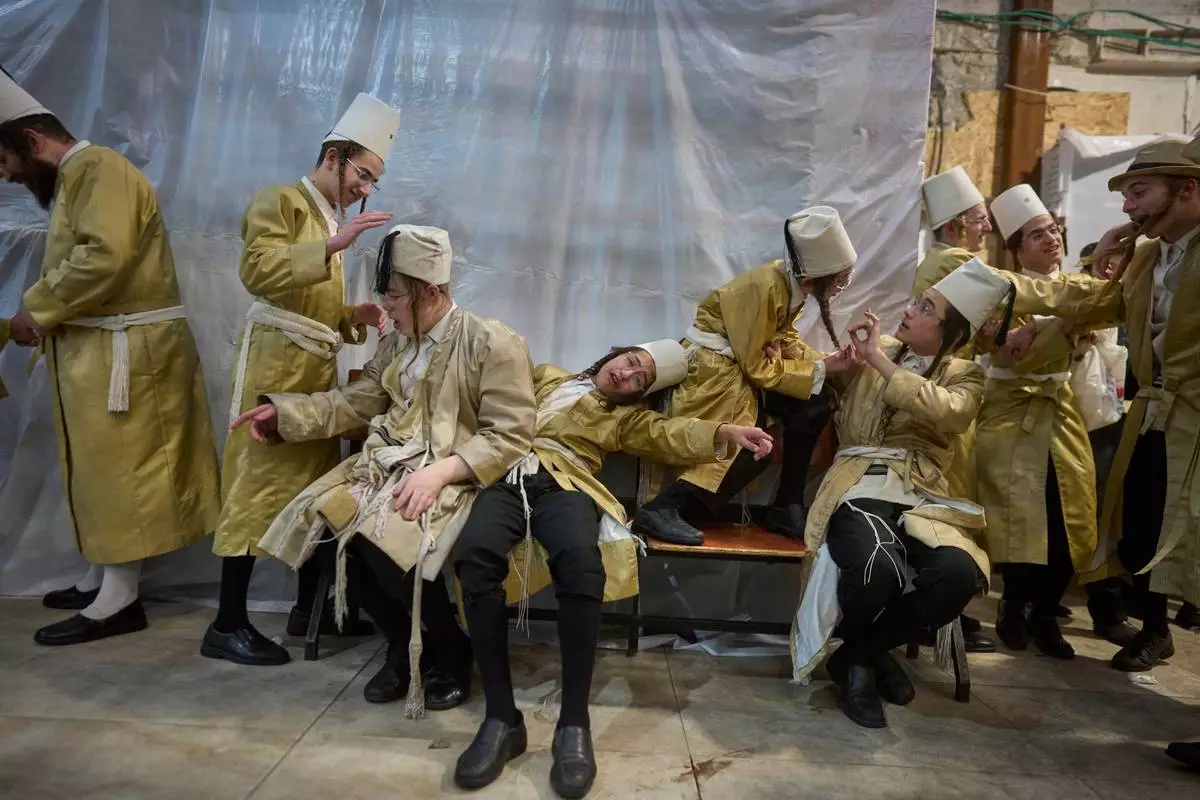
Ultra-Orthodox Jewish men celebrate the festival of Purim in Jerusalem, Wednesday, March 4, 2026. (AP Photo/Ohad Zwigenberg)
Ultra-Orthodox Jewish men celebrate the festival of Purim in Jerusalem, Wednesday, March 4, 2026. (AP Photo/Ohad Zwigenberg)

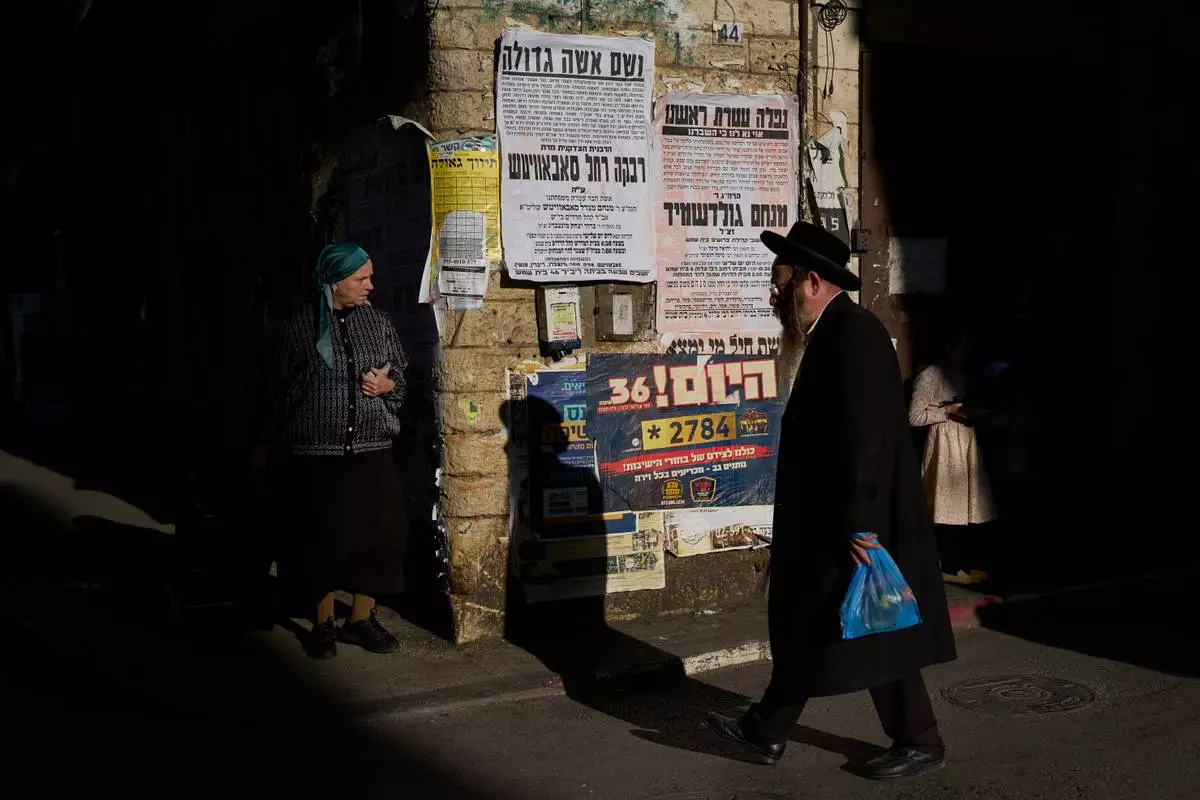
Ultra-Orthodox Jews walks past pashkevilim, posters used to publicize news and important messages in the ultra-Orthodox community, in the Mea Shearim neighborhood of Jerusalem, Wednesday, July 8, 2026. (AP Photo/Ohad Zwigenberg)

Ultra-Orthodox Jews walks past pashkevilim, posters used to publicize news and important messages in the ultra-Orthodox community, in the Mea Shearim neighborhood of Jerusalem, Wednesday, July 8, 2026. (AP Photo/Ohad Zwigenberg)

JUNEAU, Alaska (AP) — Republican Sen. Dan Sullivan and Democratic former congresswoman Mary Peltola advanced to November’s general election on Tuesday, setting the stage for what is expected to be a costly fight for a seat that could determine the balance of power in the U.S. Senate.

Sullivan went on the attack against Peltola in the days leading to the primary, providing a possible preview of their coming matchup. He attempted to tie her to a progressive movement within the Democratic Party that has been ascendant throughout the primary season, claiming Peltola was aligned with Lower 48 “liberals.”

Peltola, who in 2022 became the first Alaska Native to serve in Congress, tried to steer a centrist path but shook up her campaign hierarchy just days before the primary, ousting her campaign manager.

Sullivan and Peltola have raised by far the most money to date in the race and have the greatest name recognition across Alaska, making them the leading contenders in November.

In the race for the state’s lone U.S. House seat, Republican Rep. Nick Begich advanced to the general election along with independent Bill Hill.

The campaign featured over a dozen contenders in each of the top races — for Senate, U.S. House and governor. Under Alaska’s open primary system, all candidates appeared on the same ballot, and the four who receive the most votes qualify for the ranked vote general election. It was too early to call all candidates advancing in the top races under the top-four format.

Tuesday's ballot also included state legislative candidates and a ballot initiative that would reimpose campaign contribution limits in state and local elections.

The highest-profile candidates in a field of 16 were Sen. Sullivan, a two-term Republican, and Peltola.

The race, which is among a handful that could help determine control of the Senate, drew significant attention from outside groups, with Republican and Democratic campaign organizations identifying it as a top target. Peltola shook up her campaign leadership days before the primary, letting her campaign manager go and elevating a deputy to that role. In a statement, the campaign described the changes as “staffing updates as we transition into the general election.”

Sullivan, a veteran and ally of President Donald Trump, campaigned on supporting the military, opening more land for oil and gas extraction, and voting for Trump's signature tax and spending law.

Peltola leaned into the “fish, family, freedom” slogan that first got her elected in 2022, and criticized a political system she said is rigged by special interests and allows politicians to enrich themselves.

But it was a third candidate, a Republican also named Dan Sullivan, who garnered much of the attention.

Dan J. Sullivan won a legal fight to appear on the ballot despite claims by the senator and GOP allies that he was a sham candidate running at the behest of Democrats with the intent of causing confusion. Dan J. Sullivan, a retired teacher from the island community of Petersburg, denied that and said frustration with the incumbent prompted him to run.

He appeared on the ballot as Daniel J. Sullivan Jr., with no party affiliation — a decision that a state elections official said was intended to minimize possible confusion. Meanwhile the senator was listed as Dan S. Sullivan, Republican and incumbent. No other candidate seeking reelection had the “incumbent” label.

The drama involving the dueling Dan Sullivans caught the attention of Trump. In a social media post reiterating his support for the senator days before the primary, Trump called the other's candidacy an attempt to trick voters and urged his followers to vote for “SULLIVAN, DAN S.”

Dan J. Sullivan criticized the senator for embracing Trump's endorsement, calling the president “more interested in raising tariffs on our allies than in lowering the cost of groceries, housing and energy” and “more interested in punishing his enemies than bringing Americans together.”

The Senate race was a focal point for a number of voters.

Jeri Kissner said Congress must do more to push back against Trump.

“I’m so disappointed in our Congress to acquiesce to the president and his minions,” Kissner said. She favored Peltola because she did not like the other options.

Tom Dienst, who voted early and described himself as an “extremely staunch Reagan Republican,” said Trump needs allies to help carry out his agenda.

“When you look at all of the good Trump policies that will help the state, there’s just no doubt. We have to continue with Sullivan,” he said.

In the House race, the most prominent candidates were Begich, seeking a second term, and Hill, a fisherman and former educator from a small southwestern village.

Hill made affordability a key issue in his campaign. He said Alaskans are sick of paying high costs for healthcare, gas and groceries.

“Begich and his buddies think they can play by a different set of rules than we do,” he said after advancing Tuesday. “The Alaskans I know don’t think that’s right.”

Progressive Democrat Matt Schultz suspended his campaign last month but remained on the ballot. His campaign said Schultz would withdraw as a general election candidate if he makes the primary's top four. Schultz urged support for Hill.

Begich, who was endorsed by Trump, cast himself as hardworking and effective in his role. House Speaker Mike Johnson appeared at a rally for Begich in a conservative part of the state this month, though the event was closed to news media.

The campaign for the state’s top executive office was an open race this year because Republican Gov. Mike Dunleavy was barred by term limits from seeking a third consecutive stint.

Two Democrats advanced to the general election from a crowded, largely Republican field: former state lawmakers Jonathan Kreiss-Tomkins and Tom Begich, who is Nick Begich's uncle. If either wins in November, he would become Alaska's first Democratic governor since Tony Knowles left office in 2002.

Republicans in the race included Bernadette Wilson, a businessperson and conservative activist; Click Bishop, a former state labor commissioner and lawmaker; Dave Bronson, former mayor of Anchorage; and Adam Crum and Treg Taylor, two former members of Dunleavy's Cabinet.

Former Gov. Bill Walker, an independent, also was on the ballot.

Voters overwhelming approved the lone ballot measure in the primary, which asked them to reimpose campaign contribution limits, five years after a divided federal appeals court struck down a number of caps.

The measure imposes a $2,000 limit on how much individuals can give to candidates in state and local elections and a $5,000 cap on what they can give to political parties. It also limits spending by groups other than political parties and limits what individuals and groups can give to joint campaigns for governor and lieutenant governor.

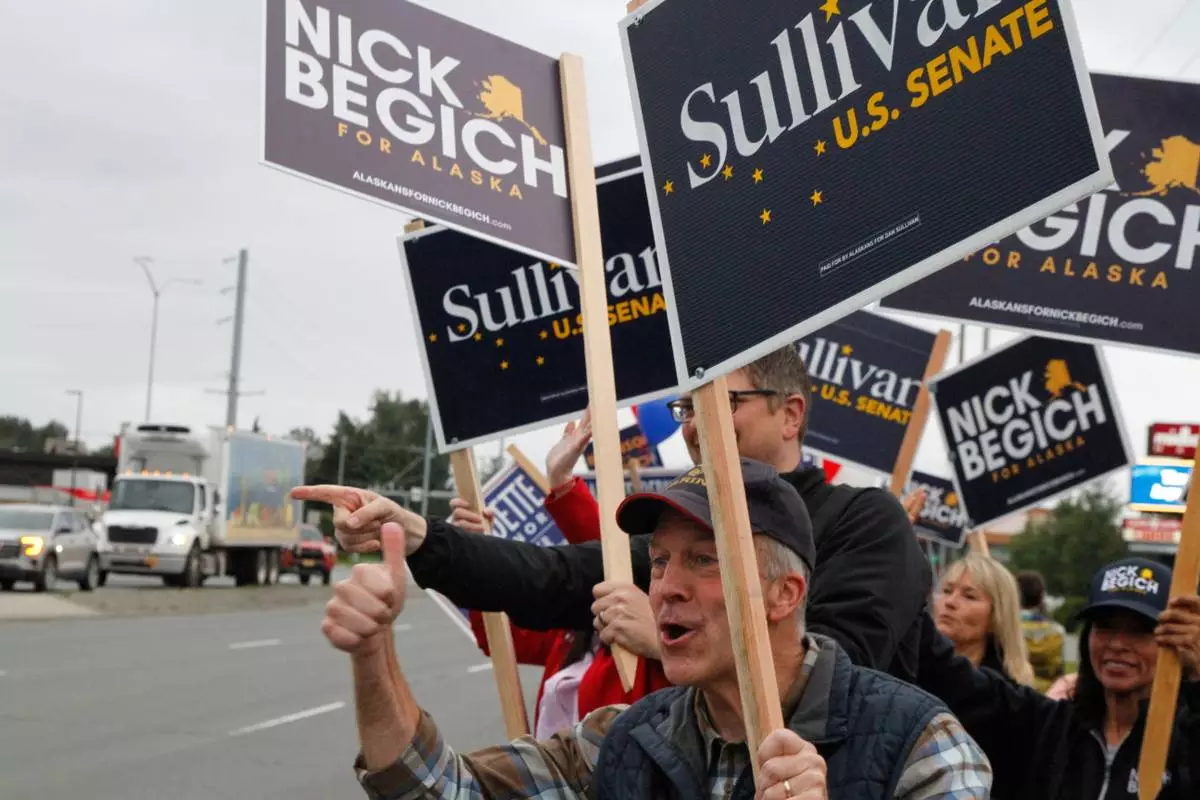
Sen. Dan Sullivan, R-Alaska, who is seeking a third term, flashes a thumbs up after a passing motorist honked during a sign waving event at an intersection on primary election day in Anchorage, Alaska, Tuesday, Aug. 18, 2026. (AP Photo/Mark Thiessen)

Sen. Dan Sullivan, R-Alaska, who is seeking a third term, flashes a thumbs up after a passing motorist honked during a sign waving event at an intersection on primary election day in Anchorage, Alaska, Tuesday, Aug. 18, 2026. (AP Photo/Mark Thiessen)

U.S. Sen. Dan Sullivan, R-Alaska, speaks at a get out the vote event held at farm in Palmer, Alaska, on Monday, Aug. 17, 2026. (AP Photo/Mark Thiessen)

U.S. Sen. Dan Sullivan, R-Alaska, speaks at a get out the vote event held at farm in Palmer, Alaska, on Monday, Aug. 17, 2026. (AP Photo/Mark Thiessen)

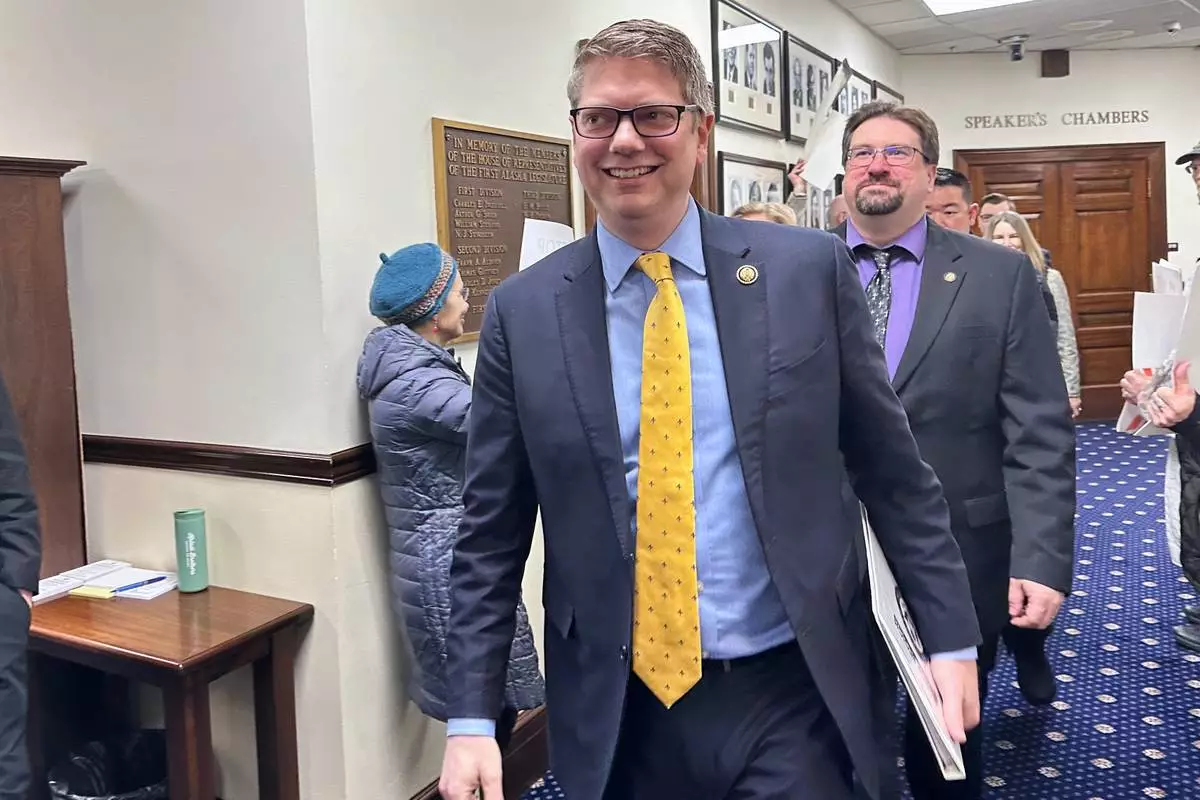
FILE - Alaska Republican U.S. Rep. Nick Begich walks down a corridor in the state Capitol before giving a speech to Alaska lawmakers, March 10, 2026, in Juneau, Alaska. (AP Photo/Becky Bohrer, File)

FILE - Alaska Republican U.S. Rep. Nick Begich walks down a corridor in the state Capitol before giving a speech to Alaska lawmakers, March 10, 2026, in Juneau, Alaska. (AP Photo/Becky Bohrer, File)

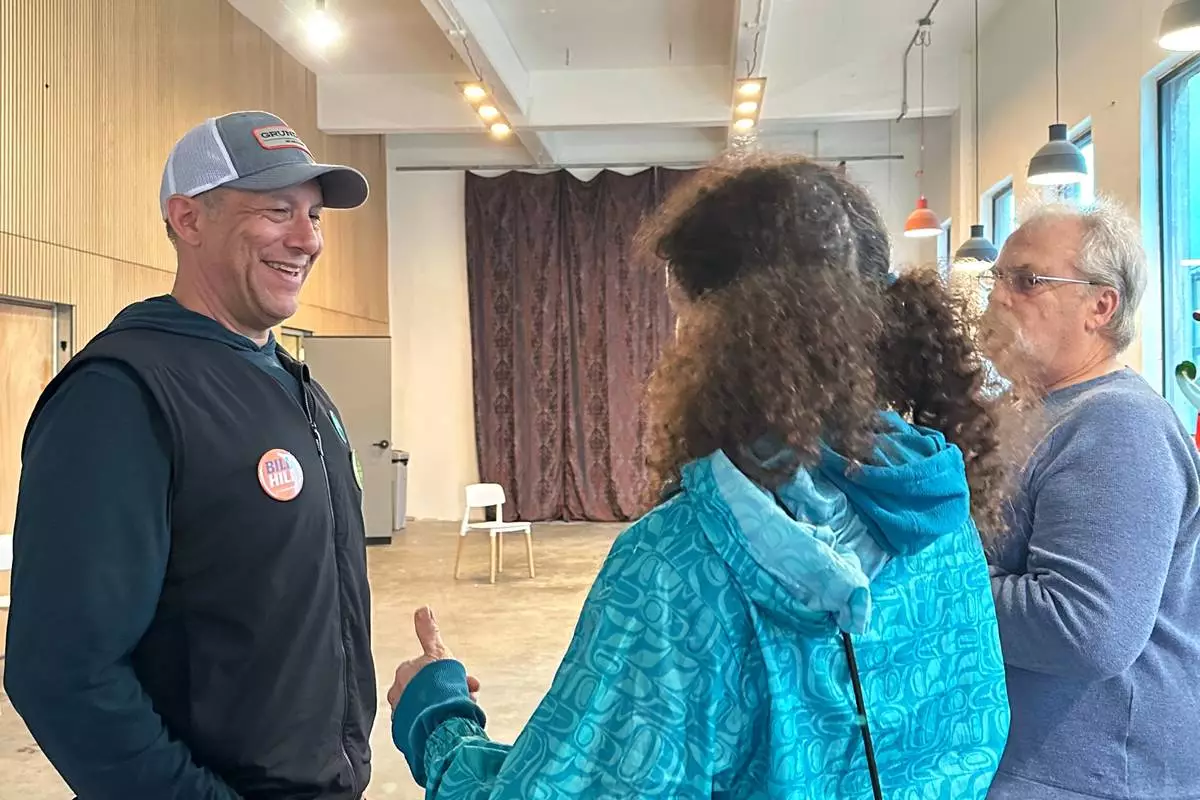
FILE - Alaska U.S. House candidate Bill Hill, an independent, speaks with people at a campaign fundraising event in Juneau, Alaska, June 4, 2026. (AP Photo/Becky Bohrer, File)

FILE - Alaska U.S. House candidate Bill Hill, an independent, speaks with people at a campaign fundraising event in Juneau, Alaska, June 4, 2026. (AP Photo/Becky Bohrer, File)

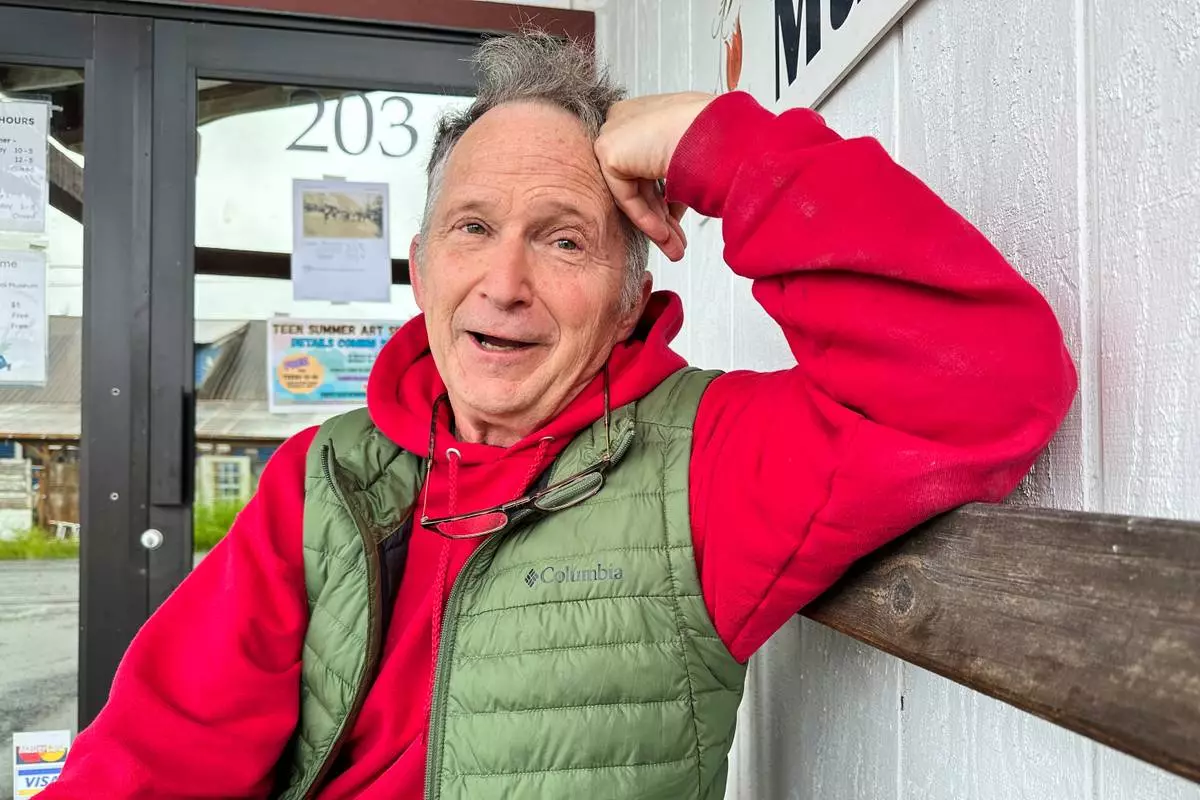
FILE - Dan Sullivan, a candidate in Alaska's U.S. Senate race who shares his name with the incumbent seeking reelection, talks with a reporter, July 3, 2026, in Petersburg, Alaska. (AP Photo/Becky Bohrer, File)

FILE - Dan Sullivan, a candidate in Alaska's U.S. Senate race who shares his name with the incumbent seeking reelection, talks with a reporter, July 3, 2026, in Petersburg, Alaska. (AP Photo/Becky Bohrer, File)

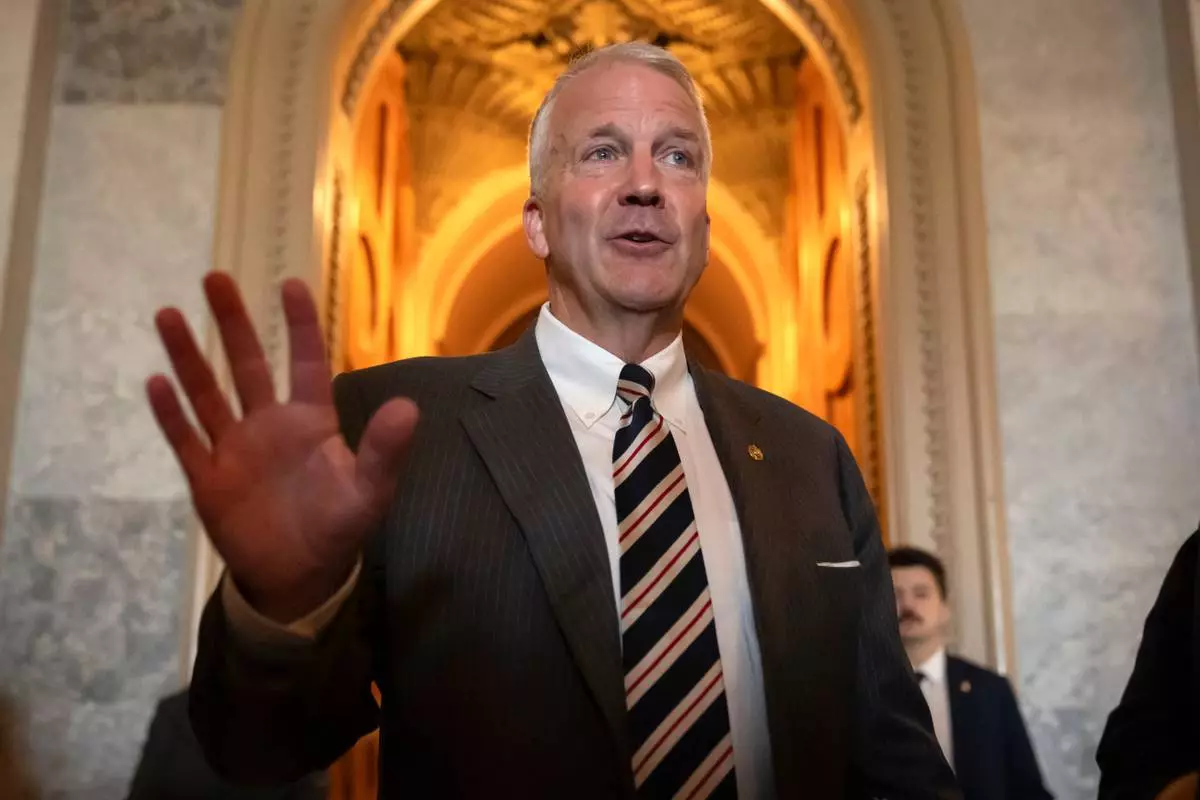
FILE - Sen. Dan Sullivan, R-Alaska, speaks to reporters at the Capitol in Washington, June 30, 2025. (AP Photo/Mark Schiefelbein)

FILE - Sen. Dan Sullivan, R-Alaska, speaks to reporters at the Capitol in Washington, June 30, 2025. (AP Photo/Mark Schiefelbein)

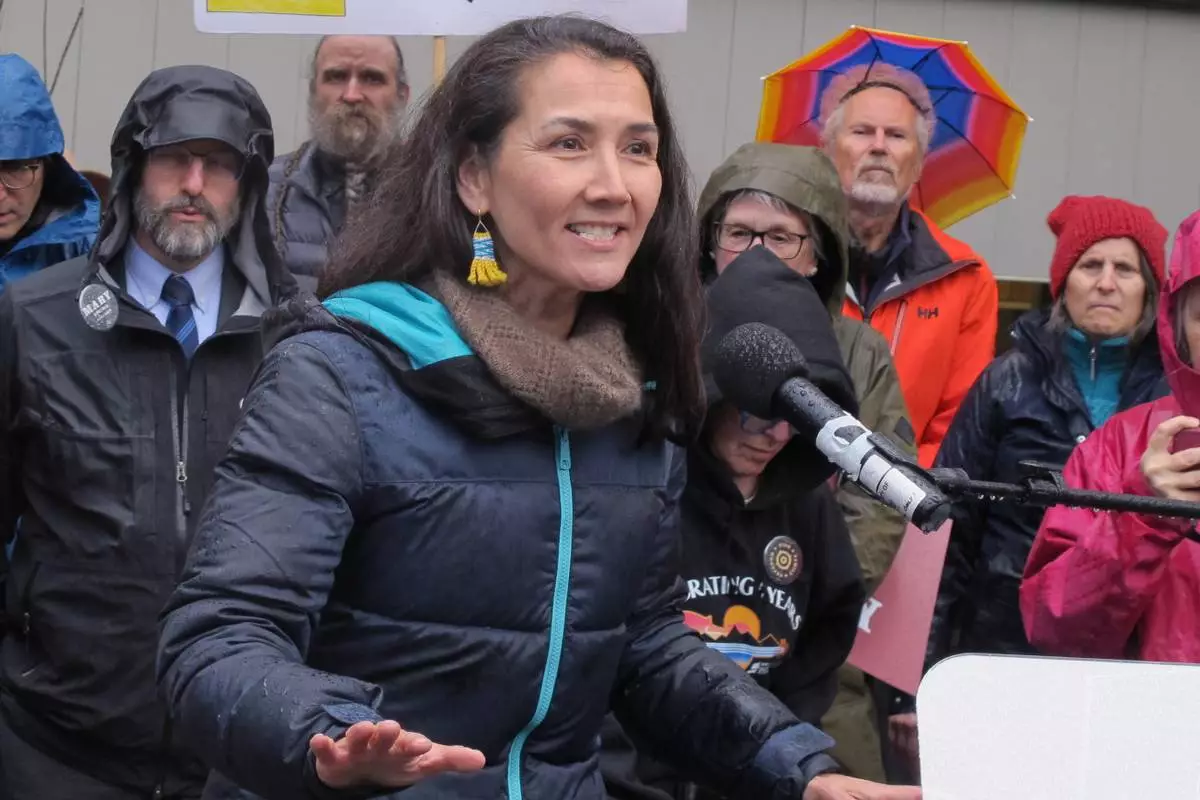
FILE - Alaska U.S. Senate candidate Mary Peltola, a Democrat, speaks during a campaign rally on May 14, 2026, in Juneau, Alaska. (AP Photo/Becky Bohrer, file)

FILE - Alaska U.S. Senate candidate Mary Peltola, a Democrat, speaks during a campaign rally on May 14, 2026, in Juneau, Alaska. (AP Photo/Becky Bohrer, file)

Recommended Articles