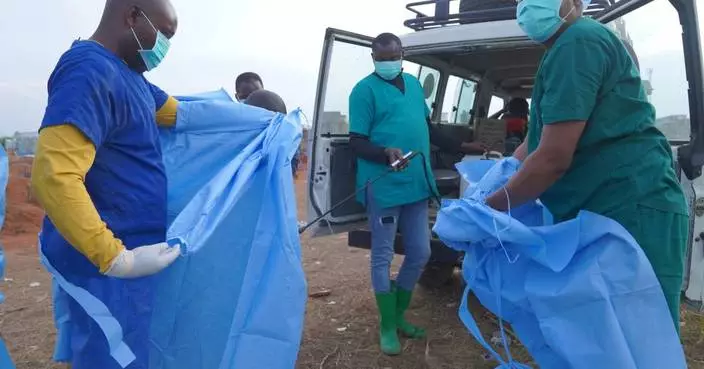
JUBA, South Sudan (AP) — At least 36 humanitarian workers and contractors have been killed in South Sudan since January, surpassing the 31 killed in all of 2025, as violence persists in the country that's one of the most dangerous for aid workers, the U.N. humanitarian coordinator there said Wednesday.
“These are not just statistics,” Ramanathan Balakrishnan said in a statement marking World Humanitarian Day, adding: “Every killing must be investigated, and those responsible held accountable. The continued loss of humanitarian personnel, overwhelmingly South Sudanese nationals, is unacceptable."
More than 450 incidents of violence against humanitarian workers and assets were reported between January and July, more than double the number recorded during the same period last year, according to the U.N. Mission in South Sudan.
Renewed fighting between government forces and opposition fighters has forced aid organizations to relocate from some areas, further restricting access to vulnerable communities in a country of about 12 million people that has struggled with both conflict and the effects of climate change since independence from Sudan in 2011.
Humanitarian organizations are calling on the South Sudan government and all parties to the 2018 peace agreement meant to end civil war to protect aid workers, investigate attacks and ensure safe and unhindered access to people in need.
Around 10 million people are expected to need humanitarian assistance this year, including more than 7.5 million facing high levels of acute food insecurity, according to the U.N.
Last week, the U.N. refugee agency and World Food Program warned that more than 650,000 refugees and asylum seekers in South Sudan risk losing access to lifesaving food, nutrition and other assistance because of severe funding shortages.

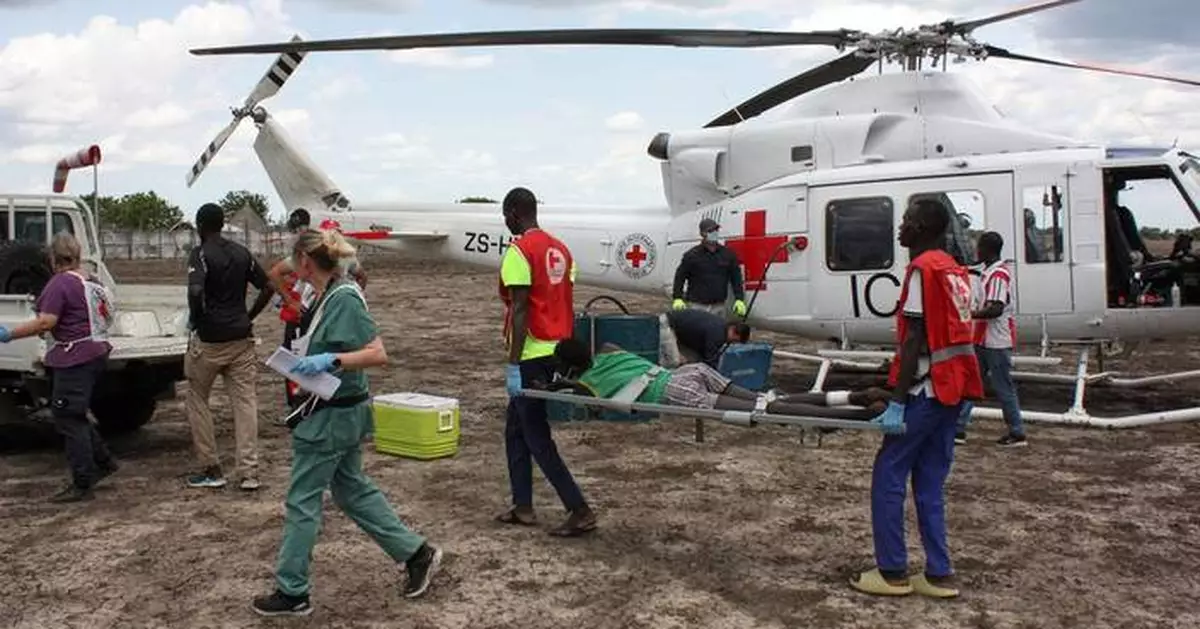
FILE - Medical staff with the International Committee of the Red Cross (ICRC) and South Sudan Red Cross, move a wounded patient to an ambulance in Akobo, South Sudan, May 24, 2025. (AP Photo/Joseph Falzetta, File)
ORLANDO, Fla. (AP) — Across 250 years, only three elected governors out of thousands have been Black –- all Democrats and all men, including current Maryland Gov. Wes Moore.
But Moore could soon have company.
With Florida Republicans nominating U.S. Rep. Byron Donalds on Tuesday, there are seven Black major party gubernatorial nominees in addition to Moore — men and women, Democrats and Republicans — on November ballots.
“We do have a unique moment here,” said Moore, who recently became chair of the National Governors Association. He often says that his historic status is “not an applause line” but instead represents a bigger challenge that this country is still looking to overcome.
The Black nominees typically do not focus on the history at stake, instead emphasizing their experience and policy proposals.
“Florida is a great meritocracy in America,” Donalds told reporters Tuesday night after not mentioning his race at all in his victory speech. “I’ll let you guys write about that,” he added.
But many said that more reflective representation matters given the nation’s history, from slavery to Jim Crow and the lingering effects.
“It’s not a secret that some issues in the African American community get ignored and don’t have a voice,” said Aaron Ford, Nevada’s first Black attorney general and now the Democratic nominee for governor. Ford said he brings a focus to issues ranging from voting rights and civil rights to the economy.
Republican Lisa Demuth said she “has never led with any type of identity politics” as Minnesota's first Black House speaker and now her party's nominee for governor. “But I recognize the historic state we are in right now,” she said. Michigan Republicans also chose U.S. Rep. John James, who is Black, as their gubernatorial nominee.
Former New York Gov. David Paterson, a Democrat who was not elected but ascended when Eliot Spitzer resigned in 2008, celebrated that the slate crosses party lines. “This is one day when maybe the Democrats and Republicans could stand in front of a statue of George Washington and let him know that we’re finally getting it right,” he said.
Democrats, meanwhile, emphasized that their Black candidates – who also include Keisha Lance Bottoms in Georgia, Jermaine Johnson in South Carolina and David Crowley in Wisconsin – are especially important after the U.S. Supreme Cour t cleared the way for states to redraw legislative districts that are majority or plurality nonwhite. That was compounded by President Donald Trump’s attacks on diversity initiatives and push to rewrite how the U.S. tells its history of the slave trade and Jim Crow segregation.
“Governors, in many ways, are becoming the last lines of defense against what we’re seeing in Washington,” Moore said.
Karen Finney, who helped push Democrat Joe Biden to select a Black woman as his vice presidential running mate, said Black politicians often are the first and loudest advocates on issues that acutely affect Black constituents. She and others cited health disparities such as maternal and infant mortality and sickle cell disease, and Finney noted that an inflationary economy hits harder in Black communities that, on average, have lower income and net worth than the wider population.
She said it is important for legislators to raise those matters and even more impactful when it is an executive.
“These are people who have the power to shape our lives, and they shape the agenda," Finney said.
But the governor's seat has been notoriously hard for Black politicians to reach, even more difficult than the U.S. Senate. Democrat Douglas Wilder of Virginia took office in 1990 as the nation's first elected Black governor.
“I didn’t become Maryland’s first Black governor because the Democratic Party said, ‘I think it’s time for us to put Wes Moore up in the seat’,” Moore said. “I had to run against the party.”
“I don’t think that the party is doing enough,” Moore added, specifically bemoaning a “negligence” in Southern states where Black voters anchor Democrats' base.
Stacey Abrams, who lost two Georgia governor’s races, recalled white Democratic power players raising money for her primary opponent in 2018, although she disputed that explicit racism was the issue.
“We do what we’ve done because it’s what we did,” she said. “Black women have not been executives, and the absence of that proof point becomes a self-reinforcing philosophy.”
This time, she noted, Bottoms already has been an executive as mayor of Atlanta.
In Minnesota, history will be made in November when the state elects its first female governor as Demuth competes against Democrat Amy Klobuchar, a U.S. senator. Demuth said she looks forward to a day when such distinctions seem less notable.
"One of the things that I really do look forward to is where it’s already done, where it no longer makes history,” she said. “So I think of young women, little girls that are looking at you, could I ever be governor of Minnesota? I hope when I win, they’re able to look at, point to that and say she’s already done it.”
In Georgia, Bottoms told the National Association of Black Journalists last week that she does not “give a lot of talk … about the historical nature” of her campaign. Yet she notes her family's Georgia ties go “back at least five generations through a plantation in Crawfordville” and that her grandfather had to “walk through these back doors” when he moved to Atlanta. She never mentioned slavery or segregation but said her ancestry “is always present with me.”
Abrams, who has campaigned for Bottoms and other Democrats this year, was more direct, arguing that all politics is identity politics of some kind — and that Republicans’ version is simply more coded.
“When your Constitution specifically strips a race of its humanity, you cannot then later on say identity doesn’t matter and has no effect, and we've spent 250 years trying to reckon with that identity” with social, political and legal fights, she continued. “So, it’s deeply disingenuous, if not woefully naive, to say that identity does not matter.”
Deval Patrick, whose tenure in Massachusetts overlapped with Paterson's in New York, said his race mattered especially to his Black constituents and what they wanted from him. It was “just different than the expectations of my predecessors,” he said, recalling criticism after he did not visit a Boston neighborhood where a teenager had been killed by gun violence.
“His mother was on the news grieving, and at some point she said while the cameras were rolling, where is Gov. Patrick?” he said. “Nobody had ever asked one of my predecessors to come to a crime scene in a neighborhood. Never.”
In Nevada, Ford said being governor still means recognizing how many core issues – jobs, housing and healthcare – cross demographic lines.
“It could be a white man, a Latino woman. It could be a person urban, suburban or rural Nevada. It could be someone from northern Nevada, southern Nevada. These are the issues that are important to them,” he said.
Patrick, who talks regularly with Ford and Moore, agreed, saying that is not just how a governor does the job, but how a candidate wins it in the first place.
“The successful candidates are the ones who present themselves as candidates for everyone,” he said, “and not candidates for just some.”
Sloan reported from Washington.
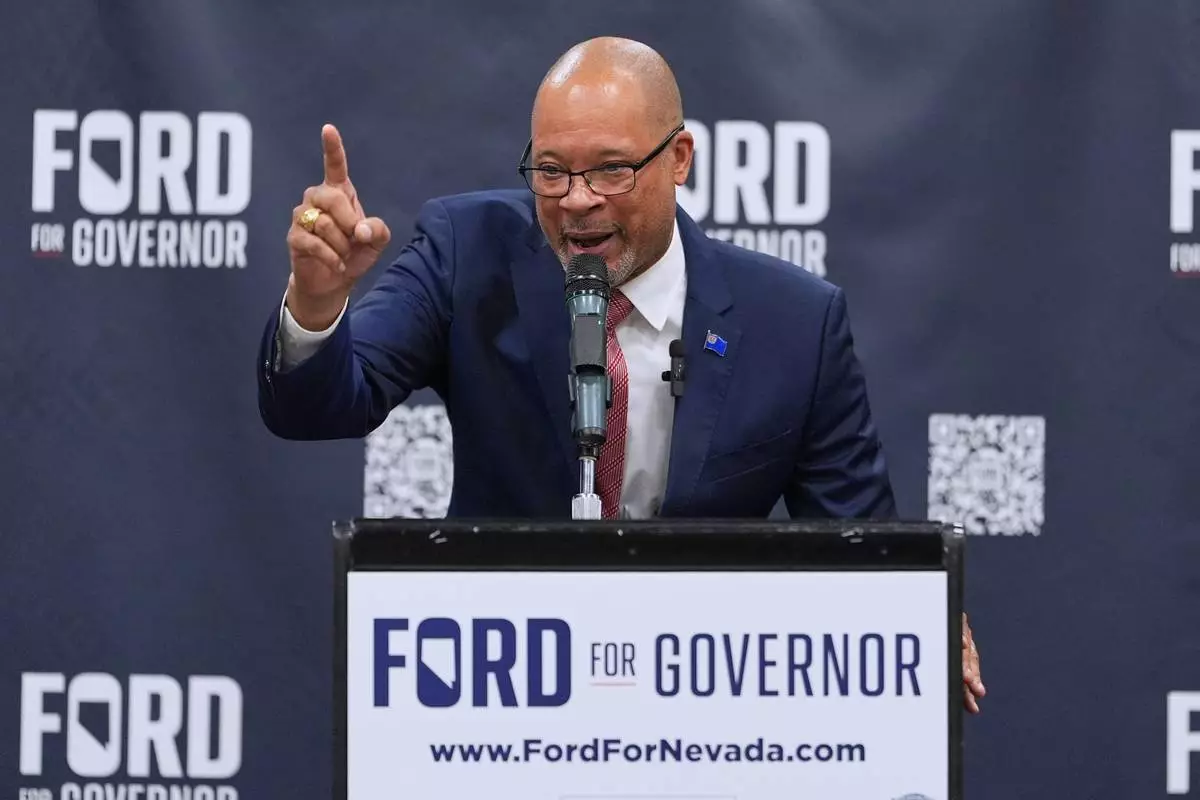
FILE - Gubernatorial candidate Aaron Ford, attorney general of Nevada, speaks during a primary election night watch party after winning the Democratic nomination, June 9, 2026, in Las Vegas. (AP Photo/Jae C. Hong, File)
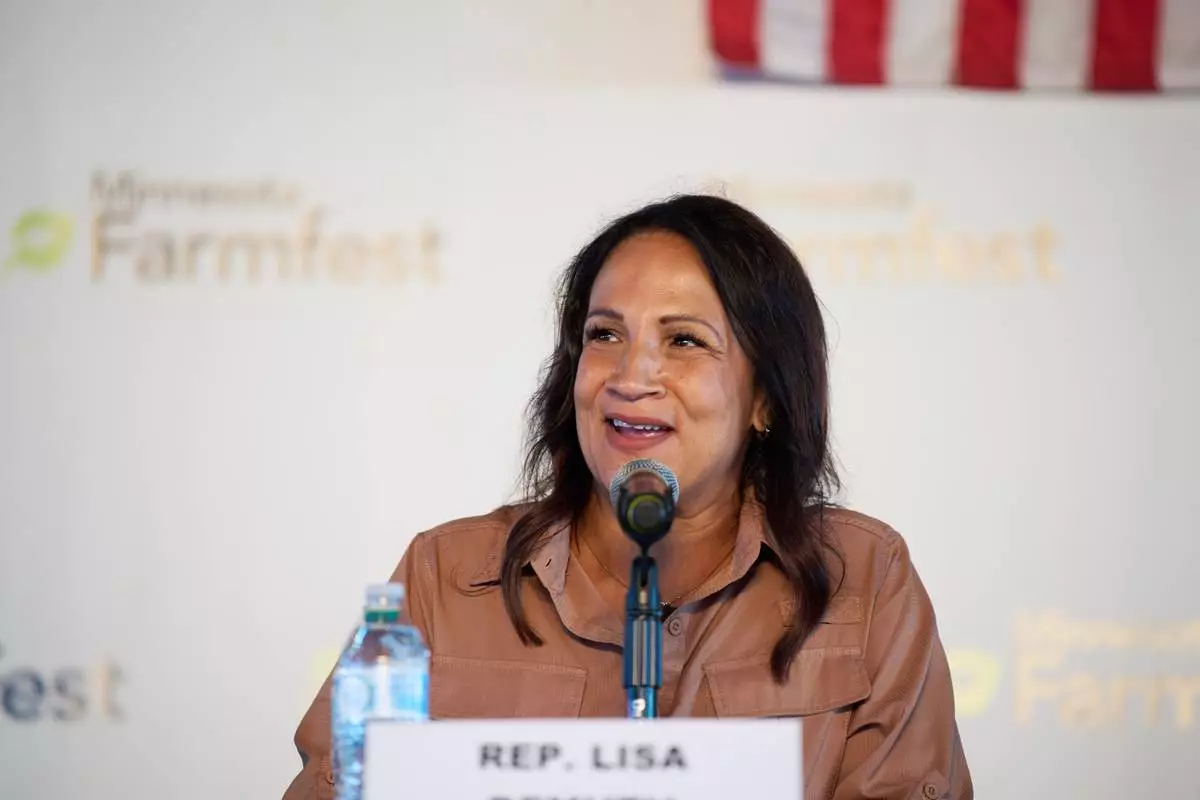
Minnesota House Speaker Lisa Demuth, a Republican gubernatorial candidate, speaks during a Minnesota Governor Candidate Forum in Morgan, Minn., Wednesday, Aug. 5, 2026. (AP Photo/Ellen Schmidt)
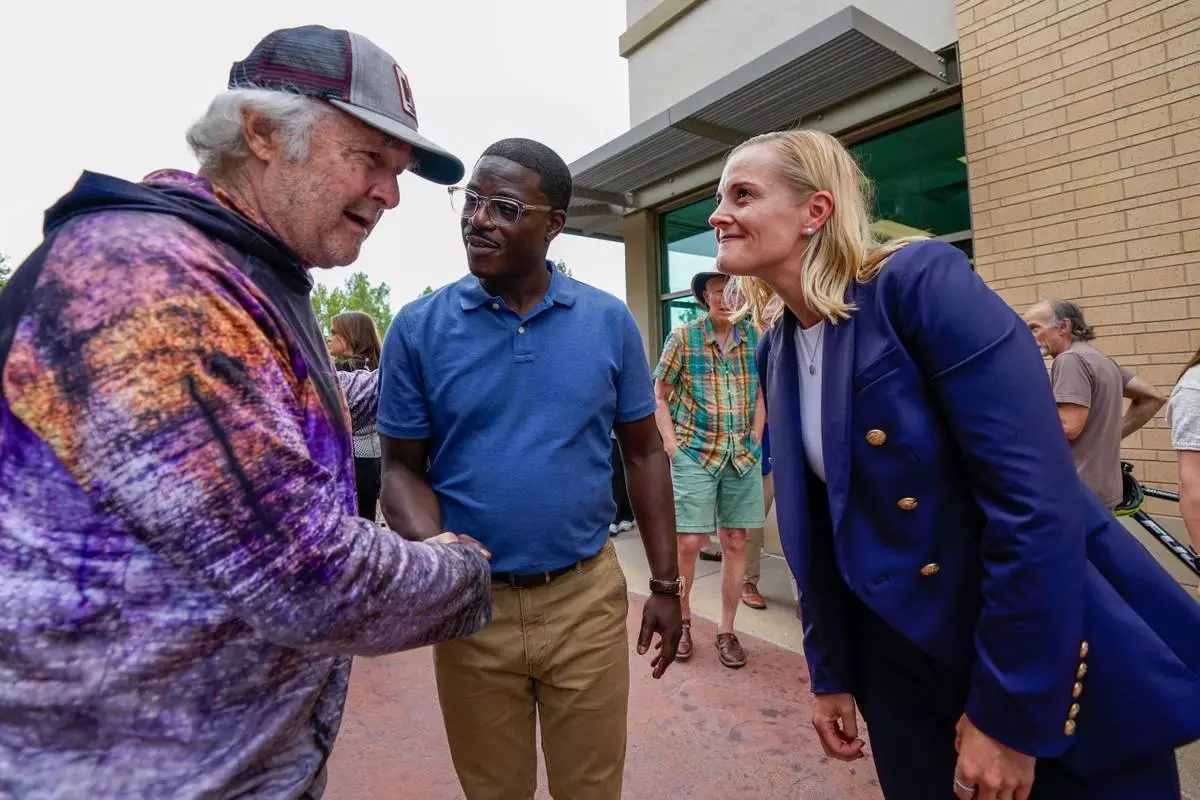
Democratic gubernatorial nominee David Crowley, center, and lieutenant governor nominee Sarah Godlewski, right, meet supporter Mike Balisle, left, following a breakfast with Democratic leaders Wednesday, Aug. 12, 2026, in Middleton, Wis. (AP Photo/Kayla Wolf)
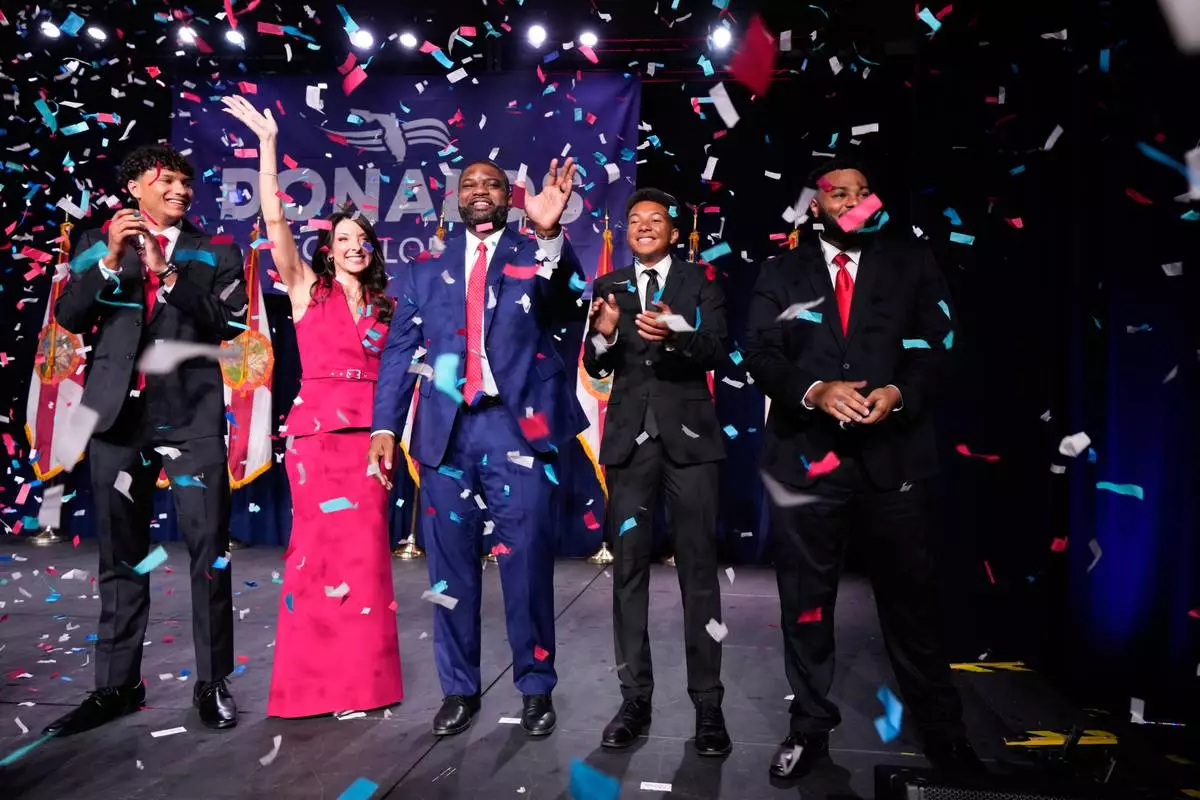
Florida Republican gubernatorial candidate Byron Donalds, center, waves next to his wife Erika, while standing on stage with their children Darin, left, Damon, second from left, and Mason during at a primary election party Tuesday, Aug. 18, 2026, in Orlando, Fla. (AP Photo/John Raoux)