JEFFERSON CITY, Mo. (AP) — A Missouri court has rejected a request to let voters decide in November whether to erect some of the nation's strongest protections for laws and constitutional amendments passed by citizen initiative.
Citizen initiatives are placed on the ballot in Missouri if voters collect enough signatures. But the secretary of state can reject measures that he deems violate the constitution.
Click to Gallery
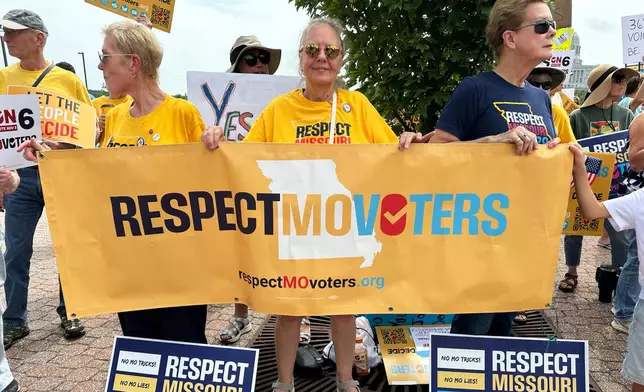
Activists with the group Respect Missouri Voters rally in support of a proposed constitutional amendment near the state Capitol in Jefferson City, Mo., Friday, Aug. 7, 2026. (AP Photo/David A. Lieb)
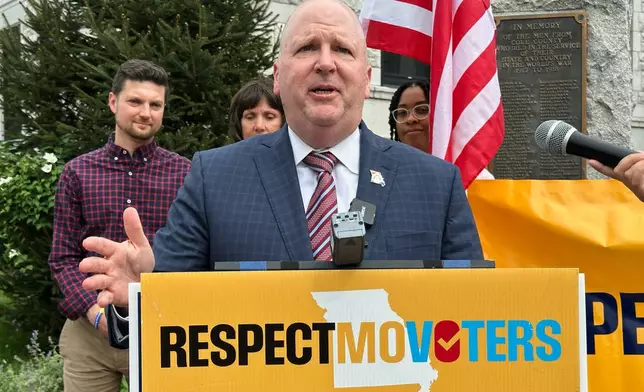
Attorney Chuck Hatfield, representing the group Respect Missouri Voters, speaks to reporters outside the Cole County Courthouse in Jefferson City, Mo., Tuesday, Aug. 18, 2026. (AP Photo/David A. Lieb)
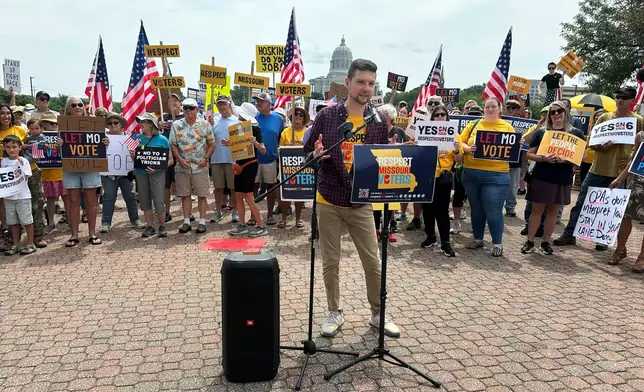
Benjamin Singer, co-founder of Respect Missouri Voters, leads a rally in support of a proposed constitutional amendment near the state Capitol in Jefferson City, Mo., Friday, Aug. 7, 2026. (AP Photo/David A. Lieb)
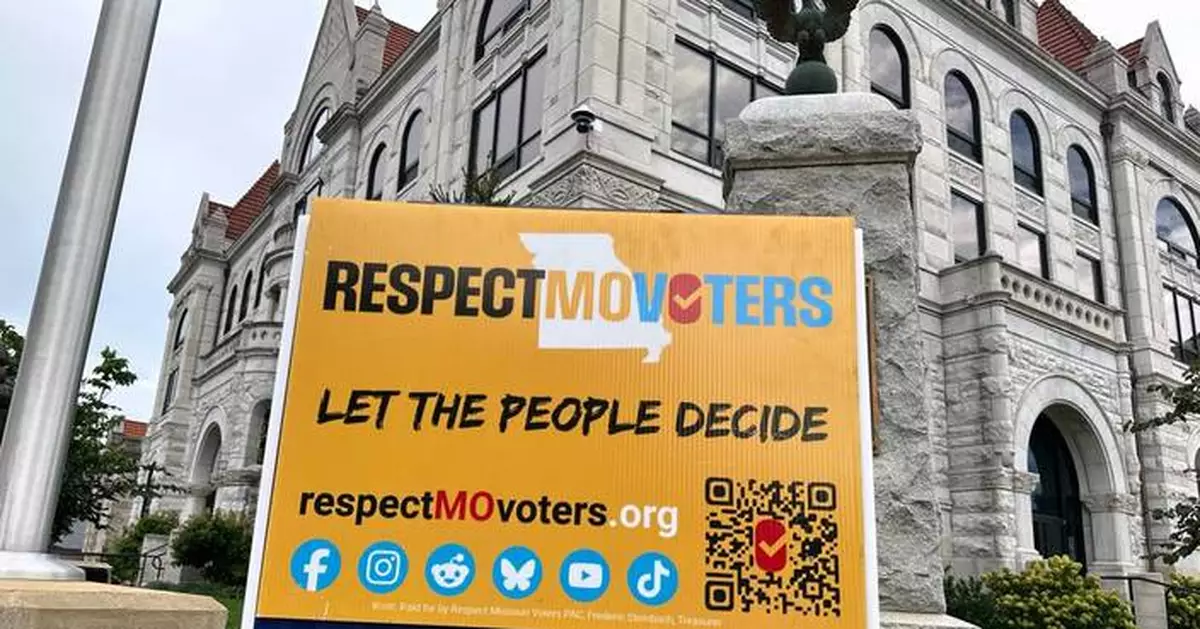
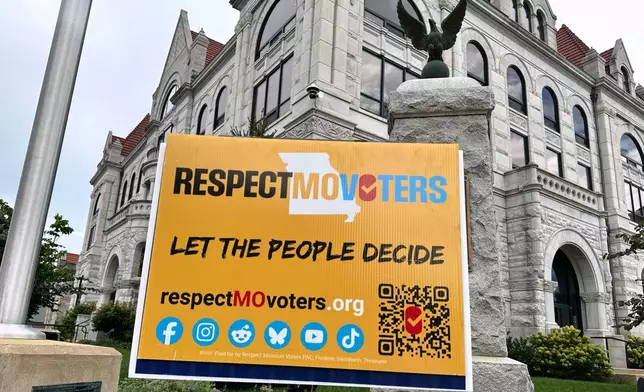
A sign in support of a proposed constitutional amendment backed by the group Respect Missouri Voters sits outside the Cole County Courthouse in Jefferson City, Mo., Tuesday, Aug. 18, 2026. (AP Photo/David A. Lieb)
The ruling Wednesday by a Cole County judge upholds a decision by Republican Secretary of State Denny Hoskins, who had blocked the amendment from the November ballot despite thousands of petition signatures for it. Hoskins asserted that the measure violated the state constitution by containing multiple subjects and restricting a republican form of government.
The decision by Cole County Circuit Judge Daniel Green is likely to be appealed.
Missouri has been at the center of a national battle over direct democracy. In August, voters overwhelmingly defeated a measure placed on the ballot by lawmakers that would have imposed one of the nation’s toughest standards for passing citizen-initiated amendments.
About half of U.S. states allow citizen initiatives, which give people the power to propose laws or constitutional amendments by collecting petition signatures to place items on the ballot.
The group Respect Missouri Voters led a petition drive to strengthen voter rights pertaining to initiatives after lawmakers last year repealed a paid sick leave initiative approved by voters in 2024 and referred a new amendment to the November ballot seeking to reverse voter-approved abortion rights.
Attorney Chuck Hatfield, representing Respect Missouri Voters, argued in court that the amendment’s provisions all focus on the single purpose of “protecting and strengthening citizen law-making power.”
But Kathleen Hunker, of the attorney general’s office, argued that the amendment “fuses disparate topics together” in violation of the constitution.
Green agreed, ruling that the proposal “makes sweeping reforms affecting multiple provisions of the Missouri Constitution.”
The proposed constitutional amendment would have required 80% of lawmakers to vote in favor of repealing or amending voter-approved initiatives in order to change them. It also would have barred the Legislature from increasing the number of signatures needed to qualify for the ballot, shortening the time to collect them or otherwise weakening initiative rights.
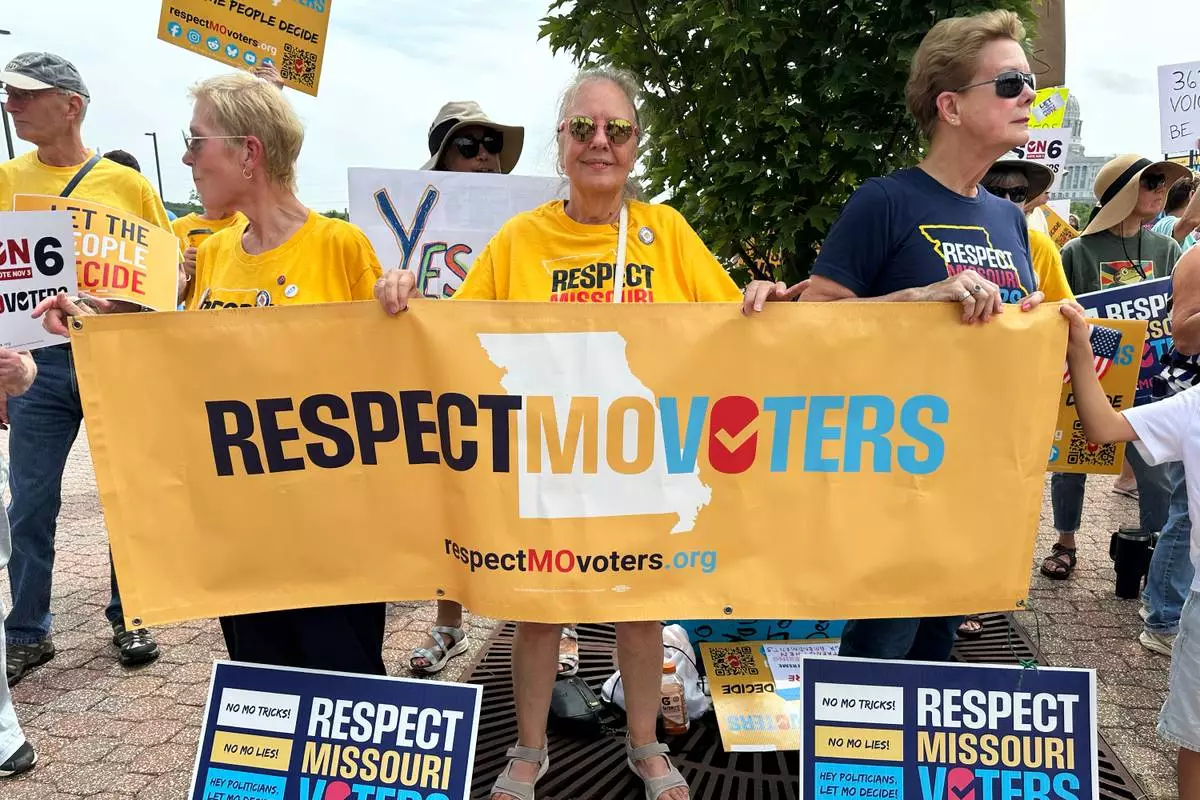
Activists with the group Respect Missouri Voters rally in support of a proposed constitutional amendment near the state Capitol in Jefferson City, Mo., Friday, Aug. 7, 2026. (AP Photo/David A. Lieb)
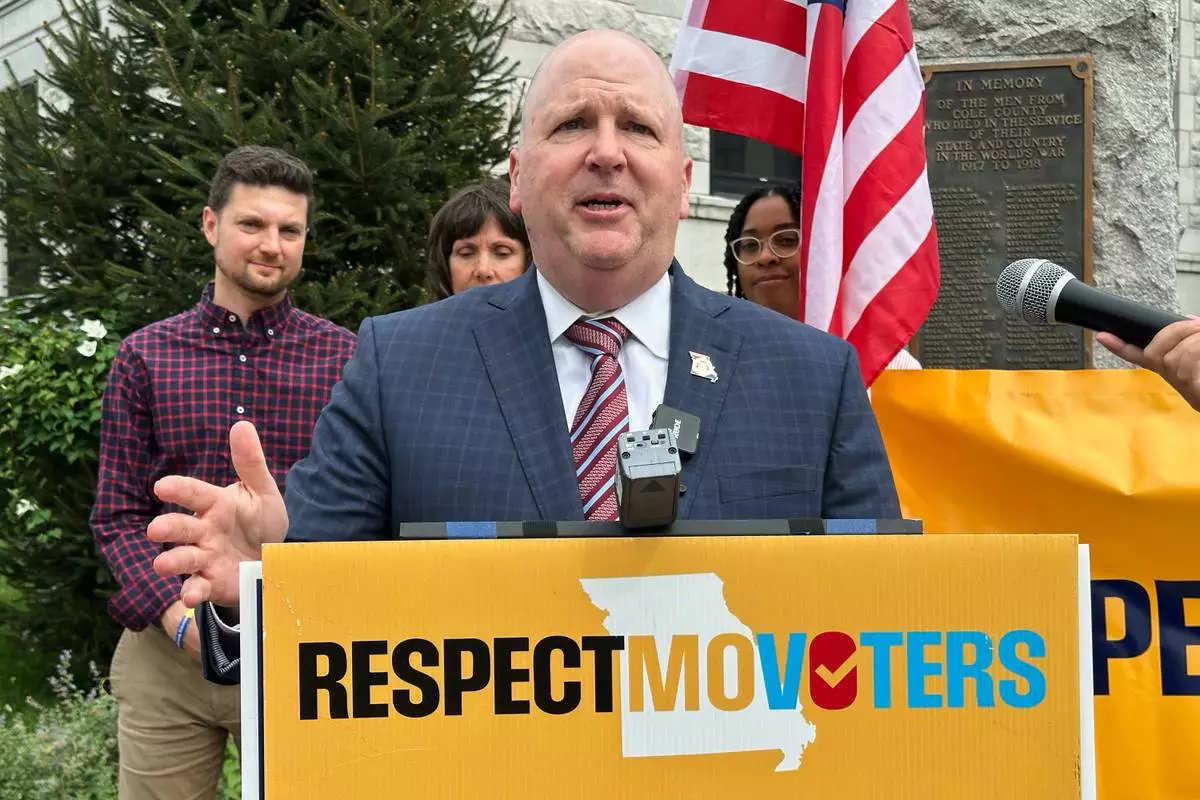
Attorney Chuck Hatfield, representing the group Respect Missouri Voters, speaks to reporters outside the Cole County Courthouse in Jefferson City, Mo., Tuesday, Aug. 18, 2026. (AP Photo/David A. Lieb)
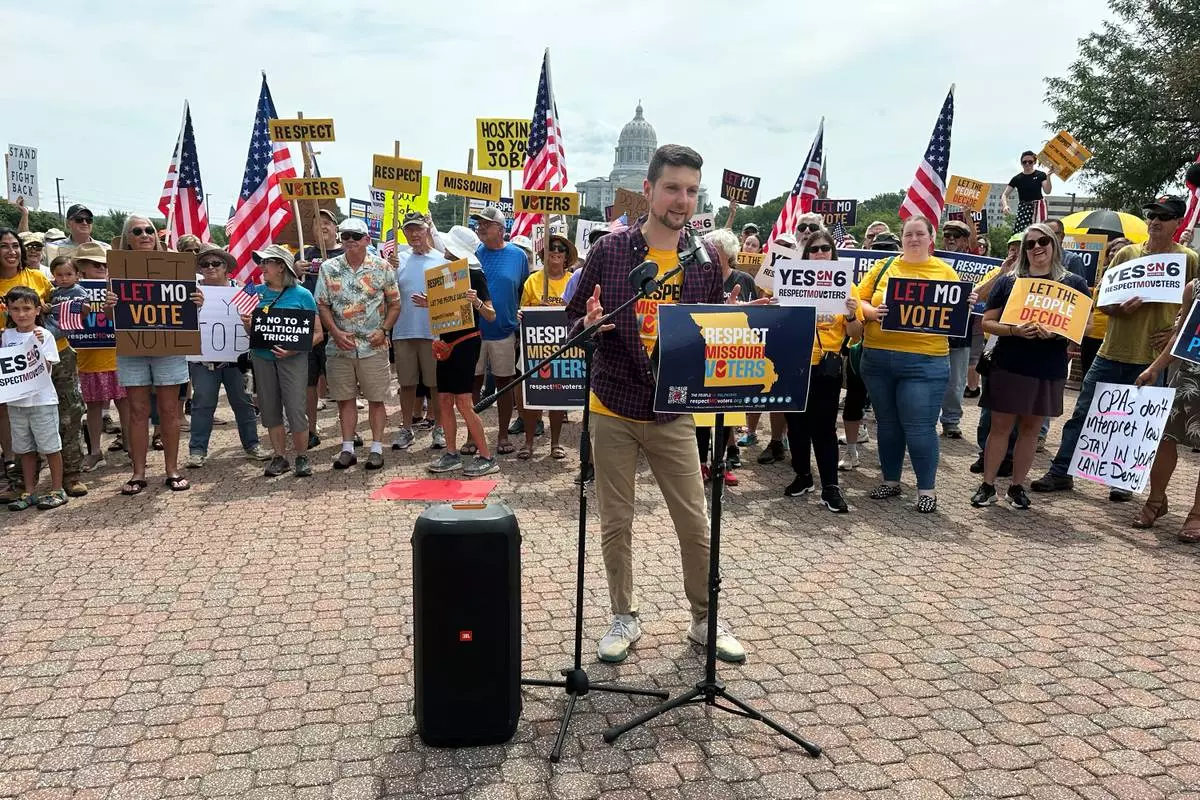
Benjamin Singer, co-founder of Respect Missouri Voters, leads a rally in support of a proposed constitutional amendment near the state Capitol in Jefferson City, Mo., Friday, Aug. 7, 2026. (AP Photo/David A. Lieb)
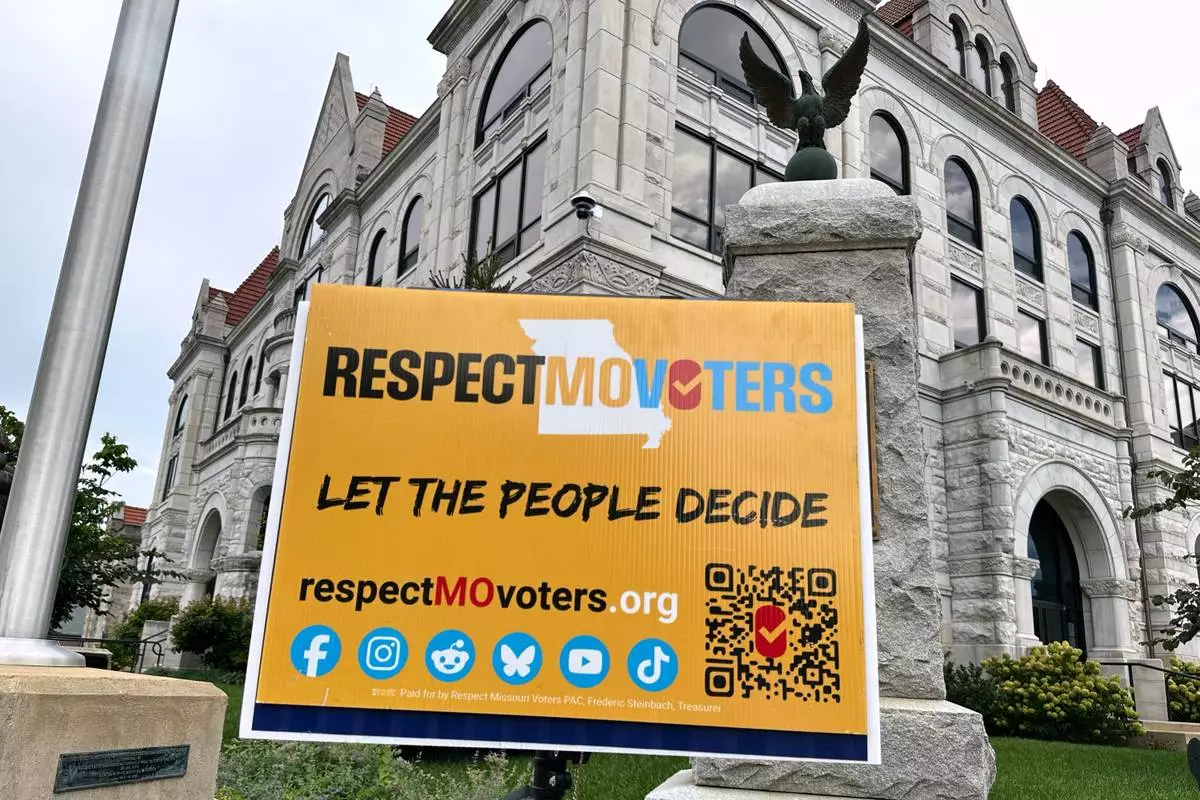
A sign in support of a proposed constitutional amendment backed by the group Respect Missouri Voters sits outside the Cole County Courthouse in Jefferson City, Mo., Tuesday, Aug. 18, 2026. (AP Photo/David A. Lieb)
Companies that secretly vary prices based on how much they think individual customers will pay could face federal charges under a proposed policy released Wednesday by the Federal Trade Commission.
“When consumers see a listed price, they expect it to be (the) same price that everyone else sees, not the retailer’s estimate of how much they are willing to pay based on their personal data,” FTC Chairman Andrew Ferguson said in a statement.
The FTC has had its eye on personalized pricing for several years. In a preliminary report filed in January 2025, the agency found that grocers, clothing companies and others were using third-party companies to help them individualize online prices based on shoppers' locations, browsing histories and other factors, including how long they left items in their virtual shopping carts.
In one hypothetical example, the FTC said a consumer profiled as a new parent might be shown higher-priced baby thermometers on the first page of their search results.
Ferguson said the FTC doesn't have the legal authority to ban personalized pricing in all circumstances. But under the proposed policy, businesses would have to “clearly and conspicuously disclose” if they are engaging in personalized pricing and share the types of data they're using to set those prices.
The proposed policy states that companies engaged in personalized pricing without revealing the practice and the data behind it could violate the FTC Act, which prohibits unfair or deceptive practices in the marketplace.
The FTC is seeking comment on the policy for 30 days.
Several retail trade groups didn't comment directly on the FTC's proposal Wednesday.
The National Retail Federation, which represents big companies like Walmart, Target and Macy's as well as smaller stores, said retailers want to continue to offer incentives like loyalty and rewards programs, which collect personal data and provide offers tailored to individuals.
“NRF has and will continue to aggressively advocate to protect these programs that deliver timely savings and personalized offers that are relevant to each shopper's interests,” said David French, NRF's executive vice president of government relations.
FMI, a trade group for the U.S. grocery industry, said Wednesday it was reviewing the proposal and didn’t have immediate comment. But in a letter FMI sent to U.S. senators this month after a subcommittee hearing on personalized pricing, FMI also said it hoped to preserve shopper loyalty programs.
In the letter, FMI also noted that electronic shelf labels, which are becoming increasingly common at grocers and retailers like Walmart, don't automatically change prices based on individual shoppers.
The Retail Industry Leaders Association, a trade group that represents Best Buy, Home Depot, Dollar General and 200 other retailers, didn't comment on the new proposal Wednesday but cited its own letter sent to U.S. senators earlier this month.
In the letter, the association said retailers don't use consumers' personal data to increase prices because that would jeopardize customer loyalty.
“As shoppers demonstrate an increased willingness to seek out lower prices, competition among retailers intensifies to meet customers' needs, creating a strong and continuous incentive for retailers to offer attractive prices, discounts and value,” the letter said.
The FTC's action comes amid consumer unease about pricing tactics. Wendy's faced a backlash in 2024 after it said it was considering charging more for its menu items during peak times. Uber and Lyft have also been in lawmakers' crosshairs for their surge-pricing practices.
Several states, including Maryland, Connecticut and New Jersey, have already passed laws prohibiting personalized pricing at grocery stores. California and New York are also considering legislation that would ban personalized pricing.
New Jersey also placed a one-year moratorium on new electronic shelf labels despite retailers' assurances that the labels aren't used for personalized pricing and can actually help consumers by, say, automatically lowering prices for foods that are about to expire.
The consumer advocacy organization Consumer Reports said Wednesday that the FTC's proposal was encouraging but might still require consumers to read detailed disclosures on pricing while shopping online.
The group said the FTC and Congress should instead follow the states' lead and ban companies from using customer data to personalize prices in the first place.
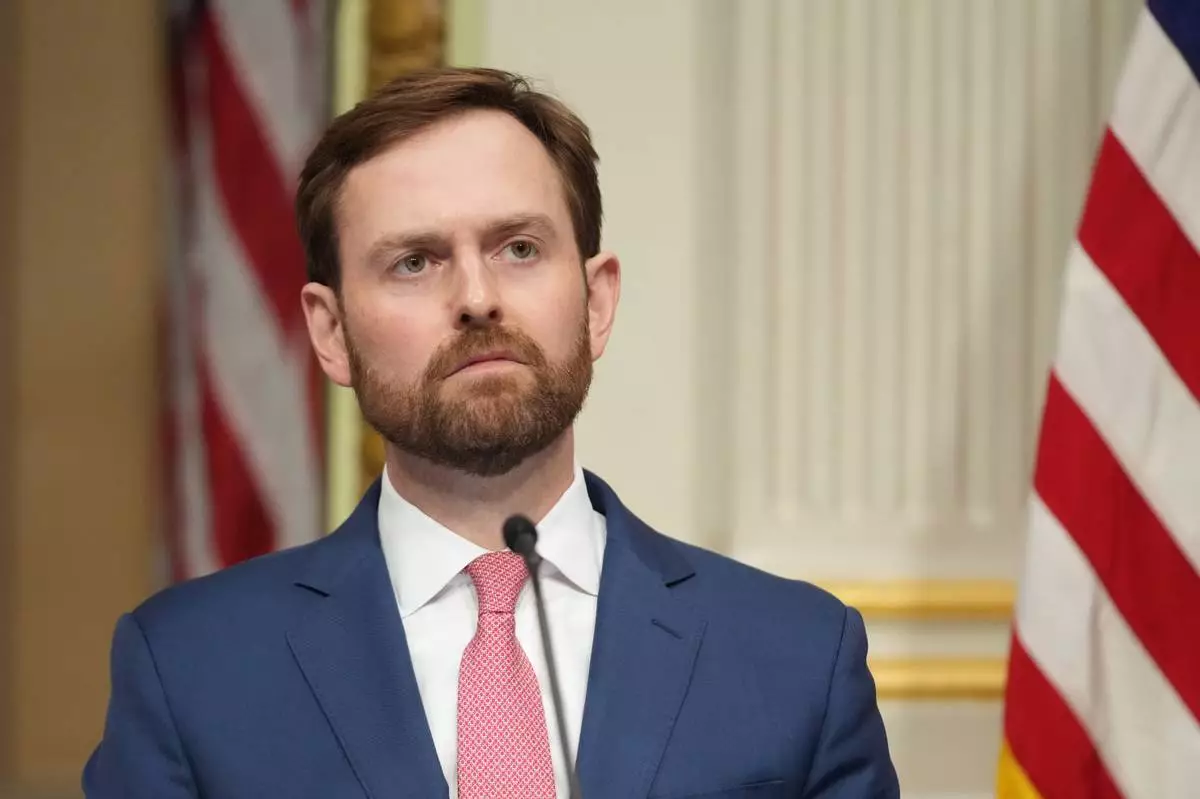
FILE - FTC Chairman Andrew Ferguson speaks in the Eisenhower Executive Office Building at the White House complex, May 26, 2026, in Washington. (AP Photo/Mark Schiefelbein, File)
FILE - The official seal of the Federal Trade Commission is seen on an office building in Washington, Feb. 13, 2026. (AP Photo/Cliff Owen, File)