WASHINGTON (AP) — The national debt surpassed a record $40 trillion on Wednesday, a staggering milestone as defense costs, social programs like Social Security and Medicare and interest on the burgeoning deficit make up an enormous share of federal spending.
The milestone figure was recorded just five months after the U.S. hit a record $39 trillion debt in March. It reached $38 trillion five months before that, in October.
The unprecedented $40 trillion figure highlights competing administration priorities, from boosting defense spending that the U.S. relies on to carry out President Donald Trump's almost-6-month-old war in Iran to lowering the cost of gas and groceries.
Kush Desai, a White House spokesman, said the Trump administration “has been focused on slashing waste, fraud, and abuse in federal spending while accelerating economic growth to get America’s debt-to-GDP ratio trending in the right direction.”
However, experts say the exploding debt and the latest record milestone are already affecting Americans' pocketbooks by raising borrowing costs for things like mortgages and cars, lowering wages from businesses that have less money available to invest, and creating more expensive goods and services.
“If we want to improve our living standards, today and for the next generation, now is the time for lawmakers to put our nation on a more affordable and sustainable path," says Michael A. Peterson, CEO of the Peter G. Peterson Foundation, a think tank focused on U.S. fiscal challenges.
The debt has exploded over several presidential administrations, as the nation's leaders spend more money than it collects in taxes. In recent memory, the multi-year COVID-19 pandemic shut down much of the U.S. economy, where the federal government borrowed heavily during President Trump's first term and under former President Joe Biden to stabilize the economy and support a recovery.
More government spending was approved after Trump signed Republicans’ tax cut and spending legislation into law last year.
Advocates for a balanced budget also warn that the long-term trend of borrowing more and paying more in interest will force Americans to face tougher fiscal tradeoffs ahead.
"The federal debt is already raising the cost of living and choking out other spending and investment, threatening our economy and Americans’ long-term prosperity,” said Margaret Spellings, president and CEO of the Bipartisan Policy Center.
“Our current fiscal trajectory is plainly unsustainable, and that’s the best-case scenario. AI disruption, a recession, global war, or any number of other events could quickly push us over the edge from a challenge into a full-blown crisis," Spellings said in a statement.
The U.S. is subject to a statutory debt limit, or a limit to federal borrowing, which Congress has the authority to set, adjust or abolish. The Bipartisan Policy Center estimates that the U.S. will most likely reach the $41.1 trillion debt limit sometime between late winter and mid-summer of 2027, requiring Congress to again vote on whether to raise or suspend it.
The U.S.' fiscal position stands as the worst among other developed countries, according to recent data analysis from the Organization for Economic Co-operation and Development

Specialist Gregg Maloney works on the floor of the New York Stock Exchange, Friday, Aug. 7, 2026, in New York. (AP Photo/Yuki Iwamura)
Companies that secretly vary prices based on how much they think individual customers will pay could face federal charges under a proposed policy released Wednesday by the Federal Trade Commission.
“When consumers see a listed price, they expect it to be (the) same price that everyone else sees, not the retailer’s estimate of how much they are willing to pay based on their personal data,” FTC Chairman Andrew Ferguson said in a statement.
The FTC has had its eye on personalized pricing for several years. In a preliminary report filed in January 2025, the agency found that grocers, clothing companies and others were using third-party companies to help them individualize online prices based on shoppers' locations, browsing histories and other factors, including how long they left items in their virtual shopping carts.
In one hypothetical example, the FTC said a consumer profiled as a new parent might be shown higher-priced baby thermometers on the first page of their search results.
Ferguson said the FTC doesn't have the legal authority to ban personalized pricing in all circumstances. But under the proposed policy, businesses would have to “clearly and conspicuously disclose” if they are engaging in personalized pricing and share the types of data they're using to set those prices.
The proposed policy states that companies engaged in personalized pricing without revealing the practice and the data behind it could violate the FTC Act, which prohibits unfair or deceptive practices in the marketplace.
The FTC is seeking comment on the policy for 30 days.
Several retail trade groups didn't comment directly on the FTC's proposal Wednesday.
The National Retail Federation, which represents big companies like Walmart, Target and Macy's as well as smaller stores, said retailers want to continue to offer incentives like loyalty and rewards programs, which collect personal data and provide offers tailored to individuals.
“NRF has and will continue to aggressively advocate to protect these programs that deliver timely savings and personalized offers that are relevant to each shopper's interests,” said David French, NRF's executive vice president of government relations.
FMI, a trade group for the U.S. grocery industry, said Wednesday it was reviewing the proposal and didn’t have immediate comment. But in a letter FMI sent to U.S. senators this month after a subcommittee hearing on personalized pricing, FMI also said it hoped to preserve shopper loyalty programs.
In the letter, FMI also noted that electronic shelf labels, which are becoming increasingly common at grocers and retailers like Walmart, don't automatically change prices based on individual shoppers.
The Retail Industry Leaders Association, a trade group that represents Best Buy, Home Depot, Dollar General and 200 other retailers, didn't comment on the new proposal Wednesday but cited its own letter sent to U.S. senators earlier this month.
In the letter, the association said retailers don't use consumers' personal data to increase prices because that would jeopardize customer loyalty.
“As shoppers demonstrate an increased willingness to seek out lower prices, competition among retailers intensifies to meet customers' needs, creating a strong and continuous incentive for retailers to offer attractive prices, discounts and value,” the letter said.
The FTC's action comes amid consumer unease about pricing tactics. Wendy's faced a backlash in 2024 after it said it was considering charging more for its menu items during peak times. Uber and Lyft have also been in lawmakers' crosshairs for their surge-pricing practices.
Several states, including Maryland, Connecticut and New Jersey, have already passed laws prohibiting personalized pricing at grocery stores. California and New York are also considering legislation that would ban personalized pricing.
New Jersey also placed a one-year moratorium on new electronic shelf labels despite retailers' assurances that the labels aren't used for personalized pricing and can actually help consumers by, say, automatically lowering prices for foods that are about to expire.
The consumer advocacy organization Consumer Reports said Wednesday that the FTC's proposal was encouraging but might still require consumers to read detailed disclosures on pricing while shopping online.
The group said the FTC and Congress should instead follow the states' lead and ban companies from using customer data to personalize prices in the first place.
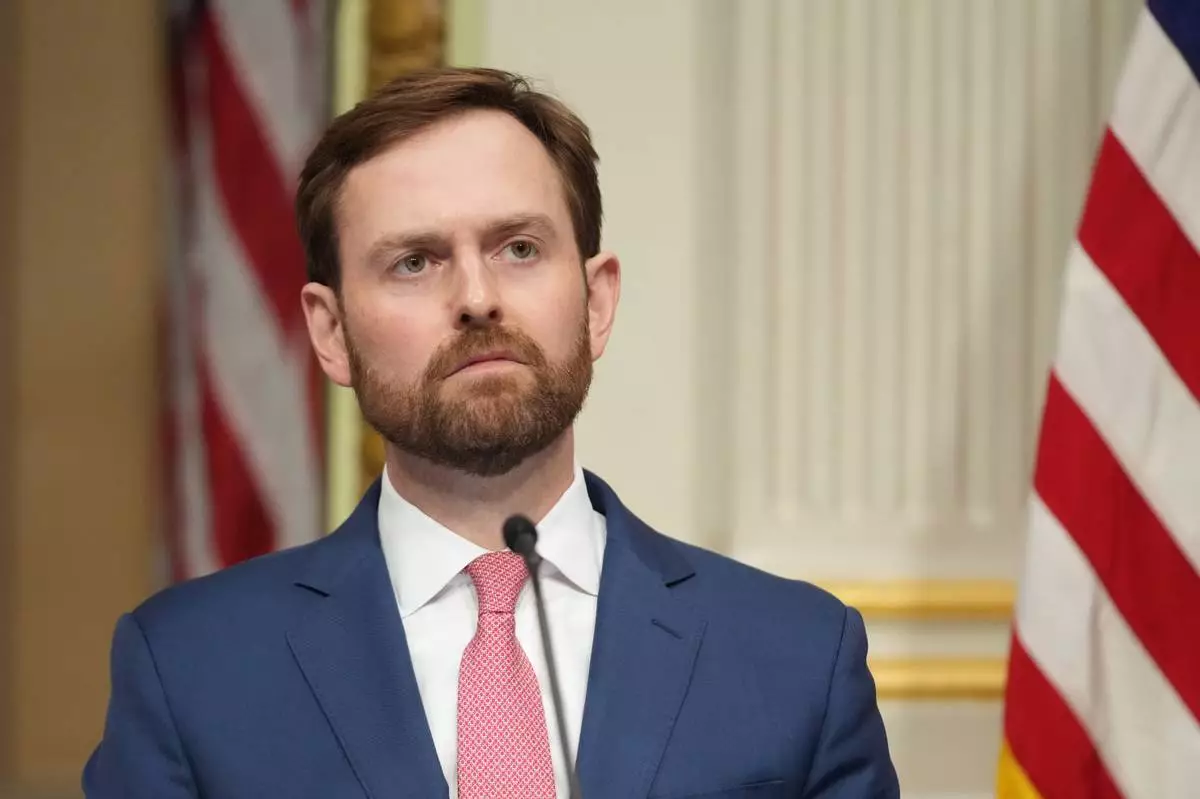
FILE - FTC Chairman Andrew Ferguson speaks in the Eisenhower Executive Office Building at the White House complex, May 26, 2026, in Washington. (AP Photo/Mark Schiefelbein, File)
FILE - The official seal of the Federal Trade Commission is seen on an office building in Washington, Feb. 13, 2026. (AP Photo/Cliff Owen, File)