Skip to Content Facebook Feature Image

Army resumes Apache helicopter training missions after Texas crash that killed 2

News

Army resumes Apache helicopter training missions after Texas crash that killed 2
News

News

Army resumes Apache helicopter training missions after Texas crash that killed 2

2026-08-20 07:05 Last Updated At:07:11

FORT HOOD, Texas (AP) — The U.S. Army said Wednesday it will resume Apache helicopter training missions after a brief pause prompted by a crash in Texas last week killed two soldiers.

The cause of the Aug. 12 crash near Fort Hood remains under investigation by the Combat Readiness Center in Fort Rucker, Alabama.

More Images
This undated photo provided by the U.S. Army on Friday, Aug. 14, 2026, shows Warrant Officer Seth L. Olmstead. (U.S. Army via AP)

This undated photo provided by the U.S. Army on Friday, Aug. 14, 2026, shows Warrant Officer Seth L. Olmstead. (U.S. Army via AP)

This undated photo provided by the U.S. Army on Friday, Aug. 14, 2026, shows Chief Warrant Officer 2 Deontre T. Huey. (U.S. Army via AP)
This undated photo provided by the U.S. Army on Friday, Aug. 14, 2026, shows Chief Warrant Officer 2 Deontre T. Huey. (U.S. Army via AP)

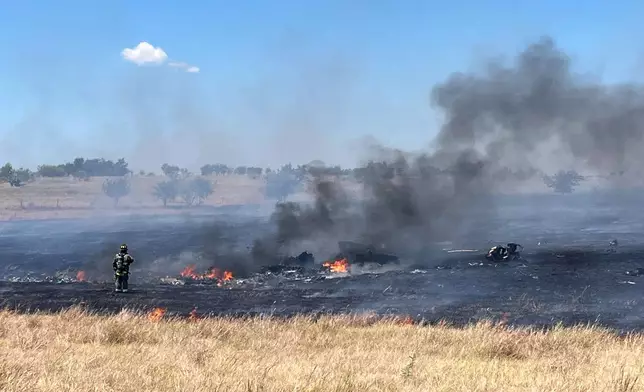
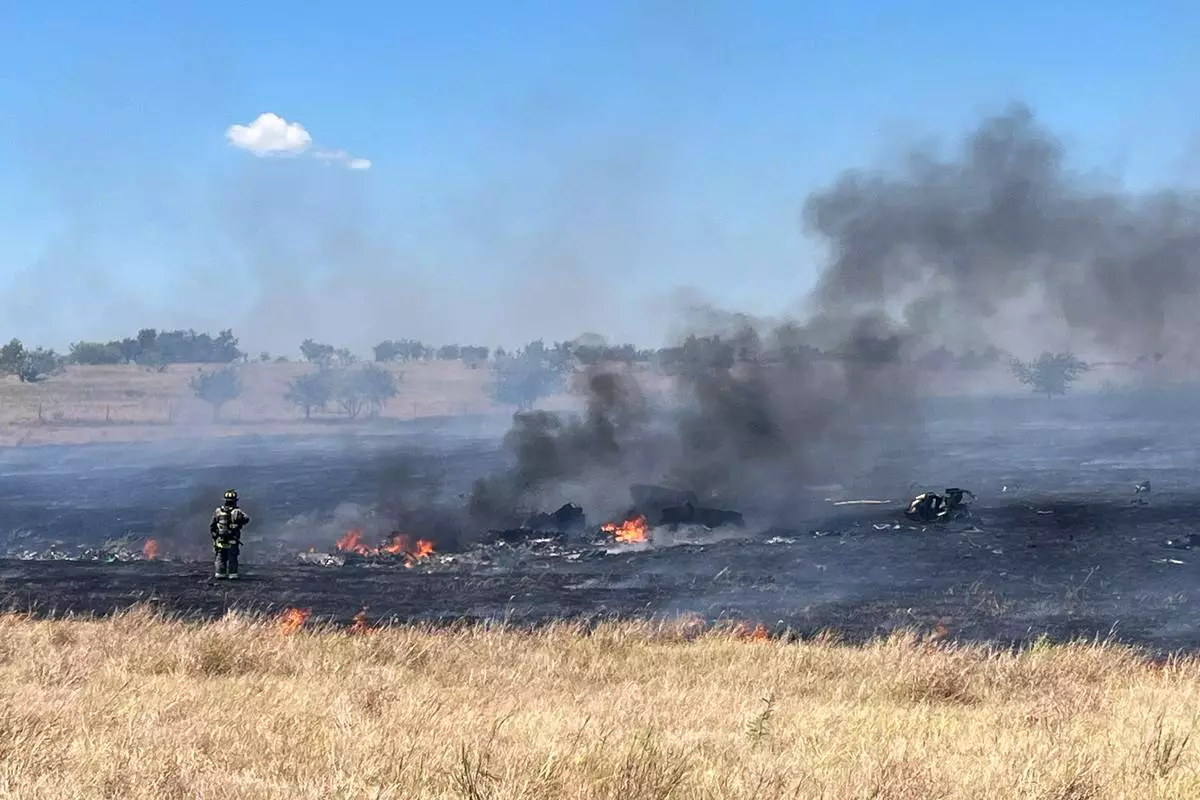
This photo provided by the Bell County Sheriff's Office shows the scene of an Army Apache helicopter crash Wednesday, Aug. 12, 2026, near Salado, Texas. (Cliff Coleman/Bell County Sherrif's Office via AP)
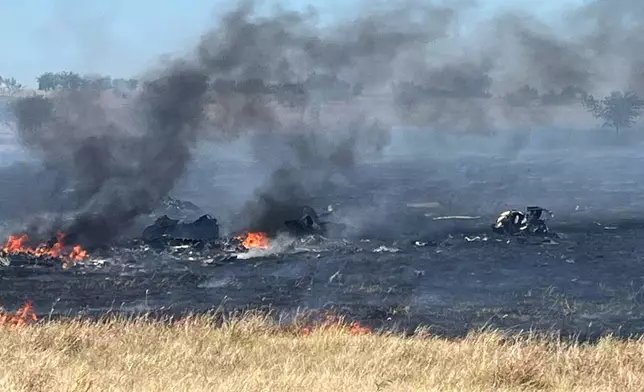
This photo provided by the Bell County Sheriff's Office shows the scene of an Army Apache helicopter crash Wednesday, Aug. 12, 2026, near Salado, Texas. (Cliff Coleman/Bell County Sherrif's Office via AP)

This photo provided by the Bell County Sheriff's Office shows the scene of an Army Apache helicopter crash Wednesday, Aug. 12, 2026, near Salado, Texas. (Cliff Coleman/Bell County Sherrif's Office via AP)

This photo provided by the Bell County Sheriff's Office shows the scene of an Army Apache helicopter crash Wednesday, Aug. 12, 2026, near Salado, Texas. (Cliff Coleman/Bell County Sherrif's Office via AP)

Military officials temporarily halted Apache training flights on Aug. 14. The decision to resume the training came “after a thorough review of safety procedures and flight operations,” the Army said in a statement.

“We remain deeply saddened by the loss of our service members. Our thoughts are with their families, loved ones, and fellow Soldiers as we honor their service and the lasting impact they had on the Army community,” the statement said.

Chief Warrant Officer 2 Deontre T. Huey, 34, of Killeen, Texas, and Warrant Officer Seth L. Olmstead, 25, of Belton, Texas, were killed in the Texas crash, the Army said last week. They were the only two people on board when the helicopter crashed in a grassy field near Salado, about 30 miles (48 kilometers) from Fort Hood.

Huey entered the Army in 2014 and Olmstead entered in 2023. They were assigned to Bravo Company, 1st Battalion, 227th Aviation Regiment, 1st Air Cavalry Brigade, 1st Cavalry Division.

The military had paused similar missions after past crashes. Three years ago, after 12 soldiers died in separate crashes in Alaska and Kentucky, the Army grounded all aviation units until they completed some additional training.

Fort Hood is a massive base with 214,968 acres (86,995 hectares) that is used to train and deploy heavy forces. In November 2015, four soldiers were killed when a Black Hawk helicopter crashed during a training exercise. And nine Fort Hood soldiers died in 2016 when a rain-swollen creek swept their vehicle into rushing waters.

The Apache attack helicopter has been a core part of Army aviation since the first one was delivered in 1984. More than 5,000 Apaches have been deployed by the U.S. military and its allies over the decades.

In announcing the pause, the Army made no mention of stopping the combat missions that Apache helicopters are regularly flying in the war in Iran. The helicopters have been employed around the Strait of Hormuz as part of the measures to maintain open navigation channels. One Apache crashed after running into an Iranian drone.

This undated photo provided by the U.S. Army on Friday, Aug. 14, 2026, shows Warrant Officer Seth L. Olmstead. (U.S. Army via AP)

This undated photo provided by the U.S. Army on Friday, Aug. 14, 2026, shows Warrant Officer Seth L. Olmstead. (U.S. Army via AP)

This undated photo provided by the U.S. Army on Friday, Aug. 14, 2026, shows Chief Warrant Officer 2 Deontre T. Huey. (U.S. Army via AP)
This undated photo provided by the U.S. Army on Friday, Aug. 14, 2026, shows Chief Warrant Officer 2 Deontre T. Huey. (U.S. Army via AP)

This photo provided by the Bell County Sheriff's Office shows the scene of an Army Apache helicopter crash Wednesday, Aug. 12, 2026, near Salado, Texas. (Cliff Coleman/Bell County Sherrif's Office via AP)
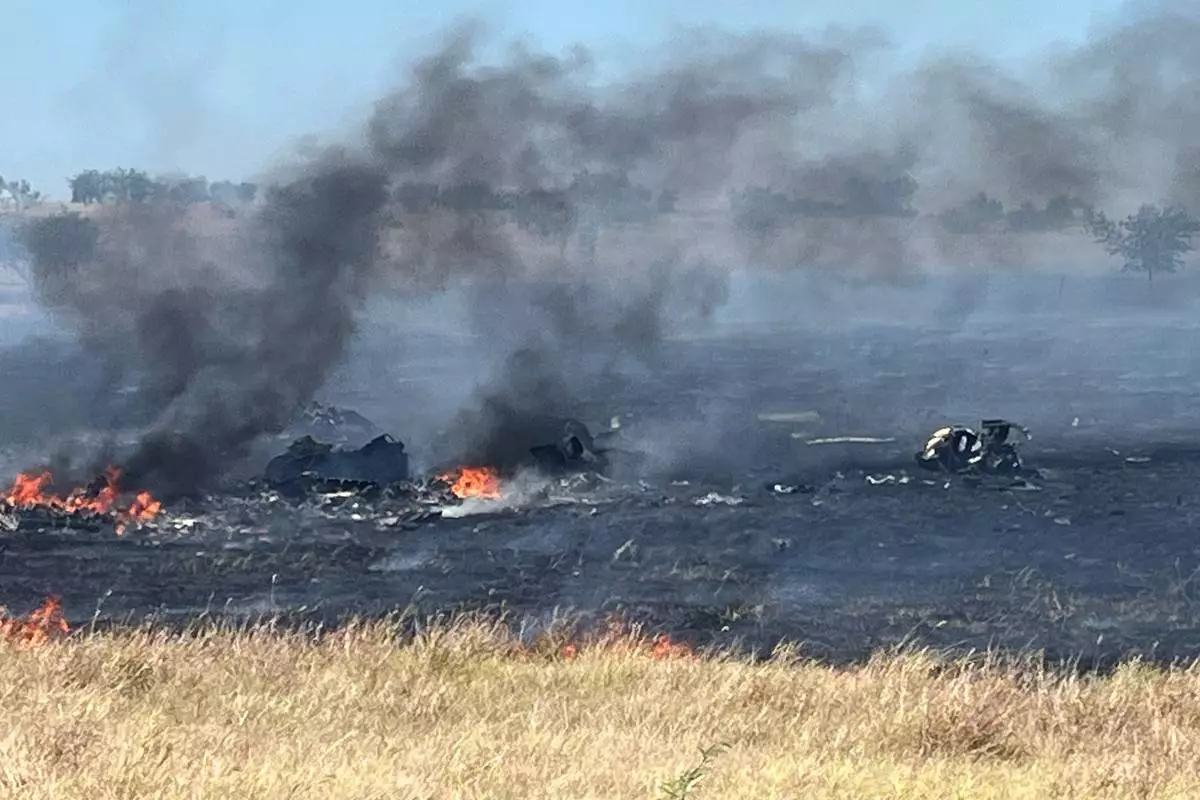
This photo provided by the Bell County Sheriff's Office shows the scene of an Army Apache helicopter crash Wednesday, Aug. 12, 2026, near Salado, Texas. (Cliff Coleman/Bell County Sherrif's Office via AP)


This photo provided by the Bell County Sheriff's Office shows the scene of an Army Apache helicopter crash Wednesday, Aug. 12, 2026, near Salado, Texas. (Cliff Coleman/Bell County Sherrif's Office via AP)
This photo provided by the Bell County Sheriff's Office shows the scene of an Army Apache helicopter crash Wednesday, Aug. 12, 2026, near Salado, Texas. (Cliff Coleman/Bell County Sherrif's Office via AP)

WASHINGTON (AP) — The national debt surpassed a record $40 trillion on Wednesday, a staggering milestone as defense costs, social programs like Social Security and Medicare and interest on the burgeoning deficit make up an enormous share of federal spending.

The milestone figure was recorded just five months after the U.S. hit a record $39 trillion debt in March. It reached $38 trillion five months before that, in October.

The unprecedented $40 trillion figure highlights competing administration priorities, from boosting defense spending that the U.S. relies on to carry out President Donald Trump's almost-6-month-old war in Iran to lowering the cost of gas and groceries.

Kush Desai, a White House spokesman, said the Trump administration “has been focused on slashing waste, fraud, and abuse in federal spending while accelerating economic growth to get America’s debt-to-GDP ratio trending in the right direction.”

However, experts say the exploding debt and the latest record milestone are already affecting Americans' pocketbooks by raising borrowing costs for things like mortgages and cars, lowering wages from businesses that have less money available to invest, and creating more expensive goods and services.

“If we want to improve our living standards, today and for the next generation, now is the time for lawmakers to put our nation on a more affordable and sustainable path," says Michael A. Peterson, CEO of the Peter G. Peterson Foundation, a think tank focused on U.S. fiscal challenges.

The debt has exploded over several presidential administrations, as the nation's leaders spend more money than it collects in taxes. In recent memory, the multi-year COVID-19 pandemic shut down much of the U.S. economy, where the federal government borrowed heavily during President Trump's first term and under former President Joe Biden to stabilize the economy and support a recovery.

More government spending was approved after Trump signed Republicans’ tax cut and spending legislation into law last year.

Advocates for a balanced budget also warn that the long-term trend of borrowing more and paying more in interest will force Americans to face tougher fiscal tradeoffs ahead.

"The federal debt is already raising the cost of living and choking out other spending and investment, threatening our economy and Americans’ long-term prosperity,” said Margaret Spellings, president and CEO of the Bipartisan Policy Center.

“Our current fiscal trajectory is plainly unsustainable, and that’s the best-case scenario. AI disruption, a recession, global war, or any number of other events could quickly push us over the edge from a challenge into a full-blown crisis," Spellings said in a statement.

The U.S. is subject to a statutory debt limit, or a limit to federal borrowing, which Congress has the authority to set, adjust or abolish. The Bipartisan Policy Center estimates that the U.S. will most likely reach the $41.1 trillion debt limit sometime between late winter and mid-summer of 2027, requiring Congress to again vote on whether to raise or suspend it.

The U.S.' fiscal position stands as the worst among other developed countries, according to recent data analysis from the Organization for Economic Co-operation and Development

Specialist Gregg Maloney works on the floor of the New York Stock Exchange, Friday, Aug. 7, 2026, in New York. (AP Photo/Yuki Iwamura)

Specialist Gregg Maloney works on the floor of the New York Stock Exchange, Friday, Aug. 7, 2026, in New York. (AP Photo/Yuki Iwamura)

Recommended Articles