VANDENBERG SPACE FORCE BASE, Calif. (AP) — Five news reporters and two members of the military who were invited to an event at Vandenberg Space Force Base in California were briefly detained at gunpoint by security officers who thought they were gate crashers, according to local news reports.
The incident happened Monday ahead of an invitation-only groundbreaking for a new training facility for missile operators at the federal airfield near Santa Barbara, California. Reporters from Noozhawk and KEYT were among those detained, and both outlets published articles detailing the detainment.
In a statement Wednesday, a Space Launch Delta 30 Public Affairs spokesperson said base protocols will be reviewed.
“Vandenberg takes both installation security and our responsibility to invited media seriously. The journalists involved were accessing the installation at our invitation, and the installation commander has ordered a full review of the media coordination processes,” the statement said.
The reporters and military members were part of a convoy being escorted onto the base by uniformed public affairs staff in a government minivan when they were suddenly ordered out of their vehicles with their hands up, according to news reports.
Officers pointed guns, sirens were sounded, and barricades went up at the gate entrance, KEYT reported.
The two military members assigned to the base — one enlisted and one a junior officer — were handcuffed and placed in base vehicles, while the civilians were ordered to sit on a curb, Noozhawk reported.
The reporters for outlets also including KSBY-TV and the Santa Maria Times/Lompoc Record were held for more than 30 minutes, causing them to miss the event. All were let go without further incident.
“We respect the military’s need to provide security for the base,” Tom Bolton, Noozhawk's editor in chief, said in a statement Wednesday. “But clearly what occurred was unfortunate and unnecessary, and potentially dangerous, as firearms were drawn.”
Bolton said he hopes to have a conversation with base leadership later this week to review what happened in the hopes of preventing a similar occurrence in the future.

Journalists wait after being stopped by security officers at Vandenberg Space Force Base in California on Monday, Aug. 17, 2026. (Jarrod Zinn/KEYT via AP)
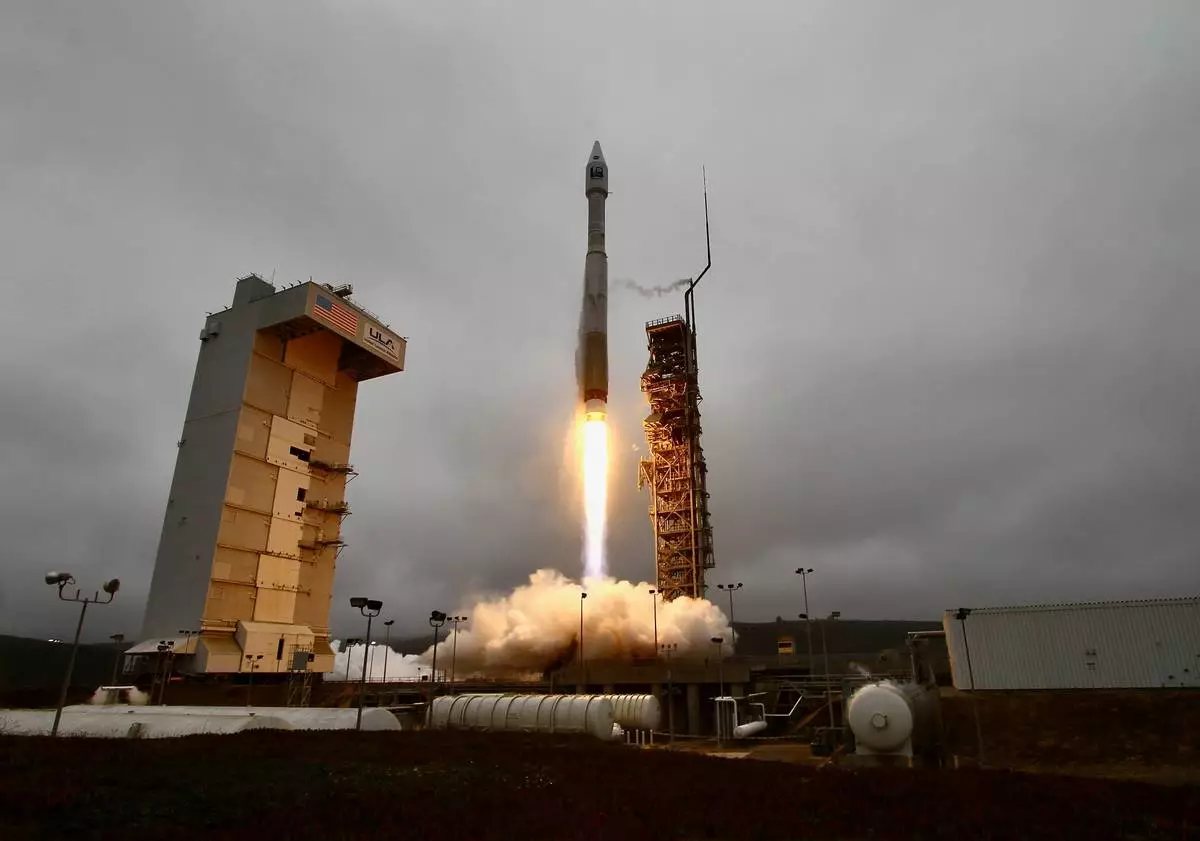
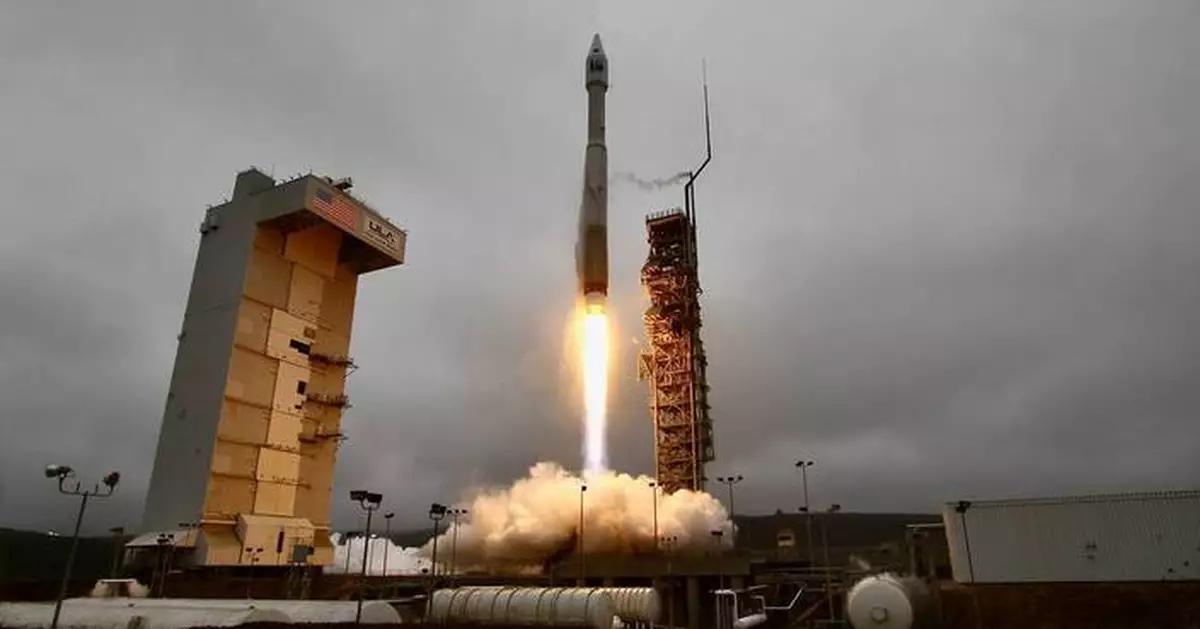
FILE - A United Launch Alliance AtlasV rocket lifts off carrying the Landsat9 earth imaging satellite from Vandenberg Space Force Base, Calif., Sept. 27, 2021. (Matt Hartman via AP, File)
THE HAGUE, Netherlands (AP) — The International Criminal Court on Wednesday slammed the latest U.S. sanctions targeting senior ICC staff, including its president, as a “flagrant attack” on the global tribunal's independence and vowed to continue seeking justice for atrocities around the world.
The State Department announced Tuesday that it had hit ICC president Tomoko Akane, a Japanese national, and ICC senior trial lawyer Abdoulaye Seye, who is from Senegal, with sanctions that freeze any assets they have in U.S. jurisdictions or come into contact with the U.S. financial system.
Japanese Prime Minister Sanae Takaichi called the move “very unfortunate” when asked about the sanctions by a reporter. “Japan will respond as we continue to maintain communication with related countries including the United States,” she added.
The Trump administration has now slapped sanctions on nine of the ICC's 18 judges, both of its deputy prosecutors, its former chief prosecutor and one other prosecution office staffer, the court said. The U.S. accuses the court of overstepping its mandate by investigating and seeking to prosecute senior military and political officials from countries, such as Israel and the United States, that are not members of the court.
In a statement, the court said that when “judicial actors are threatened for applying the law, it is the international legal order itself that is placed at risk.” It said the court “will continue to fully discharge its mandate with independence and impartiality.”
Secretary of State Marco Rubio on Tuesday branded the ICC “a corrupt and fatally politicized supranational court that has maliciously abused its authority and exceeded its mandate.”
The move came weeks after Rubio announced that the U.S. was launching a “sweeping campaign to dismantle the threat posed by the International Criminal Court to U.S. sovereignty.”
Rubio said he will pressure the court’s 125 member states to withdraw from the institution, sanction organizations that work with the court and ban staff from traveling to the United States.
Since then, Venezuela and Chad have announced they plan to leave the court, bringing the number of countries to pull out of the court in the past year to five. It takes a year for a country's decision to quit the court to be formalized.
The sanctions can impact the daily lives of court officials. They prevent the ICC officials and their families from entering the United States, block their access to even basic financial services making even going to a grocery store difficult.
Canadian judge Kimberly Prost, who was sanctioned last year, lost access to her credit cards, and Amazon’s Alexa stopped responding to her. “Your whole world is restricted,” she told The Associated Press after she was targeted.
The court's oversight body, the Assembly of States Parties, called the sanctions an “escalation” that “risks undermining ongoing investigations and impeding global efforts” to ensure justice reaches victims of global atrocities.
While Japan calls its alliance with the United States the cornerstone of its postwar foreign and security policies, Tokyo has had difficulty managing the relationship under Trump’s trade and security policies. Takaichi has been portrayed as weak for avoiding any criticism of Trump as her administration navigates weakened U.S. commitment in the region and deteriorating ties with China.
Yuichiro Tamaki, leader of the Japanese opposition Democratic Party for the People, wrote on X that Trump’s sanctions were “outrageous and intolerable.” He urged Takaichi’s government to show its support for the ICC and reach out to the U.S. government to “have it retract this unjust sanction.”
ICC host nation the Netherlands and European powerhouse Germany both threw their weight behind the court.
German foreign office spokesman Martin Giese told reporters in Berlin that the ICC is “fulfilling its mission exactly as intended,” by holding to account perpetrators of grave crimes. Dutch Foreign Minister Tom Berendsen said he had invited Akane for talks “to discuss our continued support.”
Balkees Jarrah, Middle East and North Africa director at Human Rights Watch, called the sanctions “the latest example of the Trump administration’s utter contempt for international law and a naked attempt to shield American and Israeli officials implicated in serious crimes from justice.”
Human Rights Watch and three other advocacy groups sued the Trump administration in a New York court last week to challenge its campaign against the ICC.
Associated Press journalists Matthew Lee in Washington, Mari Yamaguchi in Tokyo and Kirsten Grieshaber in Berlin contributed to this report.
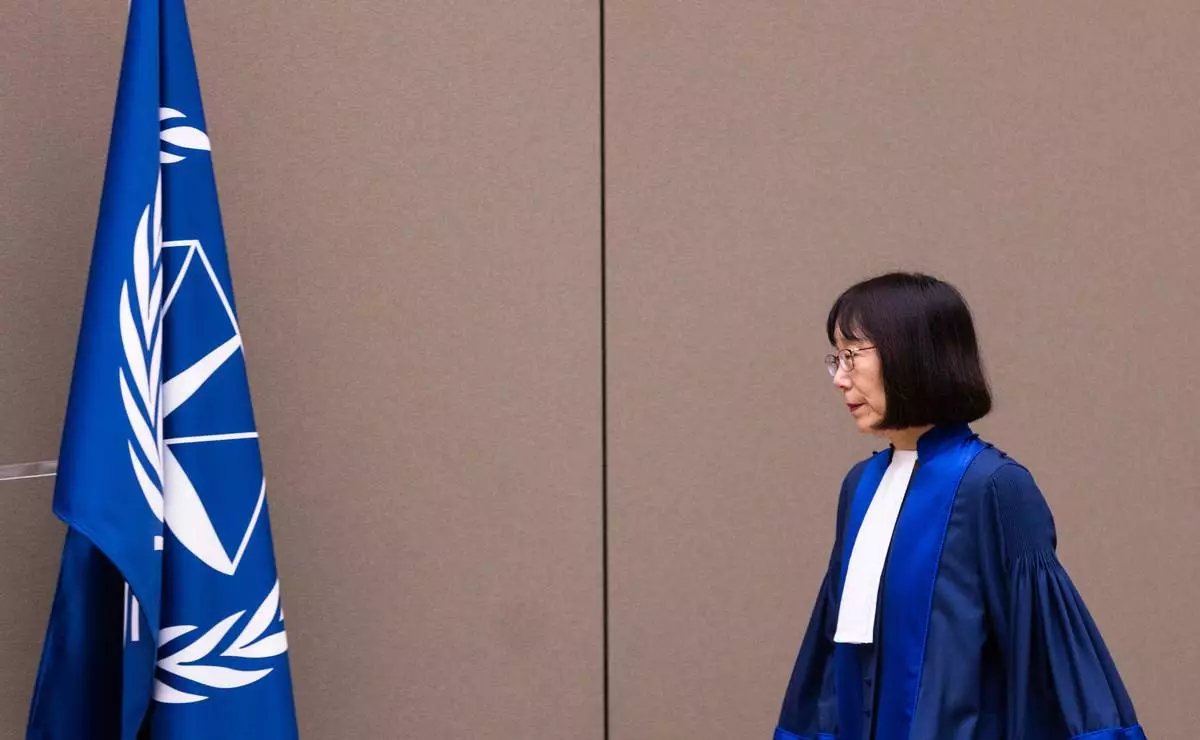
FILE - Judge Tomoko Akane walks before delivering the verdict in the Al Hassan case at the International Criminal Court in The Hague, Netherlands, Wednesday Nov. 20, 2024. (Eva Plevier/Pool Photo via AP, file)
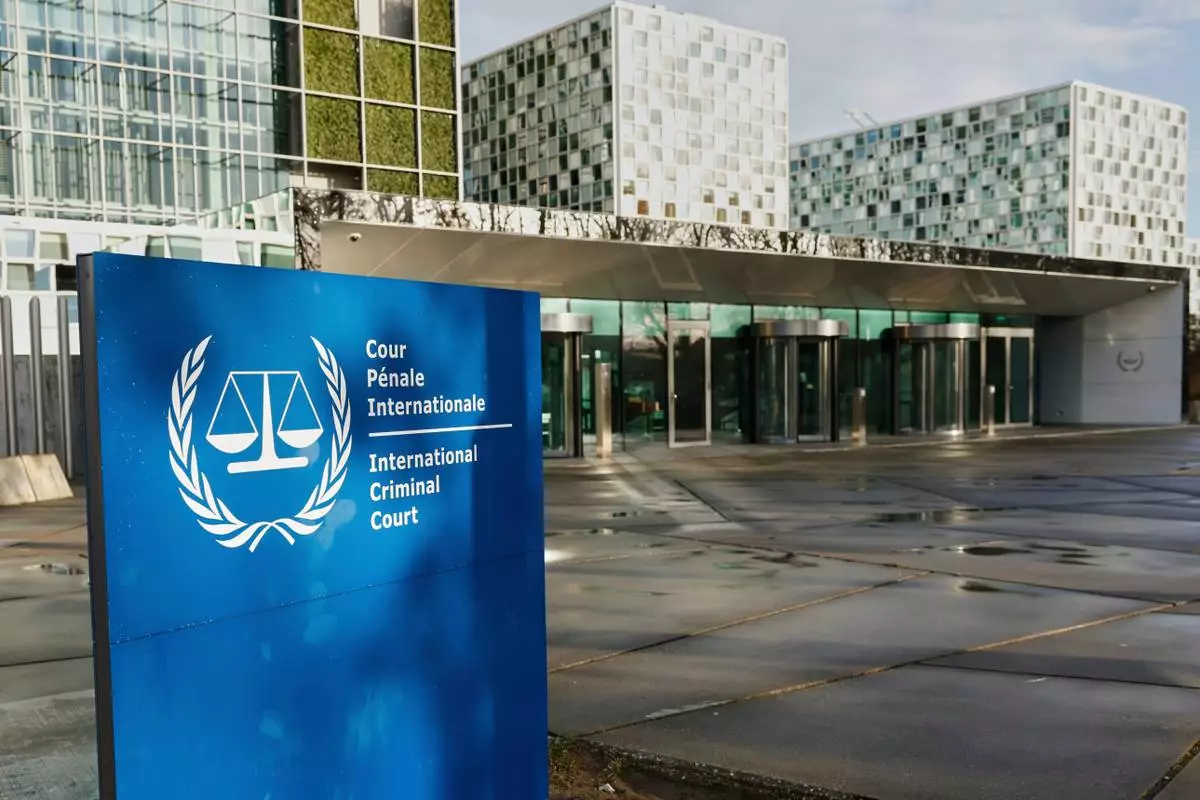
FILE - A general view of the exterior of the International Criminal Court is seen in The Hague, Netherlands, March 12, 2025. (AP Photo/Omar Havana, File)