Skip to Content Facebook Feature Image

Chinese Valentine’s Day is rooted in legend and tradition, not just romance

ENT

Chinese Valentine’s Day is rooted in legend and tradition, not just romance
ENT

ENT

Chinese Valentine’s Day is rooted in legend and tradition, not just romance

2026-08-20 09:04 Last Updated At:09:10

BEIJING (AP) — Chinese Valentine’s Day is not all about flowers and chocolates. Beyond the romance embraced by some contemporary couples, Qixi is an ancient tradition rooted in legend, prayer and cultural activities that survive to this day.

The festival is observed on the seventh day of the seventh month of the Chinese calendar, which fell on Aug. 19 in 2026. Celebrations are also held in Singapore, Vietnam and other Asian countries.

More Images
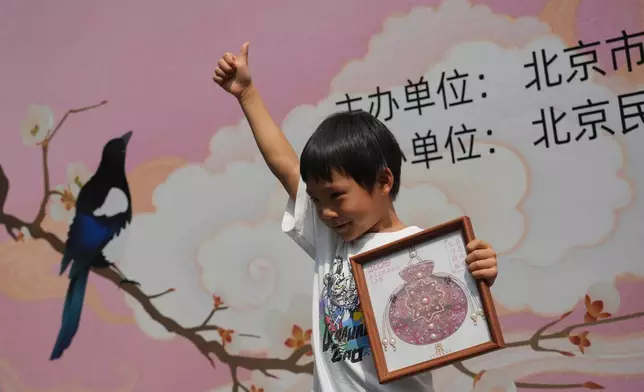
A child celebrates with his finished sachet-shaped Song brocade pearl painting during a festival to celebrate Qixi at the Beijing Folk Custom Museum in Beijing, Wednesday, Aug. 19, 2026. (AP Photo/Achmad Ibrahim)
A child celebrates with his finished sachet-shaped Song brocade pearl painting during a festival to celebrate Qixi at the Beijing Folk Custom Museum in Beijing, Wednesday, Aug. 19, 2026. (AP Photo/Achmad Ibrahim)
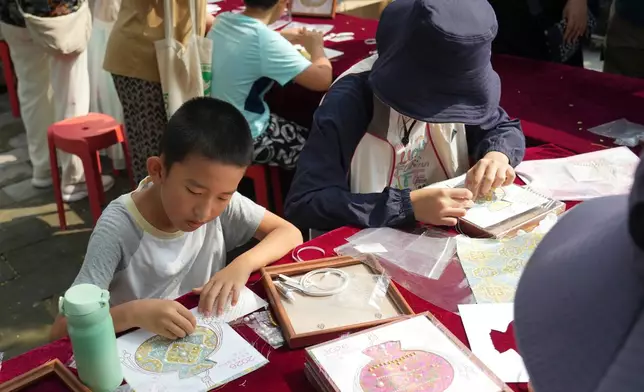
A child makes a sachet-shaped Song brocade pearl painting during a festival to celebrate Qixi at the Beijing Folk Custom Museum in Beijing, Wednesday, Aug. 19, 2026. (AP Photo/Achmad Ibrahim)
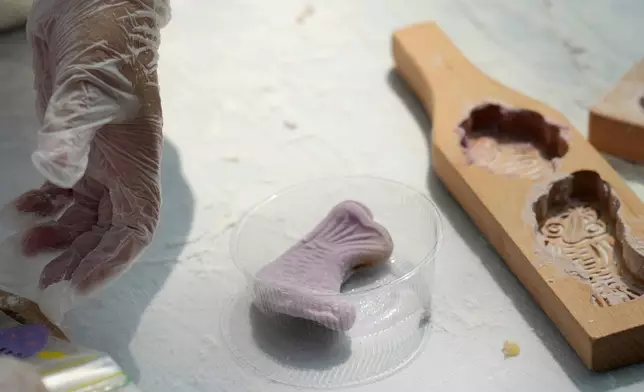
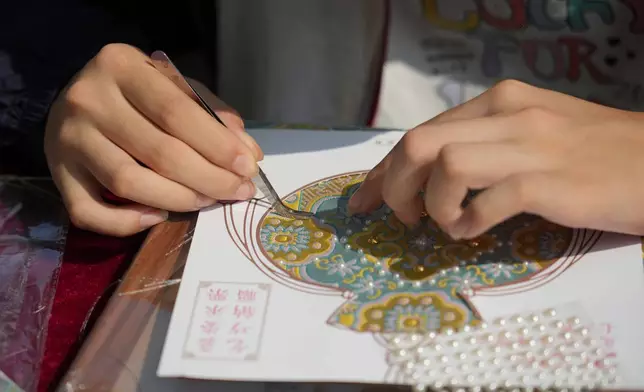
A child makes a sachet-shaped Song brocade pearl painting during a festival to celebrate Qixi at the Beijing Folk Custom Museum in Beijing, Wednesday, Aug. 19, 2026. (AP Photo/Achmad Ibrahim)
A child makes a sachet-shaped Song brocade pearl painting during a festival to celebrate Qixi at the Beijing Folk Custom Museum in Beijing, Wednesday, Aug. 19, 2026. (AP Photo/Achmad Ibrahim)
A child makes a sachet-shaped Song brocade pearl painting during a festival to celebrate Qixi at the Beijing Folk Custom Museum in Beijing, Wednesday, Aug. 19, 2026. (AP Photo/Achmad Ibrahim)
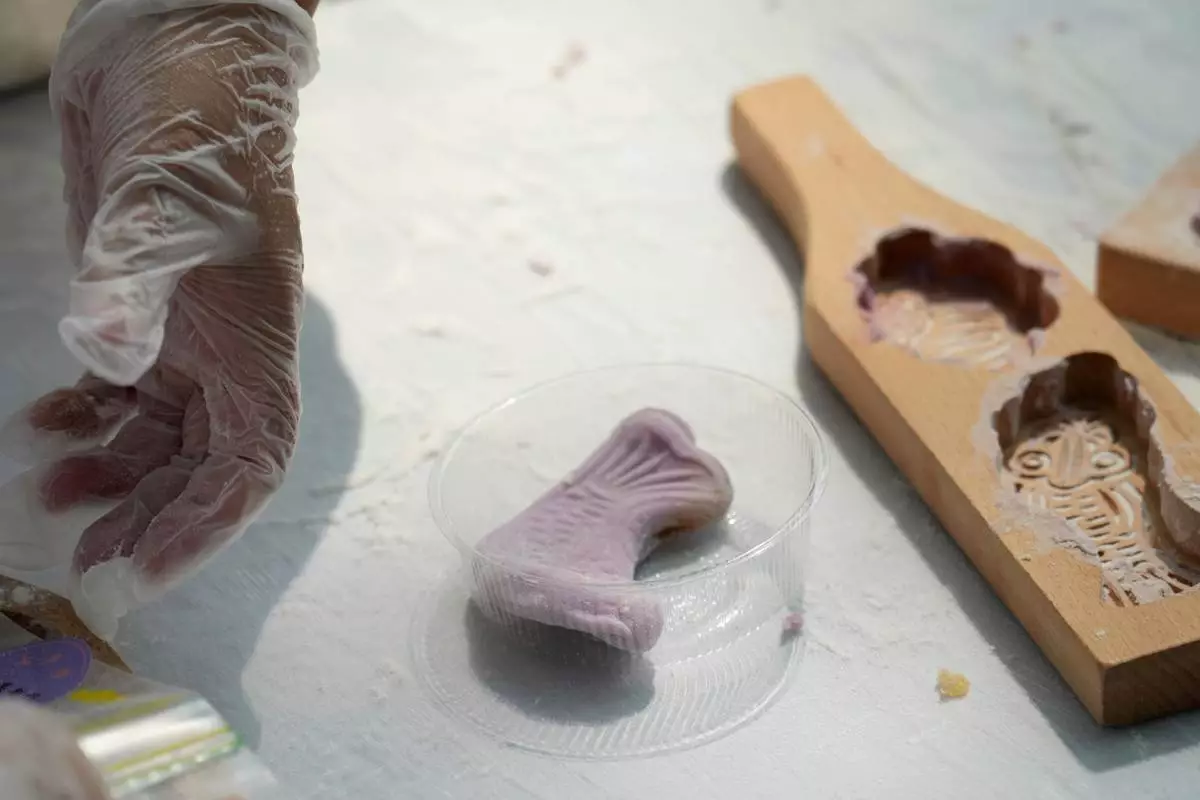
Participants create qiaoguo, a pastry made by pressing dough into decorative molds, during a festival to celebrate Qixi at the Beijing Folk Custom Museum in Beijing, Wednesday, Aug. 19, 2026. (AP Photo/Achmad Ibrahim)
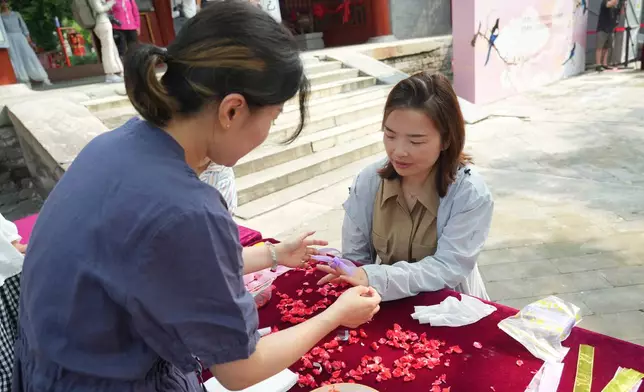
Participants create qiaoguo, a pastry made by pressing dough into decorative molds, during a festival to celebrate Qixi at the Beijing Folk Custom Museum in Beijing, Wednesday, Aug. 19, 2026. (AP Photo/Achmad Ibrahim)
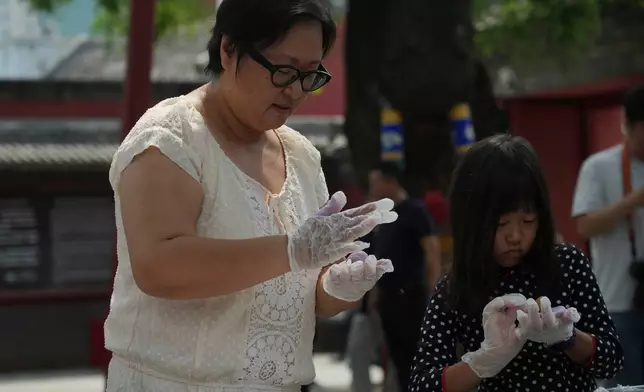
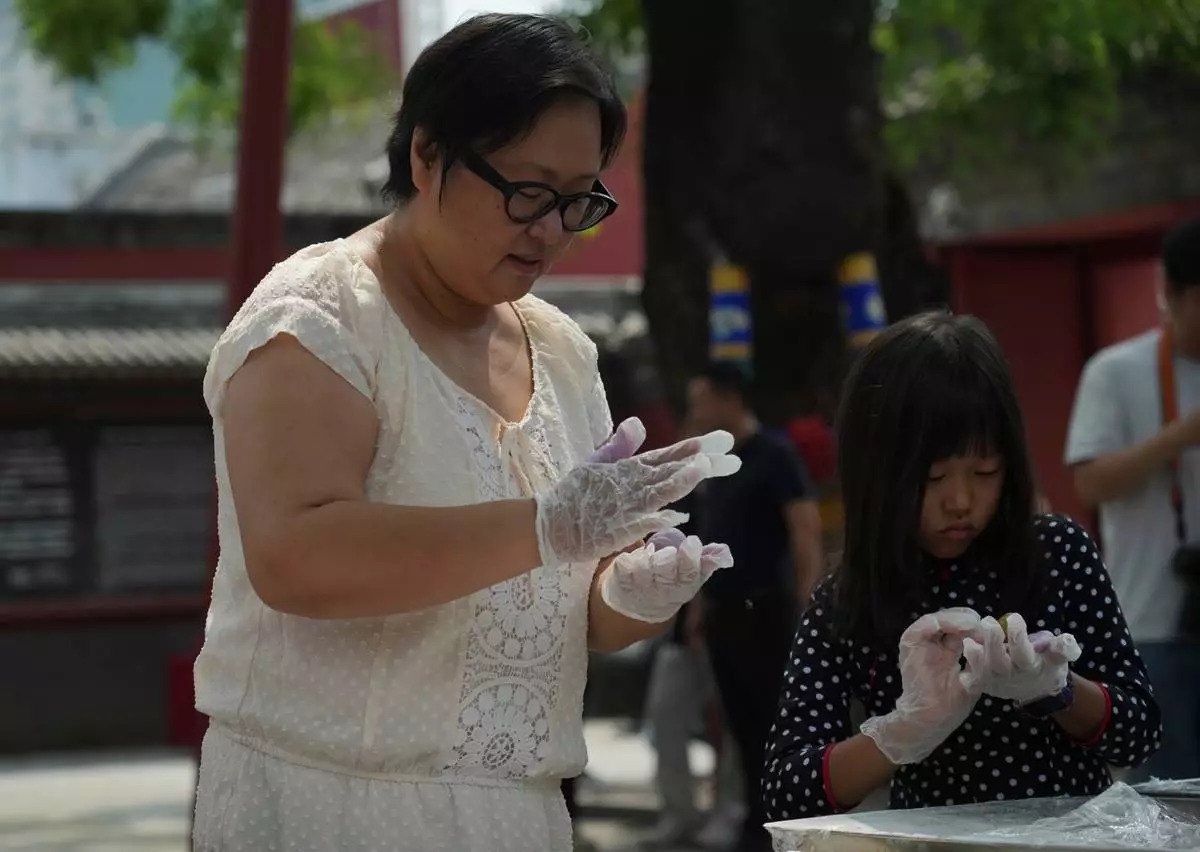
Wang Xuejie and her 7-year-old daughter make qiaoguo, a pastry made by pressing dough into decorative molds, during a festival to celebrate Qixi at the Beijing Folk Custom Museum in Beijing, Wednesday, Aug. 19, 2026. (AP Photo/Achmad Ibrahim)

Wang Xuejie and her 7-year-old daughter make qiaoguo, a pastry made by pressing dough into decorative molds, during a festival to celebrate Qixi at the Beijing Folk Custom Museum in Beijing, Wednesday, Aug. 19, 2026. (AP Photo/Achmad Ibrahim)

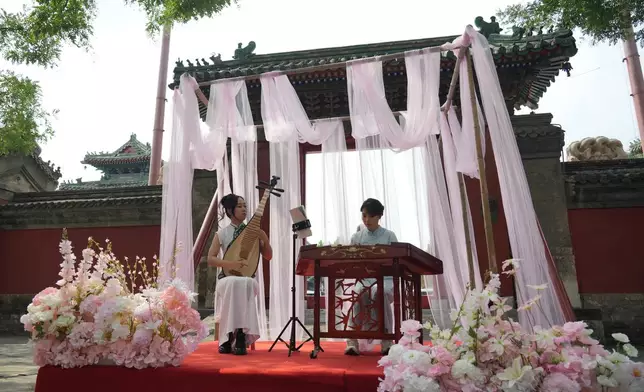
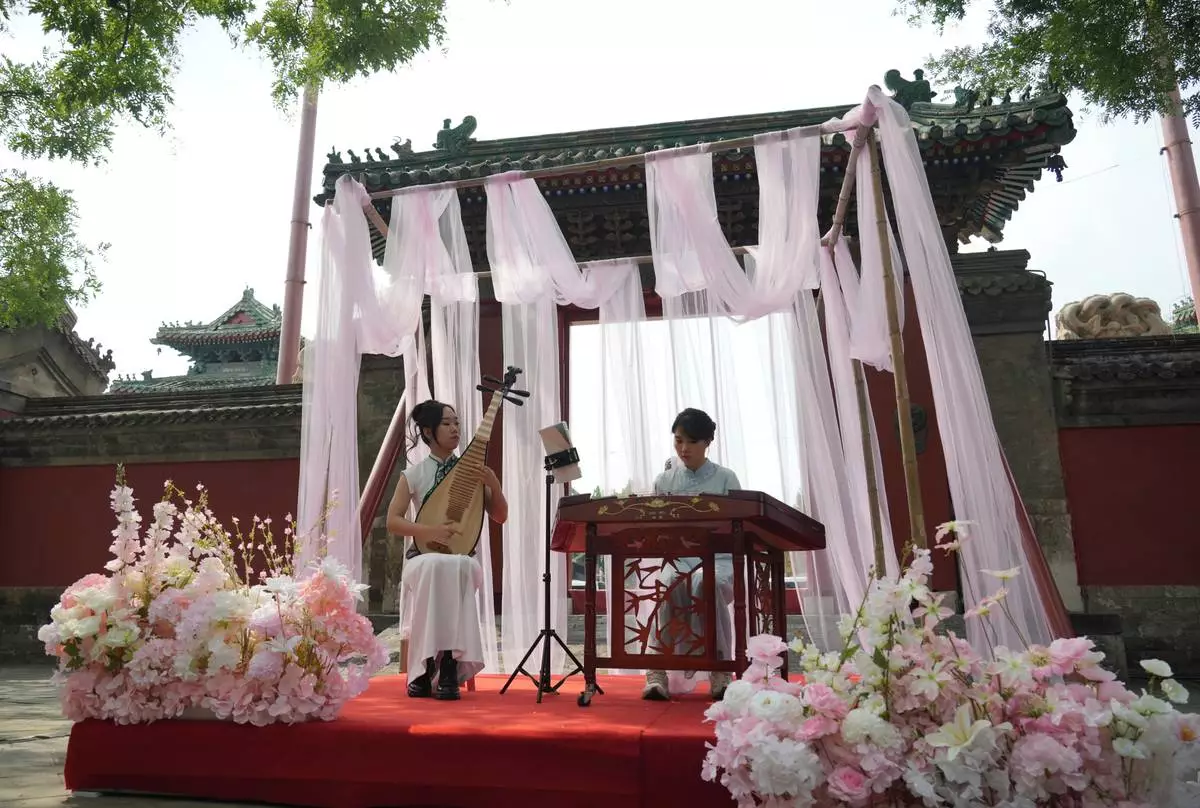
Chinese classical music performers perform at a festival to celebrate Qixi at the Beijing Folk Custom Museum in Beijing, Wednesday, Aug. 19, 2026. (AP Photo/Achmad Ibrahim)

Chinese classical music performers perform at a festival to celebrate Qixi at the Beijing Folk Custom Museum in Beijing, Wednesday, Aug. 19, 2026. (AP Photo/Achmad Ibrahim)

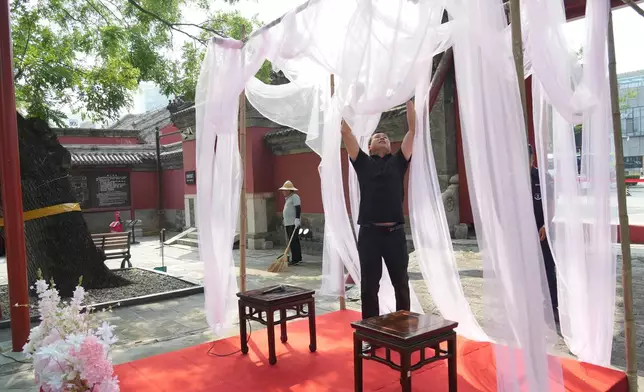
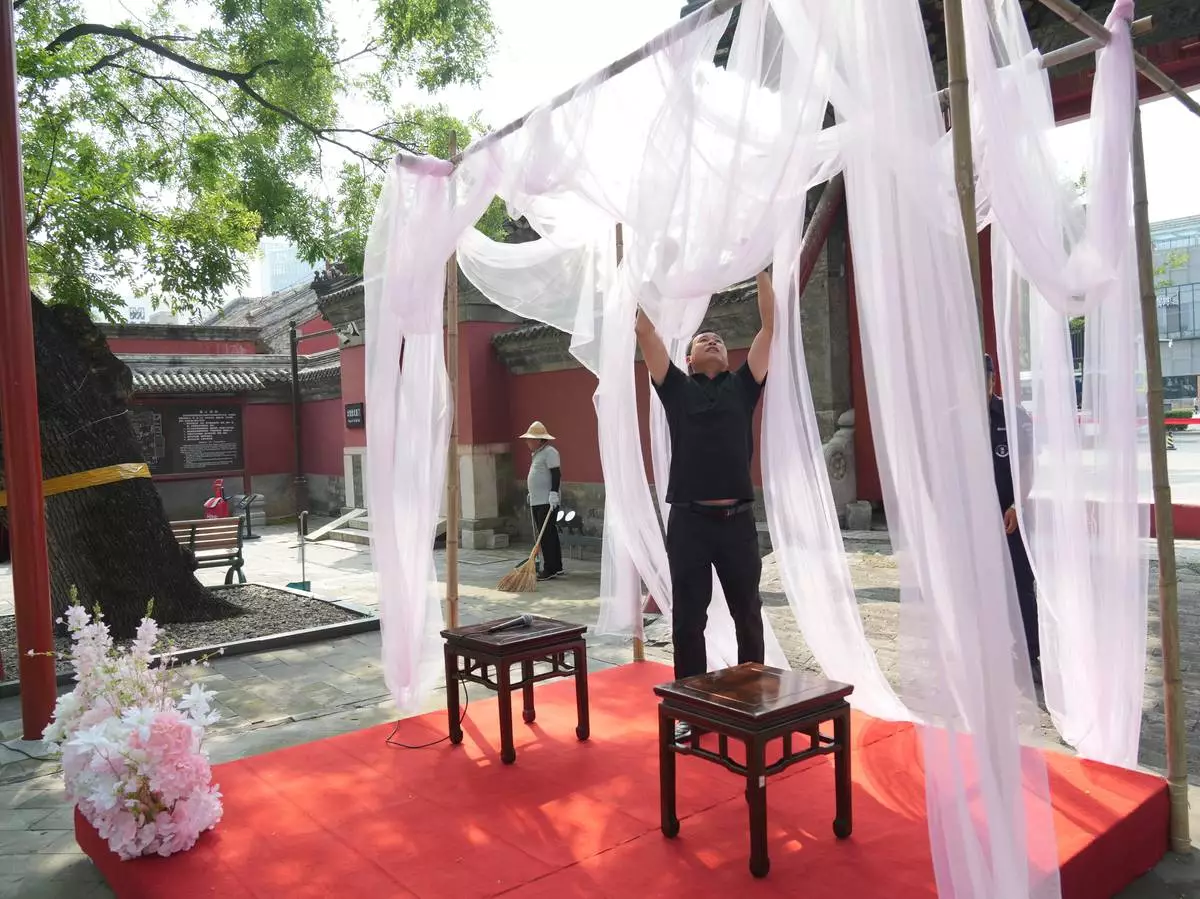
A worker decorates ahead of a festival to celebrate Qixi at the Beijing Folk Custom Museum in Beijing, Wednesday, Aug. 19, 2026. (AP Photo/Achmad Ibrahim)

A worker decorates ahead of a festival to celebrate Qixi at the Beijing Folk Custom Museum in Beijing, Wednesday, Aug. 19, 2026. (AP Photo/Achmad Ibrahim)

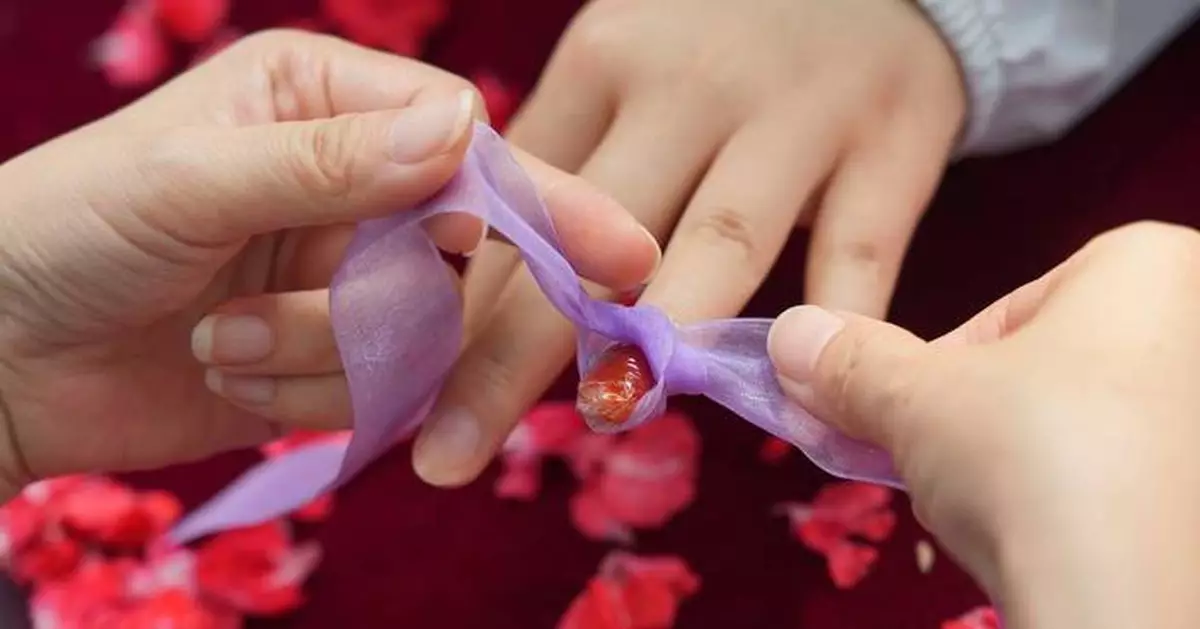
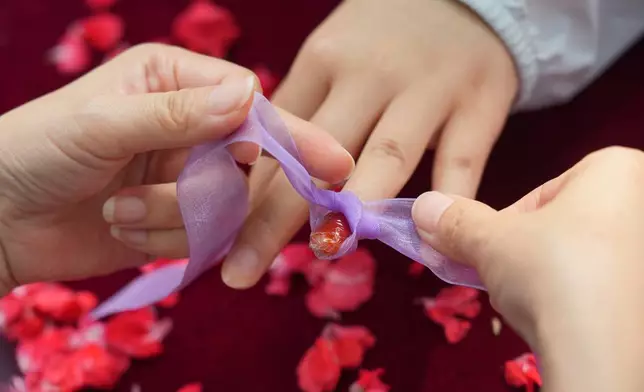
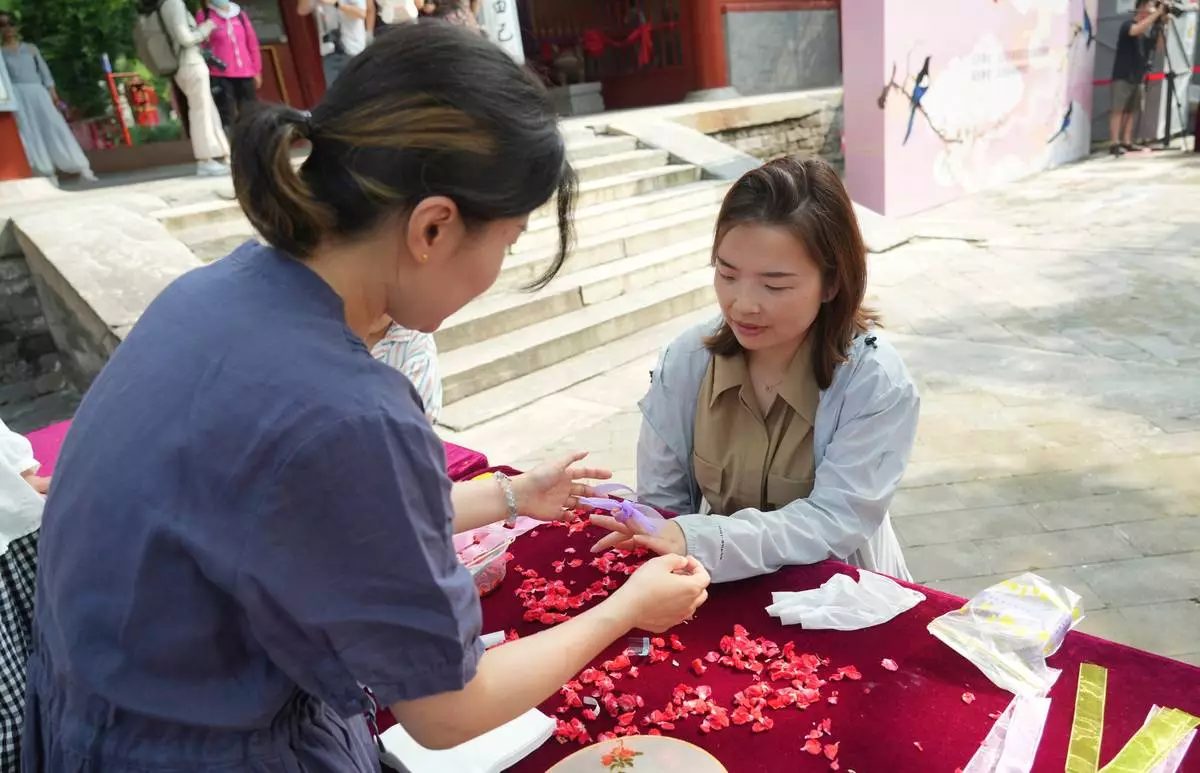
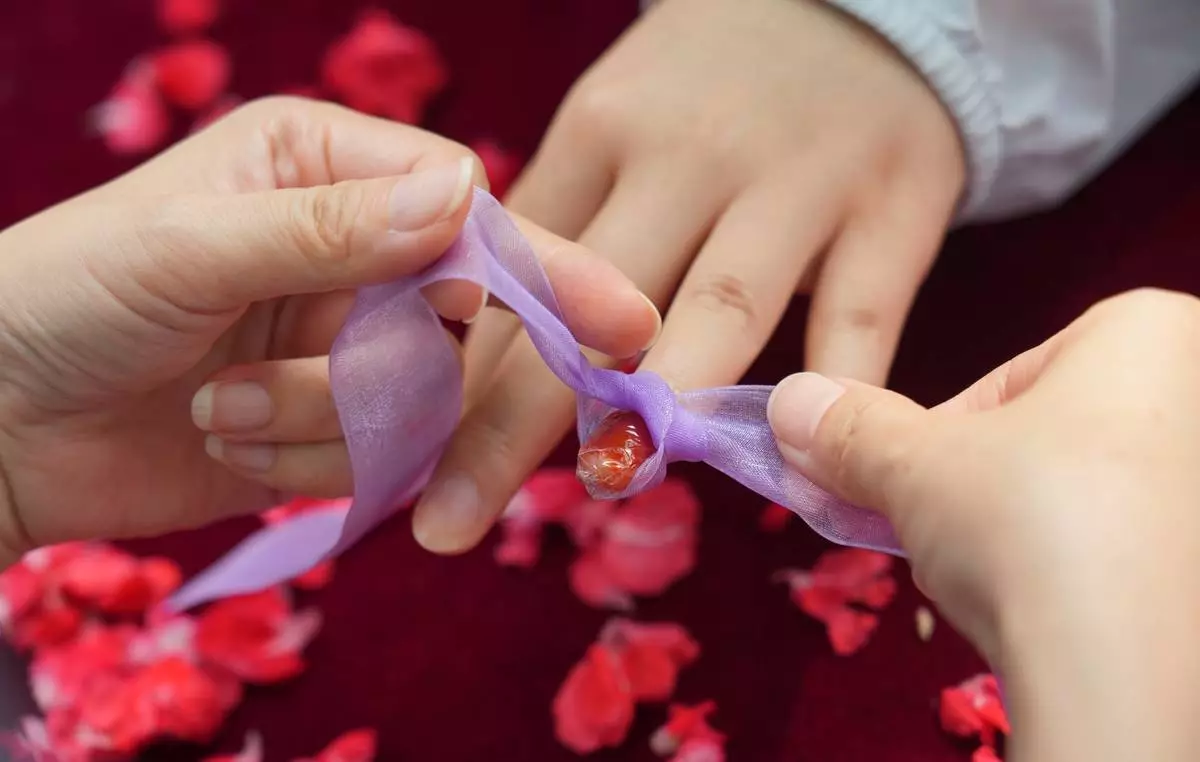
A woman gets her nail dyed with garden balsam, a natural pigment traditionally associated with beauty and blessings, during a festival to celebrate Qixi at the Beijing Folk Custom Museum in Beijing, Wednesday, Aug. 19, 2026. (AP Photo/Achmad Ibrahim)

A woman gets her nail dyed with garden balsam, a natural pigment traditionally associated with beauty and blessings, during a festival to celebrate Qixi at the Beijing Folk Custom Museum in Beijing, Wednesday, Aug. 19, 2026. (AP Photo/Achmad Ibrahim)

A woman gets her nail dyed with garden balsam, a natural pigment traditionally associated with beauty and blessings, during a festival to celebrate Qixi at the Beijing Folk Custom Museum in Beijing, Wednesday, Aug. 19, 2026. (AP Photo/Achmad Ibrahim)

A woman gets her nail dyed with garden balsam, a natural pigment traditionally associated with beauty and blessings, during a festival to celebrate Qixi at the Beijing Folk Custom Museum in Beijing, Wednesday, Aug. 19, 2026. (AP Photo/Achmad Ibrahim)

Beijing’s Folk Custom Museum hosted activities on Wednesday under a program called “Asking for Skills,” reflecting a tradition at the heart of Qixi in which women historically prayed for skillfulness and displayed their abilities through crafts.

“We especially hope that young audiences can understand the meaning of our traditional festivals through interactive and engaging experiences,” said Jia Juan, who works in the museum’s Public Education Department.

The museum, housed in Beijing’s Dongyue Taoist Temple, has been hosting Qixi-related activities for the last 14 years, drawing about 500 people each time.

Wednesday’s program began with a performance of Chinese classical music, followed by hands-on activities for families inspired by traditional Qixi customs.

One involved dyeing fingernails with garden balsam, a natural pigment traditionally associated with beauty and blessings. Another featured Song brocade bead painting, combining a precious Chinese silk fabric with pearls that symbolize completeness and good fortune.

Participants were encouraged to create their own sachet-shaped Song brocade pearl painting. Their work was meant to embody “qiqiao,” a concept centered on the pursuit of skill and dexterity.

Wang Xuejie attended with her 7-year-old daughter and they created “qiaoguo,” a pastry made by pressing dough into decorative molds.

“We were able to get a general understanding of how, during the Qixi Festival in ancient times, girls and women expressed their aspirations and hopes for their own growth,” Wang said.

Jia said that Chinese girls started practicing qiqiao during the Tang and Song dynasties, which spanned the seventh through the 13th centuries.

“The history of the Qixi Festival can be traced back to ancient people’s worship and study of the stars,” she added.

Qixi has historically centered on two main elements. One is related to a legend — its romantic component — and the other to qiqiao.

In Chinese mythology, Zhinü, a weaver girl represented by the Vega star, falls in love with Niulang, a cowherd embodied by the Altair star. Their forbidden love leads the Jade Emperor to decree their separation on opposite sides of the Milky Way. They reunite once a year — on the seventh day of the seventh lunar month — on a bridge formed by magpies.

Jia said records of the Cowherd and Weaver Girl date back to the pre-Qin period, before 221 B.C. Then, during the Han Dynasty, customs related to qiqiao began to develop.

Researcher Lynn Wong is eager to revive the festival in Singapore through an initiative called Qixi Fest, a multiday event launched in 2023. This year’s edition will run through Aug. 23.

“We’re trying to create the childhood memories of this new generation of Singaporeans so that they grow up with the stories that our forefathers grew up with,” Wong said.

She recalls that one day, while talking to a friend about Chinese festivals, she realized she had never heard of Qixi. She then started interviewing elders who shared their memories of the festival. That research is documented in a book.

Qixi came to Singapore around the 1930s with Chinese women migrants. Large numbers of men had previously settled there in search of work, but migration patterns shifted. With the women — particularly those from China’s Guangdong region — came customs and beliefs, some of which faded over time.

“I feel that in my generation, we lost quite a lot of our roots,” Wong said. “I grew up with things like the Tooth Fairy, ‘Hansel and Gretel’ and ‘Three Little Pigs,’ but what about the stories that our foremothers grew up listening to?”

Hor Xin Hao, of Cantonese descent, is among a handful of people who preserve a traditional observance of Qixi in Singapore.

Late at night on the sixth day of the seventh lunar month, his family sets up a prayer table facing the night sky in front of his house. They pray past midnight and make offerings to the Seven Maidens, celestial sisters including the Weaver Girl.

Ritual gifts include incense, flowers, perfume, cosmetics and soap, which Hor said are believed to bring beauty and charm after being blessed by the cowherd and seven maidens.

“I personally feel that the idea of a Valentine’s Day actually reduces the original idea behind the festival into something narrower,” said Hor, who sees Qixi as a celebration of traditional values and ancestral legacy.

“It contains the way we look at life from the interaction between us and the universe,” he said.

Associated Press video producer Olivia Zhang contributed.

Associated Press religion coverage receives support through the AP’s collaboration with The Conversation US, with funding from Lilly Endowment Inc. The AP is solely responsible for this content.
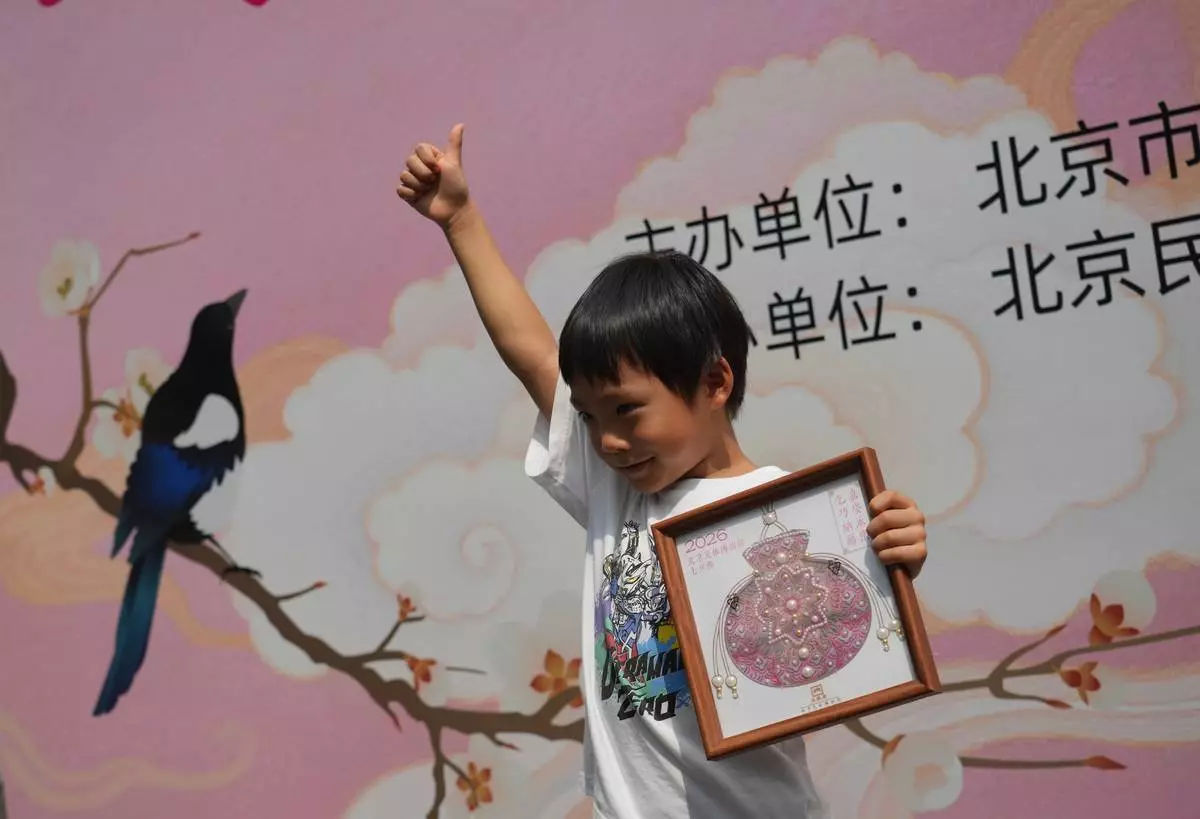
A child celebrates with his finished sachet-shaped Song brocade pearl painting during a festival to celebrate Qixi at the Beijing Folk Custom Museum in Beijing, Wednesday, Aug. 19, 2026. (AP Photo/Achmad Ibrahim)
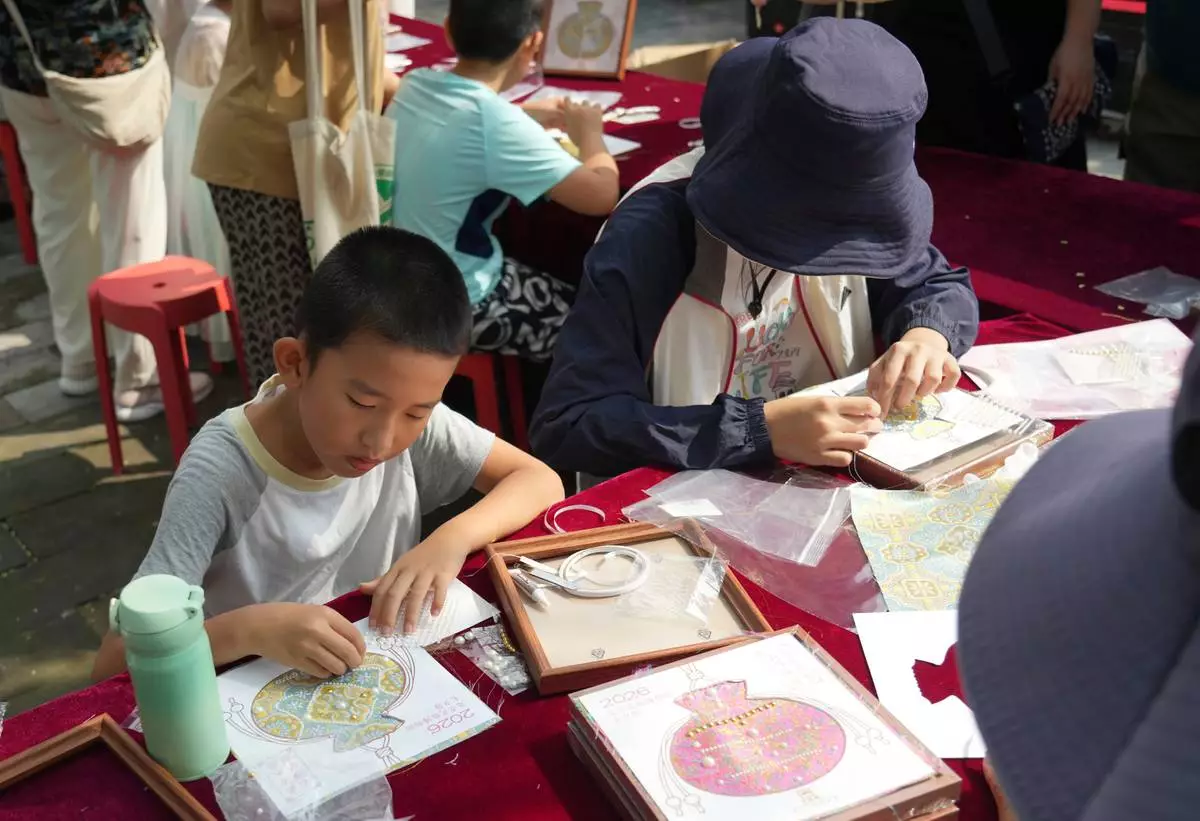
A child celebrates with his finished sachet-shaped Song brocade pearl painting during a festival to celebrate Qixi at the Beijing Folk Custom Museum in Beijing, Wednesday, Aug. 19, 2026. (AP Photo/Achmad Ibrahim)
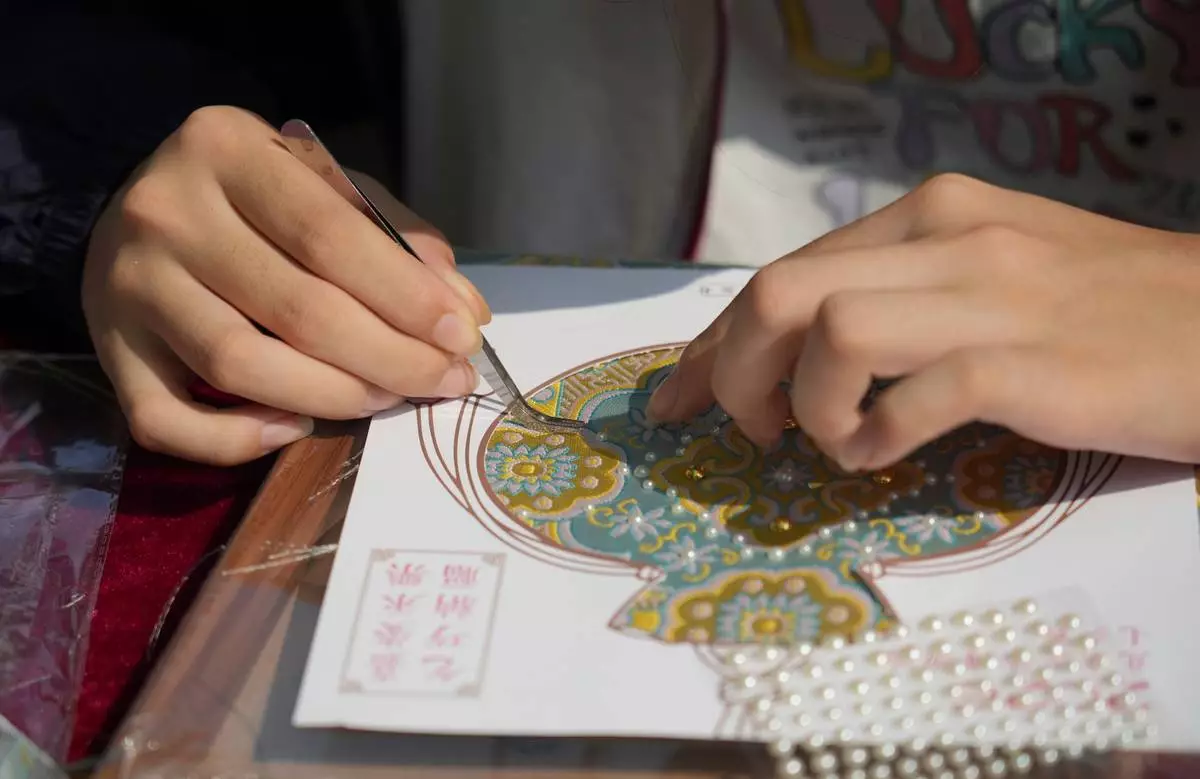
A child makes a sachet-shaped Song brocade pearl painting during a festival to celebrate Qixi at the Beijing Folk Custom Museum in Beijing, Wednesday, Aug. 19, 2026. (AP Photo/Achmad Ibrahim)
A child makes a sachet-shaped Song brocade pearl painting during a festival to celebrate Qixi at the Beijing Folk Custom Museum in Beijing, Wednesday, Aug. 19, 2026. (AP Photo/Achmad Ibrahim)
A child makes a sachet-shaped Song brocade pearl painting during a festival to celebrate Qixi at the Beijing Folk Custom Museum in Beijing, Wednesday, Aug. 19, 2026. (AP Photo/Achmad Ibrahim)
A child makes a sachet-shaped Song brocade pearl painting during a festival to celebrate Qixi at the Beijing Folk Custom Museum in Beijing, Wednesday, Aug. 19, 2026. (AP Photo/Achmad Ibrahim)
Participants create qiaoguo, a pastry made by pressing dough into decorative molds, during a festival to celebrate Qixi at the Beijing Folk Custom Museum in Beijing, Wednesday, Aug. 19, 2026. (AP Photo/Achmad Ibrahim)
Participants create qiaoguo, a pastry made by pressing dough into decorative molds, during a festival to celebrate Qixi at the Beijing Folk Custom Museum in Beijing, Wednesday, Aug. 19, 2026. (AP Photo/Achmad Ibrahim)
Wang Xuejie and her 7-year-old daughter make qiaoguo, a pastry made by pressing dough into decorative molds, during a festival to celebrate Qixi at the Beijing Folk Custom Museum in Beijing, Wednesday, Aug. 19, 2026. (AP Photo/Achmad Ibrahim)

Wang Xuejie and her 7-year-old daughter make qiaoguo, a pastry made by pressing dough into decorative molds, during a festival to celebrate Qixi at the Beijing Folk Custom Museum in Beijing, Wednesday, Aug. 19, 2026. (AP Photo/Achmad Ibrahim)
Chinese classical music performers perform at a festival to celebrate Qixi at the Beijing Folk Custom Museum in Beijing, Wednesday, Aug. 19, 2026. (AP Photo/Achmad Ibrahim)

Chinese classical music performers perform at a festival to celebrate Qixi at the Beijing Folk Custom Museum in Beijing, Wednesday, Aug. 19, 2026. (AP Photo/Achmad Ibrahim)

A worker decorates ahead of a festival to celebrate Qixi at the Beijing Folk Custom Museum in Beijing, Wednesday, Aug. 19, 2026. (AP Photo/Achmad Ibrahim)

A worker decorates ahead of a festival to celebrate Qixi at the Beijing Folk Custom Museum in Beijing, Wednesday, Aug. 19, 2026. (AP Photo/Achmad Ibrahim)

A woman gets her nail dyed with garden balsam, a natural pigment traditionally associated with beauty and blessings, during a festival to celebrate Qixi at the Beijing Folk Custom Museum in Beijing, Wednesday, Aug. 19, 2026. (AP Photo/Achmad Ibrahim)

A woman gets her nail dyed with garden balsam, a natural pigment traditionally associated with beauty and blessings, during a festival to celebrate Qixi at the Beijing Folk Custom Museum in Beijing, Wednesday, Aug. 19, 2026. (AP Photo/Achmad Ibrahim)

A woman gets her nail dyed with garden balsam, a natural pigment traditionally associated with beauty and blessings, during a festival to celebrate Qixi at the Beijing Folk Custom Museum in Beijing, Wednesday, Aug. 19, 2026. (AP Photo/Achmad Ibrahim)

A woman gets her nail dyed with garden balsam, a natural pigment traditionally associated with beauty and blessings, during a festival to celebrate Qixi at the Beijing Folk Custom Museum in Beijing, Wednesday, Aug. 19, 2026. (AP Photo/Achmad Ibrahim)

THE HAGUE, Netherlands (AP) — The International Criminal Court on Wednesday slammed the latest U.S. sanctions targeting senior ICC staff, including its president, as a “flagrant attack” on the global tribunal's independence and vowed to continue seeking justice for atrocities around the world.

The State Department announced Tuesday that it had hit ICC president Tomoko Akane, a Japanese national, and ICC senior trial lawyer Abdoulaye Seye, who is from Senegal, with sanctions that freeze any assets they have in U.S. jurisdictions or come into contact with the U.S. financial system.

Japanese Prime Minister Sanae Takaichi called the move “very unfortunate” when asked about the sanctions by a reporter. “Japan will respond as we continue to maintain communication with related countries including the United States,” she added.

The Trump administration has now slapped sanctions on nine of the ICC's 18 judges, both of its deputy prosecutors, its former chief prosecutor and one other prosecution office staffer, the court said. The U.S. accuses the court of overstepping its mandate by investigating and seeking to prosecute senior military and political officials from countries, such as Israel and the United States, that are not members of the court.

In a statement, the court said that when “judicial actors are threatened for applying the law, it is the international legal order itself that is placed at risk.” It said the court “will continue to fully discharge its mandate with independence and impartiality.”

Secretary of State Marco Rubio on Tuesday branded the ICC “a corrupt and fatally politicized supranational court that has maliciously abused its authority and exceeded its mandate.”

The move came weeks after Rubio announced that the U.S. was launching a “sweeping campaign to dismantle the threat posed by the International Criminal Court to U.S. sovereignty.”

Rubio said he will pressure the court’s 125 member states to withdraw from the institution, sanction organizations that work with the court and ban staff from traveling to the United States.

Since then, Venezuela and Chad have announced they plan to leave the court, bringing the number of countries to pull out of the court in the past year to five. It takes a year for a country's decision to quit the court to be formalized.

The sanctions can impact the daily lives of court officials. They prevent the ICC officials and their families from entering the United States, block their access to even basic financial services making even going to a grocery store difficult.

Canadian judge Kimberly Prost, who was sanctioned last year, lost access to her credit cards, and Amazon’s Alexa stopped responding to her. “Your whole world is restricted,” she told The Associated Press after she was targeted.

The court's oversight body, the Assembly of States Parties, called the sanctions an “escalation” that “risks undermining ongoing investigations and impeding global efforts” to ensure justice reaches victims of global atrocities.

While Japan calls its alliance with the United States the cornerstone of its postwar foreign and security policies, Tokyo has had difficulty managing the relationship under Trump’s trade and security policies. Takaichi has been portrayed as weak for avoiding any criticism of Trump as her administration navigates weakened U.S. commitment in the region and deteriorating ties with China.

Yuichiro Tamaki, leader of the Japanese opposition Democratic Party for the People, wrote on X that Trump’s sanctions were “outrageous and intolerable.” He urged Takaichi’s government to show its support for the ICC and reach out to the U.S. government to “have it retract this unjust sanction.”

ICC host nation the Netherlands and European powerhouse Germany both threw their weight behind the court.

German foreign office spokesman Martin Giese told reporters in Berlin that the ICC is “fulfilling its mission exactly as intended,” by holding to account perpetrators of grave crimes. Dutch Foreign Minister Tom Berendsen said he had invited Akane for talks “to discuss our continued support.”

Balkees Jarrah, Middle East and North Africa director at Human Rights Watch, called the sanctions “the latest example of the Trump administration’s utter contempt for international law and a naked attempt to shield American and Israeli officials implicated in serious crimes from justice.”

Human Rights Watch and three other advocacy groups sued the Trump administration in a New York court last week to challenge its campaign against the ICC.

Associated Press journalists Matthew Lee in Washington, Mari Yamaguchi in Tokyo and Kirsten Grieshaber in Berlin contributed to this report.

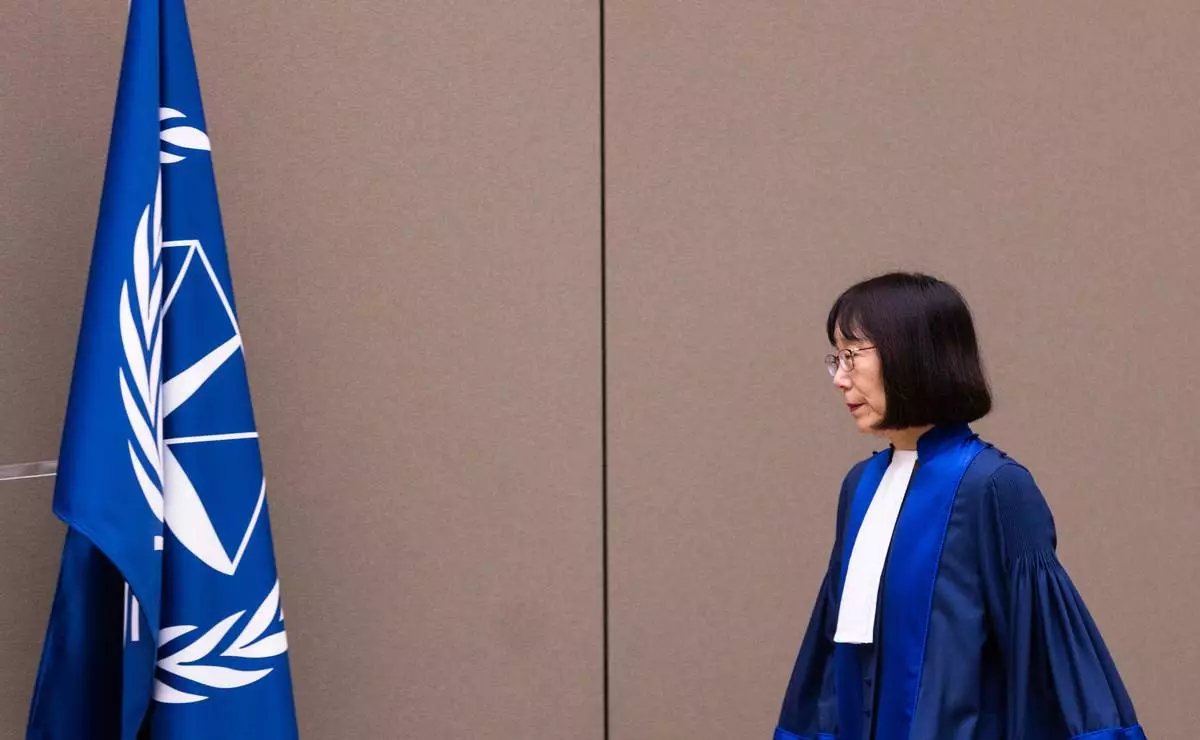
FILE - Judge Tomoko Akane walks before delivering the verdict in the Al Hassan case at the International Criminal Court in The Hague, Netherlands, Wednesday Nov. 20, 2024. (Eva Plevier/Pool Photo via AP, file)

FILE - Judge Tomoko Akane walks before delivering the verdict in the Al Hassan case at the International Criminal Court in The Hague, Netherlands, Wednesday Nov. 20, 2024. (Eva Plevier/Pool Photo via AP, file)

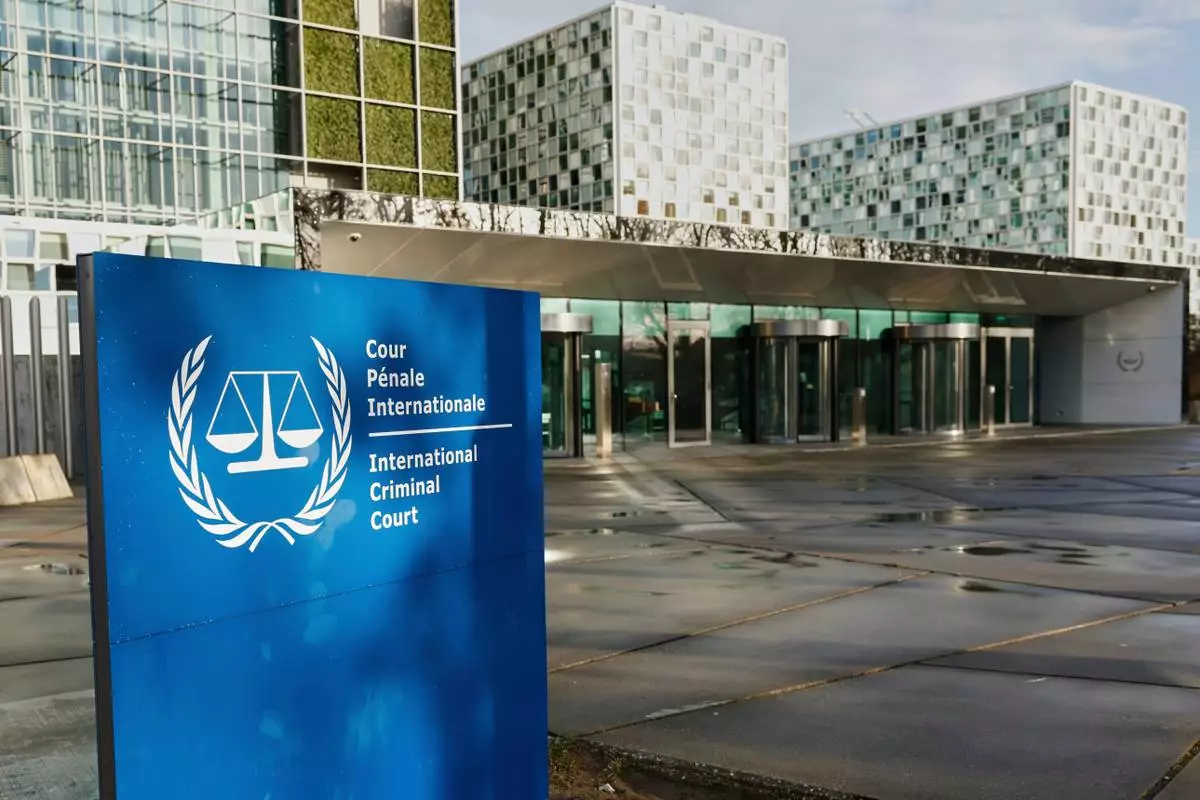
FILE - A general view of the exterior of the International Criminal Court is seen in The Hague, Netherlands, March 12, 2025. (AP Photo/Omar Havana, File)

FILE - A general view of the exterior of the International Criminal Court is seen in The Hague, Netherlands, March 12, 2025. (AP Photo/Omar Havana, File)

Recommended Articles