Commercial operations have gradually resumed at La Nubia Airport in Manizales, Colombia, after the facility was temporarily shut down due to damage from a strong earthquake that struck the country on August 10.
The airport, a key air hub connecting Manizales with other major Colombian cities, resumed service under "controlled operations" after thorough inspections of the runway, terminal and air traffic control facilities and nearly a week of emergency repairs, according to the Civil Aviation Authority of Colombia.
"Our job is to check whether the airport is in good condition, repair damaged facilities and ensure there are no safety hazards," said Jefferson Quintero, a maintenance worker at La Nubia Airport.
"The recovery of this airport is very important for people in the entire region. We can resume normal travel and visit relatives and friends," said Gerardo Gallego, a local passenger.
The 7.5-magnitude earthquake jolted Colombia at a depth of 80 km, according to the China Earthquake Networks Center (CENC).
The death toll from the earthquake has risen to 319, with 4,469 people injured, according to the latest data released by the country's National Disaster Risk Management Unit (UNGRD) as of 18:30 local time on Wednesday.

Air traffic gradually resumes in quake-hit Colombian city

Air traffic gradually resumes in quake-hit Colombian city
Japanese peace activists held an event Sunday in Kawagoe City, Saitama Prefecture of Japan, which focused on reflecting on the history of Japan's war of aggression against China and on peace education, calling on the Japanese public to confront past war crimes and prevent a repeat of tragedy.
The event marked the 20th anniversary of a peace memorial hall of a Japanese civic group -- the Association of Returnees from China. Participants at the event stressed that understanding history is an important prerequisite for preventing the repetition of a historical tragedy.
"The more I hear these experiences from friends of the association, the more I feel that we must truly understand Japan's responsibility as the perpetrator in past wars, and we must never do the same thing again. Moreover, there are now signs that seem to suggest a possible repeat of the past, which really frightens me. I believe this kind of thing must never happen again," a participant said.
"Attempts to remove Japan's history of aggression from textbooks are still ongoing. Successive Japanese governments ruled by Liberal Democratic Party (LDP) have pursued a policy of not teaching this history. Parties even more right-wing than the LDP have also emerged recently, and these forces are gaining ground. As they come to hold a majority in the Diet, the constitution is finally on the verge of revision. If that happens, they will use the constitution as a cover to implement conscription and expand military buildup -- in other words, Japan is trying to become a war-perpetrating country once again," another participant said.
Many participants voiced concern over the Japanese government's dangerous moves on historical issues.
"First of all, knowing the facts is very important. Now the Japanese government is doing everything it can to prevent people from learning history, so I think we should start by learning about it. For Japan, the textbook issue remains the most important. The September 18 Incident and the Lugou Bridge Incident were both triggered by pretexts fabricated by Japan, yet Japan claimed at the time that China had launched the attack. Pre-war education instilled these ideas. However, these incidents were planned by Japan. Post-war generations knew this, but pre-war Japanese did not. So I think it is entirely possible for such a situation to occur again today," a participant said.
Another participant said, "Understanding Japan's past history of aggression is very important -- an issue Japanese people must further understand. Japan must never forget what it once did to China. China never attacked Japan. I think these things are probably not taught in schools. And even when I was in school, they were barely covered. Now it seems they are not taught at all. Even the term 'Nanjing Massacre' was never properly taught. I feel Japan has never truly reflected on its past. So the responsibility for problems between Japan and China lies entirely with Japan."
The Japanese civic group "Association of Returnees from China" was founded decades ago by Japanese war criminals who were released back to Japan under lenient treatment by the Chinese government, with the aim of contributing to peace and Japan-China friendship.
In 2002, the association was dissolved due to the aging of its members. But the "Continuing the Miracle of Fushun Society" was later founded by the younger generation to carry on the unfinished cause of peace.
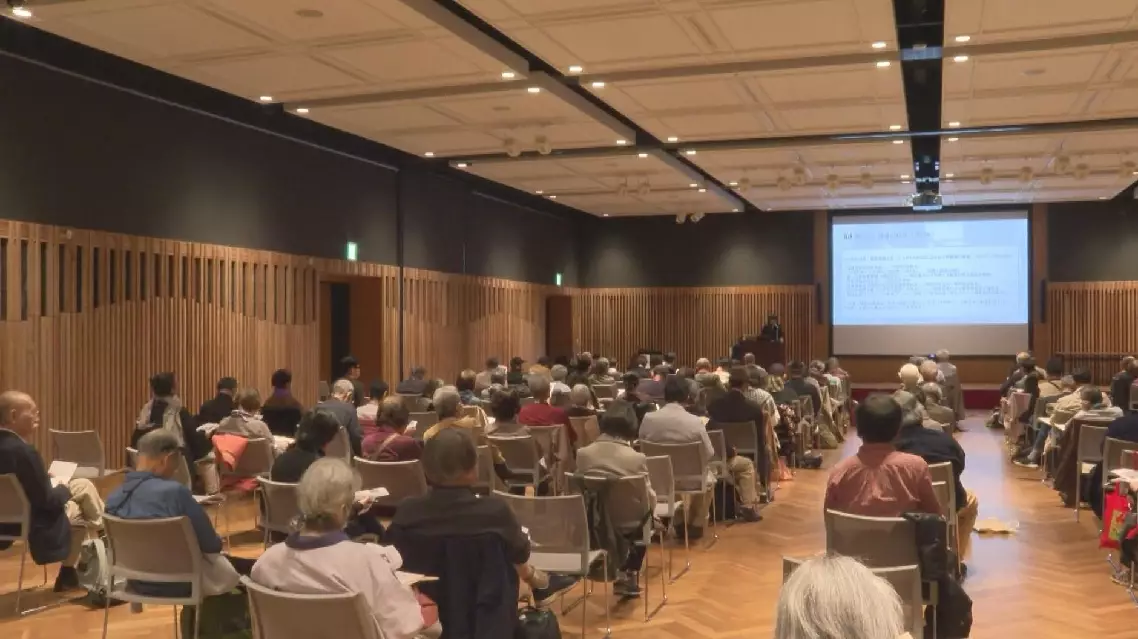
Japanese peace activists call for confronting wartime past to prevent another tragedy