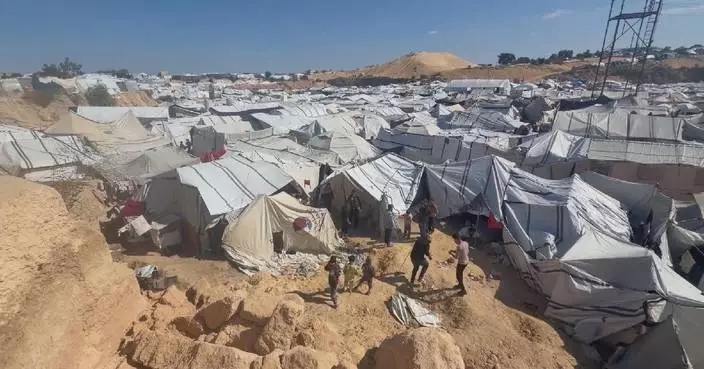
Heavy rainfall has flooded thousands of makeshift tents sheltering displaced Palestinians across Gaza, compounding the suffering of families struggling to protect their belongings and cope with the season's first major storm.
The deluge laid bare the extreme vulnerability of temporary shelters and shattered infrastructure in Gaza following years of conflict. For displaced communities facing the arrival of winter, the downpour has sparked an additional struggle for survival, soaking mattresses, clothing, and scarce food supplies.
In a displacement camp, Samar Farhat spent hours desperately trying to clear water from her tent.
"We are suffering from the heavy rain. My tent has been flooded. Our clothes, mattresses and food are all soaked. Even my husband, who is sick and bedridden, was surrounded by water from every direction," said Farhat.
Nearby, Ammar Musbeh fought through the night to keep his family safe as floodwaters rose around them. Using basic tools, residents across the territory rushed to dig trenches and build makeshift barriers to block incoming water.
"We were flooded overnight. I spent ten hours carrying my children to keep them safe. Water kept pouring into our tent throughout the night, rising to more than a meter. I spent the night trying to drain it out. As you can see, the tent has collapsed and is no longer fit to live in," said Musbeh.
Gaza's Civil Defense reported receiving more than 1,500 emergency calls following the floods. However, severe shortages of fuel, vehicles, and heavy equipment have severely hamstrung rescue and relief operations.
Yahya Al-Sarraj, mayor of Gaza City, noted that current makeshift structures are entirely unsuited for harsh weather.
"The tents are not suitable for winter or summer and we call for replacing them with mobile homes and proper housing units. This is not allowed until this moment by the Israeli occupation. The municipalities of Gaza are lacking the equipment, the tools. We don't have the heavy machines that are necessary for these conditions," said the mayor.
According to the United Nations, Gaza urgently requires 121,000 tents, 561,000 tarpaulins, and 1.7 million mattresses ahead of the winter months. With only about 2,800 tents available inside the territory as of early November, aid agencies face a catastrophic shortage in essential shelter and supplies.
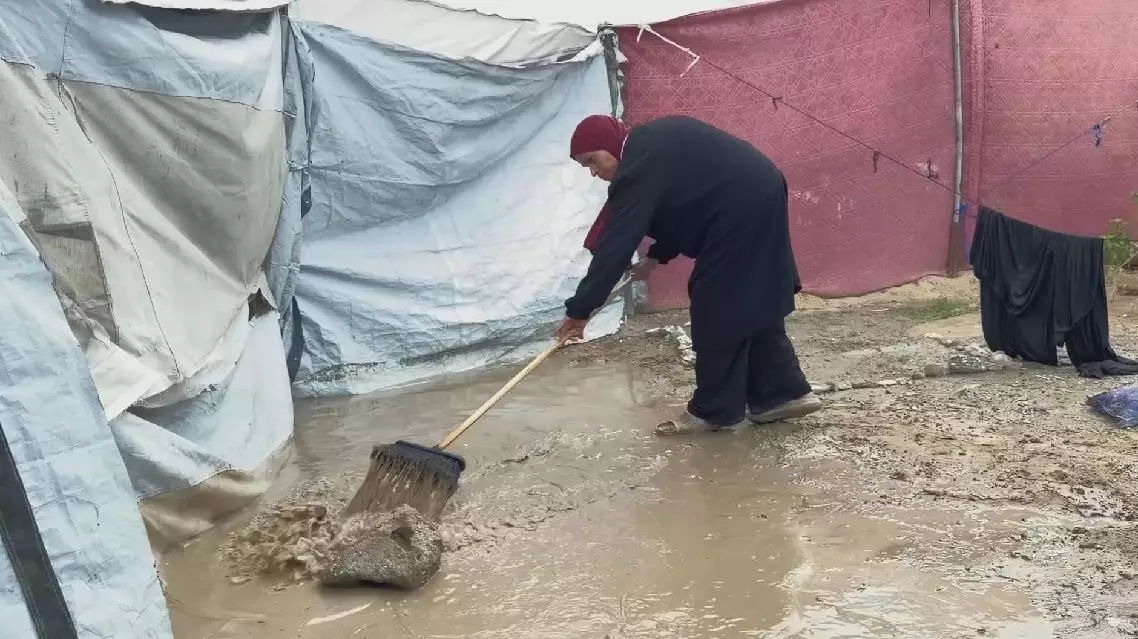
Floods inundate tents in Gaza as major storm hits displaced families
Chinese Vice President Han Zheng on Monday attended the China-Türkiye Green Development Business Forum in Istanbul together with Turkish Vice President Cevdet Yilmaz, calling for deeper cooperation between the two countries in green development and trade.
As a crucial hub connecting Asia and Europe, Türkiye has been accelerating its national energy transition and green development in recent years.
"We believe that renewable energy, energy storage, electric mobility, energy efficiency, circular economy, and low-carbon industrial technology are key sectors where we can further expand our cooperation," said Turkish Trade Minister Ömer Bolat at the event.
The forum covered key areas of economic cooperation between the two countries.
"About 300 delegates attended the event. The scope covers every aspect of economic cooperation, including green low-carbon technology, advanced manufacturing, the digital economy, logistics, and more," said Fang Jun, deputy director general with the Department of International Relations under the China Council for the Promotion of International Trade.
Business executives at the forum commended the vast potential for future green cooperation between China and Türkiye.
"The ratio of reclaimed water reuse in Turkish wastewater treatment is still low, at around six percent. We have a wide range of application scenarios for reclaimed water reuse, so we will strengthen cooperation with the Turkish side in this field," said Liao Jiasheng, chairman of China Energy Conservation And Environmental Protection Group.
"Whether in energy storage, electric vehicles, or even low-altitude aircraft, we are currently engaging in a series of discussions," said Luo Haining, director of International Investment at Contemporary Amperex Technology Co., Ltd.
"Over the next decade or so, Türkiye needs to add 100 gigawatts of capacity -- roughly 10 gigawatts per year. That is a massive volume compared to Europe or many other countries," said Qu Wanfei, CEO of Skyworth Solar.
"I think there's a huge potential for the supply chains between the two countries, because some of products, yes, we are producing the same thing, but there are tons of areas that we can complete each other, and I think we should look forward to discovering those areas," said Ahmet Faruk Isik, executive director with ATA Holding.
The successful hosting of the forum not only highlighted the achievements of China and Türkiye in green sectors, but also injected fresh momentum into deepening industrial capacity cooperation and jointly building a green Belt and Road.
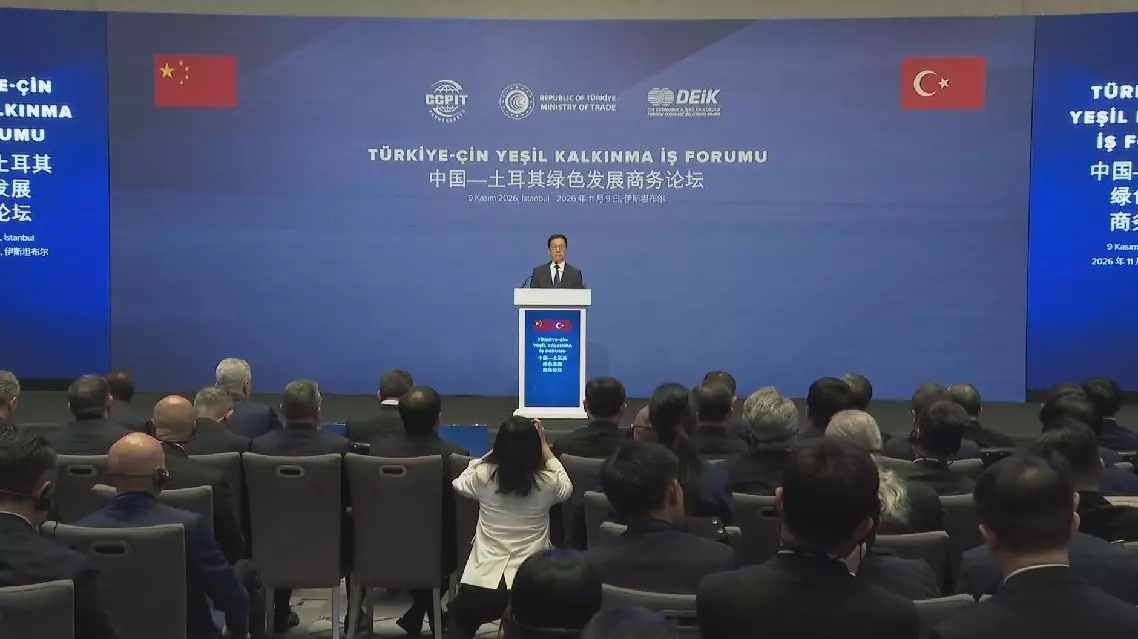
China, Türkiye pledge to deepen green development cooperation