Chinese Vice President Han Zheng on Monday attended the China-Türkiye Green Development Business Forum in Istanbul together with Turkish Vice President Cevdet Yilmaz, calling for deeper cooperation between the two countries in green development and trade.
As a crucial hub connecting Asia and Europe, Türkiye has been accelerating its national energy transition and green development in recent years.
"We believe that renewable energy, energy storage, electric mobility, energy efficiency, circular economy, and low-carbon industrial technology are key sectors where we can further expand our cooperation," said Turkish Trade Minister Ömer Bolat at the event.
The forum covered key areas of economic cooperation between the two countries.
"About 300 delegates attended the event. The scope covers every aspect of economic cooperation, including green low-carbon technology, advanced manufacturing, the digital economy, logistics, and more," said Fang Jun, deputy director general with the Department of International Relations under the China Council for the Promotion of International Trade.
Business executives at the forum commended the vast potential for future green cooperation between China and Türkiye.
"The ratio of reclaimed water reuse in Turkish wastewater treatment is still low, at around six percent. We have a wide range of application scenarios for reclaimed water reuse, so we will strengthen cooperation with the Turkish side in this field," said Liao Jiasheng, chairman of China Energy Conservation And Environmental Protection Group.
"Whether in energy storage, electric vehicles, or even low-altitude aircraft, we are currently engaging in a series of discussions," said Luo Haining, director of International Investment at Contemporary Amperex Technology Co., Ltd.
"Over the next decade or so, Türkiye needs to add 100 gigawatts of capacity -- roughly 10 gigawatts per year. That is a massive volume compared to Europe or many other countries," said Qu Wanfei, CEO of Skyworth Solar.
"I think there's a huge potential for the supply chains between the two countries, because some of products, yes, we are producing the same thing, but there are tons of areas that we can complete each other, and I think we should look forward to discovering those areas," said Ahmet Faruk Isik, executive director with ATA Holding.
The successful hosting of the forum not only highlighted the achievements of China and Türkiye in green sectors, but also injected fresh momentum into deepening industrial capacity cooperation and jointly building a green Belt and Road.
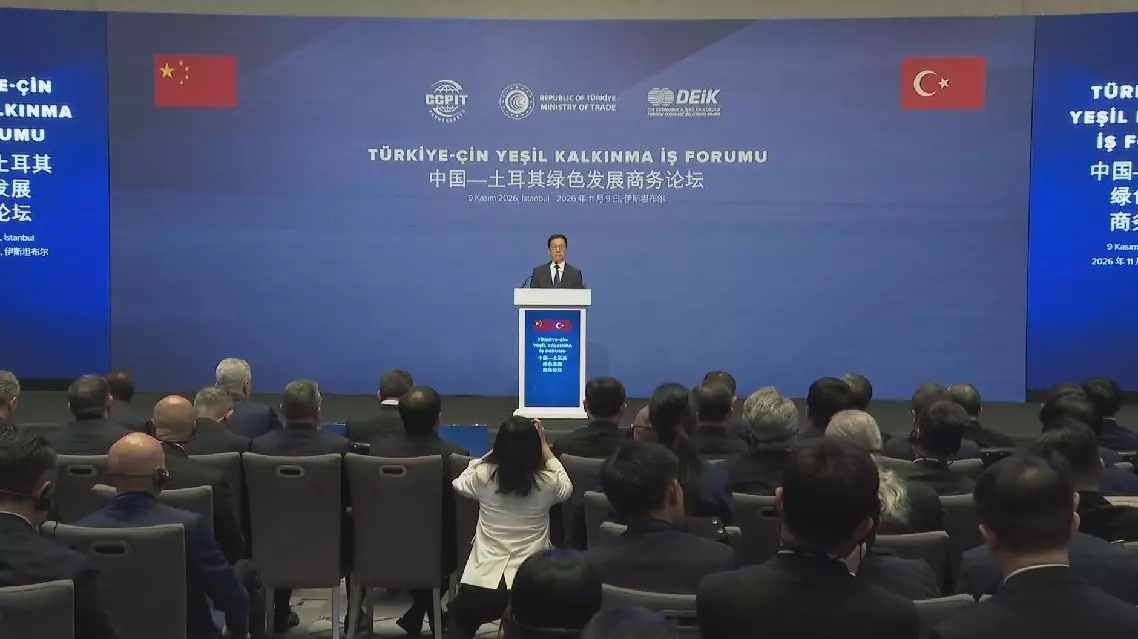
China, Türkiye pledge to deepen green development cooperation
China on Saturday released the top 10 benchmark scenarios for the multi-hazard, alert, zero-gap and universal (MAZU) platform, an AI-driven meteorological early warning solution, at a sideline event of the ninth China International Import Expo (CIIE) in Shanghai.
The scenarios were selected from 20 teams shortlisted worldwide. The selection focused on the most critical areas of global meteorological disaster prevention and mitigation and explored pathways to turn digital-intelligence meteorological advances into disaster-prevention capabilities, based on the feasibility of scenario applications, the advancement of AI technology, data security and regulatory compliance, and the replicability of innovation.
The scenarios will leverage the CIIE to engage financial institutions in Shanghai and Chinese companies going global, expand their applications, and support global green and low-carbon development and climate governance.
"We're working with the Shanghai Meteorological Service on the MAZU system. We think that in Jordan, this system will help us make the warnings in exactly time for the public, to save the public from this flash flooding," said Ra'ed Ahmad Subhi Rafid, director of the Jordan Meteorological Department.
"In Malaysia, we still don't have many landslide early warning platforms, so that's why we collaborate with the China counterparts. We collect the data from MAZU, which is the data from a satellite Fengyun and the data from CMA (China Meteorological Administration) and also the data from Beidou for our GNSS (Global Navigation Satellite System) equipment. This is a good collaboration between Malaysia and MAZU," said Kamarul Hawari Bin Ghazali, a professor at Universiti Malaysia Pahang Al-Sultan Abdullah.
"In the first phase, we plan to install equipment for the port and then for the mine extraction areas, by the end of this year for the ports. We need the MAZU project cover all the country by providing service for all the social economic development sectors, like energy, agriculture, transportation, risk management, disaster management, tourism and so on," said Rene Tato Loua, director general of the National Agency of Meteorology of Guinea.
The MAZU system integrates observation data from China's Fengyun meteorological satellites and domestically developed AI weather forecast models to provide high-resolution, rapidly updated weather monitoring and natural disaster pre-warning services, and to support disaster relief efforts, the CMA said.
Named after Mazu, the traditional Chinese goddess of the sea and protector of sailors, the system has already been deployed in seven countries while supporting cloud-based trials in more than 50 nations. In the years to come, the China-made MAZU system is expected to be applied in 30 countries.
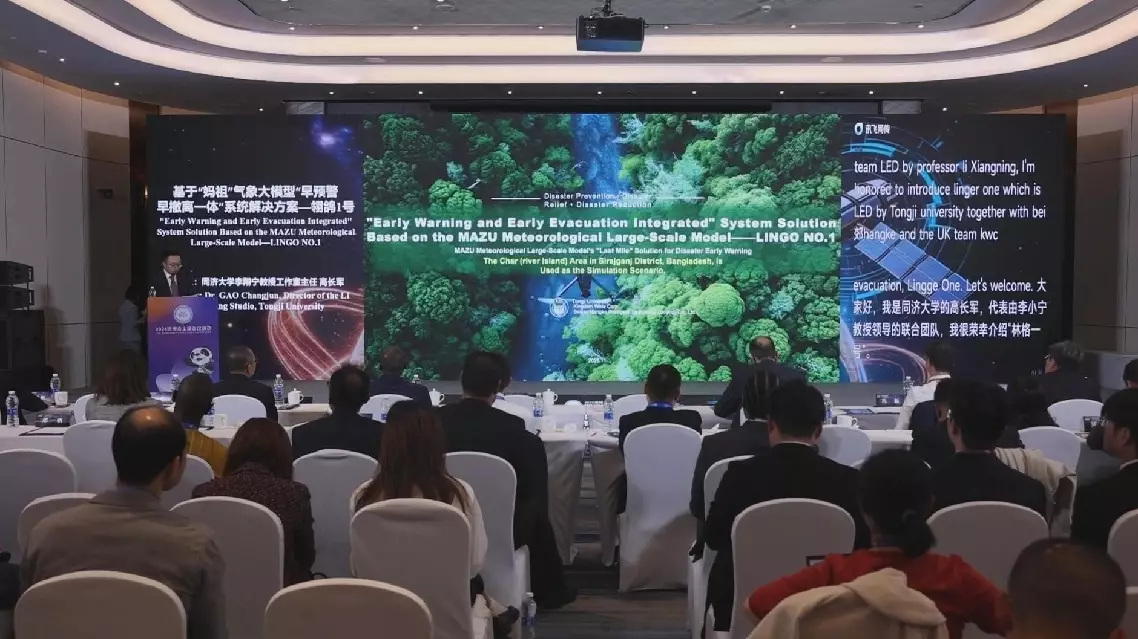
China unveils top 10 MAZU AI early warning scenarios at CIIE