TUNIS, Tunisia (AP) — A summer of extreme heat has left many Tunisians short of water and electricity — and full of anger at the country's leadership. Protesters rallied in the capital Tunis on Thursday, many calling on President Kais Saied to leave power.
Mobilized by a new opposition collective, the demonstrators pleaded for improvements to basic utility services and an end to medicine shortages, rising living costs and restrictions on freedoms. Some denounced what they described as the president's failure to meet the people’s demands since he was elected seven years ago.
Click to Gallery
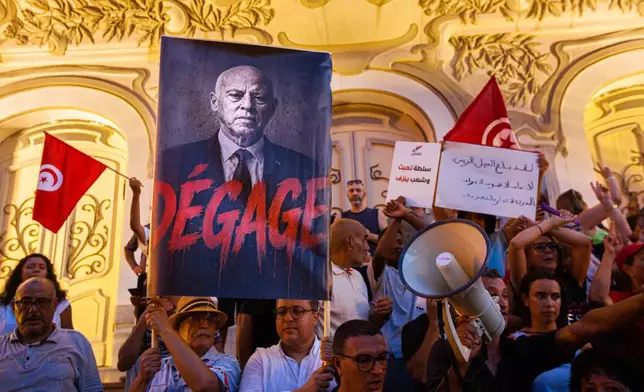
People take part in a protest against rising prices, declining purchasing power and shortages of basic goods in Tunis, Tunisia, Thursday, Aug. 20, 2026. Banner in French showing Preident Kais Saied reads "Leave". (AP Photo/Ons Abid)
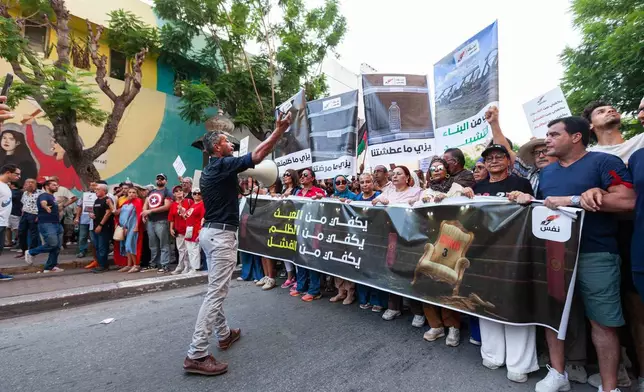
People take part in a protest against rising prices, declining purchasing power and shortages of basic goods in Tunis, Tunisia, Thursday, Aug. 20, 2026. Banner in Arabic reads "Enough injustice, enough failure." (AP Photo/Ons Abid)
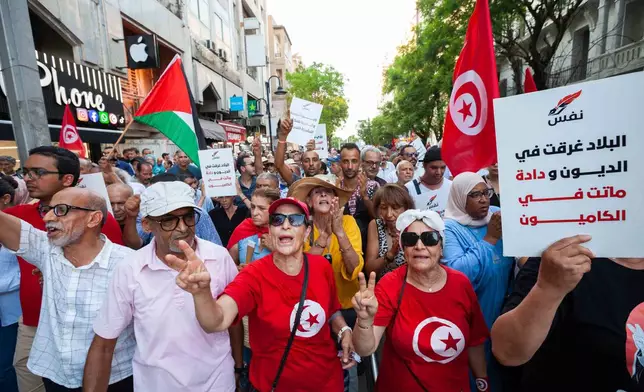
People take part in a protest against rising prices, declining purchasing power and shortages of basic goods in Tunis, Tunisia, Thursday, Aug. 20, 2026. Banner in Arabic reads "The country is drowning in debt". (AP Photo/Ons Abid)
People take part in a protest against rising prices, declining purchasing power and shortages of basic goods in Tunis, Tunisia, Thursday, Aug. 20, 2026. Banner in French showing Preident Kais Saied reads "Leave". (AP Photo/Ons Abid)
The protest was called by the Nafas movement, which seeks to bring together political parties and independent figures beyond the North African country's traditional opposition to Saied.
The umbrella initiative, launched in May, has been calling for an end to what it describes as government failure and injustice in the country that was the birthplace of the Arab Spring pro-democracy uprisings.
The protest came during a summer of extreme heat, with temperatures reaching up to 50 degrees C (122 F) in some parts of Tunisia. The heat wave pushed electricity demand to record levels and led state-owned utility STEG to introduce rationing measures in several regions.
The power cuts also affected water pumping stations, exacerbating long-running concerns over access to drinking water in parts of the country. Shelves of bottled water emptied quickly as lengthened blackouts disrupted factory operations.
The production slowdown was deepened by a shortage of raw plastic materials, triggered by ongoing shipping disruptions in the Strait of Hormuz, which cut off petrochemical exports to North Africa for bottle manufacturing.
Mohamed Hawel, a university teacher, struggles to make ends meet despite making a relatively high salary. A member of the Nafas collective, he said the group was created to unite people around basic necessities, including water, electricity and food.
“We are not making the bare minimum. We keep queuing to get water and bread. This is unbelievable in Tunisia in the 21st century,” Hawel told The Associated Press at the protest.
Thursday's protest and another one by Nafas in Tunis last month brought together opposition activists alongside citizens who had not previously taken part in political demonstrations. Participants included social media influencers expressing discontent with the country’s political status quo for the first time, mobilizing younger people.
Oussama Farhat, 25, a primary school teacher and online influencer, said he joined the protest because he believed the achievements of Tunisia’s 2011 revolution were being eroded.
“I came out today because I am a strong believer in the revolution’s achievements which have started to fall apart or get eroded,” he told the AP following Thursday’s protest.
Farhat said the demonstration was about more than freedom of speech, pointing to deteriorating access to basic services.
“We are also calling for the fall of the regime because after seven years, it has been proving its failure without a vision for change and reform,” he said.
Last month's protest was held on the fifth anniversary of a power grab by Saied, when he suspended parliament, sacked the government and cemented his rule.
Saied has consolidated power since 2021 and has presided over increasing restrictions on independent media, civil society and any dissenting voices. He accuses his critics of receiving foreign funding to stir unrest and destabilize Tunisia’s national interests.
Recent rallies have seen a distinct shift in tone, as slogans demanding that Saied step down have become more explicit. Among those utilized recently were the 2011 Arab Spring revolutionary chant “the people want the fall of the regime” and “Dégage” (Get Out), a slogan raised in the protests that ousted Tunisia's long-serving autocratic leader Zine El Abidine Ben Ali.
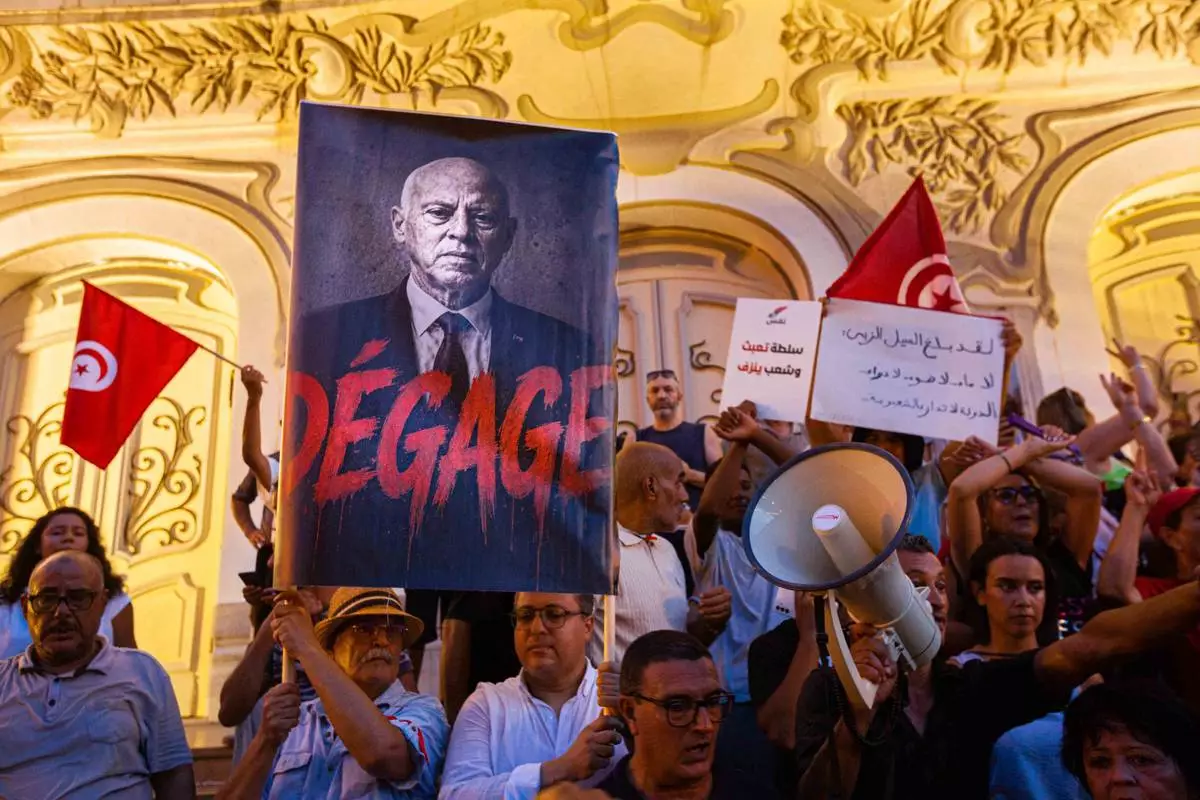
People take part in a protest against rising prices, declining purchasing power and shortages of basic goods in Tunis, Tunisia, Thursday, Aug. 20, 2026. Banner in French showing Preident Kais Saied reads "Leave". (AP Photo/Ons Abid)
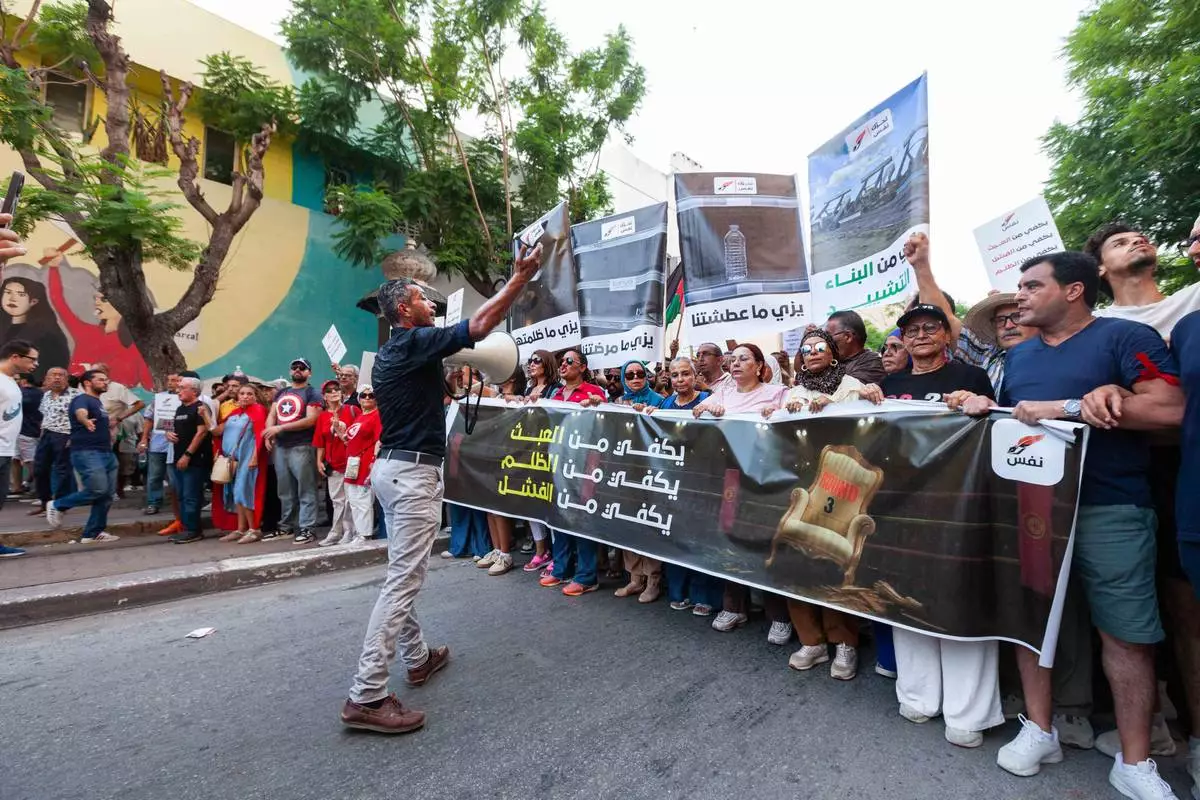
People take part in a protest against rising prices, declining purchasing power and shortages of basic goods in Tunis, Tunisia, Thursday, Aug. 20, 2026. Banner in Arabic reads "Enough injustice, enough failure." (AP Photo/Ons Abid)
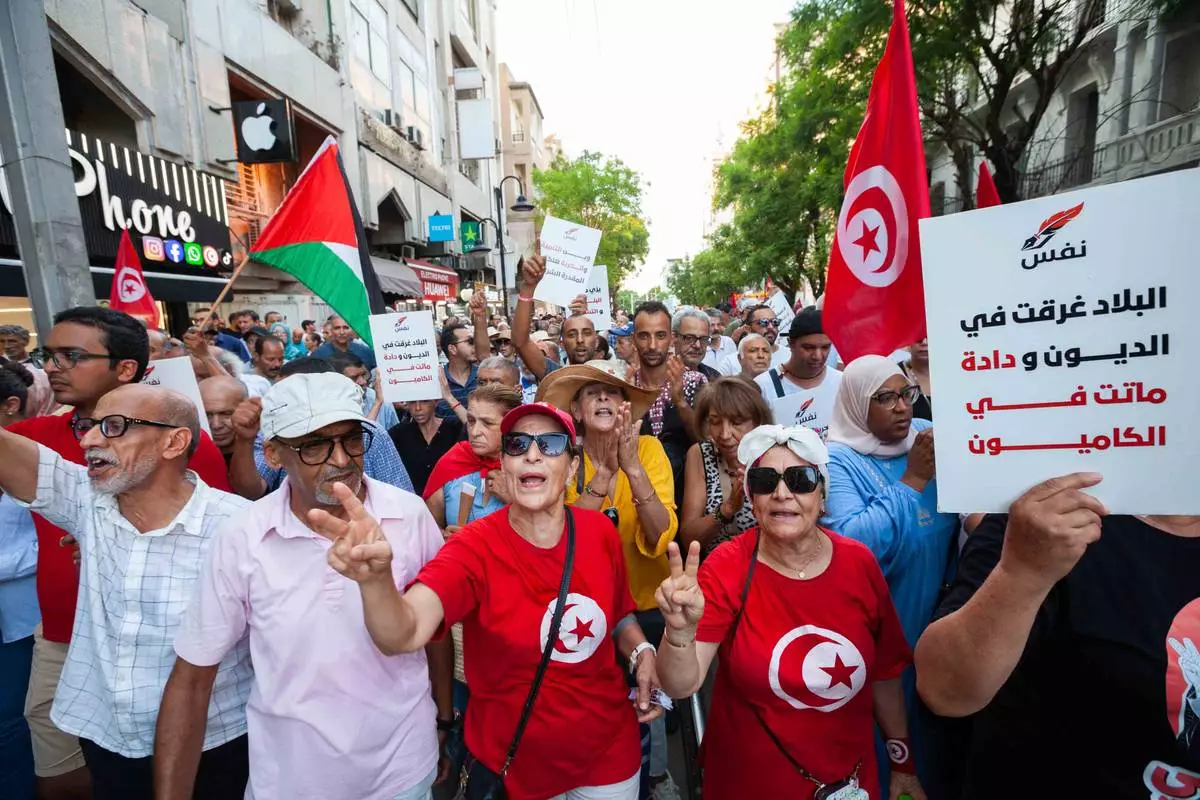
People take part in a protest against rising prices, declining purchasing power and shortages of basic goods in Tunis, Tunisia, Thursday, Aug. 20, 2026. Banner in Arabic reads "The country is drowning in debt". (AP Photo/Ons Abid)
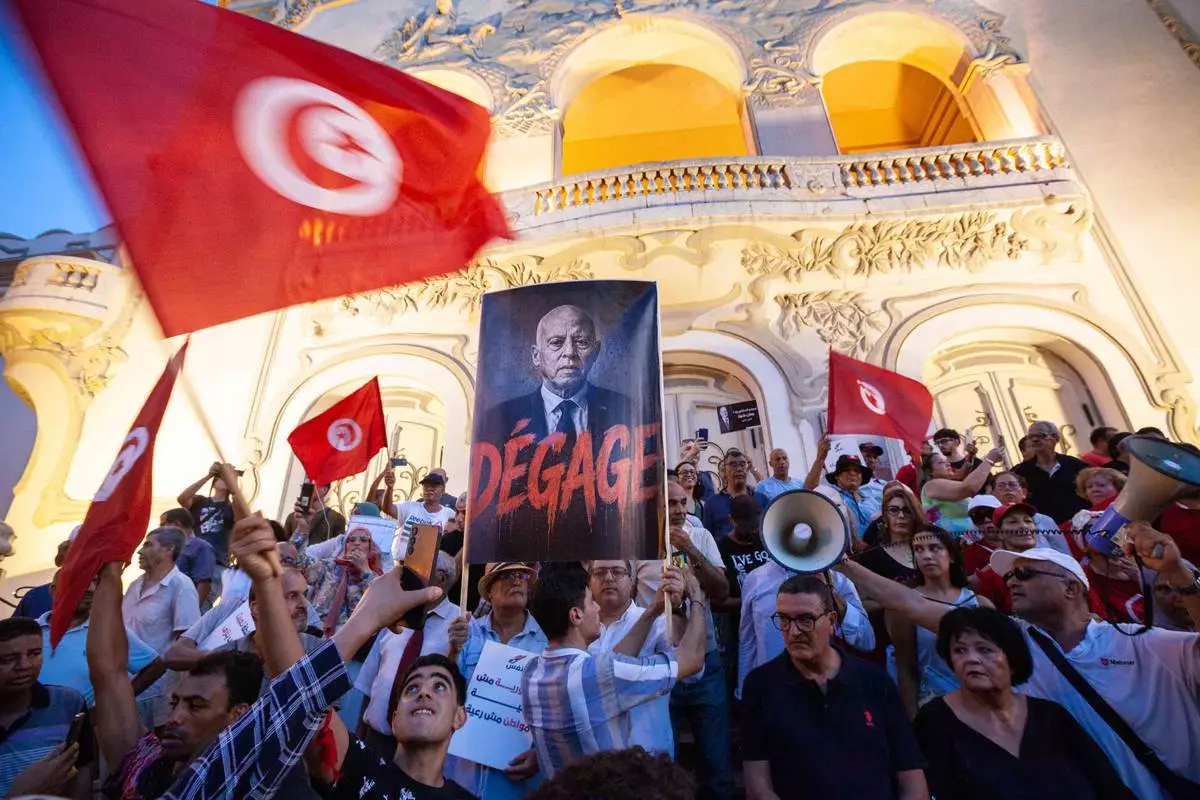
People take part in a protest against rising prices, declining purchasing power and shortages of basic goods in Tunis, Tunisia, Thursday, Aug. 20, 2026. Banner in French showing Preident Kais Saied reads "Leave". (AP Photo/Ons Abid)
CEUTA, Spain (AP) — For weeks, migrants in the Spanish territory of Ceuta had gathered on a beach away from the city center, sleeping on cardboard sheets, under reed huts and guarding their few possessions in tattered plastic bags.
They were gone by Thursday morning after Spanish police escorted them to makeshift shelters. But an hour later, other migrants were combing through the trash they had left behind for anything useful: an abandoned mattress, plastic chairs, sheets, a scrap of tarp.
The scene exemplified the ongoing humanitarian crisis in Ceuta, where up to 10,000 migrants remain in the city weeks after more than 72,000 people poured into the small Spanish territory neighboring Morocco. Three weeks later, Spanish authorities were struggling to shelter and attend to those who refused to leave — or even determine how many migrants were still in the city of 84,000.
Within days of the initial border rush, in which at least 90 people died, most migrants went back to Morocco, realizing the difficulties of staying in Ceuta and their slim chances of reaching mainland Europe. But thousands remained, hiding in the woods, on beaches and outside a migrant reception center.
City officials estimate that 9,000 to 10,000 migrants — including about 2,000 minors — could still be in the city, based on the number of daily food rations handed out by aid groups. Spain’s interior ministry puts the figure at roughly 5,000 people.
The U.N. refugee agency highlighted large humanitarian and operational challenges in Ceuta in an interview with The Associated Press, specifically around access to shelter, basic services and food. While most of those who crossed in late July are from Morocco, people from war-torn Sudan, Mali and Yemen also reached the Spanish exclave.
The U.N. refugee agency urged Spanish authorities to start processing their asylum claims as soon as possible, estimating that about 1,200 migrants in Ceuta could be eligible for international protection, according to Paula Barrachina, a spokesperson for the agency in Spain.
The Spanish government says it is working to house the remaining migrants in the city, and return a sense of normalcy to Ceuta. On Thursday, Spain’s Minister of Inclusion, Social Security and Migration Elma Saiz said the government had secured space to accommodate 1,800 migrants in a parking lot and a military facility sometimes used for religious events. It is looking for more space.
Even so, an Associated Press photographer on Thursday saw migrants still roaming the streets. Elsewhere, hundreds of women and minors were sheltering in makeshift centers run by locals.
Khadija Rifai, a 20-year-old woman from Morocco, acknowledged that some people were receiving help, but didn't know what Spain planned to do with adults like her.
“They help the minors and the youngsters, but they haven’t found any solutions for us,” she said Wednesday.
Rifai said her life in Morocco was “normal” but in late July, she and her husband swam to the Spanish territory in search of better opportunities and healthcare. Rifai's husband was sent back to Morocco, but she hid from authorities and stayed on. She now hopes to reunite with him and eventually move to mainland Spain, where she wants to have children.
“Even though we suffered here in Ceuta, we hope that once we reach the mainland, life will be good and we will have a house, a car, and everything we dreamed of," Rifai said.
Ceuta Mayor Juan Jesús Vivas accused the national government, led by Socialist Prime Minister Pedro Sánchez, of not doing enough to control the situation.
On Thursday, Spanish police escorted several hundred people, mostly men, through the city’s streets to a shelter. Hours later, Vivas, a member of the center-right Popular Party, said the government’s decision to move migrants from the beach to other locations in the city did not demonstrate "a will to fix the problem.”
Spain's migration ministry said the government has allocated 6.5 million euros ($7.6 million) in emergency funds to help the city cope with the new arrivals. Speaking in Ceuta this week, Migration Minister Saiz praised the work of local organizations in Ceuta and said 4,000 meals had been distributed every day since Aug. 3.
A ministry spokesperson said the Spanish government has to process every case on an individual basis. Before that can happen, police must identify those who entered the city illegally, verify every migrant's nationality and background, determine who qualifies for international protection and establish who must leave, either voluntarily or by force, he said.
Migrants in Ceuta say they are willing to wait out the uncertainty. Hundreds had gathered earlier in the week in protest on a beach in Ceuta, carrying signs reading “Asylum” alongside Spanish flags.
Mohamed Yaqoub, 18, a migrant from Chad hid for days in the woods after Spanish soldiers chased him in late July, he said. He managed to stay and wishes to someday study in France.
Getting there will not be easy. Travelers leaving Ceuta and Melilla, Spain’s other territory in North Africa, are subject to exit checks at ports and airports, an obstacle for those who enter the territories illegally and hope to reach the European continent.
“We ask them to allow us entry and give us the necessary papers and documents,” Yaqoub told an AP photographer in a cellphone note. “The most important thing for us is to get the papers.”
Naishadham reported from Madrid.
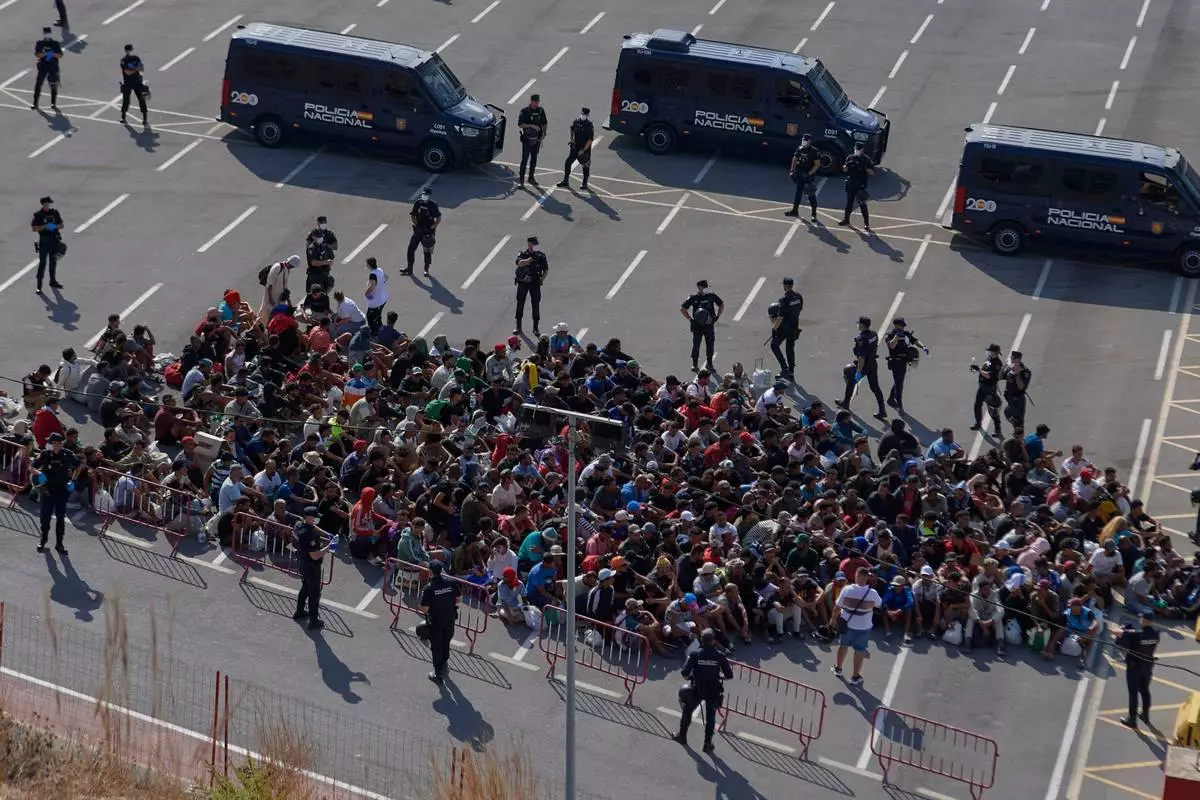
Migrants who crossed from Morocco into Spain are escorted by Spanish police to temporary shelters after being cleared from a beach in the Spanish exlave of Ceuta on Thursday, Aug. 20, 2026. (AP Photo/Antonio Sempere)
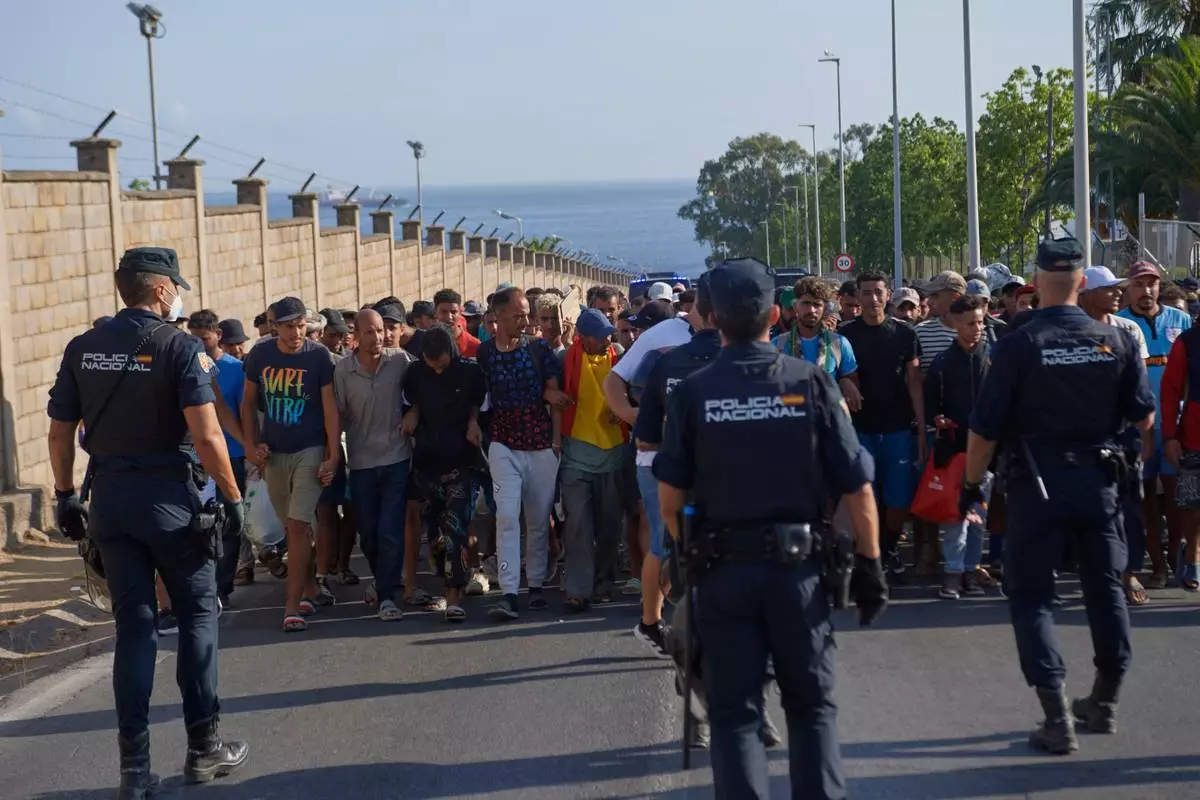
Migrants who crossed from Morocco into Spain are escorted by Spanish police to temporary shelters after being cleared from a beach in the Spanish exlave of Ceuta on Thursday, Aug. 20, 2026. (AP Photo/Antonio Sempere)
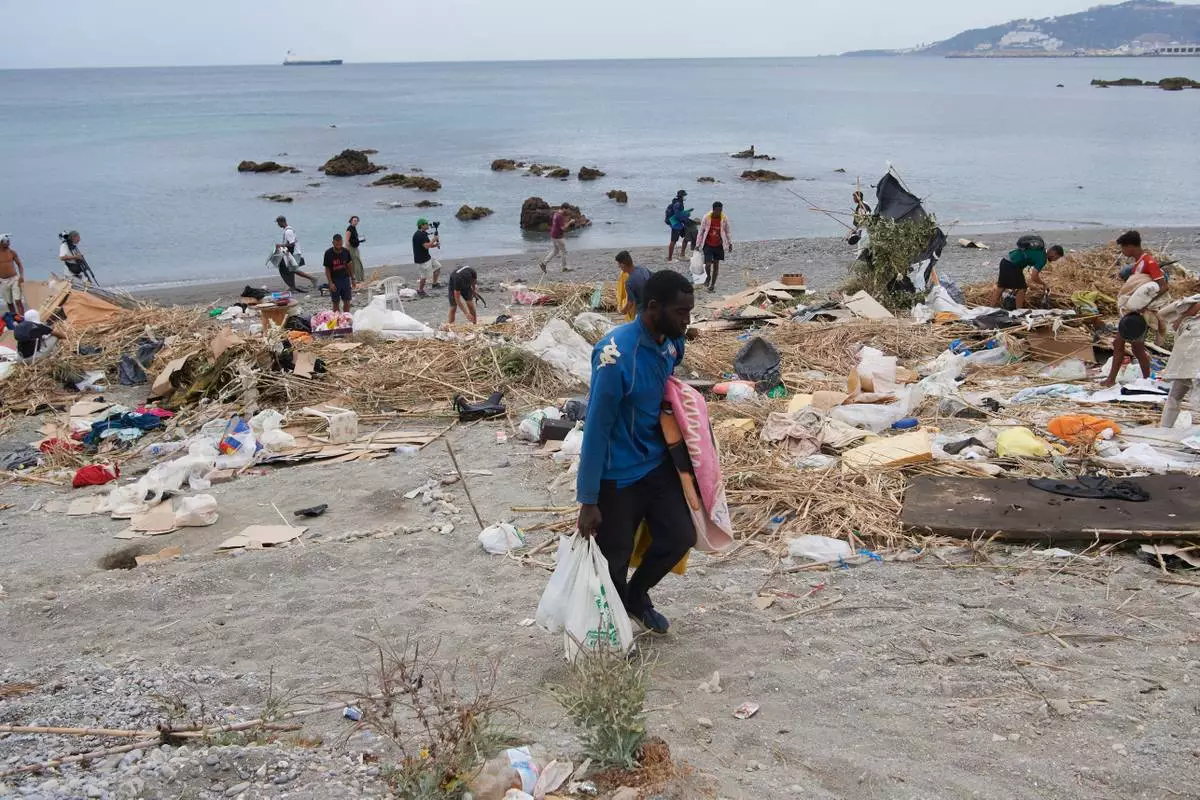
Migrants who crossed from Morocco into Spain gather their belongings after being cleared from the beach in the Spanish exlave of Ceuta, Thursday, Aug. 20, 2026. (AP Photo/Antonio Sempere)
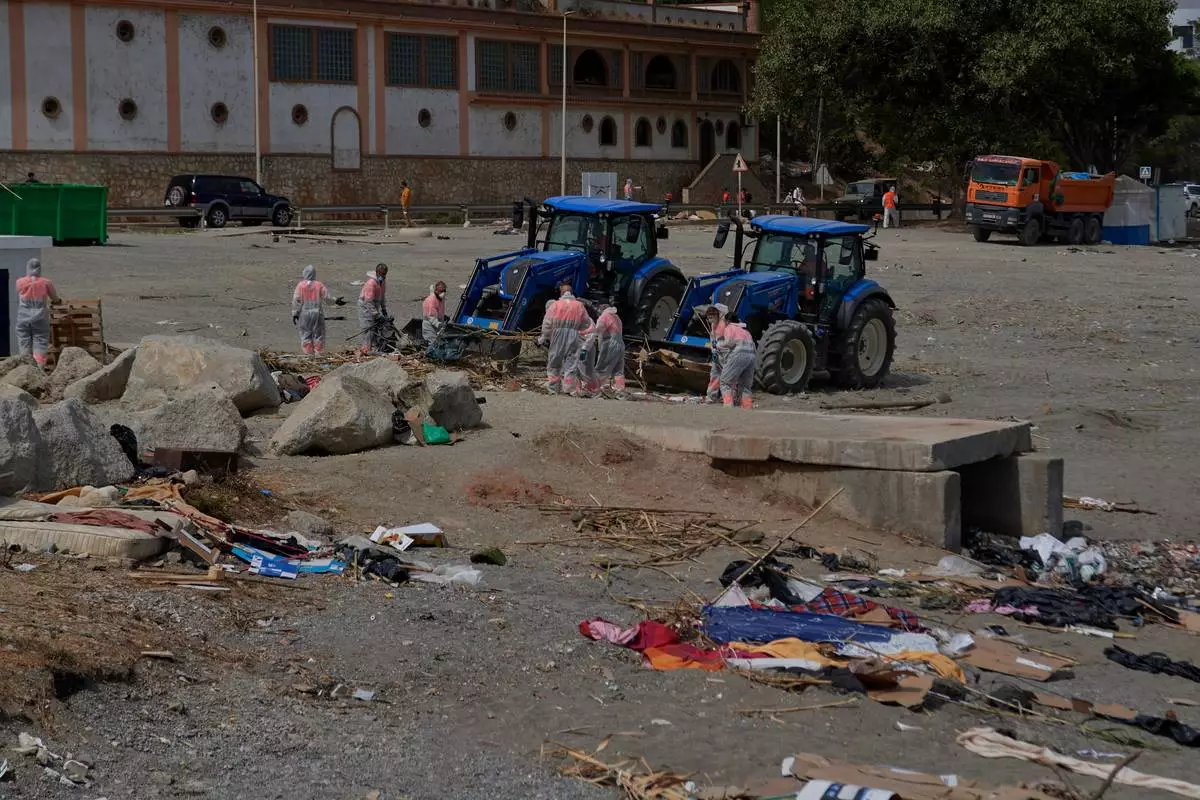
Cleaning staff clear the El Trampolin beach, where migrants who crossed from Morocco into Spain stayed in the Spanish exlave of Ceuta, Thursday, Aug. 20, 2026. (AP Photo/Antonio Sempere)
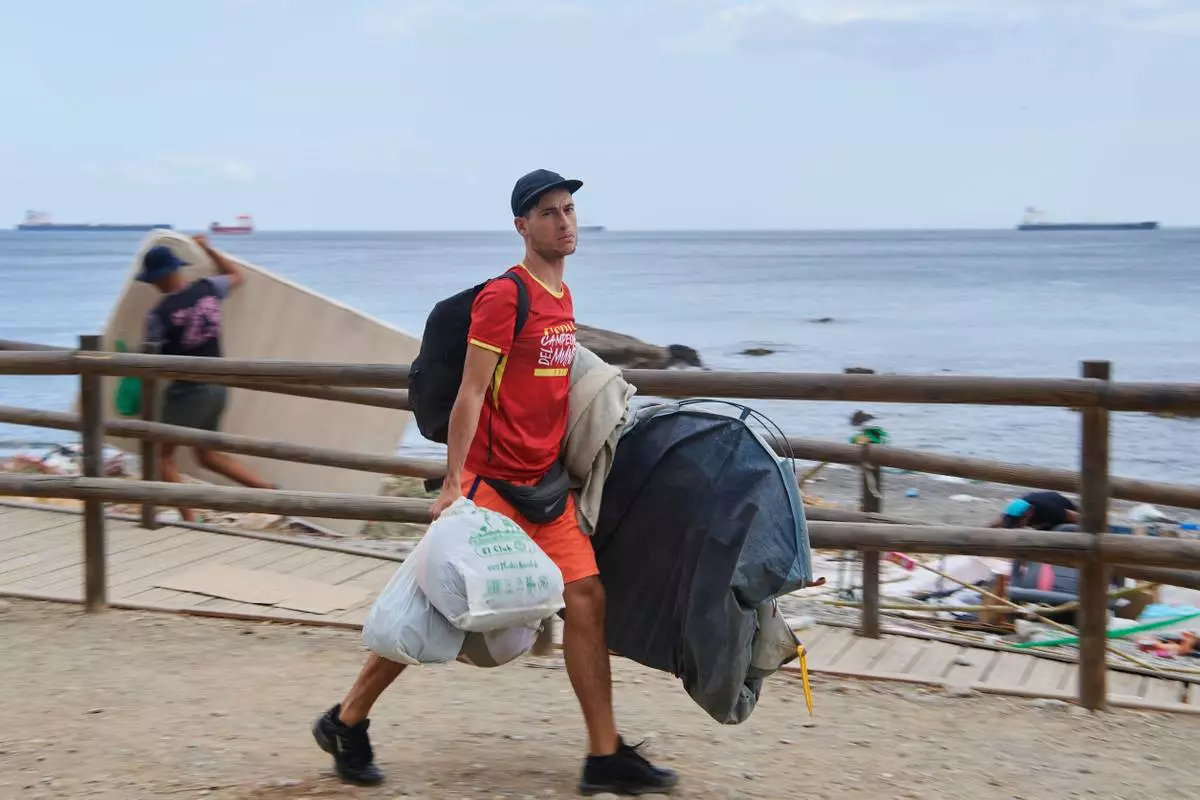
A migrant who crossed from Morocco into Spain gathers his belongings after being cleared from the beach in the Spanish exlave of Ceuta, Thursday, Aug. 20, 2026. (AP Photo/Antonio Sempere)