BALTIMORE (AP) — Pete Alonso skipped sideways toward first base while his drive sailed toward the foul pole in left field. Then he tossed the bat aside, seemingly convinced he'd hit a home run.
From that distance and that angle, however, it was hard to be too certain.
Alonso's deep fly was ruled foul, and the call stood after a review in Baltimore's 5-3 loss to the New York Yankees on Wednesday night. That led to plenty of outcry — and calls for baseball to use technology to evaluate possible home runs near the foul pole.
It doesn't sound like that is imminent.
If baseball were to start using additional technology on fly balls like these, it would have to be developed, tested and installed by MLB, according to a person with knowledge of the issue. The person spoke on condition of anonymity because of the sensitivity of the situation.
Unlike with the Automated Ball/Strike system, Hawk-Eye data above the foul pole is unlikely to be accurate that far from the field. It’s based on data from the first part of the ball’s flight, with the rest of the path estimated — meaning factors like wind aren’t fully accounted for.
Before Thursday's game, Orioles manager Craig Albernaz said the front office had communicated with Major League Baseball about the call.
“Just said that there wasn't enough video evidence to overturn the call on the field,” Albernaz said.
One angle showed the ball on the right side of the pole and another showed it on the left side. Neither provided much clarity on where the ball was at the moment it passed the pole and the wall in left, which was the key question.
If the ball were lower, the camera angles might've shown it passing in front of or behind the pole, but when a hit sails higher than the top of the pole, it's not easy to find a definitive view.
The difference between a home run and a foul ball is substantial, so it's understandable players would want to feel confident those calls are correct.
“Obviously, this is a big game in division, so obviously this one’s going to be a little bit more amplified. But this happens quite a few times throughout the season, more than you would think,” Alonso said after the game. “I think having a camera or laser shooting straight up, we have all the technology, analytics and whatever and funds. I don’t see why we can’t do it.”
The ABS system launched in the majors this year, and MLB has been experimenting in the minors with technology allowing challenges to checked swing calls.
See AP’s full MLB coverage here

Baltimore Orioles' Pete Alonso (25) reacts after hitting a foul ball during the seventh inning of a baseball game against the New York Yankees, Wednesday, Aug. 19, 2026, in Baltimore. (AP Photo/Stephanie Scarbrough)
GUATEMALA CITY (AP) — The United States has deported nearly 2,300 Mexicans to Guatemala this year and sent at least dozens more to Honduras, according to official data, a shift from the beginning of U.S. President Donald Trump’s second term when such transfers were minimal.
Until now, Mexicans deported from the United States were sent almost exclusively back to their country by air and land. Only a handful arrived in other countries.
Some civil organizations believe this change reported in recent days is a way to increase pressure on Mexico, whose government has protested the deaths of 17 Mexicans in immigration custody or during enforcement operations. This also comes as Trump has expanded agreements with allied Latin American countries to conduct joint operations in the region against criminal groups and has increased its security demands to Mexico.
Guatemalan President Bernardo Arévalo confirmed Wednesday night that, so far this year, 2,284 Mexicans deported from the U.S. have arrived in the country as part of a “transit stopover” before being taken to Mexico as part of an “arrangement” with the Mexican government, and without these individuals being under any refugee or asylum status.
“They are arriving on planes carrying Guatemalan returnees, and what we have done is bring them in transit so that, in coordination with Mexican immigration authorities, we can return them to Mexican territory within 24 hours of their arrival in the country,” he explained at a press conference.
The costs of these operations are covered by the Mexican government or, in some cases, by U.S. funding, he added.
Mexico’s National Migration Institute (INM) confirmed to The Associated Press in a brief message that Mexicans have been deported by the Trump administration to Guatemala and Honduras, primarily since April, and are then transported by bus to southern Mexico.
“The reason is that the United States wants to prevent them from crossing back into its territory,” the institution said. The INM did not provide figures or further details.
Asked about why the Mexicans were sent to Central America and not their own country, and for more details, the U.S. Department of Homeland Security, which oversees immigration enforcement, said in an emailed statement that the administration “is utilizing all lawful options to carry out the largest deportation operation in history, just as President Trump promised.”
“The Mexican government has expressed its opposition to this practice to U.S. authorities and has reiterated that every Mexican citizen has the right to enter the country,” the Mexican Foreign Ministry said in a statement on Thursday. It added that Mexico is coordinating with the countries involved to ensure the safe return of Mexican citizens.
Historically, Mexico has always been willing to receive its deported citizens.
Since Trump’s first term, it has also accepted deportees from third countries, although the details of immigration agreements with Washington have usually been opaque. In 2025, Mexico received some 12,000 deported foreigners, mostly Cubans and Venezuelans, according to figures provided by Mexican President Claudia Sheinbaum. The government has not updated these figures since December although the practice has continued.
Authorities in Honduras also did not respond to requests for comment, but according to official documents from the country accessed by The Associated Press, 82 Mexicans deported from the United States arrived in the Honduran city of San Pedro Sula on two flights on August 13 and 15. An additional 35 arrived on Thursday.
Another 165 Mexicans were deported to Honduras between May and mid-July, according to the website Third Country Deportation Watch, run by the NGOs Human Rights First and Refugees International, which track U.S. deportation flights to third countries.
The website does not clarify the source of its nationality figures, but both organizations have expressed concern because these transfers could endanger migrants who possibly sought asylum in the U.S. or have few resources in an unknown country.
The deportation tactic “seems to be to put pressure on the Mexican government,” said Savitri Arvey of Human Rights First. “They really don’t want any Mexicans crossing the border.” Some of those deported arrived in Honduras on U.S. military flights, she added.
At the beginning of his second term, with immigration control as one of his priorities, Trump reached agreements with Mexico, Guatemala, El Salvador, Honduras, Costa Rica and Panama to act as “bridge” or destination countries for migrants from third countries expelled from U.S. territory. These agreements gradually expanded to more countries, including some African ones, most recently Liberia.
Until recently, only a handful of Mexicans had been expelled from the U.S. to countries other than Mexico.
Arévalo said on Wednesday that Guatemala received 15 Mexicans in 2025. As of February 2026, Honduras had officially reported the arrival of six. Costa Rica has received 11 Mexicans since Trump’s return to the White House, and according to local immigration authorities, they remain in the country. Presumably, these individuals may have requested not to be returned to Mexico out of fear.
Immigration lawyers believe that the Trump administration is using deportations to third countries as a legal loophole to indirectly force asylum seekers to return to Mexico when the government cannot send them there because it would violate court orders from immigration judges that recognize the dangers. Organizations and politicians both inside and outside the U.S. have also questioned the use of force by U.S. immigration authorities.
Verza reported from Mexico City and González from Tegucigalpa.
Follow AP’s Latin America coverage at https://apnews.com/hub/latin-america
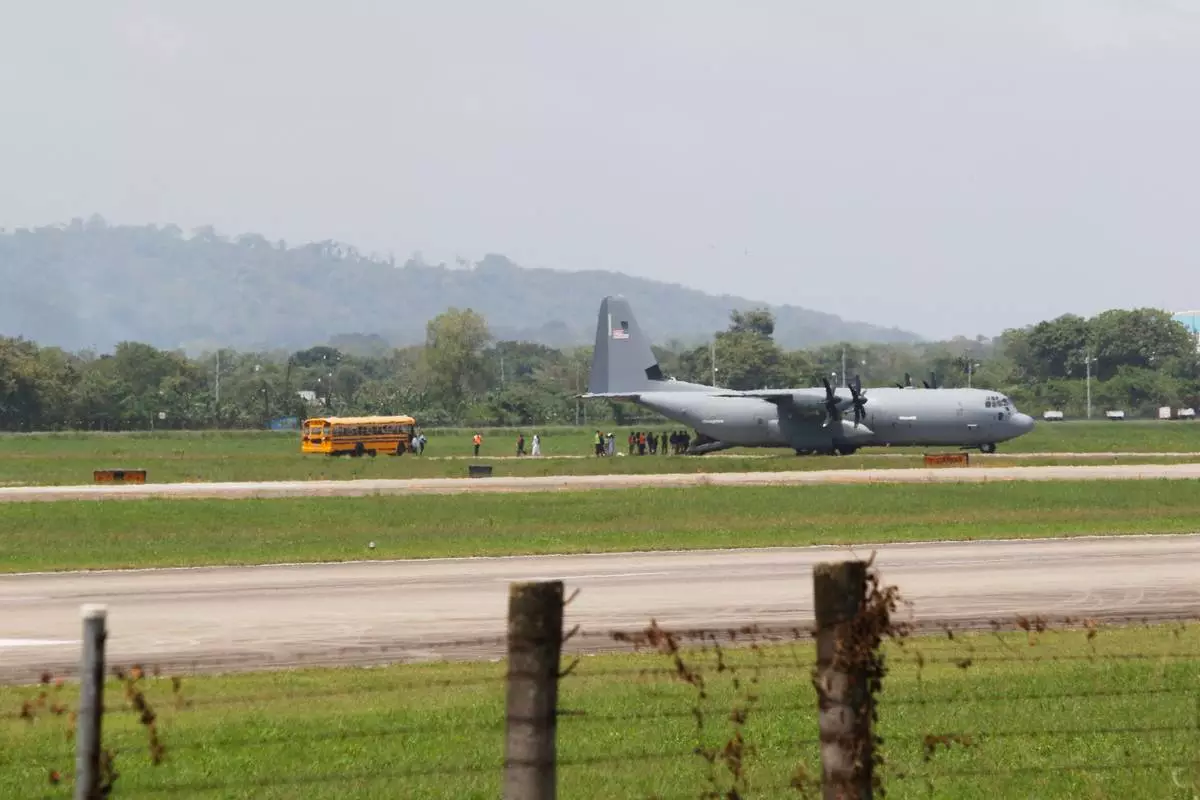
Migrants deported from the United States walk to a waiting bus after deplaning at the Ramon Villeda Morales Airport in San Pedro Sula, Honduras, Thursday, Aug. 20, 2026. (AP Photo/Delmer Martinez)
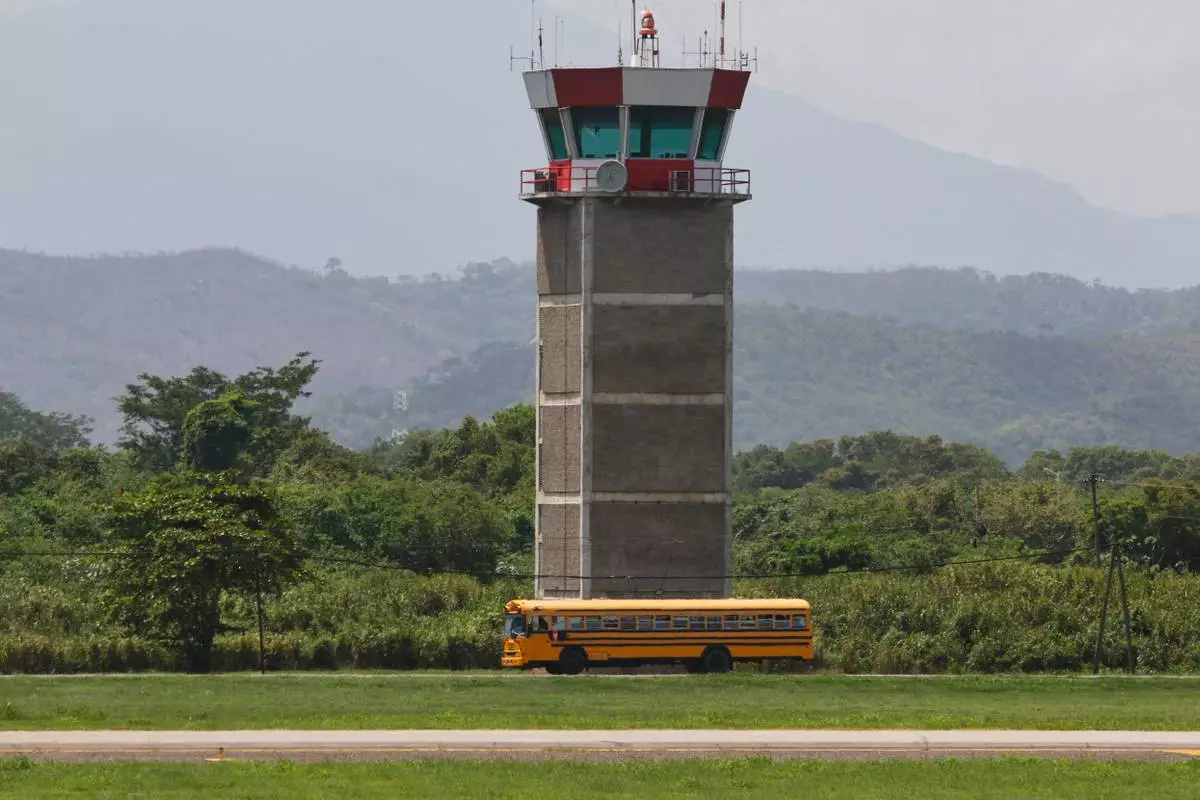
Migrants deported from the United States are transported in a bus after arriving on plane at the Ramon Villeda Morales Airport in San Pedro Sula, Honduras, Thursday, Aug. 20, 2026. (AP Photo/Delmer Martinez)
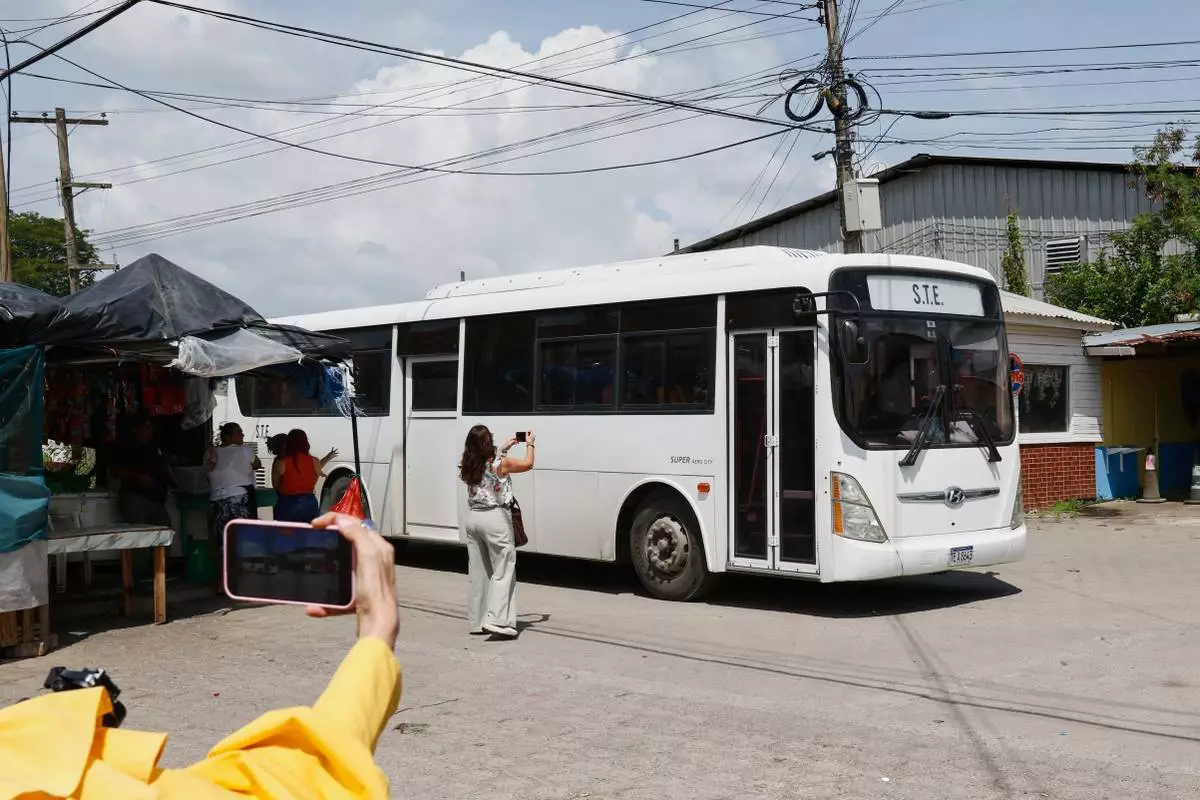
Journalists take images of a bus transporting migrants deported from the United States following their arrival at the Ramón Villeda Morales Airport in San Pedro Sula, Honduras, Thursday, Aug. 20, 2026. (AP Photo/Delmer Martinez)
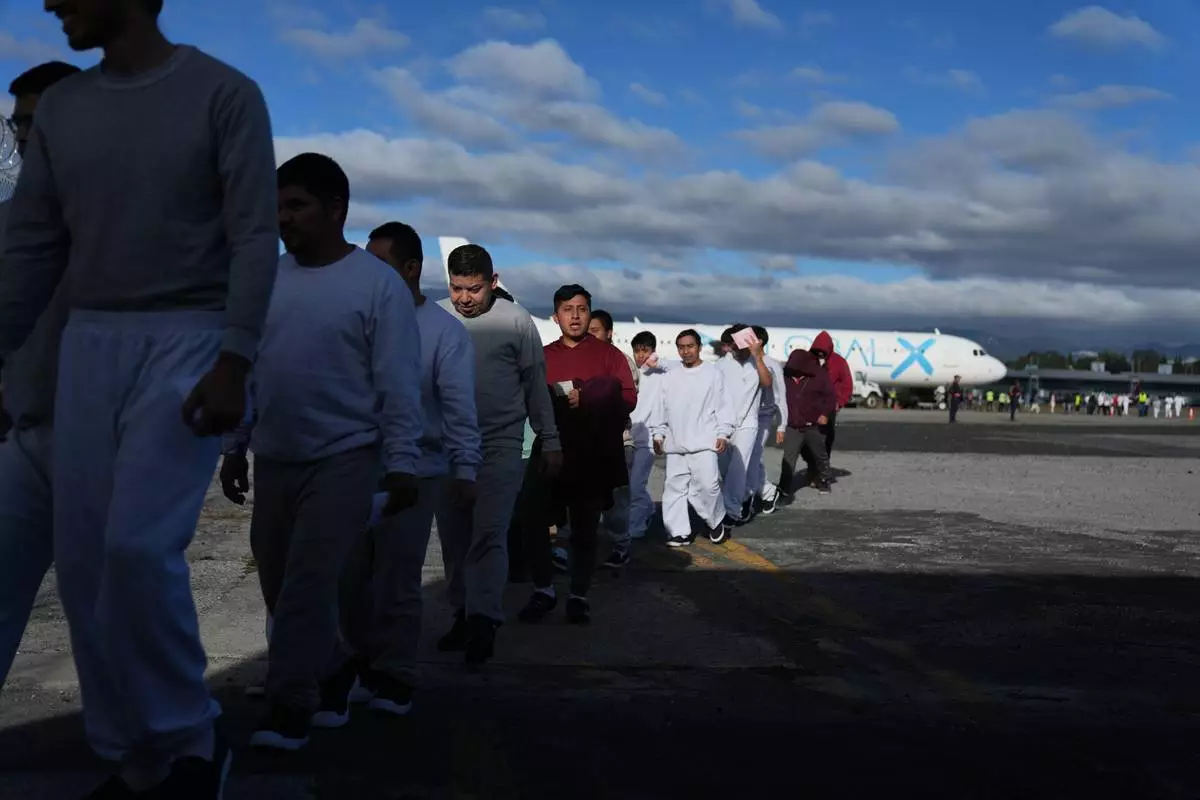
FILE - Guatemalans deported from the U.S. arrive at La Aurora airport in Guatemala City, Dec. 30, 2025, after deplaning a repatriation flight. (AP Photo/Moises Castillo, File)