A story-sharing forum titled "Xizang Panorama: New Era, New Development" was held in the Nepali capital Kathmandu on Wednesday, drawing more than 300 people from various sectors of China and Nepal.
Jiang Jianguo, a member of the Standing Committee of the National Committee of the Chinese People's Political Consultative Conference (CPPCC) and vice director of the Committee for Ethnic and Religious Affairs of the CPPCC National Committee; Top Bahadur Magar, chairperson of Nepal's National Human Rights Commission; and Zhang Maoming, Chinese ambassador to Nepal, attended the event and delivered speeches.
While addressing the forum, Jiang, also executive vice president of the China Society for Human Rights Studies, said that this year marks the 75th anniversary of the peaceful liberation of China's Xizang Autonomous Region. Over the past 75 years, the Communist Party of China and the Chinese government have consistently regarded the rights to subsistence and development as primary basic human rights, charting a human rights development path that follows the trend of the times and suits China's national conditions.
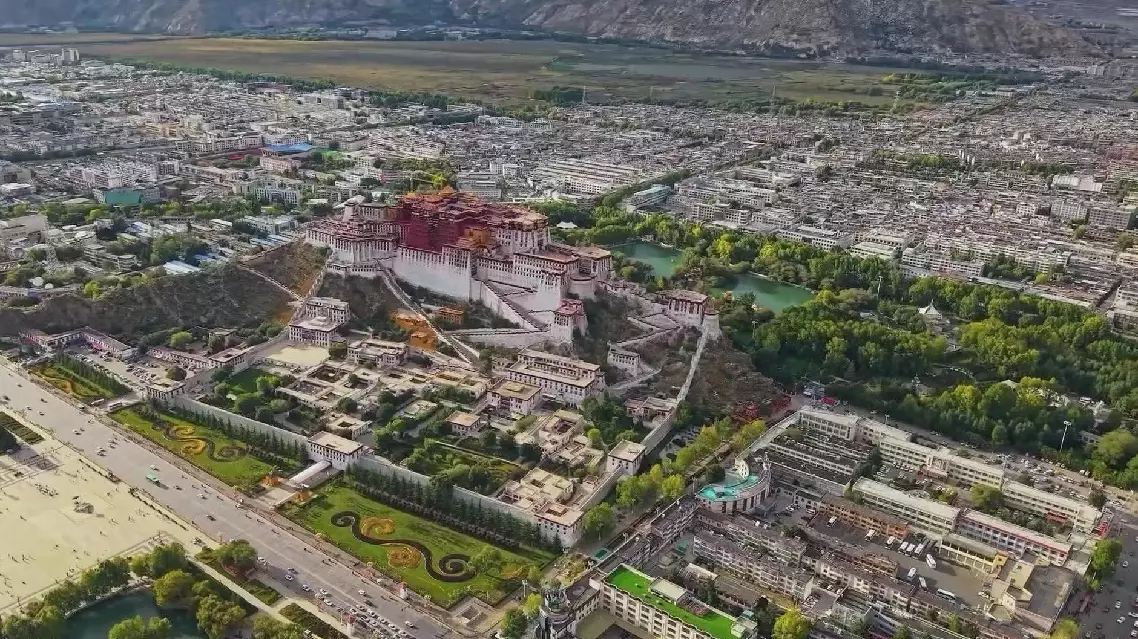
The story-sharing forum was structured around four thematic units -- "Open Xizang," "Vibrant Xizang," "Harmonious Xizang" and "Green Xizang." Guests from China and Nepal shared vivid stories and images of a real, multidimensional and comprehensive Xizang.
"I think the beauty of Xizang lies in its culture. The architecture there is very unique. Many ancient buildings have been preserved, and they blend seamlessly with beautiful lakes and snow-capped mountains, creating a breathtakingly beautiful scene," said Pabitra Shanki, a Nepali actress at the event.
"One truly remarkable aspect is Xizang's governance and planning. From a cultural perspective, it has effectively preserved traditional culture. From an environmental perspective, it promotes development and construction while maintaining natural beauty. Seeing all this with my own eyes, I find it truly impressive," said Buddhi Tamang, a Nepali dramatist.
"I think that as members of the media, we must base our judgments and reporting on thoroughly verified information. I encourage everyone to go and see it for themselves, to explore the region, gain a deeper understanding of Xizang and then form their own opinions," said Sangken Rai, a Nepali journalist.
The event was co-organized by the China Society for Human Rights Studies, Nepal's Tribhuvan University, and the National Human Rights Commission of Nepal. A photo exhibition was also held alongside the forum.
Story-sharing forum in Nepal portrays authentic Xizang