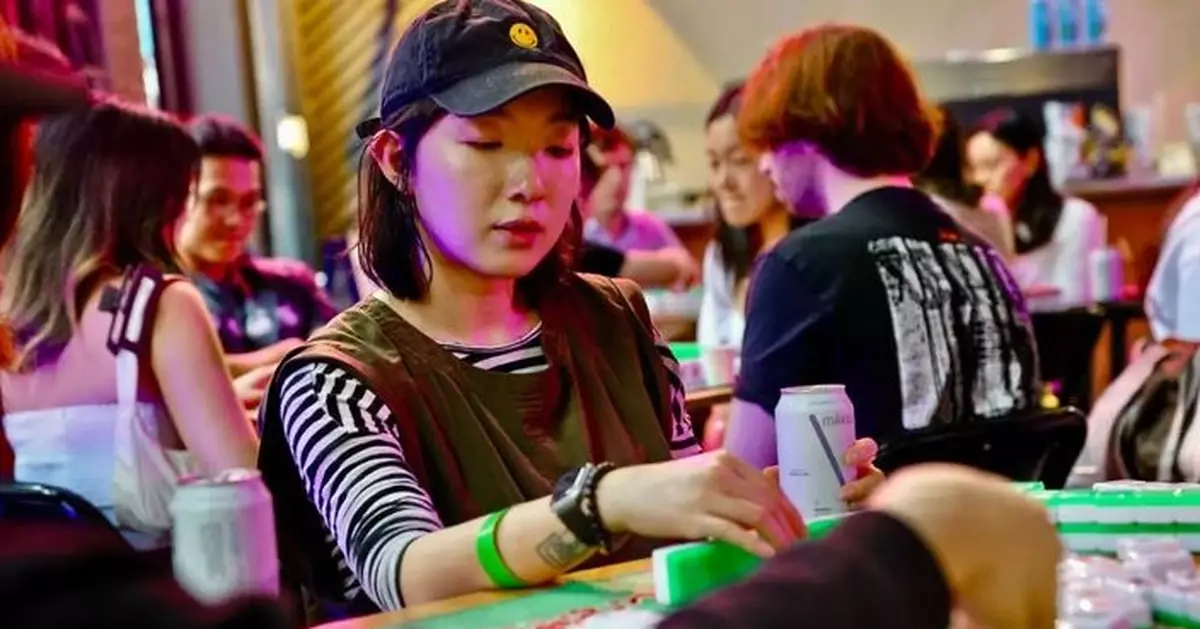

If Julia Roberts' Tuesday night games represent a Hollywood-style "living Zen," then the recent surge of mahjong fever across mainstream American society is nothing short of a coast-to-coast social revolution. Originating in 19th-century China, this ancient tile game has successfully shed its stereotype as a "Chinatown senior pastime," bursting into the living rooms, bars, and nightclubs of young Americans with chic momentum.
The Numbers Don't Lie: Skyrocketing Demand for Mahjong
To understand how massive this trend has become, the figures tell the truest story. According to ticketing platform Eventbrite, mahjong-related events across the United States surged by 179% between 2023 and 2024 alone. Data from Yelp is even more striking: searches for "mahjong clubs" exploded by 4,467% between September 2024 and August 2025, while searches for mahjong classes jumped by 819%. These statistics reveal that mahjong is no longer a niche pursuit—it has become a highly sought-after social phenomenon.
From Asian American Homes to the Mainstream: Pop-Up Mahjong Parties
The driving force behind this craze is a wave of "pop-up mahjong clubs" spearheaded by young Asian Americans. Among them, New York’s Green Tile Social Club stands out as a prime example. Founded in 2022, the club specializes in hosting youth-oriented mahjong parties at bars, trendy hotels, urban gardens, and creative spaces, completely reshaping the game's traditional image.
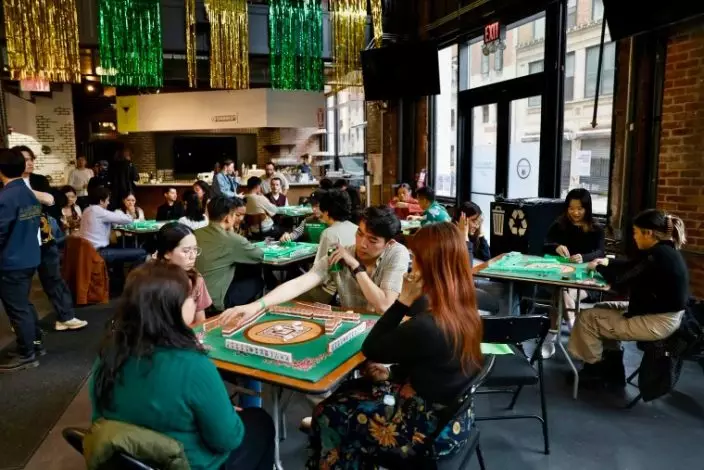
A mahjong competition hosted by Green Tile Social Club in New York. (Photo by NBC News)
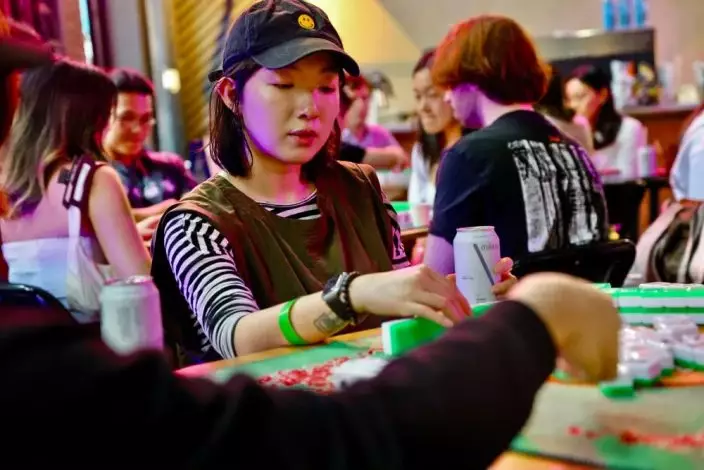
A mahjong competition hosted by Green Tile Social Club in New York. (Photo by NBC News)
This new format has successfully drawn in large numbers of Gen Z players. Attendance has expanded from initial gatherings of 50 to 60 people to sold-out events with up to 200 players coming together to "build the wall." Beginners need not worry—teaching assistants (TAs) are on hand to offer step-by-step guidance, and many first-timers quickly get hooked, becoming regular attendees. For organizers, these gatherings are about more than just promoting the game; they represent a form of cultural reclamation. For Asian Americans in particular, shuffling tiles serves as a tangible way to reconnect with their heritage.
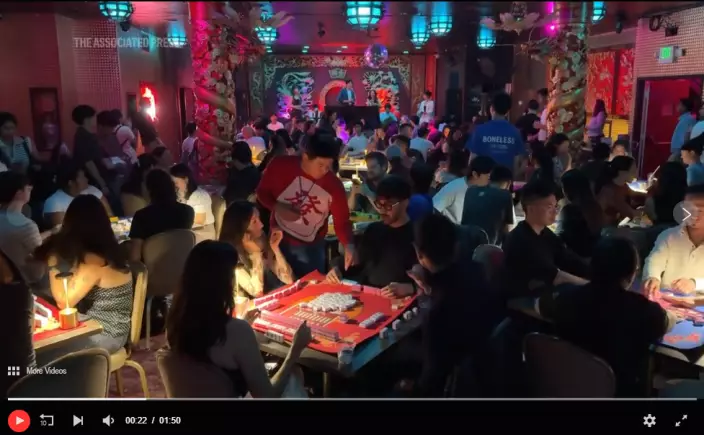
Mahjong nights draw young crowds to San Francisco bars and restaurants. (A screencap from AP video)
Post-Pandemic Social Needs: Unplugging for Real Interaction
Why did mahjong experience such an explosion after the pandemic? New York-based mahjong instructors point to a fundamental craving for human connection. After spending lockdown glued to screens, people emerged eager for face-to-face interaction. Mahjong offers an ideal setting to put down smartphones and focus on engaging with opponents at the table. Players note that mahjong is not merely a mechanical game of skill—it is a mirror of personality. Observing someone's playstyle reveals whether they are cautious and conservative or bold risk-takers.
From a 1920s "Eastern treasure" craze to a post-pandemic "social darling" for Gen Z, mahjong's journey in America has seen remarkable evolution. It is no longer just "grandma's game," but a bridge connecting cultures, generations, and personal relationships. Whether pursuing a philosophy of "creating order out of chaos" or simply gathering friends to shuffle tiles and catch up, mahjong has proven its enduring charm—transcending language and culture to bring people together.
Chinamaxxing
** 博客文章文責自負,不代表本公司立場 **