China's expanding imports and its emergence as a significant global market are challenging narratives that portray its trade surplus as "squeezing other economies". Experts stress that China's exports and trade surplus reflect market demand, international division of labor and comparative advantages rather than allegedly displacing other countries.
Recently, some Western media outlets have once again hyped up the narrative of China's "surging exports", claiming that China's trade surplus is creating so-called "pressure" or "shocks" for global markets.
Such rhetoric echoes earlier claims about China's "overcapacity" and, in essence, reflects a selective blindness to China's development.
Yet, the facts tell a different story.
In 2025, China's imports reached 18.5 trillion yuan, making the country the world's second-largest import market for the 17th consecutive year. China is a major export destination for nearly 80 countries, generating substantial employment and tax revenues for an increasing number of economies.
In the first half of 2026, China's imports exceeded 10 trillion yuan for the first time in the same period in history. China serves increasingly as a super buyer, opening the door wider to the world's market.
The logic of some Western media outlets is simple: China exports more and runs a larger trade surplus, therefore it is "squeezing" other countries. This conclusion clearly does not stand up to scrutiny.
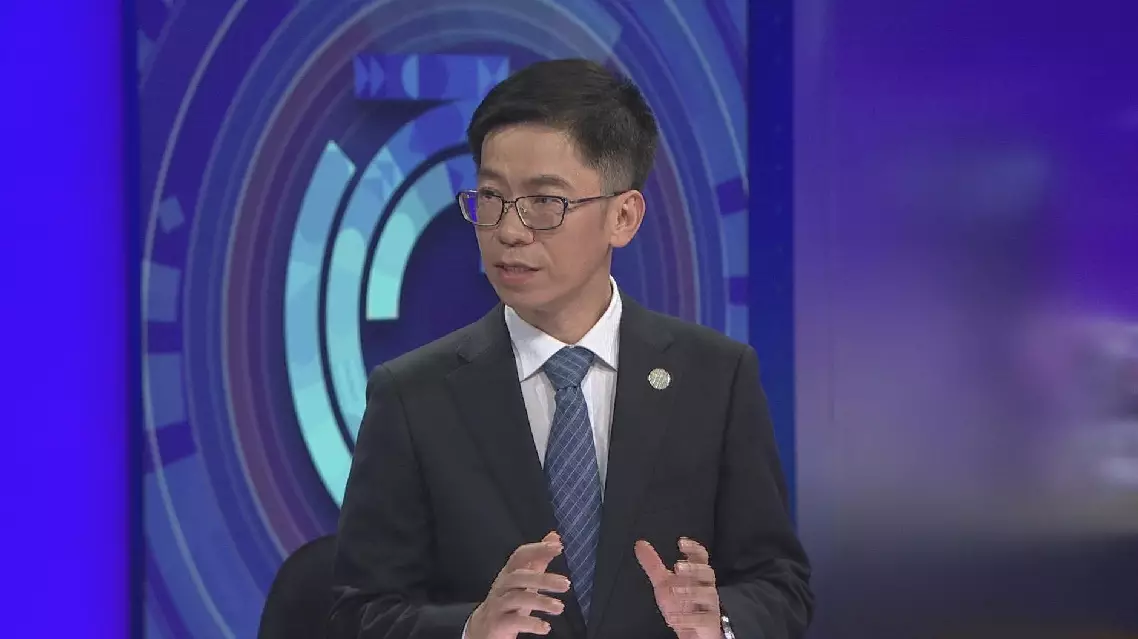
"We should make it very clear that there is no causal relationship among exports, trade surplus and overcapacity. Why? We know that international trade is a very free market, and all enterprises make decisions independently. There is no forced buying or selling. China cannot force other countries to buy Chinese products, if Chinese products were not good. This essentially shows that we are able to export so much because other countries are willing to buy products from China," said Zhou Mi, deputy director of the Institute of American and Oceania Study at the Chinese Academy of International Trade and Economic Cooperation under the Chinese Ministry of Commerce.
High export volumes show that global markets need competitive Chinese products, while a large trade surplus is a natural outcome of the international division of labor and comparative advantages.
Many of the products China exports are precisely those that other countries either are unwilling to produce or would face excessively high costs to manufacture.
This is not about "taking away jobs", but rather reflects the efficient operation of global industrial and supply chains and the rational choices made by global markets in balancing costs and risks.
Moreover, China's imports grew more than eight percentage points faster than its exports in the first seven months of this year.
If China were truly focused only on "selling" and not on "buying", why has its import growth outpaced export growth? Such a narrative of "selective blindness" is either rooted in ignorance or intended distortion.
"Additionally, we should recognize that the role of China's imports has actually been underestimated by the rest of the world, or, to some extent, selectively ignored. I think this kind of disregard is very unfair to China. A simple example is that international trade involves the back-and-forth movement of means of transportation. If a ship only travels from one side to the other, for instance a Chinese ship transporting China's goods to another country, what does it do on its return trip? If it just stays there, the ship cannot operate in a cycle. This is unreasonable and uneconomical for international trade. Therefore, for China and our trading partners, the best approach is for trade to take place in both directions, with goods flowing both ways. This is exactly what China is working to achieve. We have implemented a series of policies to expand imports from African and developed countries. Such cooperation is mutually beneficial and delivers win-win outcomes," Zhou said.
China's expanding imports instill certainty into global economy