Skip to Content Facebook Feature Image

Table tennis included as new event in World Humanoid Robot Games in Beijing

China

China

China

Table tennis included as new event in World Humanoid Robot Games in Beijing

2026-08-22 17:51 Last Updated At:23:17

Robotic table tennis showed up as a new event in the second World Humanoid Robot Games that kicked off Saturday in Beijing.

Featuring 12 teams from around the world, the sport event tests the abilities of the robots to see, calculate, and hit the ball.

In addition to testing autonomous control, algorithm design, and engineering capabilities, another major challenge for the teams is bridging the gap between simulations and the real world.

The robots make all decisions autonomously using AI, which makes table tennis one of the most challenging events.

They need to determine their return strategy, choose between forehands and backhands, and make other decisions in less than 0.3 seconds.

In order to train the robots, teams have them play against human opponents, and use motion-capture cameras to record the trajectory of the specially designed balls.

The data is then used to help the robots learn and improve.

Xu Kaiyang, captain of the joint team from Shanghai Jiaotong University and the Shanghai Innovation Institute, explained the challenges faced while training the robots.

"The data collected from human athletes can vary from team to team. We normally train in Shanghai, so when we came here to Beijing, we first needed to measure things like air drag coefficient. The motion-capture equipment here may also be different from what we use in Shanghai," said Xu.

"The hardest part is that the robot has to be trained in simulations first. The results may be good in simulations, but once you bring it into the real world, there can be a gap between the two. In the short term, we want the robot to get every return on the table and improve its return strategy. Right now, it's still at a beginner's level. In the long term, we want to see if we can train it to reach the level of a human athlete who has had one or two years of systematic table tennis training," he said.

This year's World Humanoid Robot Games brought together more than 2,000 robots from 600 teams to compete in 51 events that push the limits of humanoid technology.

The athletic competitions have introduced new high-intensity events including long jump, weightlifting, tug-of-war and table tennis, all of which serve as ultimate tests of a robot's "brain," "cerebellum," physical structure and core components.

In addition to athletic events, the Games also feature scenario-based competitions spanning nine fields, including home services, hospitality and logistics, demonstrating the application potential of humanoid robots in everyday production and life.
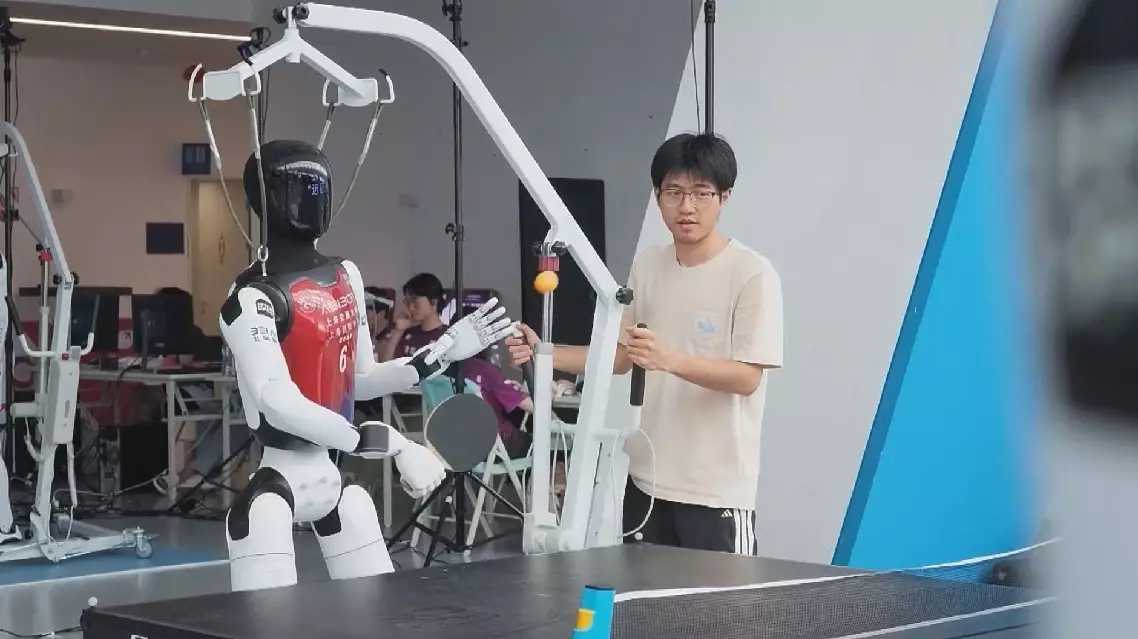
Table tennis included as new event in World Humanoid Robot Games in Beijing

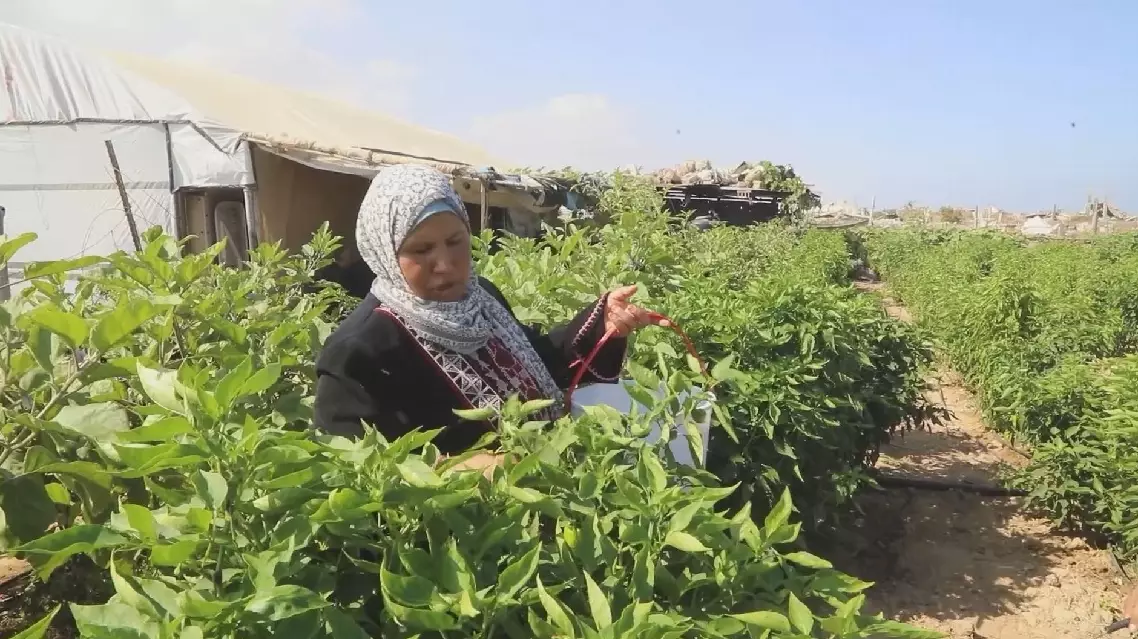
Table tennis included as new event in World Humanoid Robot Games in Beijing

Displaced farming families are returning to their homeland in Gaza City, restoring fields and growing food again, though challenges like poor farming conditions and lack of supplies remain.

In parts of Gaza, farmland damaged during Israel's war on the enclave is slowly coming back to life.

Fresh vegetables are being harvested again from farmland in Gaza City's Al-Zaitoun neighborhood.

For the Al-Dahdouh family, these crops mark the return of their land to life.

The challenges have been immense. Nearly three years of war have left much of Gaza's farmland damaged or bulldozed, making the return to farming a difficult task for families trying to start again.

"When we returned after being displaced, the land was covered with piles of rubble and debris and was difficult to access. Everyone in the family worked together to rehabilitate it for farming. Thankfully, we were finally able to cultivate it again," said Wajiha Al-Dahdouh, a Palestinian farmer.

Rebuilding livelihoods and restoring a sense of normal life remains difficult after the three years of war, repeated displacement and the loss of income for many families.

"We can't afford to hire workers to help us with farming because of the high costs. We also face serious difficulties securing water for irrigation and pesticides. It has been a huge burden on us," said Iman Al-Dahdouh, another Palestinian farmer.

The Al-Dahdouh family is among around 350 farming families supported by United Nations Development Program (UNDP) with Relief Housing Units and farming assistance.

Around 1,100 families are expected to benefit in total.

"For the last three years, it has been total destruction, and people have had to leave their homelands. The families have been displaced multiple times to various locations in the midland south area of the Gaza Strip. What you see here now is life returning to the neighborhood, and UNDP supports these families through providing dignified shelters and housing solutions through what we call relief housing units," said Margunn Indreboe Alshaikh, deputy special representative of UNDP Palestine.

The initiative is part of UNDP's Neighbourhood Approach, combining housing with basic services and livelihood support.

Displaced farmers arrive back in Gaza amid challenges

Displaced farmers arrive back in Gaza amid challenges

Recommended Articles