China's Shenzhou-23 astronauts have pressed ahead with a full slate of space science experiments, while also carrying out routine station upkeep and comprehensive health management tasks over the past week as they will mark their three months in orbit, according to the China Manned Space Agency (CMSA).
According to the mission schedule, the three crew members of Zhu Yangzhu, Zhang Zhiyuan and Lai Ka-ying have carried out a series of hands-on scientific operations. They replaced and cleaned experimental samples, and performed electrode maintenance as well as lens cleaning. In addition, the trio completed gas cylinder replacement and vacuum pumping and exhaust removal. On the station maintenance front, the crew conducted routine microbial monitoring aboard the space station. They collected and tested samples from cabin air, surfaces, and water systems to assess microbial growth conditions, providing critical data for in-orbit contamination prevention and control. In terms of health management, the astronauts completed scheduled visual function assessments and non-invasive cardiac function tests, offering valuable reference data for researchers monitoring the long-term health effects of spaceflight. Meanwhile, all the three crew members have maintained regular in-orbit exercise routines and have been using specialized equipment such as bone loss countermeasure devices to mitigate the physiological impacts of microgravity. Meanwhile, they took a well-deserved break, eating together to replenish energy, relaxing both body and mind, shedding the fatigue of intense work, and recharging for the missions ahead.
China launched the Shenzhou-23 crewed spaceship on May 24. The mission includes a one-year in-orbit study designed to gather data for future long-duration human space missions.
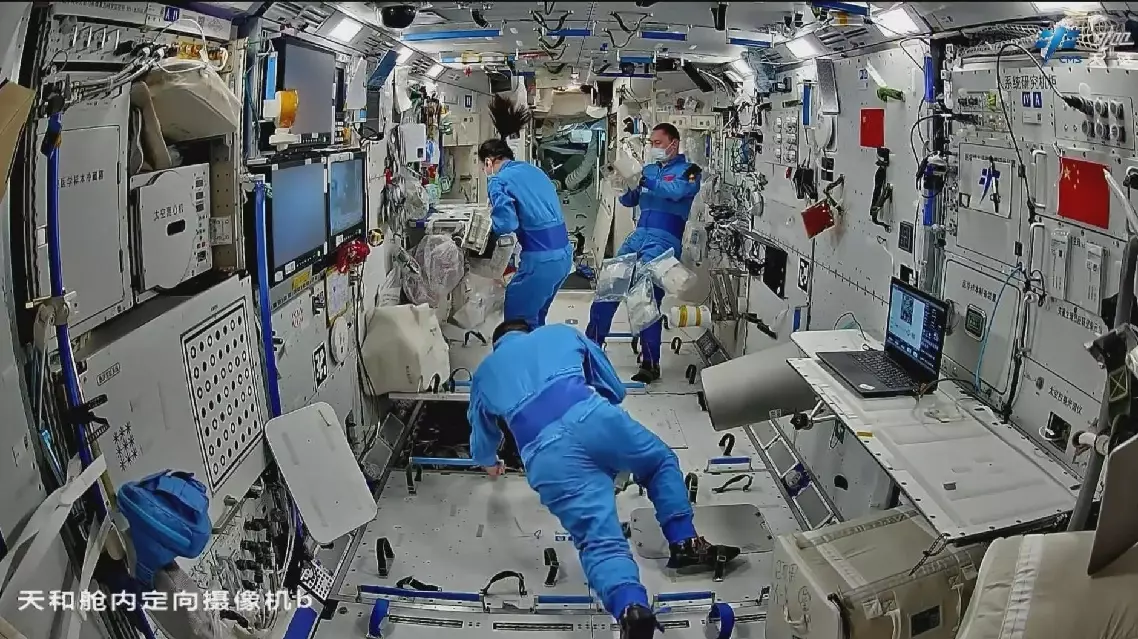
Shenzhou-23 crew advances experiments, health monitoring
Extreme heatwaves and persistent drought across Italy have caused apples to ripen several days earlier than previous years, harming fruit quality and threatening farmers' incomes.
In the northern region of Trentino-Alto Adige, one of Europe's top apple producers, orchard growers have been forced to begin their apple harvests significantly ahead of schedule, with popular early varieties like Gala being picked ten days or even two weeks earlier than 20 years ago.
Meteorological data showed that the average temperature in Trento, capital of the region, reached 14.9 degrees Celsius from January to July, the highest for the same period since records began. July alone was 2.4 degrees Celsius warmer than the historical average, while rainfall was below seasonal norms.
Gian Paolo Antonioli, a local apple farmer, underscored that the seasonal changes have led to reduced water availability.
"The main problem we have encountered is the lack of water, which has led to smaller apple sizes. Apples become smaller because they do not have enough water to support their growth. They tend to turn yellow faster and ripen earlier," Antonioli said.
Gala apples require red coloration before they are ready for fresh-market sales. When water is insufficient, the fruit may reach maturity before coloring properly, so a portion of the early yield has had to be downgraded for processing rather than sold on the fresh market, reducing growers' returns.
The weather woes are not limited to Italy. The World Apple and Pear Association forecast in August that 2026 production across major EU apple-growing countries would total about 9.5 million tons, a drop of 15.6 percent year on year and 14.3 percentage points lower than the three-year average.
"We must strive for constant production. We cannot accept yields to be one year on, one year off, two years on, and another year off. The climate is no longer stable, so we need to allow for some changes in annual production, but the average yield must be fairly constant," said Gianluca Barbacovi, president of Coldiretti Trentino-Alto Adige.
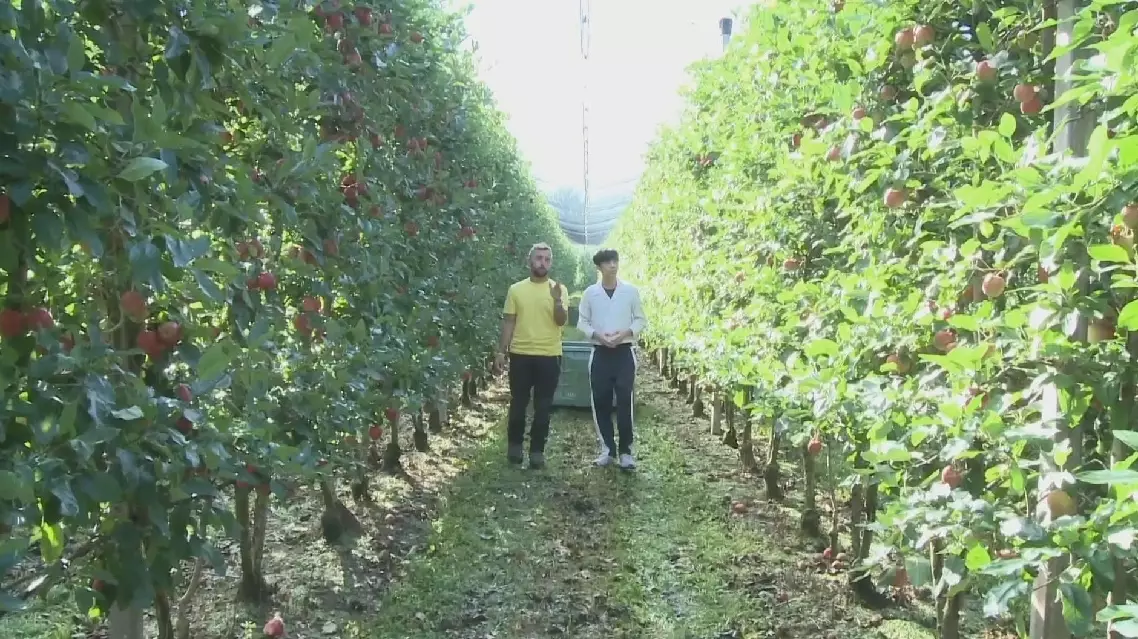
Italian apple orchards suffer from early harvests due to extreme heat