Extreme heatwaves and persistent drought across Italy have caused apples to ripen several days earlier than previous years, harming fruit quality and threatening farmers' incomes.
In the northern region of Trentino-Alto Adige, one of Europe's top apple producers, orchard growers have been forced to begin their apple harvests significantly ahead of schedule, with popular early varieties like Gala being picked ten days or even two weeks earlier than 20 years ago.
Meteorological data showed that the average temperature in Trento, capital of the region, reached 14.9 degrees Celsius from January to July, the highest for the same period since records began. July alone was 2.4 degrees Celsius warmer than the historical average, while rainfall was below seasonal norms.
Gian Paolo Antonioli, a local apple farmer, underscored that the seasonal changes have led to reduced water availability.
"The main problem we have encountered is the lack of water, which has led to smaller apple sizes. Apples become smaller because they do not have enough water to support their growth. They tend to turn yellow faster and ripen earlier," Antonioli said.
Gala apples require red coloration before they are ready for fresh-market sales. When water is insufficient, the fruit may reach maturity before coloring properly, so a portion of the early yield has had to be downgraded for processing rather than sold on the fresh market, reducing growers' returns.
The weather woes are not limited to Italy. The World Apple and Pear Association forecast in August that 2026 production across major EU apple-growing countries would total about 9.5 million tons, a drop of 15.6 percent year on year and 14.3 percentage points lower than the three-year average.
"We must strive for constant production. We cannot accept yields to be one year on, one year off, two years on, and another year off. The climate is no longer stable, so we need to allow for some changes in annual production, but the average yield must be fairly constant," said Gianluca Barbacovi, president of Coldiretti Trentino-Alto Adige.
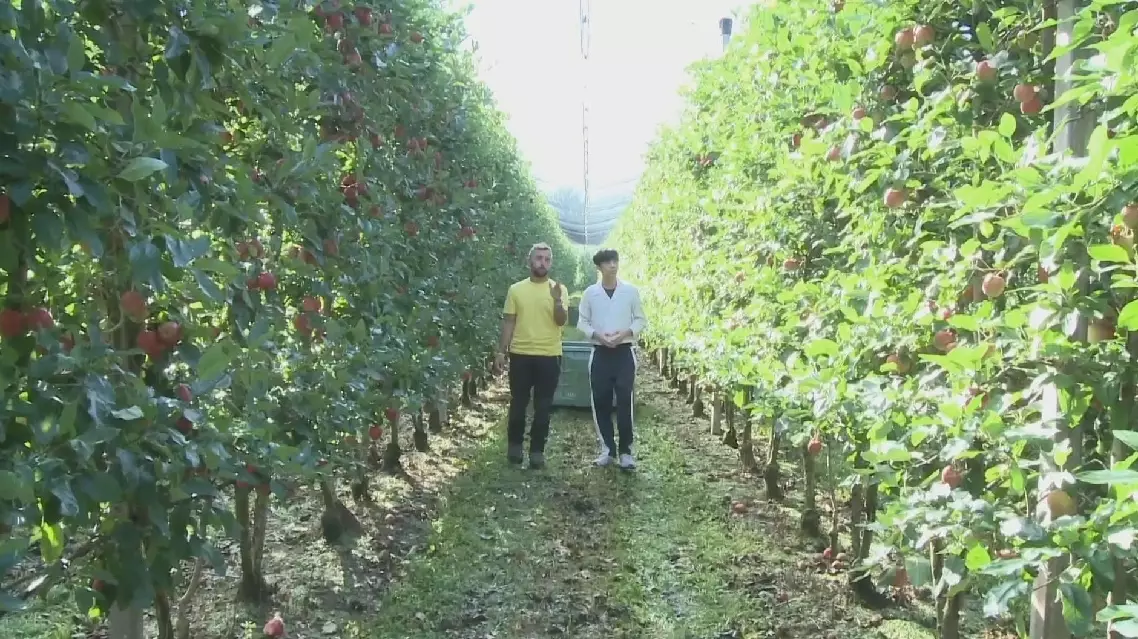
Italian apple orchards suffer from early harvests due to extreme heat
More than 1 million displaced Palestinians in the Gaza Strip are struggling to secure enough food and clean water, as the amount of humanitarian aid entering the enclave remains heavily restricted.
According to the latest UN reports, about 1.4 million people, or 67 percent of Gaza's population, are facing acute food insecurity, struggling to secure a single basic meal every day.
The UN has also warned that around 10 percent of Gaza's population is on the edge of famine, highlighting the severity of the humanitarian crisis across the Strip.
Many displaced families across the Strip live in makeshift tents, relying entirely on sporadic distributions or charity kitchens. However, aid groups have recently reduced meal distributions due to funding constraints and restricted supply corridors.
Mariam Al-Firani, a displaced Palestinian living with her family in a camp in Gaza City, has found it increasingly difficult to provide food for her three children.
"My husband is injured, and we have no source of income. I struggle in every possible way to provide food for my three children. Today, we received no meals from the charity kitchen, and I don't know how I will feed them," she said.
For Mahmoud Hallas, who is displaced from the Shujaiya neighborhood in eastern Gaza City, accessing water is an exhausting daily task. Every day, he and his children struggle to find even a small amount.
"Water is a right from God for everyone, but we cannot get enough. We wash our clothes only once every two weeks because of the shortage. We even ration drinking water. A person needs around five liters a day, but we drink only one glass, so that we can save the rest for cooking and cleaning. Water is our greatest hardship," he said.
Gaza's municipalities have warned of an imminent water system collapse due to fuel and oil shortages, saying only 40 of around 700 generators have received oil.
"People struggle on a daily basis to access their essentials: reliable access to clean water, to sanitation, to healthcare, to affordable and nutritious food. And we urge sustained effort to ensure the rapid and unimpeded flow of humanitarian assistance into the Gaza Strip," said Amani Al-Naouq, a spokeswoman for the International Committee of the Red Cross in Gaza.
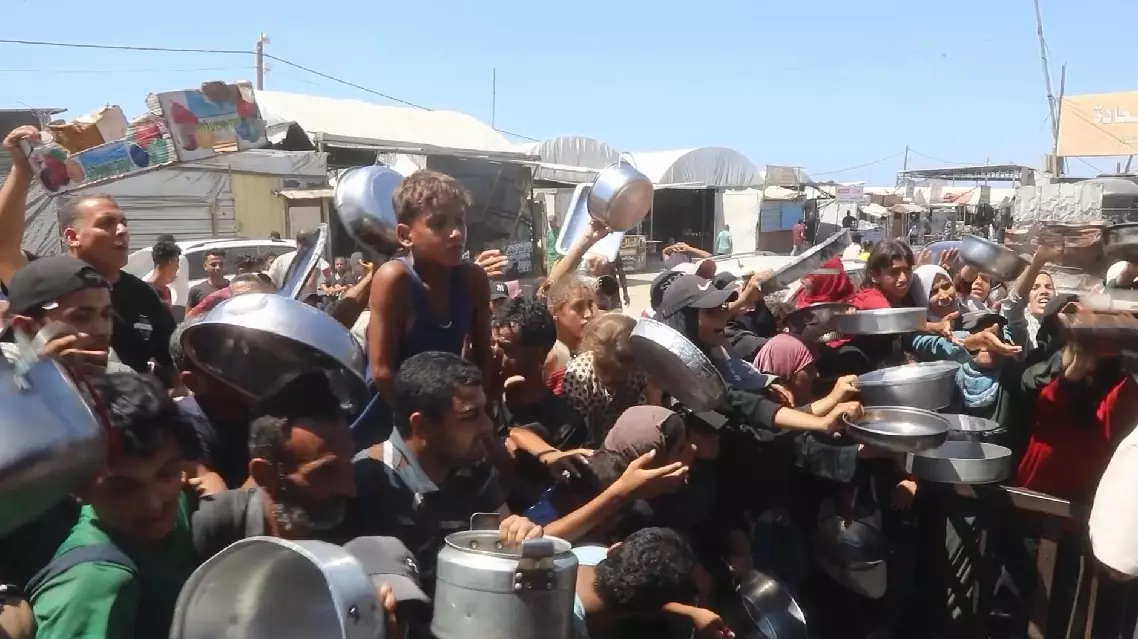
Over 1 million displaced Gazans face hunger