Skip to Content Facebook Feature Image

Tanzanian president inaugurates Julius Nyerere Hydropower Plant

China

China

China

Tanzanian president inaugurates Julius Nyerere Hydropower Plant

2026-08-23 12:12 Last Updated At:14:07

Tanzanian President Samia Suluhu Hassan on Saturday inaugurated the 2,115-megawatt Julius Nyerere Hydropower Plant, a landmark project expected to strengthen electricity supply and accelerate industrial and economic development.

Hassan inaugurated the plant in Rufiji District in Coast Region, saying the new generation capacity should produce measurable gains in manufacturing, trade, mining, modern agriculture, public services, investment and employment.

The nine-unit facility now accounts for nearly half of electricity dispatched to Tanzania's national grid, significantly improving reliability and security of supply, she said.

Built with the participation of China's Power Construction Corporation of China (PowerChina) and Dongfang Electric Corporation, the plant has a total installed capacity of 2,115 megawatts, Zhang Rui, the project manager with PowerChina, said.

PowerChina undertook the construction of the main works, including the main dam, the stilling basin, the water conveyance system, the diversion tunnels and the metal structures, as well as the overall engineering design and the supporting facilities, Zhang said.

Tan Jin, the project manager with Dongfang Electric, noted that they supplied all nine hydro-turbine generator units, main inlet valves and other complete sets of electromechanical equipment, and carried out their installation, commissioning and trial operation.

During construction, the China-involved construction work created about 14,000 jobs for local residents. Thousands of Tanzanians received professional skills training from Chinese engineers in areas such as welding, steel fixing, carpentry, heavy machinery operation and surveying, helping build a stronger local workforce, according to the two managers.

The project is also expected to improve electricity supply for households and public services, strengthen Tanzania's role in the regional energy market in East Africa, and provide reliable energy support for regional connectivity and socioeconomic development, said Humphrey Moshi, an economics professor at the University of Dar es Salaam in Tanzania.

Tanzanian president inaugurates Julius Nyerere Hydropower Plant

Tanzanian president inaugurates Julius Nyerere Hydropower Plant

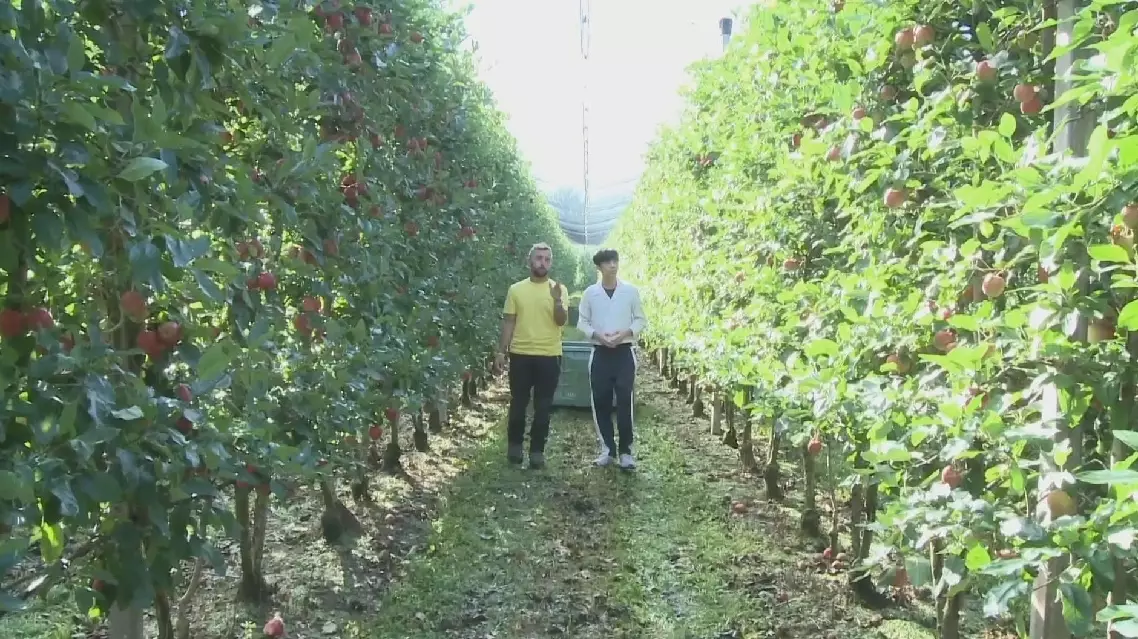
Extreme heatwaves and persistent drought across Italy have caused apples to ripen several days earlier than previous years, harming fruit quality and threatening farmers' incomes.

In the northern region of Trentino-Alto Adige, one of Europe's top apple producers, orchard growers have been forced to begin their apple harvests significantly ahead of schedule, with popular early varieties like Gala being picked ten days or even two weeks earlier than 20 years ago.

Meteorological data showed that the average temperature in Trento, capital of the region, reached 14.9 degrees Celsius from January to July, the highest for the same period since records began. July alone was 2.4 degrees Celsius warmer than the historical average, while rainfall was below seasonal norms.

Gian Paolo Antonioli, a local apple farmer, underscored that the seasonal changes have led to reduced water availability.

"The main problem we have encountered is the lack of water, which has led to smaller apple sizes. Apples become smaller because they do not have enough water to support their growth. They tend to turn yellow faster and ripen earlier," Antonioli said.

Gala apples require red coloration before they are ready for fresh-market sales. When water is insufficient, the fruit may reach maturity before coloring properly, so a portion of the early yield has had to be downgraded for processing rather than sold on the fresh market, reducing growers' returns.

The weather woes are not limited to Italy. The World Apple and Pear Association forecast in August that 2026 production across major EU apple-growing countries would total about 9.5 million tons, a drop of 15.6 percent year on year and 14.3 percentage points lower than the three-year average.

"We must strive for constant production. We cannot accept yields to be one year on, one year off, two years on, and another year off. The climate is no longer stable, so we need to allow for some changes in annual production, but the average yield must be fairly constant," said Gianluca Barbacovi, president of Coldiretti Trentino-Alto Adige.

Italian apple orchards suffer from early harvests due to extreme heat

Italian apple orchards suffer from early harvests due to extreme heat

Recommended Articles