China and Kenya are increasing their use of RMB in trade and investment, exploring ways to deepen financial cooperation as China's foreign trade continues to expand.
On Thursday, over 180 representatives from financial institutions, government agencies and Chinese enterprises gathered in Nairobi to discuss how cross-border RMB payments, financing and settlement can make bilateral trade easier, and potentially reduce transaction costs.
Hosted by the Bank of China, the forum brought together representatives from the Chinese Embassy, the Kenya Investment Authority, the Kenya Bankers Association, local commercial banks and Chinese companies operating in the country. It is the 11th stop of the Bank of China's 2026 global roadshow promoting the international use of the RMB.
"Over the past 29 years, Bank of China has actively served as an all-weather financial partner for China-Africa cooperation, providing high-quality services to both Chinese enterprises doing business here and local clients, and continuously injecting strong and stable financial momentum into Africa's economic and social development," said Yun Yi, deputy general manager of the clearing department of Bank of China Head Office.
As China-Kenya trade and investment continue to grow, reducing cross-border transaction costs and improving the efficiency of capital flows have become shared priorities.
Fidelis Muia, director of technical services at the Kenya Bankers Association, said that he hopes financial institutions can deepen RMB cooperation and strengthen connectivity with payment systems such as China's Cross-Border Interbank Payment System (CIPS).
"For Kenyan businesses importing from China and increasing Chinese businesses investing and operating in Kenya, the ability to settle transactions more efficiently in RMB can predominantly reduce transaction friction, improve transparency, and provide greater choice in managing foreign exchange and liquidity. For Kenyan banks, this presents an opportunity to develop and deepen capabilities around RMB payments, correspondent banking, trade finance, foreign exchange and treasury services," he said.
Kenya is one of China's key economic partners in Africa, with cooperation moving beyond infrastructure and traditional trade into areas such as digital technology, green development and new energy. With Kenya gaining greater access to the Chinese market, including through measures such as zero-tariff access for selected Kenyan exports, opportunities for bilateral trade are expected to expand further.
"When trade and investment progress to some extent, we need kind of international currency to use for payments and settlements. But before, mostly, we were using the U.S. dollar because the U.S. dollar is the biggest international currency in the world. But the U.S. currency has some shortcomings, such as the interest rate is quite high and also fluctuate," said Huang Meibo, dean of International Development Cooperation Academy at the Shanghai University of International Business and Economics.
Muia also believes that wider RMB use by Kenyan banks and businesses could provide an alternative settlement currency for trade with China, while potentially opening new avenues for financing and investment.
"The value proposition for a bank in Kenya that has an integration to the payment ecosystem in China is that you don't have to worry about carrying money; you don't have to worry about making payments. You can actually order online, make your payments online from the comfort of your house facilitated through the local banks," said Muia.
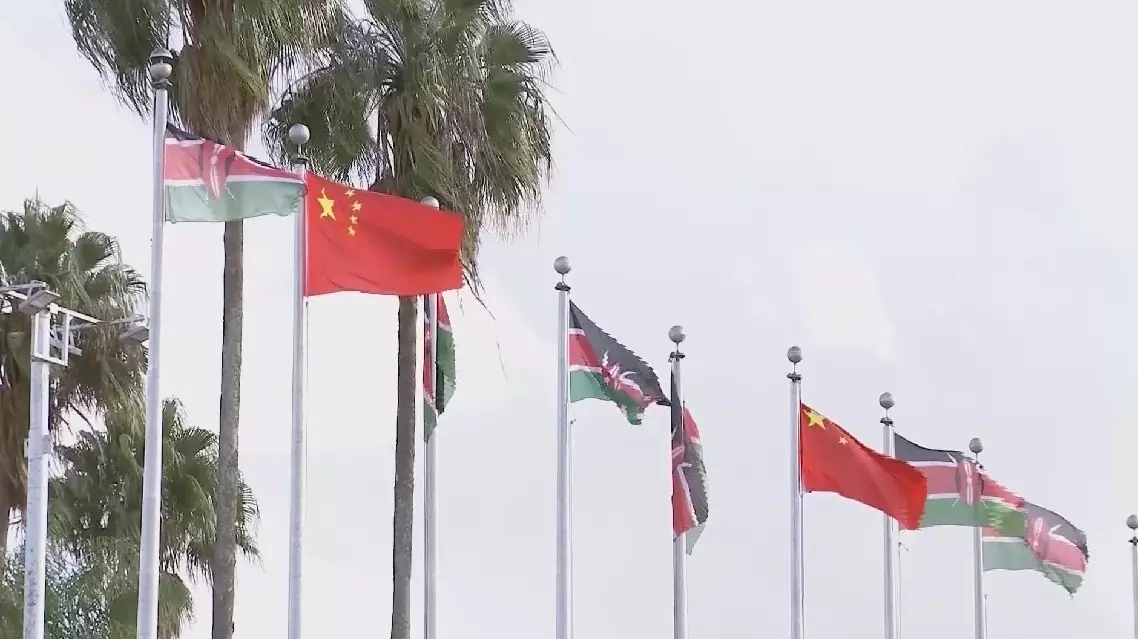
China expands RMB services in Kenya to boost bilateral trade, investment