
Skip to Content Facebook Feature Image

Aramark Collegiate Hospitality Introduces 2026-2027 Innovations for Current and Incoming Generations

Business

Aramark Collegiate Hospitality Introduces 2026-2027 Innovations for Current and Incoming Generations
Business

Business

Aramark Collegiate Hospitality Introduces 2026-2027 Innovations for Current and Incoming Generations

2026-08-24 19:31 Last Updated At:19:40

PHILADELPHIA--(BUSINESS WIRE)--Aug 24, 2026--

As colleges and universities prepare to welcome Generation Alpha, Aramark Collegiate Hospitality is introducing new dining programs, wellness-focused residential concepts, digital enhancements, and student engagement initiatives for the 2026-2027 academic year.

This press release features multimedia. View the full release here: https://www.businesswire.com/news/home/20260824711385/en/

"Generation Alpha's expectations are already influencing how colleges think about food, wellbeing, and community," said Barbara Flanagan, President and CEO of Aramark Collegiate Hospitality. "We have more insight into what students want than we ever have, and we are using that knowledge to make decisions well ahead of enrollment trends, not in response to them."

Aramark's May 2026 TrendScoop report profiles Generation Alpha, whose oldest members are expected to begin enrolling on U.S. campuses in Fall 2028, as one of the most food-aware and digitally connected generations yet. According to the proprietary report, which blends industry insight with Aramark Collegiate Hospitality’s campus engagement research, 88% currently eat restaurant food one to five times per week, more than 70% have tried new foods they have discovered through social media, and 75% enjoy mainstream global cuisines, behaviors already influencing how students evaluate dining experiences and helping shape Aramark's approach to the future of collegiate hospitality.

The Future of Food

To meet those evolving student preferences and to appeal to current students, Aramark Collegiate Hospitality is introducing new dining offerings that bridge Gen Z and Alpha as revealed in TrendScoop, including:

The Future of Wellbeing and Connection

To support student wellbeing, Aramark Collegiate Hospitality is looking beyond its menus. According to industry insight, about 40% of college-aged students report feeling stressed or anxious most of the time (Deloitte, 2025) and identify mindful eating as a factor in mental wellbeing (Aramark DiningStyles Survey, 2024), and nearly 20% say investment in wellness spaces would directly improve their wellbeing and academic performance (Inside Higher Ed, 2024). This tracks with a broader generational shift: nearly half of young adults say their online life is harming their wellbeing (WGSN, 2026), and Gen Z is increasingly turning to real-life, in-person connection to recharge.

Collegiate Hospitality is addressing these trends with new and expanded programming that helps students to un-plug:

The Future of Digital Engagement

Aramark Collegiate Hospitality is redefining how campus dining listens, responds, and connects with today's students through one of the most comprehensive digital feedback and engagement programs in higher education.

Anchoring this ecosystem is MyDiningHub, Aramark's redesigned, proprietary, all-in-one campus dining platform, now live across all campus partners. MyDiningHub serves as a centralized destination where students can manage meal plans, filter menus, access campus dining information, and track rewards, putting everything a student needs to make informed dining decisions in one seamless digital experience.

"This work is about making sure every student who walks into one of our dining halls feels like the experience was built for them," said Flanagan. "Our goal is to help campuses create dining programs that meet those expectations now while building for the future. Because of the insight and dedicated teams behind this work and serving our communities, we are well positioned to do exactly that."

About Aramark Collegiate Hospitality

Aramark Collegiate Hospitality —where futures are better served—has been a trusted dining partner to higher education institutions for over 50 years. Serving approximately 300 colleges and universities nationwide, Aramark delivers customized dining and hospitality programs that reflect the unique culture and needs of each campus. Rooted in a deep commitment to service for people, partners, the community, and the planet, Aramark goes beyond meals by curating tailored experiences, supporting success, and cultivating communities. Connect with Collegiate Hospitality on LinkedIn.

Aramark (NYSE: ARMK) proudly serves the world’s leading educational institutions, Fortune 500 companies, world champion sports teams, prominent healthcare providers, iconic destinations and cultural attractions, and numerous municipalities in 16 countries around the world with food and facilities management. Because of our hospitality culture, our employees strive to do great things for each other, our partners, our communities, and the planet. Learn more at www.aramark.com and connect with us on LinkedIn, Facebook, and Instagram.
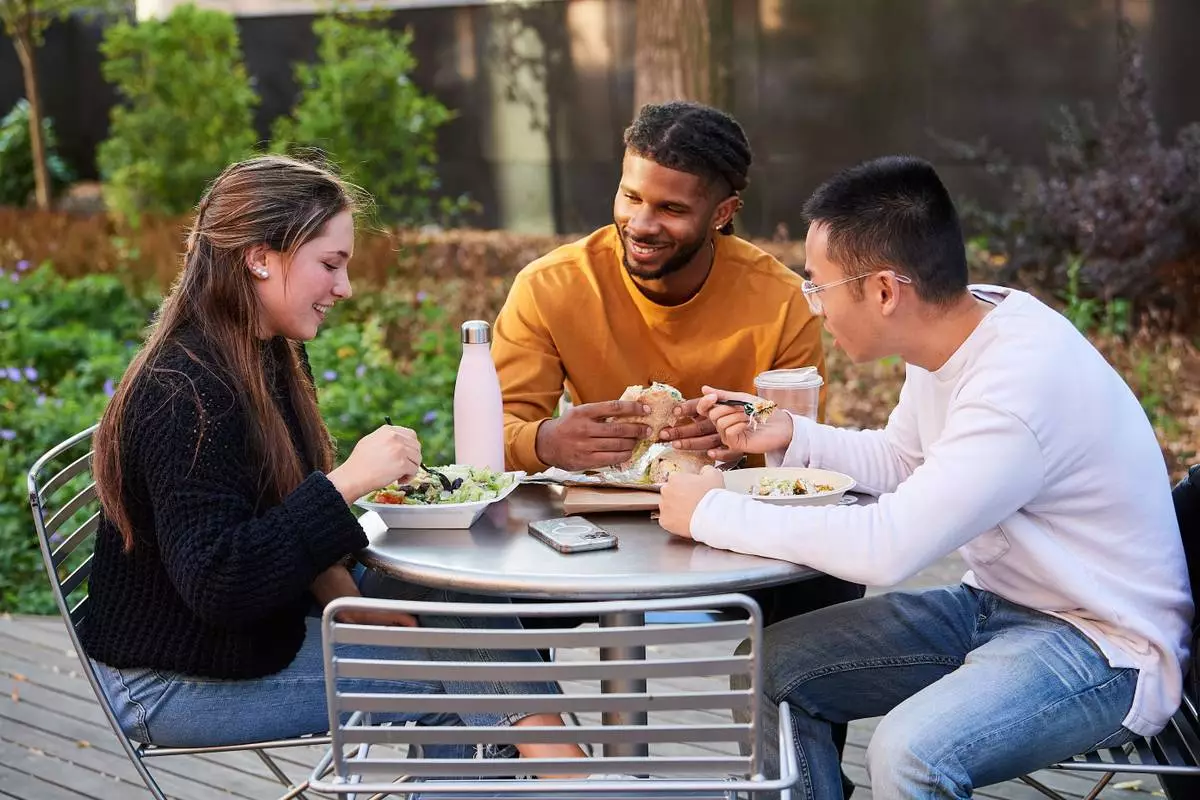
As colleges and universities prepare to welcome Generation Alpha, Aramark Collegiate Hospitality is introducing new dining programs, wellness-focused residential concepts, digital enhancements, and student engagement initiatives for the 2026-2027 academic year. "Generation Alpha's expectations are already influencing how colleges think about food, wellbeing, and community," said Barbara Flanagan, President and CEO of Aramark Collegiate Hospitality. "We have more insight into what students want than we ever have, and we are using that knowledge to make decisions well ahead of enrollment trends, not in response to them."


As colleges and universities prepare to welcome Generation Alpha, Aramark Collegiate Hospitality is introducing new dining programs, wellness-focused residential concepts, digital enhancements, and student engagement initiatives for the 2026-2027 academic year. "Generation Alpha's expectations are already influencing how colleges think about food, wellbeing, and community," said Barbara Flanagan, President and CEO of Aramark Collegiate Hospitality. "We have more insight into what students want than we ever have, and we are using that knowledge to make decisions well ahead of enrollment trends, not in response to them."

WASHINGTON (AP) — South Carolina Republicans will return to the polls Tuesday for the fourth time since June to replace the late U.S. Sen. Lindsey Graham on the fall general election ballot.

Graham won the June 9 Republican primary for renomination to the seat he first won in 2002, but his unexpected death on July 11 from an aortic tear created a vacancy not only for his current U.S. Senate seat but also as the party’s pick to compete for another six-year term.

The finalists for the Republican nomination are Graham’s sister, U.S. Sen. Darline Graham, who was appointed to serve out the remainder of her brother’s current term, and U.S. Rep. Ralph Norman, a five-term congressman who ran for governor earlier in the year and placed third in the primary.

Darline Graham placed first in the Aug. 11 special primary but fell shy of the vote majority needed to avoid Tuesday’s runoff. She received about 33% of the vote, compared to about 25% for Norman. U.S. Rep. Russell Fry placed third with about 20% of the vote.

Graham swept the counties across central South Carolina, including the Columbia area, as well as the state’s Low Country region, which includes Charleston. She scored her highest percentages in counties along the Georgia border.

Norman performed best in the state’s Piedmont and Upcountry regions, including the Greenville area. Fry did best in the eight counties in the Pee Dee and Waccamaw regions that he represents in Congress.

Fry endorsed Graham after he lost the primary. She also has key backing from Republican U.S. Sen. Tim Scott and President Donald Trump, who was an early proponent of Graham and held a campaign rally with her Friday in Myrtle Beach.

Greenville County is the most populous in the state and typically contributes the most votes in statewide Republican primaries. It also has bucked against the front-runners in recent Republican primaries. Norman also carried Greenville County in the gubernatorial primary, and it was one of the only counties Lindsey Graham lost in his final election.

Democratic-leaning Richland and Charleston counties have the next-largest populations and contribute a sizable number of votes in Republican primaries, but they tend to be more influential in Democratic contests.

Horry, Lexington and Spartanburg counties are also large counties that have big impacts on Republican primaries. Spartanburg was the only other county Lindsey Graham lost in the June primary.

The winner will face Democratic nominee Annie Andrews, a Charleston pediatrician who challenged Republican U.S. Rep. Nancy Mace in the 1st Congressional District in 2022.

Lindsey Graham last won reelection in 2020 with 54% of the vote. Trump carried the state in 2024 with 58% of the vote.

Here are some of the key facts about the election and data points the AP Decision Team will monitor as the votes are tallied:

Polls close at 7 p.m. ET.

The Associated Press will provide vote results and declare a winner in the special Republican primary runoff for U.S. Senate.

Voters who participated in the Democratic primary on June 9 may not participate in the special Republican primary runoff on August 25. Only Republican primary voters or registered voters who did not participate in any party’s primary on June 9 may cast ballots in Tuesday’s election.

As of Friday, there were about 3.4 million registered voters in South Carolina. Voters in South Carolina do not register by party.

About 465,000 voters cast ballots in the June 9 Republican U.S. Senate primary when Lindsey Graham was renominated. About 336,000 voters participated in the Aug. 11 special Republican U.S. Senate primary.

About 19% of the vote in Aug. 11 Republican special primary was cast early in-person or by mail.

As of Friday, about 45,000 ballots had already been cast in Tuesday’s election.

Nearly all of South Carolina’s 46 counties release all or almost all of their early in-person and mail voting results in the first vote update of the night, usually before releasing any results from in-person Election Day voting.

In the Aug. 11 special primary, the AP first reported results at 7:13 p.m. ET, or 13 minutes after polls closed. The last vote update of the night was at 11:25 p.m. ET with more than 99% of total votes counted.

The AP does not make projections and will declare a winner only when it’s determined there is no scenario that would allow a trailing candidate to close the gap. If a race has not been called, the AP will continue to cover any newsworthy developments, such as candidate concessions or declarations of victory. In doing so, the AP will make clear that it has not yet declared a winner and explain why.

In South Carolina, recounts are automatic if the margin between the winning and losing candidates is 1% of the total vote or less. The AP may declare a winner in a race that is subject to a recount if it can determine the lead is too large for a recount or legal challenge to change the outcome.

As of Tuesday, there will be 70 days until the 2026 midterm elections.

Follow the AP’s coverage of the 2026 election at https://apnews.com/projects/elections-2026/.

U.S. Rep. Ralph Norman, R-S.C., left, reaches over to shake hands with Sen. Darline Graham, R-S.C., during a debate ahead of the special GOP Senate runoff election to replace the late Sen. Lindsey Graham, R-S.C., in Newberry, S.C., Tuesday, Aug. 18, 2026. (AP Photo/Meg Kinnard)

U.S. Rep. Ralph Norman, R-S.C., left, reaches over to shake hands with Sen. Darline Graham, R-S.C., during a debate ahead of the special GOP Senate runoff election to replace the late Sen. Lindsey Graham, R-S.C., in Newberry, S.C., Tuesday, Aug. 18, 2026. (AP Photo/Meg Kinnard)

Recommended Articles