Ordinary Iranians are bracing for even deeper social and economic strain, after the United States threatened to impose what it calls "unprecedented" sanctions and economic isolation on Iran.
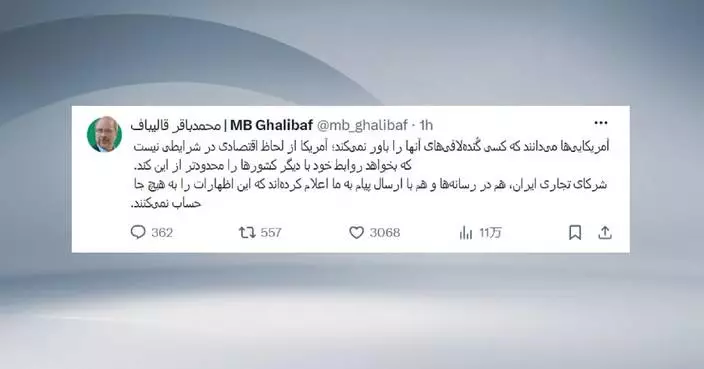
U.S. President Donald Trump announced on Wednesday that the United States will impose "unprecedented" economic warfare and isolation on Iran, after months without a decisive military outcome or diplomatic progress. Calling it "an Economic D-Day," Trump said in a post on Truth Social that the move will be "the most crushing economic operation ever taken against any country."
Many residents in Tehran said that sanctions have become a way of life -- seen in higher food prices, lower incomes and less purchasing power.
"Dairy products have become very expensive. Every time I go to that store, when I walk in there is one price, and when I walk out there is another. That is why per capita consumption of dairy products is declining, and the same goes for meat and protein. People like me, who are retired, get a salary increase only once a year, but prices go up every moment. My question is: what is the outcome in return for all these hardships?" said Abbas, a resident of Tehran.
"These sanctions are 100 percent making life difficult. With the incomes we have, we simply cannot make ends meet. My child is now unhappy with me, and asks: 'What kind of a job is driving a taxi, that you cannot earn a sufficient income?'" said Mohammad, another Tehran resident.
Economists have warned that the government must exercise extreme caution in introducing any new economic measures at this stage. The public, they said, is already under immense pressure, and further steps could deepen the strain on households and businesses.
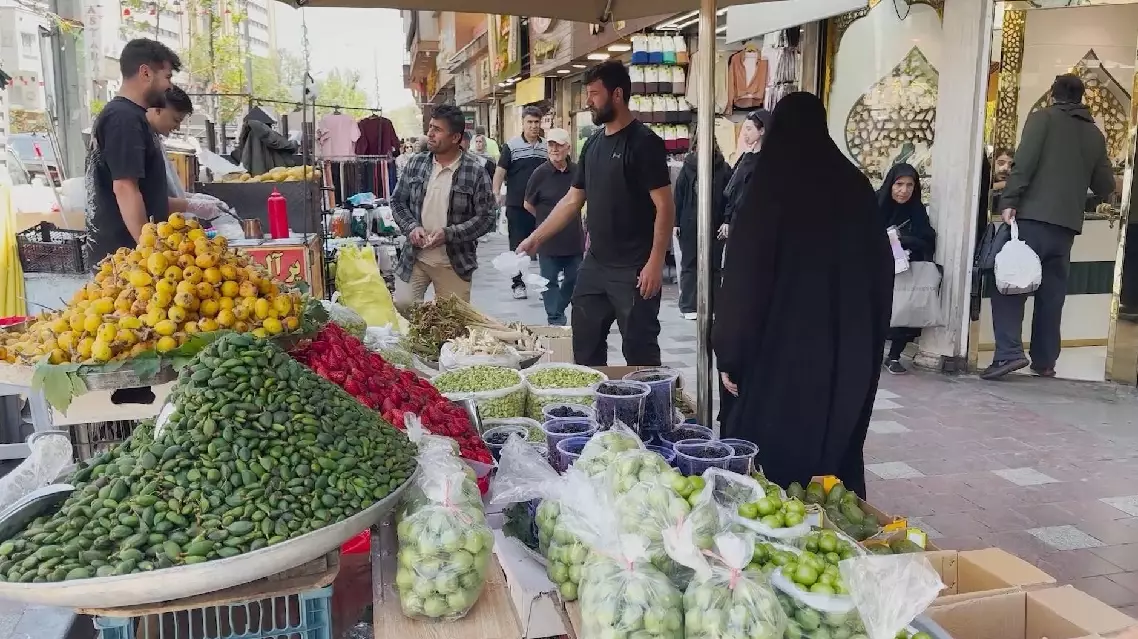
U.S. sanction threat deepens economic pressure on Iran
UN Secretary-General Antonio Guterres on Monday called for engagement and cooperation of relevant parties for a confidence-building mechanism that aims to safeguard the movement of essential goods through maritime choke points.
Guterres said a task force he established in March for the Strait of Hormuz crisis has worked to develop "a practical and time-bound confidence-building mechanism focused initially on fertilizers and related raw materials -- but with the ability to be extended to other products."
"Navigational rights and freedoms are not abstract principles, they are international law. Those rights and freedoms are vital for international peace and security and for the flow of food, energy and essential goods on which billions of lives depend. The mechanism would not authorize passage through the State of Hormuz or alter the rights or obligations of any Member State and their international law. Sovereign decisions remain entirely with participating Member States. United Nations would serve as a neutral facilitator and the purpose is simple to reduce immediate risks, support more orderly and predictable transit, and help rebuild the confidence necessary for diplomacy and de-escalation," he stated at a press briefing.
The mechanism can be operationalized quickly as international support for this effort has been encouraging, particularly from vulnerable countries that understand what is at stake when maritime lifelines are disrupted, he said. "What is needed now is the cooperation and political will of the parties. I urge all concerned to engage seriously and constructively."
Guterres cautioned that the mechanism is not a substitute for fully restoring navigational rights and freedoms, or for the political solutions needed to end these conflicts. But it is a practical first step. A demonstration that, even amid conflict, it is possible to reduce risks, protect civilians and safeguard the movement of essential goods, said Guterres.
"The alternative is continued disruption, deeper mistrust and mounting hardship for people far beyond the regions directly affected," he warned.
Guterres called for full respect for international law, including the law of the sea and international humanitarian law; protection for civilian shipping, infrastructure and civilian seafarers; the upholding of navigational rights and freedoms; an immediate end to attacks against commercial shipping and civilian infrastructure in the Black Sea; the full restoration and respect of navigational rights and freedoms in the Strait of Hormuz; and an end to attacks against shipping in the Red Sea and around Bab al-Mandab.
"Maritime choke points must never become instruments of coercion. And the world's food supply must never become collateral damage of conflict," said Guterres.
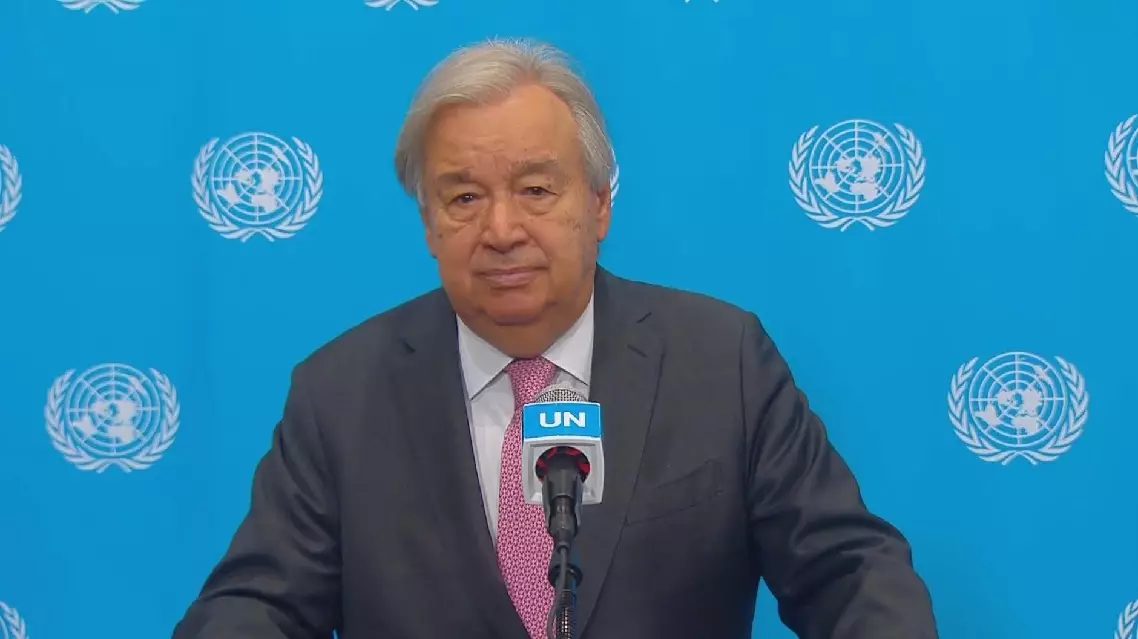
UN chief calls for cooperation on maritime shipping mechanism