China-initiated Alliance of National and International Science Organizations for the Belt and Road Regions (ANSO) has launched a major initiative targeting fragile dryland ecosystems, stressing global cooperation and science‑driven solutions to combat desertification.
The release came on the sidelines of the ongoing 17th Session of the Conference of the Parties (COP17) to the United Nations Convention to Combat Desertification (UNCCD) in Ulan Bator, Mongolia.
The initiative was accompanied by a scientific report unveiled Monday at a side event themed "Science, Technology, and Innovation for Rangeland Restoration and Combating Desertification." The event was jointly hosted by ANSO and partners including the Mongolian Academy of Sciences (MAS), the Xinjiang Institute of Ecology and Geography of the Chinese Academy of Sciences (XIEG), the University of Chinese Academy of Sciences (UCAS), and the University of the Mongolian Academy of Sciences (UMAS).
ANSO warned that rapid land degradation threatens global food, water, and ecological security. It urged five key steps: deepening global cooperation, strengthening science‑led governance, boosting AI innovation, engaging local youth, and securing fresh funding for green technology.
Experts at the event emphasized that cross‑border collaboration and data‑driven decisions are now essential to safeguard vulnerable regions.
"The causes and conditions of desertification differ around the world, but there are valuable experiences we can share. By using digital technologies and artificial intelligence, we can compile global expertise into a shared knowledge base that can then be adapted and applied in different regions based on their specific conditions," said Liu Weidong, executive director of ANSO.
Peter Gilruth, former chief scientist of the United Nations Environment Program (UNEP) said that combating desertification requires joint global efforts.
"So, I think the main thing about this report is that it brings together the science, it brings together regional perspectives, and it puts those together to come up with solutions and a way forward for combating desertification. I think the key word is the word 'governance,' governance as how we interact with each other, how we get information from those who we want to help," he said.
Academician Demberel Sodnomsambuu, president of the Mongolian Academy of Sciences, noted that close exchanges between Chinese and Mongolian researchers have played a vital role in empowering desertification control.
"And not only these students are working together, and the young researchers, Mongolian scientists is working in Chinese institute, Chinese professor is coming here, giving lectures. It's really very tight, very good relationship. It's really good example, good experience for other countries," he said.
Held under the theme "Restoring Land, Restoring Hope", COP17 will continue in Ulan Bator through Aug 28, with governments and stakeholders expected to work toward concrete decisions and partnerships to accelerate land restoration and strengthen resilience to drought and other environmental challenges.
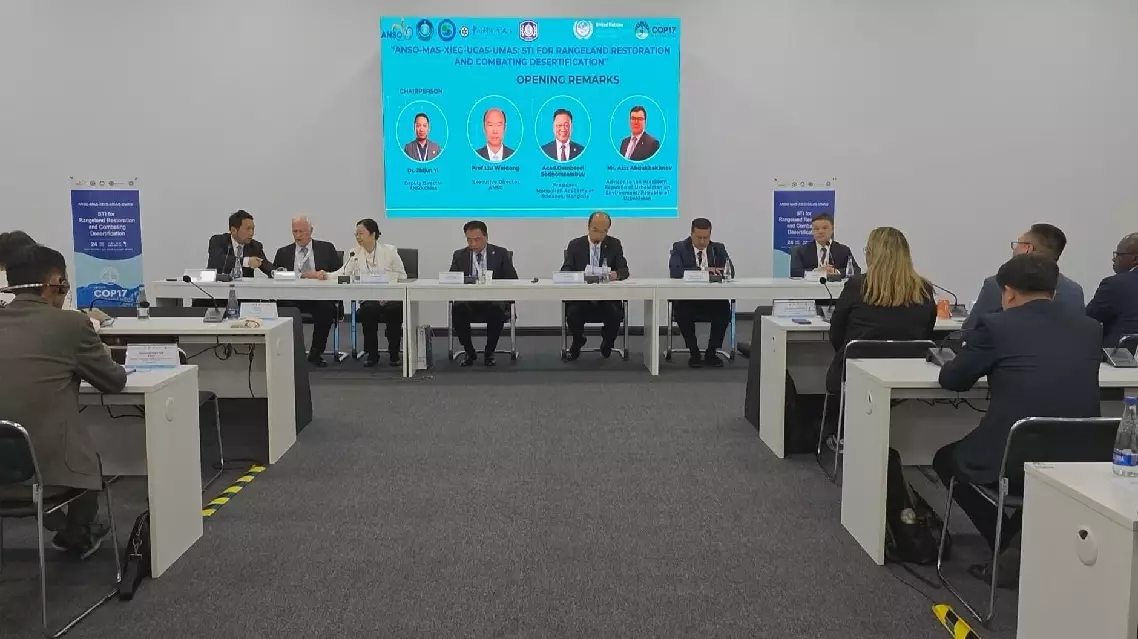
China-led science alliance unveils desertification initiative amid COP17