Skip to Content Facebook Feature Image

Chicago Leaders Unveil Plan for O’Hare Flyer 15-Minute Airport Express Train to Downtown Chicago

Business

Chicago Leaders Unveil Plan for O’Hare Flyer 15-Minute Airport Express Train to Downtown Chicago
Business

Business

Chicago Leaders Unveil Plan for O’Hare Flyer 15-Minute Airport Express Train to Downtown Chicago

2026-08-25 20:17 Last Updated At:20:30

CHICAGO--(BUSINESS WIRE)--Aug 25, 2026--

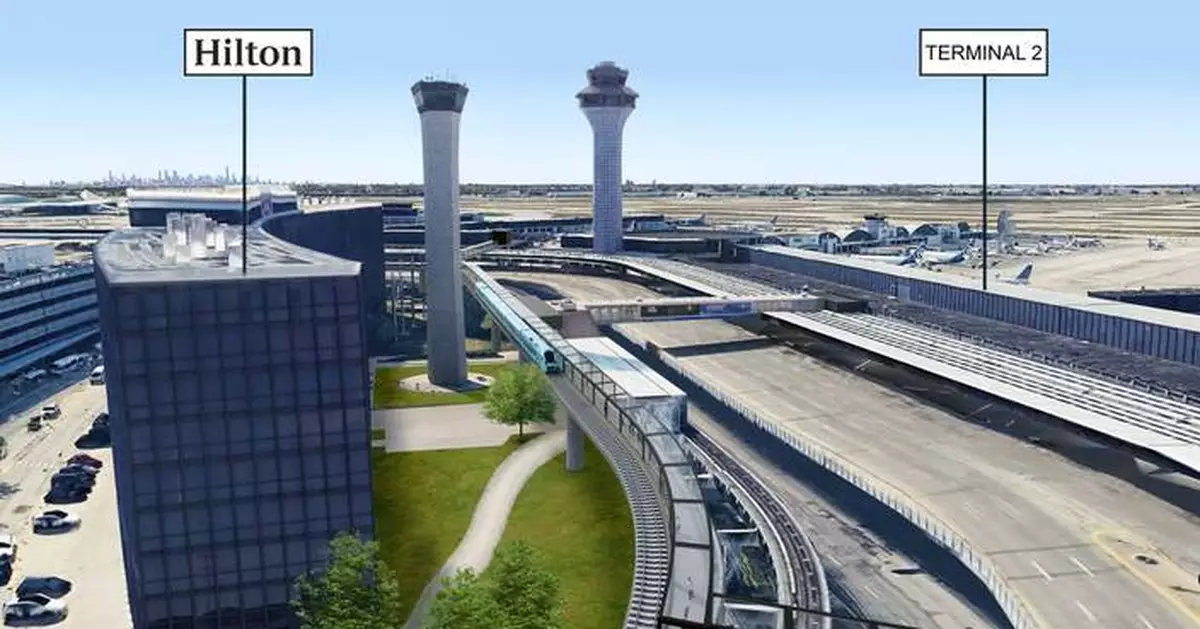
A group of Chicago business and civic leaders today unveiled plans to redefine the airport transportation experience in Chicago with O’Hare Flyer, the first airport express train in the U.S. O’Hare Flyer will provide a 15-minute ride from Chicago’s downtown to O’Hare Airport’s Terminal 2 on a dedicated track with a reliable schedule of whisper-quiet train departures every 15 minutes.

This press release features multimedia. View the full release here: https://www.businesswire.com/news/home/20260825914679/en/

“O’Hare Flyer will connect our world class downtown with our world class airport in fifteen minutes,” said O’Hare Flyer Founder and Chief Executive Officer Dave Lundy. “This is a first-of-its-kind express train in the U.S. and will give Chicago a safe, reliable, world-class rider experience on a fast, whisper-quiet battery-electric train.”

Designed for travelers, O’Hare Flyer will provide concierge-level service on clean trains with comfortable seats and luggage racks in every car. The train will run on continuous rail and recharge at its Downtown station near the Old Post Office and at its Terminal 2 O’Hare station.

“This is an important first for Chicago and for the country. O’Hare Flyer will build on Chicago’s heritage as America’s rail capital and center of innovation,” said O’Hare Flyer Founder and Chief Engineering Officer Mark Walbrun. “By combining three existing but underused freight rights-of-way into a dedicated express rail service, we will create the best airport transportation experience in America – and one of the best in the world.”

O’Hare Flyer is being developed by Chicagoans invested in Chicago’s future. Over the last three years, with the O’Hare Flyer project in exploratory development, the project team has built a platform of best-in-class partners and service providers, with most based in Chicago. These partners include top engineering, law, architecture, urban planning, design, marketing and public relations firms. Two of the Big Four accounting and consulting firms are also supporting the project.

“For decades, Chicago’s economic and political leaders have dreamt about a fast connection between O’Hare and Downtown because it is economic development rocket fuel,” said O’Hare Flyer co-founder Kristi Lafleur. “This quiet, pollution-free electric train will attract visitors and more businesses to downtown and the region. It is also important and noteworthy that it will be led by and for Chicagoans.”

“The O’Hare Flyer team will ensure the economic benefits of building this vital project are felt throughout Chicago and we will work with local partners to ensure that local contractors have opportunities to participate in its construction,” added Lundy. “We also deeply value the critical role that organized labor plays in Chicago’s economic life and look forward to executing a Project Labor Agreement with the Chicago and Cook County Building and Construction Trades Council.”

O’Hare Flyer will run on freight rail right-of-way owned by three class one railroads: CSX, Canadian National (CN) and Union Pacific (UP). The O’Hare Flyer has reached agreement on terms, memorialized in a Letter of Intent (LOI) with CSX and is moving forward with the other carriers as well.

“CSX is pleased to work with the O’Hare Flyer team to support a safe and reliable transportation option for Chicago travelers,” said Andy Daly, CSX Senior Director of Passenger Operations.

O’Hare Flyer is a private endeavor. The project is not seeking government subsidies or funding that could otherwise go to regional transit agencies such as the CTA or Metra.

“O’Hare Flyer will be a job creation engine and an investment in working families and communities across Greater Chicago,” said Mike Macellaio, President of the Chicago and Cook County Building and Construction Trades Council. “Our MOU is an important first step toward a Project Labor Agreement that will help ensure this landmark project is built by Greater Chicago’s highly skilled unionized construction workforce while expanding opportunities for local workers and delivering lasting economic benefits throughout the region.”

With an objective to launch the project within the next five years, the O’Hare Flyer team is now meeting with public officials, business, finance, government, and community groups and will be expanding outreach throughout the region in the months ahead.

“O’Hare is one of Chicago’s greatest assets and a major competitive advantage in our ability to attract businesses, workers, investment, and visitors from around the world," said Chicagoland Chamber of Commerce President and CEO Jack Lavin. "O’Hare Flyer will be a game-changer, creating a faster, more reliable connection between the airport and downtown, making it easier to do business in Chicago and strengthening our position as a premier destination for corporate headquarters, conventions, and tourism.”

As development has proceeded, O’Hare Flyer has worked closely with World Business Chicago.

“O’Hare Flyer has found a beautifully simple solution to a complicated problem and an unrealized ambition of Chicago’s as a leading global city. Their high-speed rail solution was hiding in plain sight - if you’re expert enough and smart enough to see it, “ said World Business Chicago CEO Phil Clement. “It’s been great working with them over the last year and a half as they put that "can-do" spirit to work that Chicago is famous for!”

O’Hare Flyer invites everyone to join the discussion. Visit ohareflyer.com. Sign up for our newsletter here. Follow O’Hare Flyer news and progress on X and LinkedIn and Instagram.
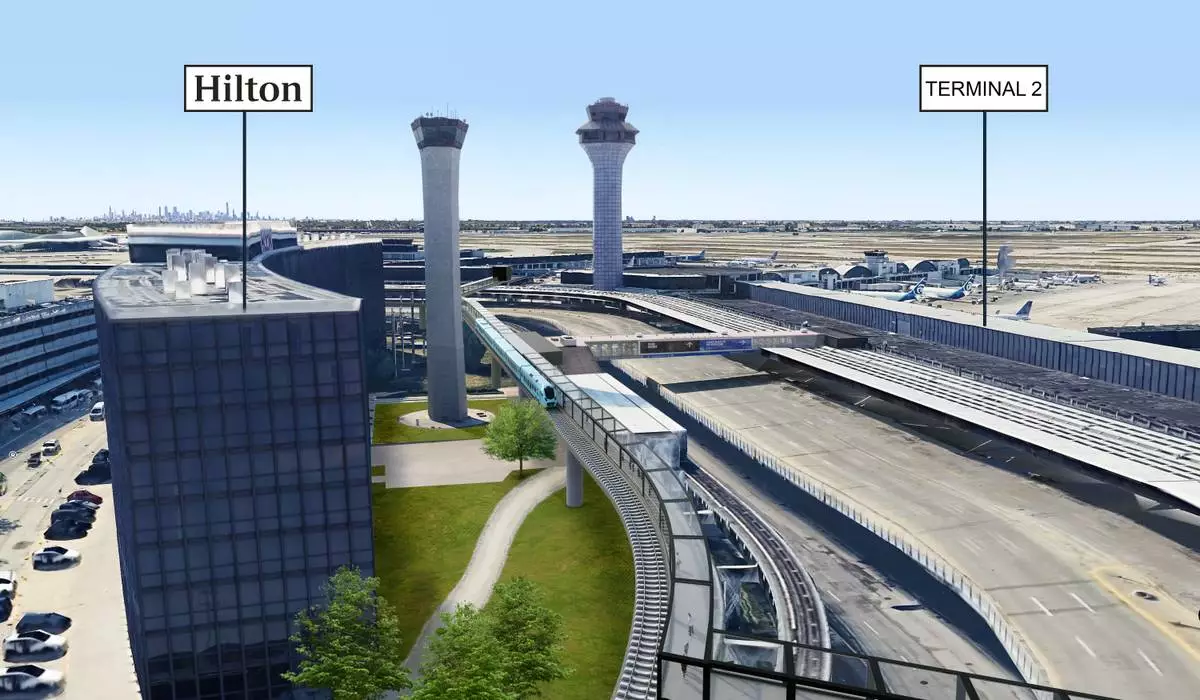
The O'Hare Flyer, a battery-electricty express train announced August 25, 2026, will offer first-of-its-kind 15-minute service between Downtown Chicago and O'Hare International Airport.


The O'Hare Flyer, a battery-electricty express train announced August 25, 2026, will offer first-of-its-kind 15-minute service between Downtown Chicago and O'Hare International Airport.

Russian President Vladimir Putin has decreed that the state can temporarily seize control of critical infrastructure facilities if private owners fail to protect them from Ukrainian drone attacks or rebuild them after the strikes.

The move came Monday amid growing economic pressure and public frustration being felt in Russia after months of escalating Ukrainian attacks on oil refineries and e-commerce hubs that have caused nationwide disruptions.

Ukraine also is reeling from relentless aerial attacks that have smashed its power grid ahead of winter and heavily damaged homes as Russia’s invasion stretches into its fifth year.

The Kremlin's exact intentions with the decree are unclear. However, it applies to various sectors, including energy infrastructure, as well as industrial, communications, transportation and logistics facilities.

Kremlin spokesman Dmitry Peskov said Tuesday that “often business owners do not pay enough attention to taking measures to ensure safety, anti-drone safety.”

Given the threat to vital economic infrastructure, “we must take measures, we must ensure our own safety,” he said.

Deputy Prime Minister Denis Manturov said in a statement the decree doesn’t imply the nationalization of companies or a change of ownership — only “involvement of the state in the management of an enterprise to solve specific security problems.”

He added that the decree “doesn’t imply widespread use," and that "targeted, carefully considered decisions will be made at the highest level.”

Russian political analyst Abbas Gallyamov said the measure might be a “tactical” step designed to force the owners of repeatedly damaged oil refineries into making repairs.

“Given the fact that the same refinery has already been hit three to five times, it’s safe to assume that the owners are now reluctant to invest in restoring what’s been destroyed,” he said on the Telegram messaging app.

“Why spend billions if they’re going to get hit again tomorrow?” said Gallyamov, a former speechwriter for Putin.

He said the government is giving companies an ultimatum: “If you don’t finance the restoration of the refineries, we’ll take them away from you.”

In the latest attacks, Ukraine’s General Staff said Tuesday its forces struck facilities at Russia’s Afipsky oil refinery in the Krasnodar region overnight, causing a fire. Krasnodar Gov. Veniamin Kondratyev said a fire broke out at an oil refinery in the town of Afipsky.

A Ukrainian attack also damaged the Novoshakhtinsk oil refinery in southern Russia’s Rostov region overnight and halted operations, Rostov Gov. Yuri Slyusar said, without elaborating.

Russian businesses face fundamental economic challenges as the costly war drags on. The government has raised taxes and increased domestic borrowing to keep its budget deficit under control, and taking over major companies could potentially bring in revenue.

At the same time, seizing damaged assets could bring another financial burden. The Kremlin may intend the measure as a way to pressure companies to shoulder more responsibility for air defense, as Russia’s vast territory is hard to protect.

Russia also is offering more help for its biggest online retailer, Wildberries, and businesses selling goods through it. The company and thousands of sellers working with it have been hit hard by repeated Ukrainian strikes on warehouses. The Finance Ministry proposed Monday extending deadlines for tax and insurance payments to give Wildberries and its sellers some financial breathing space.

On Saturday, Putin told state television that Russia “must and will improve the air defense system and enhance its capabilities.”

“We need to streamline coordination between defense, law enforcement and civilian agencies at all levels, and to leverage the capabilities of state‑run enterprises and private businesses,” he said.

In May, following deep strikes that unsettled Moscow, Russian lawmakers approved a bill that allowed the Central Bank, state-controlled Sberbank and other financial services to fend off drone attacks by installing air defenses on their premises.

News outlet RBC, citing anonymous sources in and close to the Defense Ministry, reported that month that a mechanism had been established for businesses to procure weapons and equipment to protect themselves from drone attacks, something Russian officials and lawmakers have said companies should do.

Follow the AP’s coverage of the war in Ukraine at https://apnews.com/hub/russia-ukraine

Russian President Vladimir Putin, right, listens to Stavropol region governor Vladimir Vladimirov during their meeting at the Kremlin in Moscow, Tuesday, Aug. 25, 2026. (Mikhail Metzel/Sputnik, Kremlin Pool Photo via AP)

Russian President Vladimir Putin, right, listens to Stavropol region governor Vladimir Vladimirov during their meeting at the Kremlin in Moscow, Tuesday, Aug. 25, 2026. (Mikhail Metzel/Sputnik, Kremlin Pool Photo via AP)

Russian President Vladimir Putin speaks to Indian Foreign Minister Subrahmanyam Jaishankar during their meeting at the Senate Palace of the Kremlin in Moscow, Monday, Aug. 24, 2026. (Sergei Karpukhin/Sputnik, Kremlin Pool Photo via AP)

Russian President Vladimir Putin speaks to Indian Foreign Minister Subrahmanyam Jaishankar during their meeting at the Senate Palace of the Kremlin in Moscow, Monday, Aug. 24, 2026. (Sergei Karpukhin/Sputnik, Kremlin Pool Photo via AP)

Recommended Articles