CHICAGO (AP) — Canada has pledged to roll out “dollar-for-dollar” countertariffs on scores of U.S. goods next month in response to President Donald Trump’s latest import taxes, which have plunged the North American neighbors deeper into a bitter trade war.
Ottawa released a list of more than 700 targets Tuesday. Starting Sept. 8, Canada’s government says it will impose steeper import taxes on goods ranging from fish and cheese to smartphones and steel imported from the United States.
Canada said it was focusing its retaliation on products “most affected by U.S. tariffs.” The levies will be set at 15%, 25% or 50% — rates that the government said would match U.S. tariffs on goods targeted in Washington’s latest round as well as products covered by previously imposed sectoral duties.
Tuesday’s announcement came just days after the Trump administration’s 50% tariffs on roughly $20 billion of Canadian goods, ranging from honey to hockey sticks, took effect. That represents just 5% of the value of goods Canada sent to the U.S. last year, but the punishing rate comes on top of a series of tariffs Trump has imposed on the country during his second term in office. More threats of escalation have piled up in the meantime. As a result, businesses—and, by extension, households—on both sides of the border could soon feel the strain of even higher prices.
Here’s a recap of some of the affected products.
Canada plans to impose steeper tariffs on hundreds of U.S. products starting Sept. 8.
Many of the goods are highly specific and mirror products on which Washington began imposing 50% tariffs over the weekend. The list also includes products made of steel and aluminum, which already face a 50% U.S. sectoral tariff on most imports globally, although some goods qualify for lower duties under an adjustment rolled out by the White House earlier this year.
Some of the many U.S. items Canada is now targeting include:
The new tariffs on these products will carry rates of 15%, 25% or 50%. Canada’s tariffs on many American products would double from 25% to 50%, with the largest share of the new measures affecting steel and aluminum.
The Trump administration already outlined its own lengthy list of more than 550 Canadian products that are now subject to 50% tariffs. That list includes natural honey, vegetable seeds and flower bulbs; alcoholic beverages such as beer and vermouth; ice skates and other sports accessories; various household goods; and smartphones.
Trump imposed the tariffs by reaching back to a long-dormant Great Depression-era law. Section 338 of the Tariff Act of 1930, which has never been used before, authorizes the president to impose import taxes of up to 50% on goods from countries that have discriminated against U.S. businesses.
Trump claimed that Canada discriminated against U.S. autos, alcohol and dairy products, particularly following the implementation of his earlier import taxes last year. It’s worth noting that the list of Canadian goods facing the latest levy is far more diverse.
Threats of stronger countermeasures and further escalation have continued to pile up—and it’s possible that even more products could face steeper import taxes down the road.
Trump took to social media Monday to say that his administration would also increase tariffs on Canadian cars, trucks, automotive parts and steel to 50% starting Jan. 1, 2027. Like other countries, Canada currently faces a broader 25% tariff on autos. A 50% sectoral tariff on most steel imports is already in effect.
Canadian Prime Minister Mark Carney said the auto-sector proposal would “gradually dismantle” Canadian production. He also accused Washington of trying to subordinate Canada and said U.S. demands during the failed talks showed that Americans wanted to “destroy our major industries.”
Beyond tariffs, Trump added another provocation Tuesday, saying the United States was giving “serious consideration” to renaming Lake Ontario “Lake America” amid a feud with Ontario Premier Doug Ford. Ford told The Associated Press this week that his province would be ready to cut off electricity and critical minerals to the U.S. if the trade war worsens.
AP Writer Rob Gillies in Toronto contributed to this report.
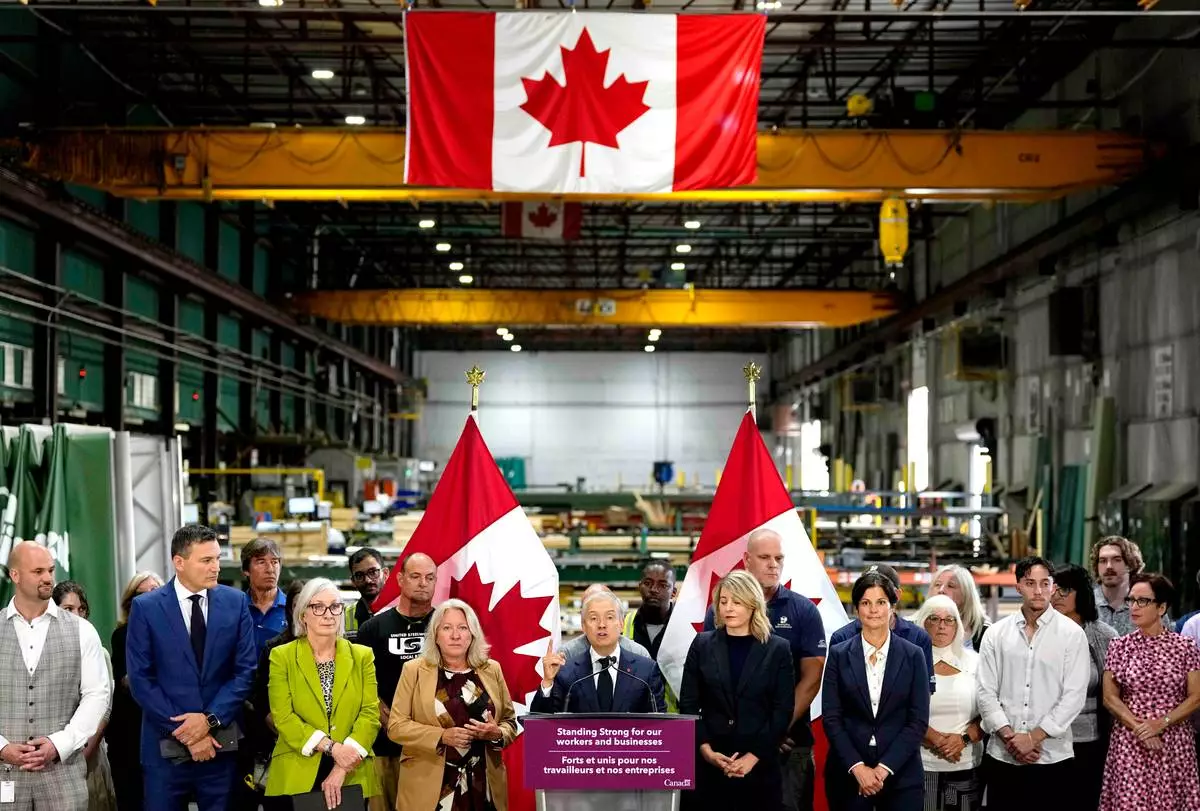
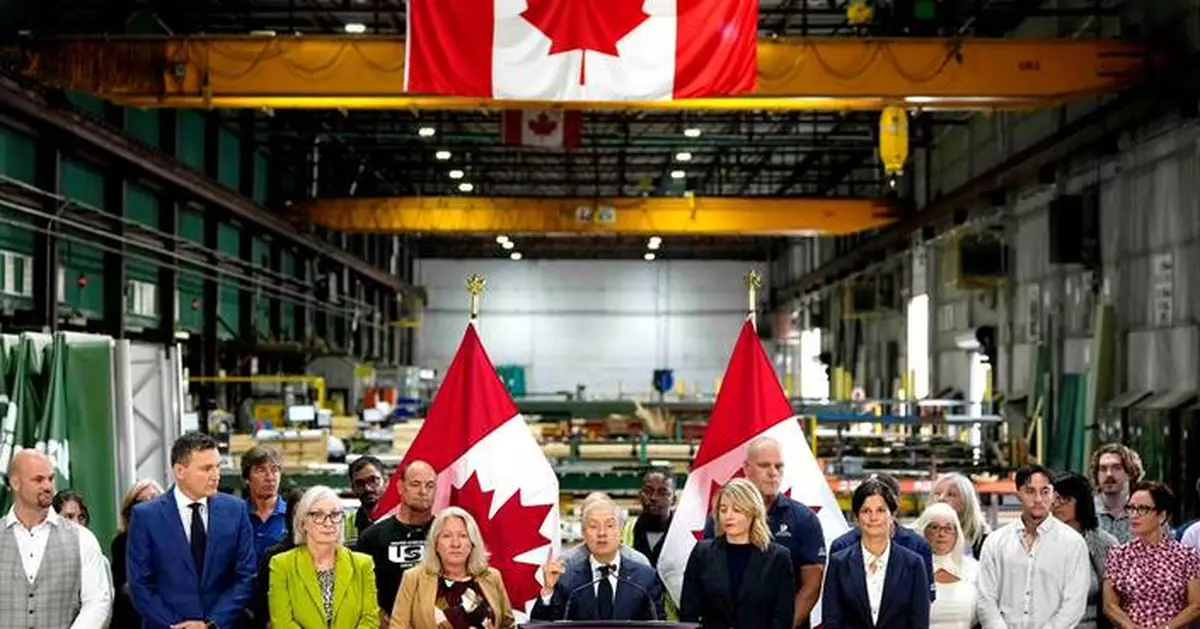
Minister of Finance and National Revenue Francois-Philippe Champagne speaks at a news conference on Canada's response to U.S. tariffs, at a roofing company in Ottawa, on Tuesday, Aug. 25, 2026. (Justin Tang/The Canadian Press via AP)
CAIRO (AP) — New explosions have been heard in the Saudi capital, residents said Wednesday, as blame again quickly fell on Iran-backed Houthi rebels in neighboring Yemen. The Saudi-led military coalition fighting the Houthis said it intercepted a ballistic missile fired toward Riyadh.
The Houthis have repeatedly targeted Saudi airports, military facilities and oil infrastructure in the latest front in the Iran war. Separately, the rebel-run Health Ministry reported two dead in attacks in Yemen on Tuesday and blamed the Saudis.
The Houthis, hardened by years of civil war, have emerged as Iran's most effective armed proxy of the moment, but experts say they also have their own agenda. Either way, they are applying increasing pressure on a key U.S. ally.
The sight of smoke rising from some of Saudi Arabia’s most sensitive facilities has rattled the region and global markets, increasing questions for President Donald Trump, who has said he is evaluating whether the U.S. should join the Saudi strikes on the Houthis.
The Riyadh residents spoke about the latest blasts on condition of anonymity for their safety. One lives in northern Riyadh, where King Khalid International Airport — targeted multiple times in the past week with strikes that have killed 17 people and hurt over 300 more — is located.
There were no immediate reports of casualties or damage.
The Saudi civil defense reported air raid alerts in Riyadh and Kharj province southeast of the capital. Kharj is home to the state-owned Military Industries Corporation and Prince Sultan Air Base.
The Houthis on Wednesday claimed attacks against King Khalid International Airport, oil facilities in the eastern city of Dhahran, which hosts the headquarters of Saudi giant Aramco, and an Aramco refinery in Riyadh, calling them retaliation for “treacherous Saudi aggression” against the rebel-held Yemeni capital of Sanaa and other areas.
The Houthis have been warning in advance of attacks on both airports and oil facilities, and airlines have been suspending operations and pulling out planes. On Tuesday, a fire broke out in an administrative building at a facility operated by Aramco, one of the world’s largest oil companies.
The escalation has highlighted Saudi Arabia’s struggle to intercept Houthi missiles and drones, and the kingdom’s efforts to press allies like the United States for more military support. Regional officials say that Saudi Arabia, the world’s top purchaser of American weapons, is running low on interceptors.
The Saudis are trying to intercept daily attacks across a territory about three times the size of Texas. Experts have said trying to intercept all of the missiles and drones is impossible.
The Houthis have a large arsenal capable of striking targets well over 1,000 miles (1,600 kilometers) away. Some warheads change direction during flight.
Even interceptions are a danger. Overnight, Saudi Arabia’s Civil Defense said debris from two intercepted Houthi ballistic missiles fell on residential areas in Riyadh, injuring four people including a child and damaging 15 homes.
Meanwhile, the Saudis have been carrying out airstrikes in rebel-held areas of Yemen in support of the country’s internationally recognized government. The fighting erupted this year when the rebels blamed the Saudis for a strike on the airport in rebel-held Sanaa. That attack revived anger over a Saudi blockade of the Houthis. The rebels in turn declared their own blockade against the kingdom.
A week and a half ago, the Saudi-led coalition responded with a major military offensive.
On Wednesday, the Houthi-run Health Ministry said two people were killed in an airstrike Tuesday in the Ras Isa port area in Hodeida province. The strike hit a facility of the state oil company and wounded two others, the ministry said, and blamed Saudi Arabia. The Saudi-led coalition also attacked an oil facility in Sanaa.
The targeting of fuel storage facilities in Houthi-controlled areas marks a new phase in the Saudi-led coalition's campaign, said Ahmed Nagi, senior Yemen analyst at the International Crisis Group, a think tank. He added that in a war of attrition, the rebels could risk losing much of their military capacity.
“The Houthis are betting on pressure, while the Saudis are betting on time. The Houthis are trying to strike critical infrastructure in Saudi Arabia to raise the cost of continued military intervention and support for the Yemeni government,” Nagi added.
Associated Press writer Sarah el Deeb in Beirut contributed.

FILE -Birds fly over a billboard advertisement for Saudi Arabia's state-owned oil giant Aramco, with Arabic that reads, "Saudi Aramco, soon on stock exchange," in Jiddah, Saudi Arabia. (AP Photo/Amr Nabil, File)