Retired American teacher Ronald Sakolsky has shared his emotions at being able to enjoy a "dream" reunion with Chinese desert-control pioneer Yin Yuzhen, after the pair met to reflect on their desertification-control efforts a whole 27 years after their first encounter.
The remarkable story stretches all the way back to 1999, when Sakolsky was teaching English at a school in central China's Henan Province under a teachers' exchange program between the U.S. and China.
After watching a television news report featuring the tireless work of Yin, he was deeply moved and raised 5,000 U.S. dollars to help Yin and her husband in their afforestation efforts against desertification in north China's Inner Mongolia Autonomous Region.
Months later, at the invitation of local officials, Sakolsky traveled to the desert to meet Yin in person. In a symbolic gesture, Yin kept one dollar as a souvenir of Sakolsky's kindness, while she also bought 50,000 saplings to plant.
After that brief visit deep in the heart of the expansive Mu Us Desert, the two lost touch and their transcontinental friendship faded with time.
But, in an incredible twist, that all changed earlier this year, when a public campaign across Chinese social media successfully tracked down the now 69-year-old Sakolsky in the United States.
The renewed connection quickly led to an online clamor for the pair to have a long-overdue reunion, and finally Sakolsky arrived in Ordos City on Sunday to once again meet Yin in person.
In a touching interview with the China Global Television Network (CGTN), Sakolsky could not hide his joy at this dream meeting becoming a reality, as he said the unexpected get together felt very different to how he had imagined it.
"It's definitely different, because I can touch her. In my imagination, it is just in my head. But I can touch her, I can hug her, and I can watch her cry and cry with her. I say it's a miracle because nobody could tell me that I would ever come to China in 1999. Definitely nobody could tell me that I would be back in China in 2026. But when you can touch your dream, it becomes a reality. It's not a dream anymore. So these last two days have been reality for me," said Sakolsky.
Seated next to him, Yin highlighted the importance of always keeping one's promises, no matter how long has passed.
"I believe that first, you have to be a good person, and then you can do things well," she said.
The passage of time between their first meeting is poignantly seen in the land cultivated by Yin. The small swathe of green she started over a quarter of a century ago has now expanded to more than 8 million trees, covering more than 11,000 acres of once-barren land.
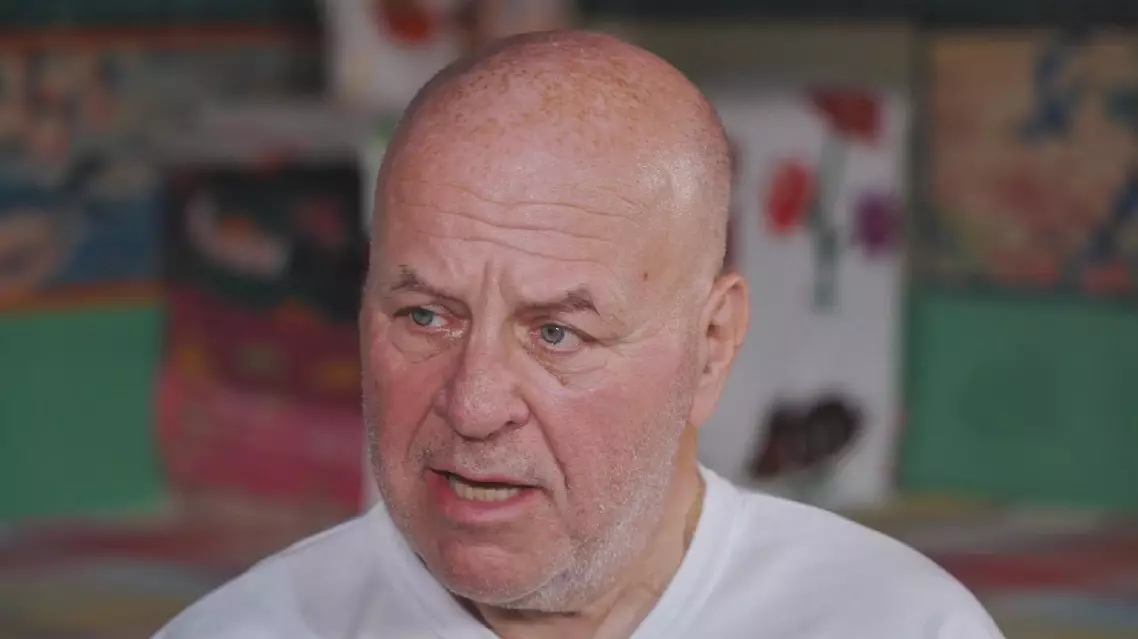
US teacher shares emotion at "dream" reunion with Chinese desert-control pioneer
China and the United States held the third Track 1.5 Dialogue in Beijing on Tuesday.
The two sides engaged in candid, in-depth and constructive exchanges, and underscored that the China-U.S. relationship is of vital importance and is currently at a critical juncture.
Both sides expressed the need to jointly implement the important consensus reached by the two heads of state, build on the new positioning of the China-U.S. constructive relationship of strategic stability, strengthen communication and dialogue, and enhance mutual political trust.
"At present, the relevant departments of both sides are moving along the track set by the two heads of state, maintaining communication in areas such as economy and trade, diplomacy, military affairs, counter-narcotics, law enforcement, AI, and people-to-people exchanges, to inject stability into the development of the two countries with positive expectations. The year 2026 is an important year for China-U.S. relations. We hope that everyone will demonstrate strategic vision and actively explore the right way for two major countries to get along with each other," said Liu Haixing, head of the International Department of the Communist Party of China (CPC) Central Committee.
"President Xi put forward this idea of a constructive relationship of strategic stability, and President Trump endorsed that idea. That would be the guiding, sort of framing of the relationship. To the standpoint of the group that was here it makes a lot of sense. There's a lot of possibilities for progress, and I'm optimistic that there will be progress," said John L. Thornton, co-chair of the Board of Trustees of the Asia Society.
"I'd like to believe that meetings like the one we're having here today, the Track 1.5 meeting, are an indication. If you listen to the conversations here that people are now hunting for activities that we can do that align with this slogan," said Craig Mundie, the U.S. Co-chair of the China-U.S. AI Track Two Dialogue.
Representatives also called for promoting exchanges and cooperation in such areas as economy and trade, people-to-people and cultural ties, subnational cooperation, healthcare, artificial intelligence and food security, to properly handle differences and jointly address global challenges.
"Business has always been a central part of the U.S.-China relationship. We have exchanged technologies and we have grown together. And I am hopeful that we will make progress to deepen the business relationship rather than to decouple. To decouple will make us both poorer and neither side can afford to decouple," said Craig Allen, the former president of U.S.-China Business Council (USCBC).
"For instance, we've seen a lot of things of AI escaping sandboxes, their own sandboxes recently. This is very worrisome. And this is the critical issue for our time, and both China and the United States need to take leadership for the protection of humanity. If China and the United States are fighting each other on AI, then humanity will be in trouble potentially. So I think this is a critical issue that we must work together," said Christopher Nixon Cox, a Board Member of the Richard Nixon Foundation.
The dialogue was co-hosted by the International Department of the Communist Party of China (CPC) Central Committee and the Asia Society of the United States.
Approximately 40 Chinese and U.S. representatives participated in the dialogue, including personnel from relevant Chinese government departments, local governments, think tanks and universities, as well as U.S. strategic and business community figures.
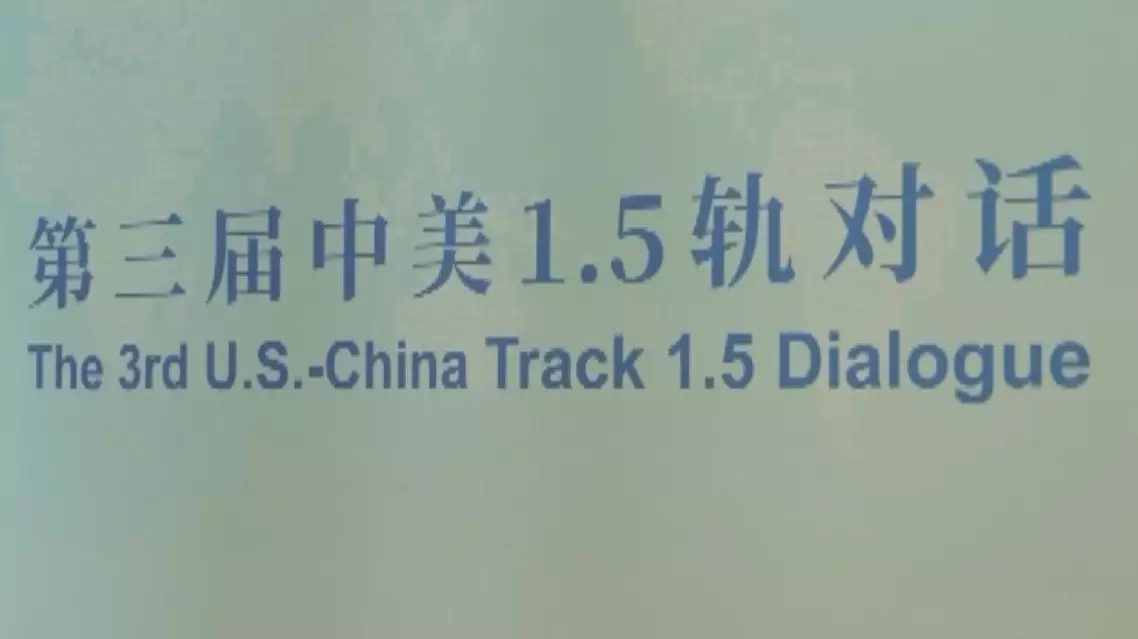
China, U.S. hold third Track 1.5 Dialogue in Beijing