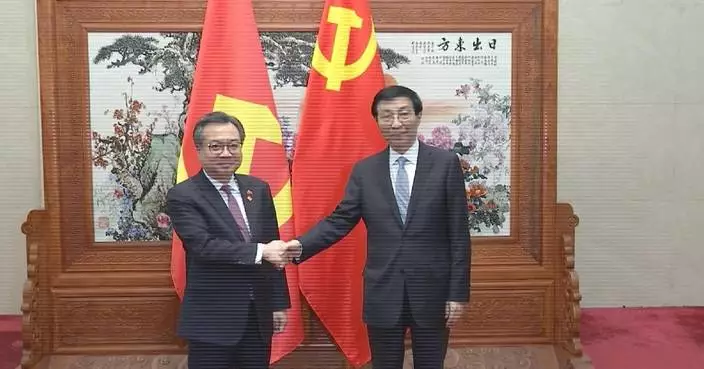
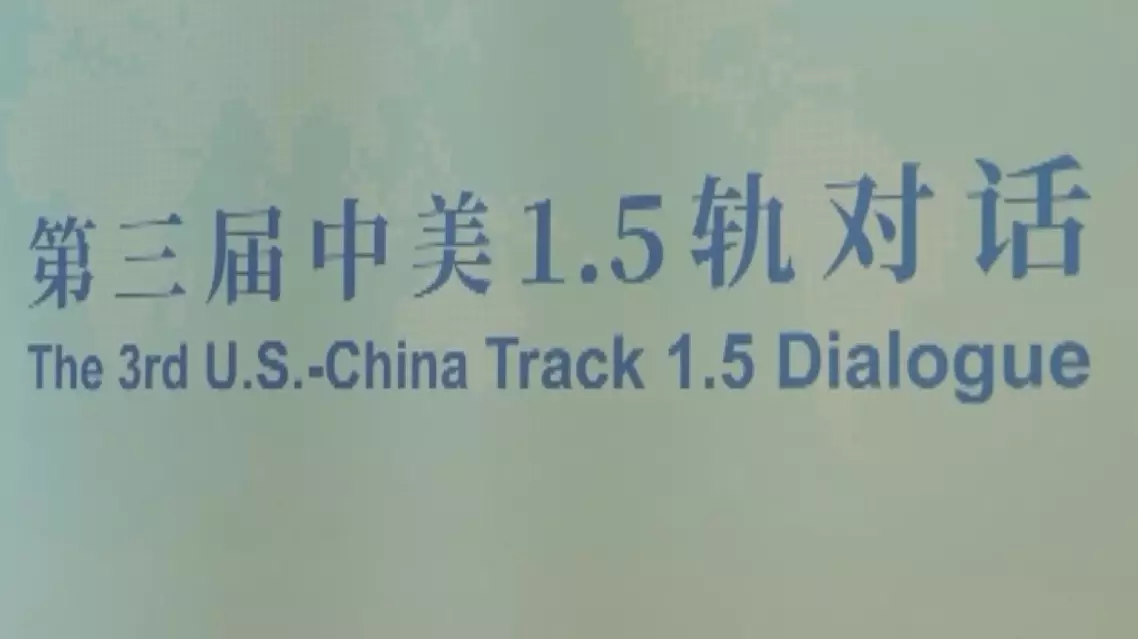
China and the United States held the third Track 1.5 Dialogue in Beijing on Tuesday.
The two sides engaged in candid, in-depth and constructive exchanges, and underscored that the China-U.S. relationship is of vital importance and is currently at a critical juncture.
Both sides expressed the need to jointly implement the important consensus reached by the two heads of state, build on the new positioning of the China-U.S. constructive relationship of strategic stability, strengthen communication and dialogue, and enhance mutual political trust.
"At present, the relevant departments of both sides are moving along the track set by the two heads of state, maintaining communication in areas such as economy and trade, diplomacy, military affairs, counter-narcotics, law enforcement, AI, and people-to-people exchanges, to inject stability into the development of the two countries with positive expectations. The year 2026 is an important year for China-U.S. relations. We hope that everyone will demonstrate strategic vision and actively explore the right way for two major countries to get along with each other," said Liu Haixing, head of the International Department of the Communist Party of China (CPC) Central Committee.
"President Xi put forward this idea of a constructive relationship of strategic stability, and President Trump endorsed that idea. That would be the guiding, sort of framing of the relationship. To the standpoint of the group that was here it makes a lot of sense. There's a lot of possibilities for progress, and I'm optimistic that there will be progress," said John L. Thornton, co-chair of the Board of Trustees of the Asia Society.
"I'd like to believe that meetings like the one we're having here today, the Track 1.5 meeting, are an indication. If you listen to the conversations here that people are now hunting for activities that we can do that align with this slogan," said Craig Mundie, the U.S. Co-chair of the China-U.S. AI Track Two Dialogue.
Representatives also called for promoting exchanges and cooperation in such areas as economy and trade, people-to-people and cultural ties, subnational cooperation, healthcare, artificial intelligence and food security, to properly handle differences and jointly address global challenges.
"Business has always been a central part of the U.S.-China relationship. We have exchanged technologies and we have grown together. And I am hopeful that we will make progress to deepen the business relationship rather than to decouple. To decouple will make us both poorer and neither side can afford to decouple," said Craig Allen, the former president of U.S.-China Business Council (USCBC).
"For instance, we've seen a lot of things of AI escaping sandboxes, their own sandboxes recently. This is very worrisome. And this is the critical issue for our time, and both China and the United States need to take leadership for the protection of humanity. If China and the United States are fighting each other on AI, then humanity will be in trouble potentially. So I think this is a critical issue that we must work together," said Christopher Nixon Cox, a Board Member of the Richard Nixon Foundation.
The dialogue was co-hosted by the International Department of the Communist Party of China (CPC) Central Committee and the Asia Society of the United States.
Approximately 40 Chinese and U.S. representatives participated in the dialogue, including personnel from relevant Chinese government departments, local governments, think tanks and universities, as well as U.S. strategic and business community figures.
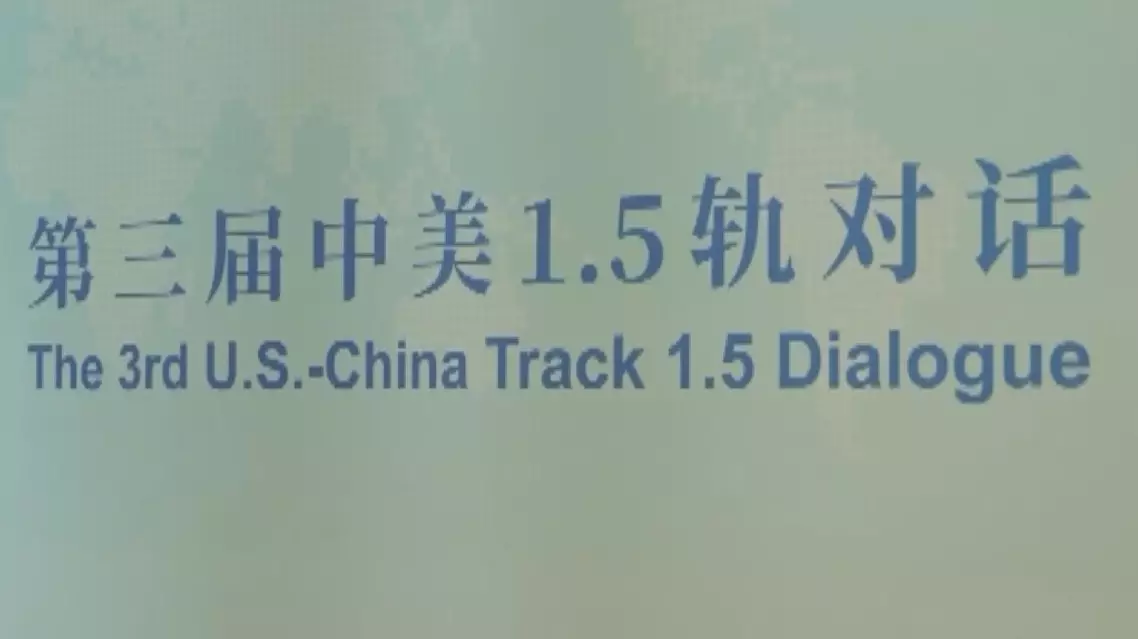
China, U.S. hold third Track 1.5 Dialogue in Beijing
China, U.S. hold third Track 1.5 Dialogue in Beijing