China has formed a multi-dimensional import pattern integrating sea, land and air transport, supported by efficient logistics and customs clearance.
From January to July, China's goods imports reached 12.69 trillion yuan (about 1.89 trillion U.S. dollars), an increase of 22 percent year on year, which is eight percentage points higher than export growth.
China has been the world's second-largest import market for 17 consecutive years, with its imports growing by an average annual rate of 5.1 percent.
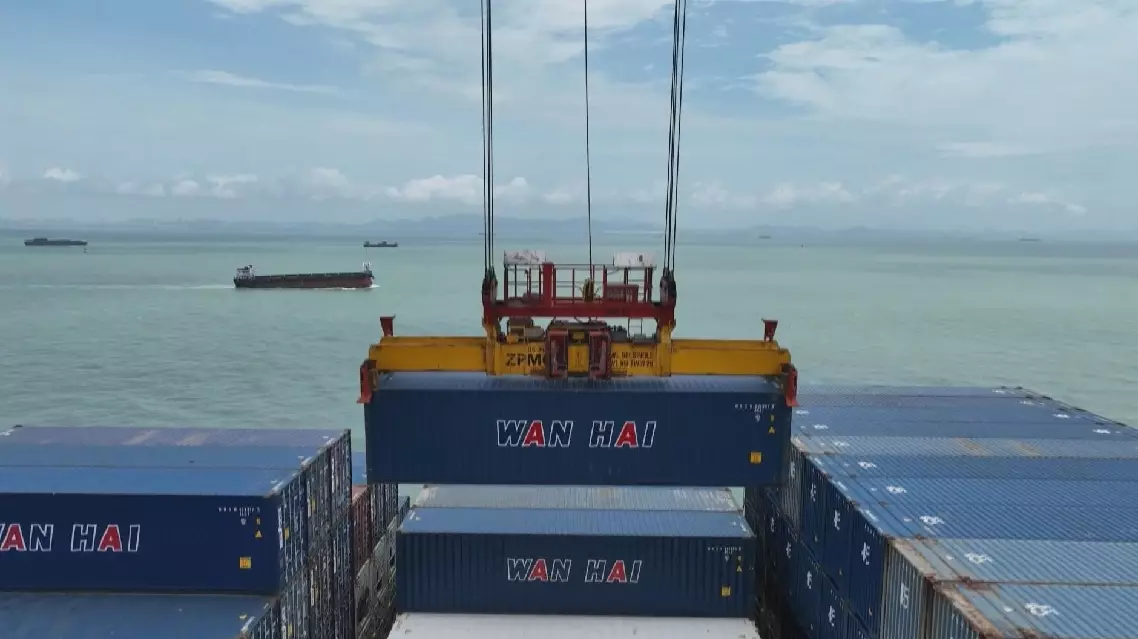
As the world's largest trader of goods, China relies on maritime transport for more than 90 percent of its cross-border trade.
Eight of the world's top 10 ports by cargo throughput are in China.
The Shenzhen Yantian Port in south China has introduced an innovative "inspection-before-loading" model, cutting customs clearance time by half and reducing costs by 30 percent.
East China's Ningbo-Zhoushan Port, along with other major hubs, continues to optimize shipping routes to leverage the benefits of the Regional Comprehensive Economic Partnership (RCEP).
Automated terminals at Shanghai and Qingdao ports in east China have reached a single-crane efficiency of over 60 containers per hour, the world's highest.
China has also been expanding its land-based channels of import.
To date, China has handled more than 130,000 China-Europe Railway Express trains, reaching 236 cities in 26 European countries and more than 100 cities in 11 Asian countries. As of June 2026, the container load factor has remained at 100 percent for 46 consecutive months. Return and outbound train services are now nearly balanced at a 1:1 ratio, enabling European auto parts, pulp, and specialty agricultural products to enter the Chinese market more quickly.
China has been intensifying its international air cargo network, which allows the high-value, time-sensitive goods, such as advanced medical equipment and fresh imported seafood, to enter Chinese market via dedicated freighters.
This year, China opened 103 new international air cargo routes, adding 229 round-trip flights per week.
From coastal ports to inland rail hubs and air cargo gateways, China's growing import network is facilitating smoother access for goods from around the world.
China builds multi-dimensional import network spanning sea, land, air