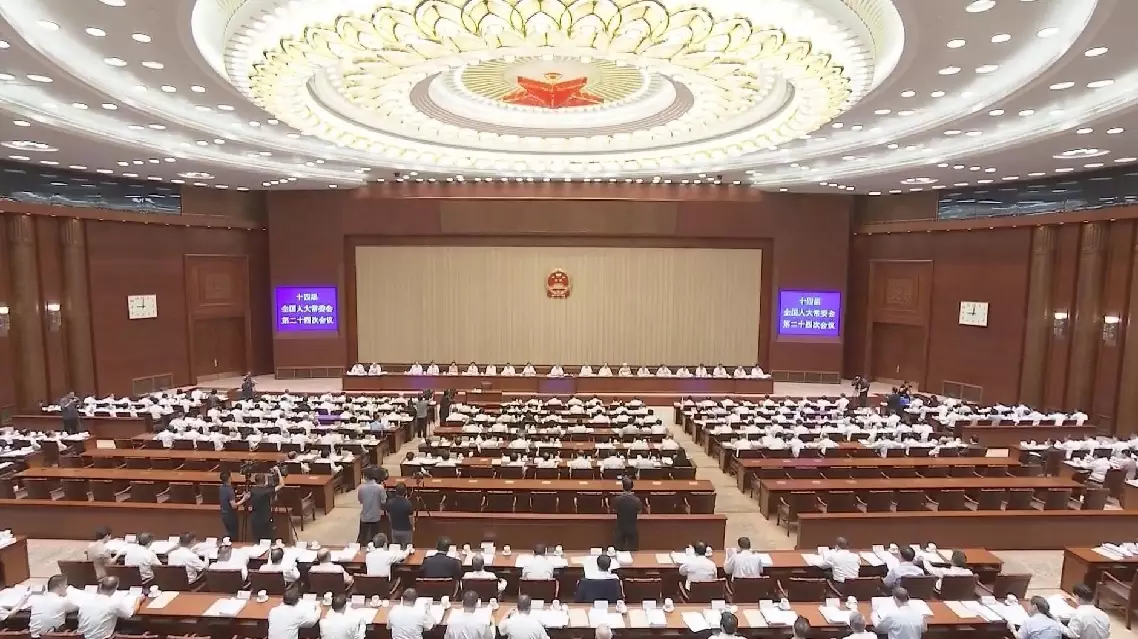
Chinese lawmakers began reviewing a draft law on combating cross-border corruption in Beijing on Tuesday.
The draft was submitted for its first reading to the ongoing session of the Standing Committee of the National People's Congress, the country's top legislature.
Structured into six chapters and 47 articles, the draft sets out the principles, scope and key positions underpinning China's efforts to combat cross-border corruption.
It also defines relevant operational mechanisms and institutional responsibilities, and seeks to strengthen case handling and international cooperation.
The draft further clarifies enterprises' obligations regarding integrity and compliance, and specifies legal liabilities for violations.
The draft law is a practical step to regulate the development of cross-border businesses and help build a world-class business environment aligned with market principles, the rule of law and international standards.
It is also expected to expand the legal tools available to combat cross-border corruption and help address challenges in detecting corruption, collecting evidence, recovering illicit assets and securing convictions.
China mulls draft law against cross-border corruption
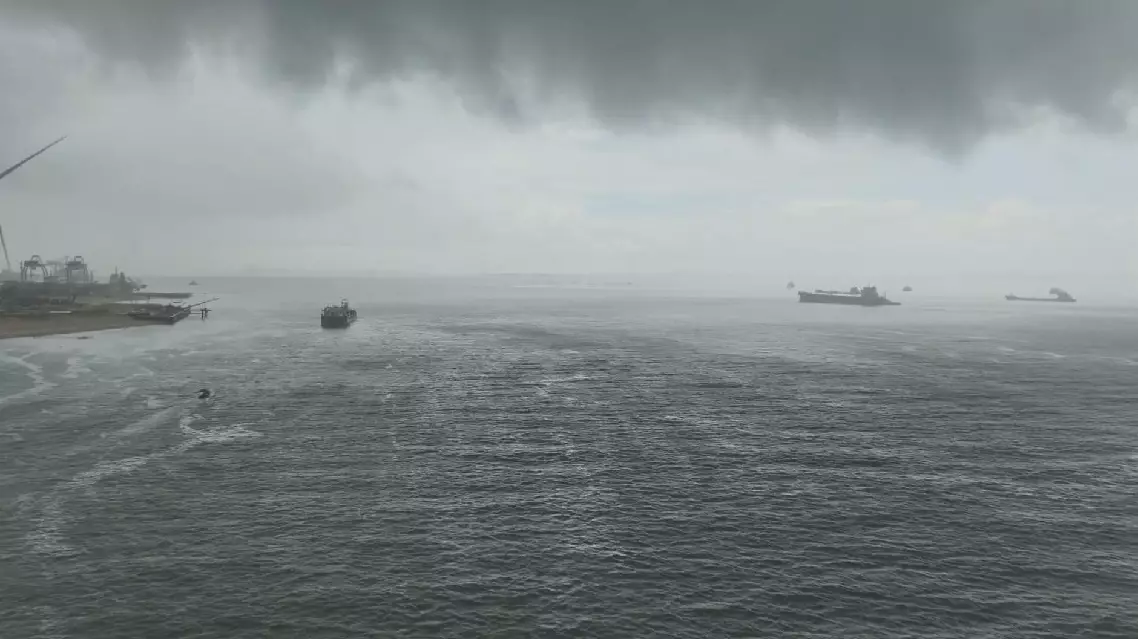
Authorities in south China's Hainan and Guangdong provinces have taken a raft of precautionary measures, including evacuating residents, recalling fishing vessels and suspending transport services, as Typhoon Narra approaches, with strong winds and heavy rainfall expected to affect coastal areas.
Typhoon Narra, the 19th typhoon of 2026, made the second landfall along the coast of south China's Guangdong Province early Wednesday, packing a maximum sustained wind of 18 meters per second (Force 8) near its center.
Previously, Narra landed on the coast of Changjiang Li Autonomous County, south China's Hainan Province, at around 18:40 on Tuesday, with a maximum sustained wind speed of 20 meters per second (Force 8) near its center.
In Hainan's Lingao County, more than 1,500 fishing vessels had returned to port for shelter before the typhoon's landfall, while over 5,700 people had been relocated ashore.
Personnel have been assigned to keep round-the-clock watch at fishing ports to prevent vessels from venturing out to sea amid dangerous weather conditions.
The Qiongzhou Strait, the waters between south China's island province of Hainan and Guangzhou Province, suspended ferry services in both directions on Tuesday, with the resumption of operations to be determined according to weather conditions.
China Railway Guangzhou Group also continued to suspend passenger train services to and from Hainan on Wednesday.
In Guangdong, the coastal city of Zhanjiang activated a Level-III emergency response for typhoon and wind control on Tuesday.
As of Wednesday, all 26,000 fishing vessels in the city had returned to port, while all personnel working on fishing rafts and marine ranches had been evacuated ashore.
Seven coastal scenic areas and three seaside bathing sites in Zhanjiang have also been closed.
Coast guard and maritime authorities have been strengthening patrols, assisting with the reinforcement of mooring lines and issuing rolling safety reminders to reduce risks from strong winds, high waves and heavy rainfall.
Hainan, Guangdong take precautionary measures as Typhoon Narra approaches