Skip to Content Facebook Feature Image

Asahi Kasei Unveils New Wet-Process Separator Coating Line in North Carolina, Advancing the Company’s 40-Year North American Battery Separator Strategy

Business

Asahi Kasei Unveils New Wet-Process Separator Coating Line in North Carolina, Advancing the Company’s 40-Year North American Battery Separator Strategy
Business

Business

Asahi Kasei Unveils New Wet-Process Separator Coating Line in North Carolina, Advancing the Company’s 40-Year North American Battery Separator Strategy

2026-08-26 20:31 Last Updated At:20:51

TOKYO--(BUSINESS WIRE)--Aug 26, 2026--

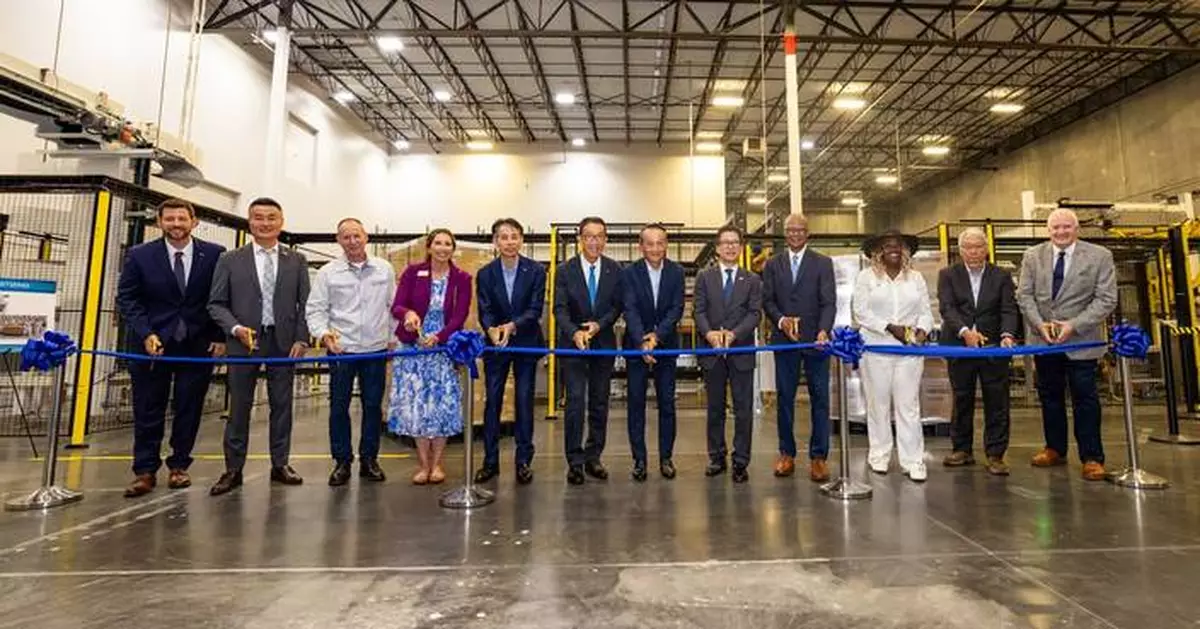
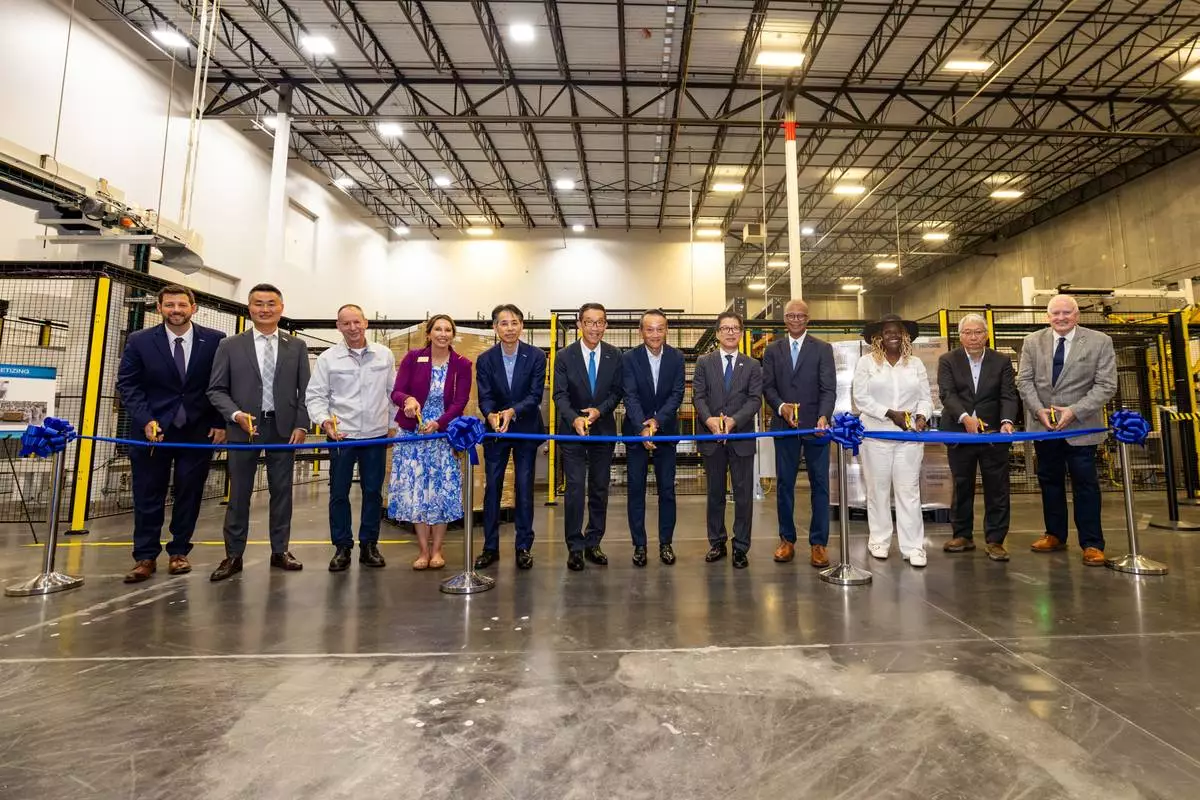
Asahi Kasei held a grand opening ceremony on August 20 for its new Hipore™ wet-process lithium-ion battery separator coating line in Charlotte, North Carolina, marking a significant milestone in the execution of the company’s North American battery separator strategy. The investment expands production capacity at the company’s existing Celgard®manufacturing facility, establishing North America-based coating and supply capabilities for its wet-process separator technology.

This press release features multimedia. View the full release here: https://www.businesswire.com/news/home/20260826511367/en/

The facility represents the first step toward establishing a regional supply structure for wet-process separators. The investment decision was made in 2023, and commercial production is scheduled to begin in the second half of fiscal 2026.

The grand opening coincided with the 40 th anniversary of the Celgard ® manufacturing facility in Charlotte, which has been producing dry-process separators in the United States since 1986. The ceremony brought together local government officials, representatives of Toyota Tsusho Corporation, which has entered into a capacity rights agreement related to the facility, and other stakeholders who supported the project’s development.

The investment comes as North American battery demand is expected to expand beyond electric vehicles, supported by the increasing deployment of energy storage systems. Although the separator market remains competitive, improving regional market conditions are creating opportunities for suppliers with localized production and responsive supply capabilities.

“Opening the Charlotte coating line is a key milestone in establishing our North American supply platform for battery separators,” said Ryu Taniguchi, President of Asahi Kasei Battery Separator Corporation. “By leveraging Celgard's experienced workforce and established operations, we are expanding our North American product portfolio to include both Celgard ® dry-process and Hipore™ wet-process technologies. Together with our planned separator facility in Canada, this investment will bring production capabilities closer to the region’s battery market and position Asahi Kasei to swiftly respond as demand grows across electric vehicles and energy storage systems.”

Construction of Asahi Kasei’s wet-process separator facility in Canada is also progressing according to plan. Together, the Charlotte coating line and the Canadian plant will establish a regional supply framework for wet-process separators, strengthening the company’s manufacturing presence and market position in North America.

The investments support Asahi Kasei’s broader growth strategy for Energy & Infrastructure, which is designated as a Growth Potential area of business under the company’s medium-term management plan.

About Asahi Kasei

Asahi Kasei is a diversified global company that contributes to life and living for people around the world. Since its foundation in 1922, with businesses in ammonia and cellulose fiber, Asahi Kasei has consistently grown through proactive portfolio transformation to meet the evolving needs of every age. With 50,000 employees worldwide, the company contributes to sustainability by providing solutions to the world’s challenges across its three business sectors: Healthcare, Homes, and Material. For more information, visit https://www.asahi-kasei.com/.
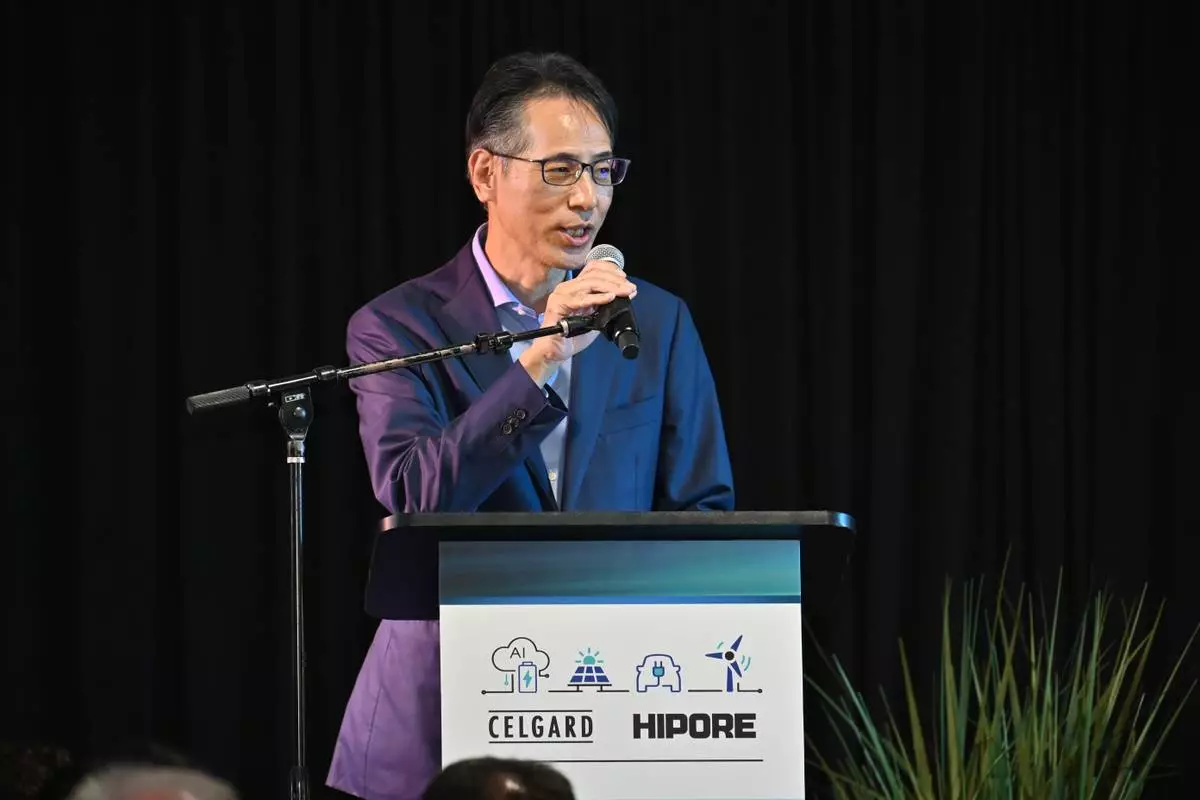
Ryu Taniguchi, President of Asahi Kasei Battery Separator Corporation
Ryu Taniguchi, President of Asahi Kasei Battery Separator Corporation

Attendees participate in a ribbon-cutting ceremony to celebrate the completion of the facility.

Attendees participate in a ribbon-cutting ceremony to celebrate the completion of the facility.
TOKYO (AP) — The president of the International Criminal Court said Wednesday there is no reason she has to face U.S. sanctions, adding that she is asking Japan's government to work with Washington to avoid further escalating tensions.

Last week Tomoko Akane, a Japanese national, became the latest court member to be hit with sanctions that freeze any assets they have in U.S. jurisdictions. The sanctions also prevent the court officials and their families from entering the United States and block their access to even basic financial services.

Washington accuses the court of overstepping its mandate and has slapped sanctions on about a dozen court staff in retaliation for investigations into Israeli officials in Gaza and U.S. military personnel in Afghanistan.

Trump’s administration has now sanctioned nine out of the ICC's 18 judges, both of its deputy prosecutors, its former chief prosecutor and one other prosecution office staffer.

“I insist that there is no reason I have to be sanctioned,” Akane told a news conference she joined by video from The Hague. She said the sanctions, which she had expected, have not intimidated her and will not affect her judicial work. “ICC will never be defeated. Justice will and should prevail.”

Akane said despite “unreasonable inconvenience and threat” to her as an individual, such as her credit cards being suspended, she is determined to protect ICC, its judges and staff and to continue ICC operations.

Akane urged Japan, a U.S. ally that has consistently placed the rule of law as a key pillar of its diplomacy, to convince Washington not to further escalate the situation. She called on Japan to approach other ICC members not to succumb to U.S. pressure and withdraw.

“ICC is a last hope for the victims of serious international crimes,” she said. “I would like Japan to do everything it can to defend ICC and the rule of law in the global society.”

Prime Minister Sanae Takaichi has struggled to balance Japan's support for the rule of law and ties with U.S. President Donald Trump.

On Tuesday Takaichi told reporters that the U.S. sanctions against Akane was “not compatible” with Japan's position and that “we take this very seriously.” “I share the sense of crisis and concern that President Akane has faced, and we will continue to provide necessary support,” Takaichi said.

She rejected criticism, including from within her own party, that she has avoided confrontation with Trump, saying Japan has repeatedly called on Washington not to impose sanctions against Akane.

On Monday, a cross-party group of ruling and opposition lawmakers adopted a statement denouncing the Trump administration over its sanctioning of the ICC chief. They demanded that it retract the action and urged Takaichi’s government to take tougher measures.

Foreign Minister Toshimitsu Motegi said Tuesday that his ministry has also dispatched an official to The Hague to meet with Akane to discuss how the government can support her.

The U.S. position against ICC is “extremely severe," Motegi said, adding that Washington has indicated a possibility of additional sanction measures.

Japan became the 105th member of the ICC in 2007 under former Prime Minister Shinzo Abe.

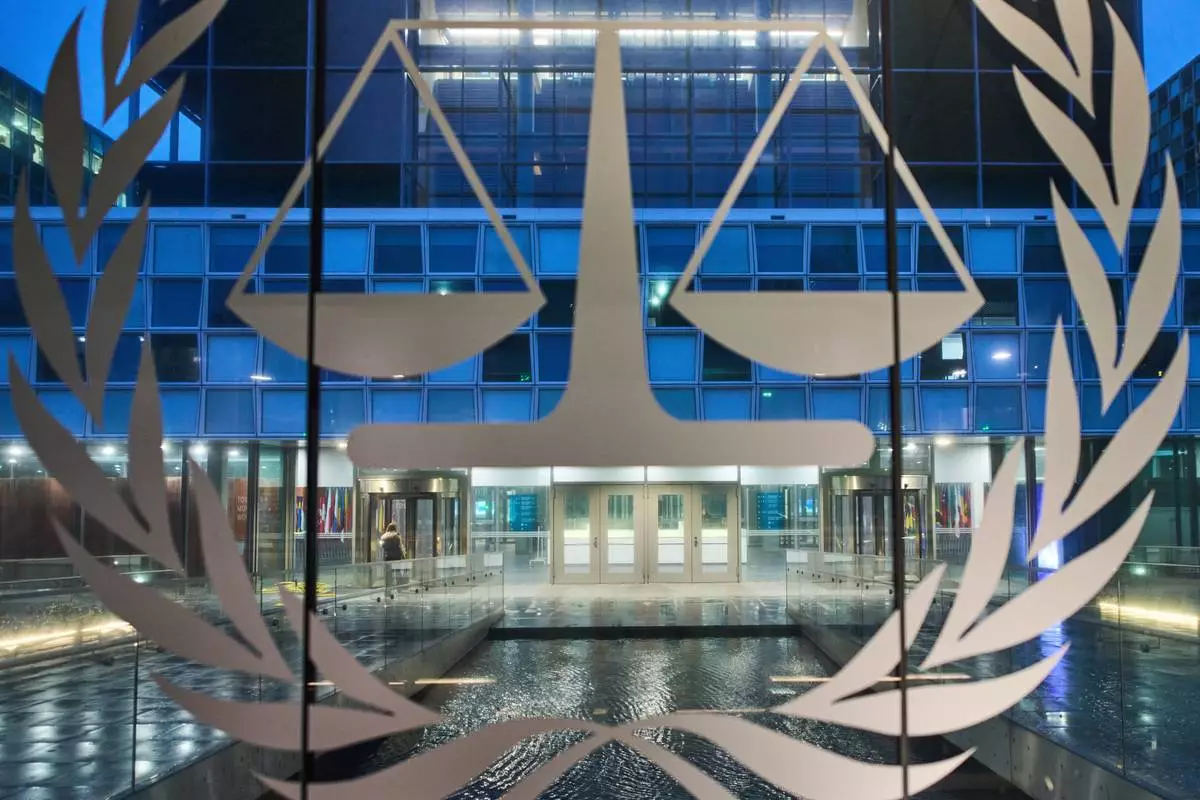
FILE - The International Criminal Court (ICC) is seen on Dec. 9, 2025, in The Hague, Netherlands. (AP Photo/Peter Dejong, Pool, File)

FILE - The International Criminal Court (ICC) is seen on Dec. 9, 2025, in The Hague, Netherlands. (AP Photo/Peter Dejong, Pool, File)

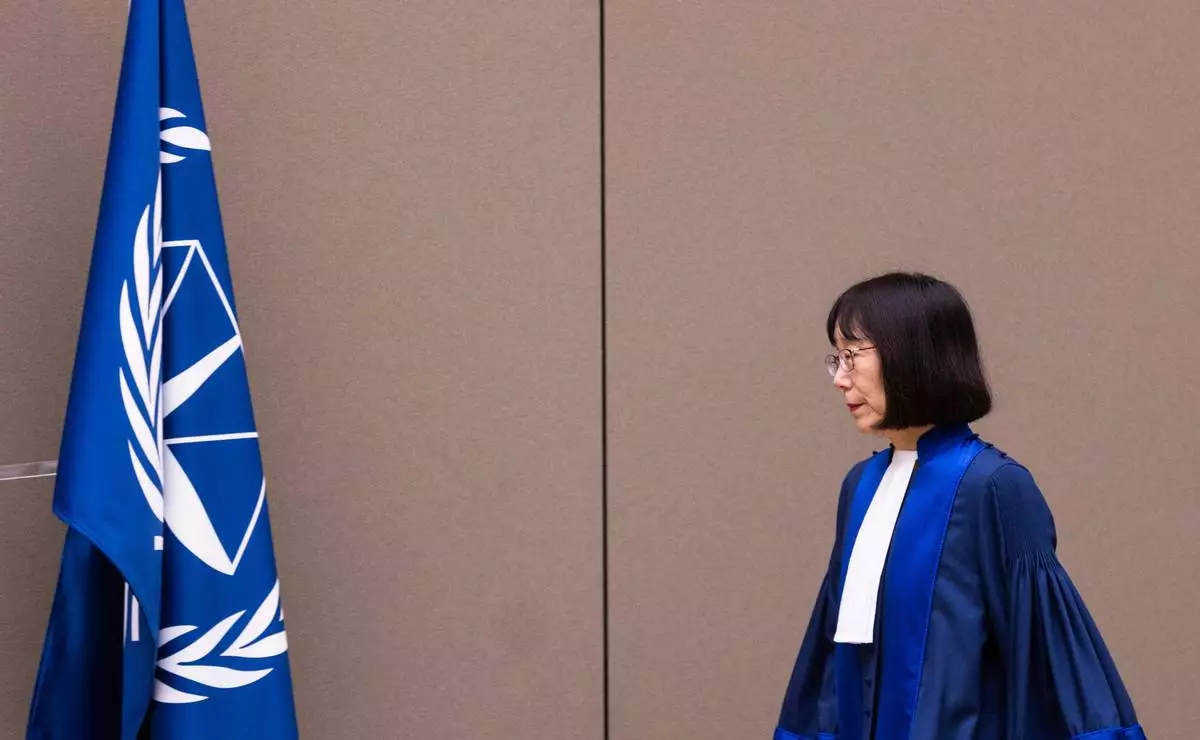
FILE - Judge Tomoko Akane walks before delivering the verdict in the Al Hassan case at the International Criminal Court in The Hague, Netherlands, Wednesday Nov. 20, 2024. (Eva Plevier/Pool Photo via AP, file)

FILE - Judge Tomoko Akane walks before delivering the verdict in the Al Hassan case at the International Criminal Court in The Hague, Netherlands, Wednesday Nov. 20, 2024. (Eva Plevier/Pool Photo via AP, file)

Recommended Articles