ATLANTA (AP) — Players who leave the NFL to return to college won't be allowed to come back to the league this season.
NFL executive Troy Vincent reiterated the longstanding policy at the league's meetings Wednesday, saying players who go back to college will be ineligible to play in 2026. Vincent said any player who does that would instead become a free agent for the 2027 season.
The comments came one day after the Southeastern and Big Ten conferences banned players who were on NFL rosters from being able to play at their schools. Atlantic Coast and Big 12 conference leaders were also discussing the topic this week.
At least two players who signed with NFL teams as undrafted free agents this offseason were hoping to return to college and play at No. 11 LSU.
Tight end Dae'Quan Wright originally signed with Philadelphia as an undrafted free agent out of Mississippi following the draft. He was waived by the Eagles on Aug. 10 and claimed by Cleveland the following day. He spent about two weeks with the Browns without playing in an exhibition game before being waived on Monday. He cleared waivers Tuesday and now wants to go to LSU to play for his former Ole Miss coach Lane Kiffin.
Defensive lineman Zxavian Harris signed with New Orleans in May as an undrafted free agent out of Ole Miss and participated in the offseason program. He was placed on the non-football injury list at the start of training camp in July and was waived Aug. 8. He wasn't claimed by any team and also wants to go back to college to play for Kiffin.
Both players entered the NFL draft because they had used up their four years of eligibility. The NCAA announced a rule change in June allowing players who began college in 2023 or later to have five years to play five years of sports in college.
That rule didn't apply to Wright and Harris, who entered college in 2022 but they are among the players who have sued the NCAA, arguing they’re being deprived of education and potential NIL financial benefits by being excluded from the rule.
Cal football general manager Ron Rivera said Wednesday he hopes the ACC joins the Big Ten and SEC in turning away former pros.
“I think when somebody makes a decision, goes in a certain direction, I think they’ve made their decision,” said Rivera, a former NFL player and coach. “I’m disappointed that people are looking for ways to cheat the system or beat the system.”
In Tennessee, the state's Court of Appeals granted the NCAA’s motion that puts on hold an order that would have given former Vanderbilt player Jalen Washington and 18 other basketball players a fifth year of eligibility.
The ruling gives the NCAA a win in ongoing litigation across the nation in federal and state courts involving college athletes who contend they should get a fifth year of competition under revised NCAA eligibility rules adopted in June.
Washington, who transferred to Tennessee, and the other plaintiffs are now ineligible pending resolution of the NCAA’s appeal of the lower court’s ruling.
Washington was the lead plaintiff in a complaint filed July 6 by the Texas Trial Group seeking the injunction. Others included Chendall Weaver, last at Texas; A.J. Storr of Mississippi; Jason Edwards of Providence; and Daniel Egbuniwe of St. Bonaventure.
The NCAA also has won stays of injunctions in Ohio and New Jersey state courts and in a federal court in Colorado.
Sign up for Top 25 poll alerts here. Visit the Top 25 here and see AP’s full college football coverage here.
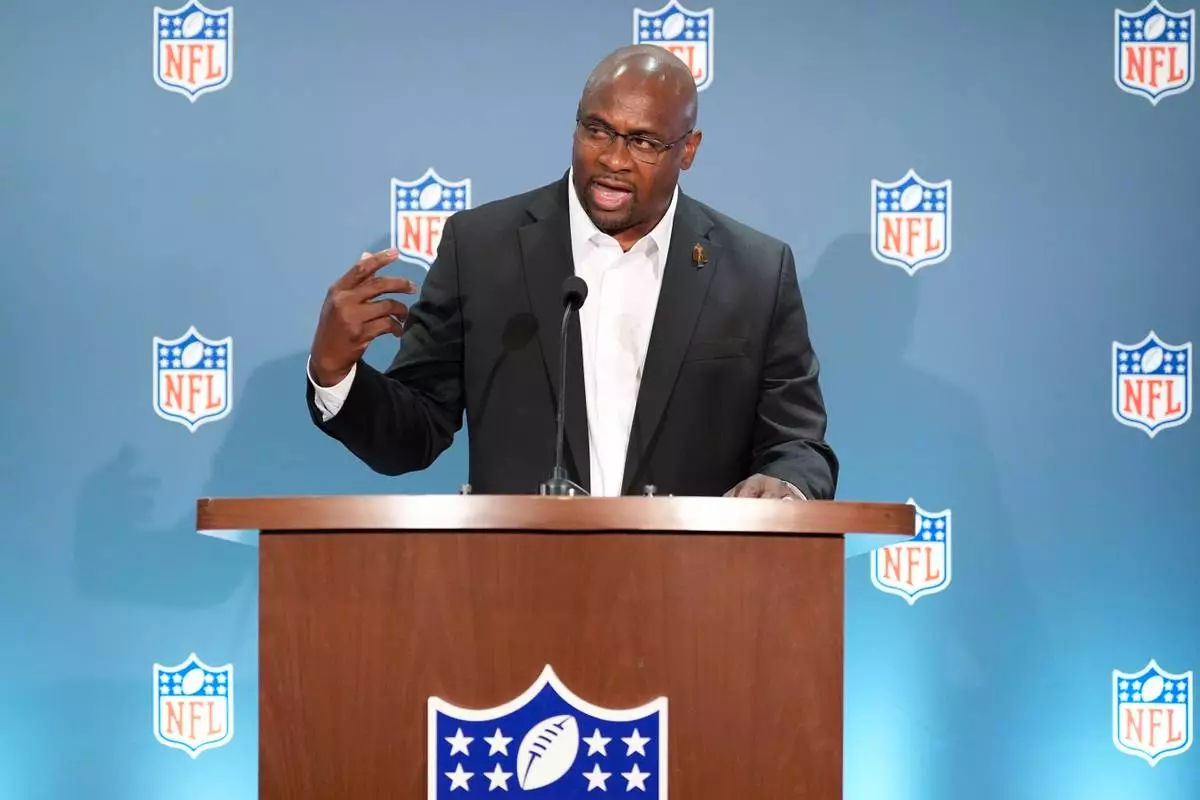
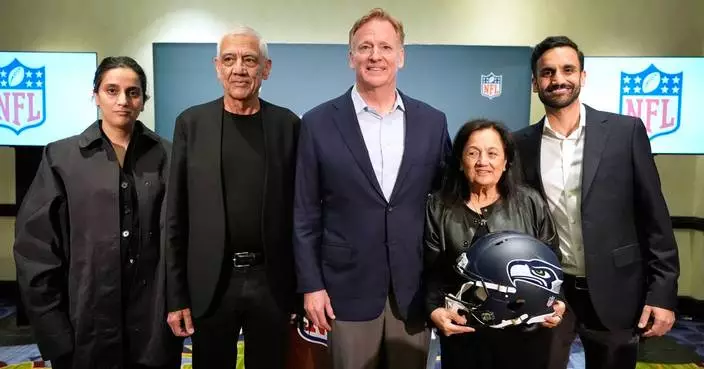
Troy Vincent speaks during a news conference at an NFL football owners meeting on Wednesday, Aug. 26, 2026, in Atlanta. (AP Photo/Brynn Anderson)
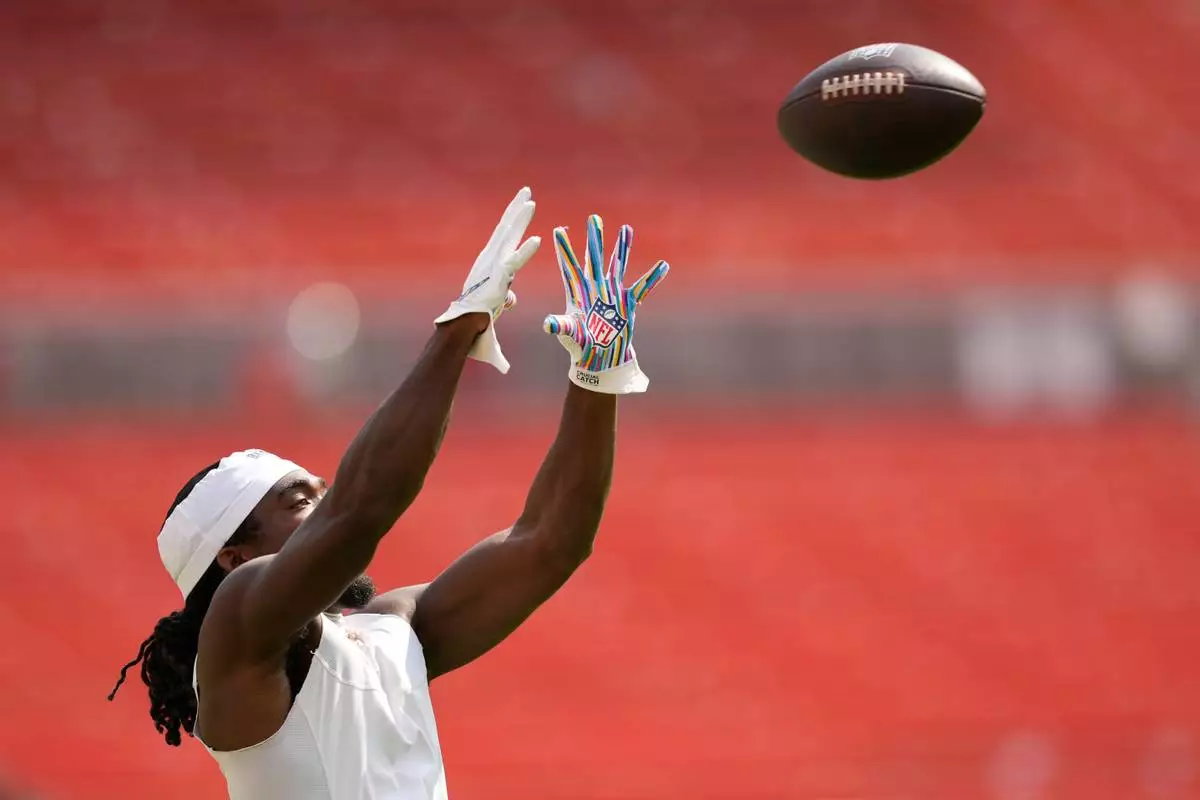
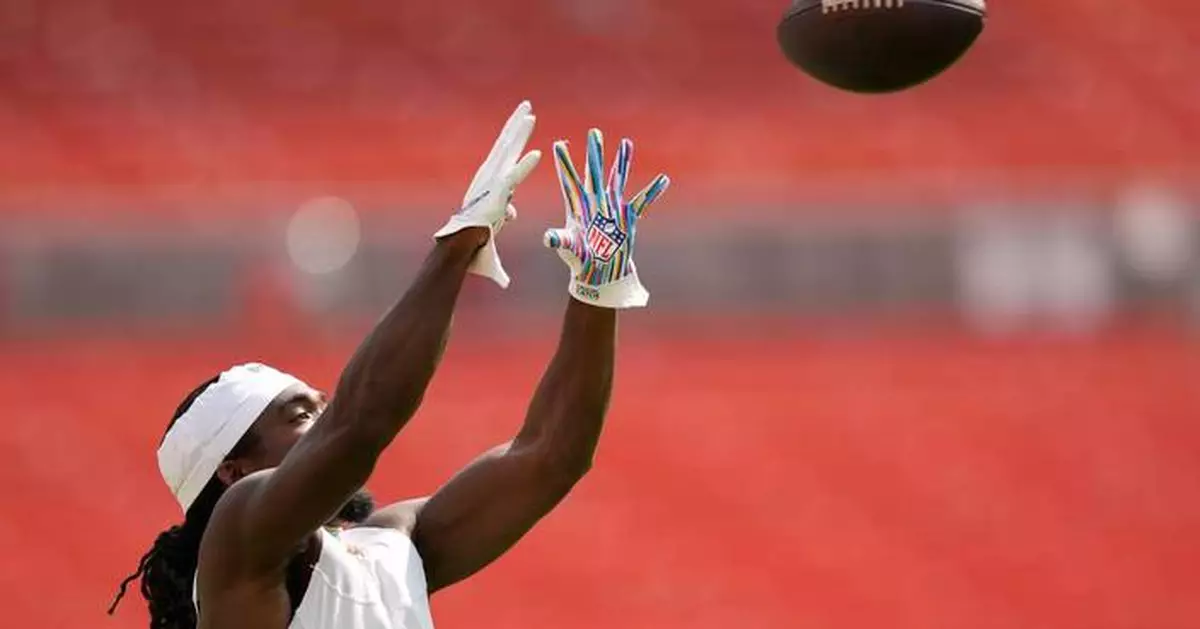
Cleveland Browns tight end Dae'Quan Wright warms up before a preseason NFL football game against the Buffalo Bills, Saturday, Aug. 22, 2026, in Cleveland. (AP Photo/Carolyn Kaster)
BROWNSVILLE, Texas (AP) — A federal judge on Wednesday refused to order Texas to extradite an Immigration and Customs Enforcement officer charged with shooting a man and lying about it during the immigration crackdown in Minneapolis.
U.S. District Judge Fernando Rodriguez Jr. wrote in an order that he couldn't prevent a county sheriff from releasing Christian Castro or order Texas Gov. Greg Abbott to sign his extradition warrant.
The Cameron County sheriff said he would release Castro at midnight.
Castro is charged in Minnesota with assault and falsely reporting a crime in the Jan. 14 shooting of 24-year-old Julio Cesar Sosa-Celis.
Castro is accused of firing a gun through the front door of a Minneapolis home, shooting Sosa-Celis in the leg. Prosecutors say Castro also falsely accused Sosa-Celis and another man of attacking an ICE officer with a broom handle and a snow shovel.
After a Minnesota judge issued a nationwide warrant for Castro's arrest in May, authorities, including Minnesota’s Bureau of Criminal Apprehension, arrested Castro in Cameron County on May 29. Minnesota authorities have sought his extradition since his arrest, but he remains in custody in Brownsville, Texas, a city bordering Mexico.
Under Texas law and barring extradition, Castro must be released after 90 days of detention, which is Thursday.
Minnesota Attorney General Keith Ellison filed a request for a temporary restraining order last week seeking to block Castro's release or to order his return to Minnesota.
Texas attorneys on Tuesday argued the judge could not rule on a decision that's still pending. Abbott has not denied the extradition. Instead he is waiting for the outcome of an internal state investigation considering whether Castro was legally a “fugitive” under the Extradition Clause, the lawyers said.
The judge wrote in Wednesday's order that the court can't yet step in.
“The Court concludes that it lacks subject matter jurisdiction because the case is not ripe for adjudication,” the order read. “Minnesota cannot premise its causes of action on the allegation that Governor Abbott may violate those authorities in the future; it must prove that a violation has already occurred.”
The judge said in his order that the extradition laws do not outline how long the Texas governor can take to make that decision.
Ellison said in a statement that his office would keep litigating the case but didn't specify what it would do next.
“I respectfully but strongly disagree with the court’s order, which nonetheless acknowledges that Christian Castro is a flight risk, that Minnesota will be harmed if he is allowed to flee to Mexico, and that Governor Abbott’s consideration of Minnesota’s extradition request is of ‘an atypically long duration’ — to say the least,” Ellison said in a statement.
Hennepin County Attorney Mary Moriarty, whose office handles prosecutions in Minneapolis, said at a new conference that Abbott was unfairly harboring the former ICE agent.
"If Christian Castro walks out of the door of the jail tomorrow and disappears into Mexico, it will be the fault of one person: Governor Greg Abbott,” Moriarty said.
Abbott's press secretary, Andrew Mahaleris, welcomed the ruling and said it was the governor's duty to carefully consider the merits of extradition requests.
"Today’s order rebuffs Minnesota’s efforts to conscript federal courts into commandeering the authority of Governor Abbott’s office,” Mahaleris said in a statement.
Abbott said last week he would not respond to the extradition request, citing the ongoing investigation into fraud in government social service programs in Minnesota, which President Donald Trump used to justify his immigration crackdown there.
Minnesota officials say Castro could flee the country, citing calls he made from jail to a woman in Mexico, talking “about marrying her and buying a house in Mexico when he is released,” according to the lawsuit.
The judge conceded that Castro could flee the country but added that “the threat of injury by itself does not create an issue ripe for adjudication.”
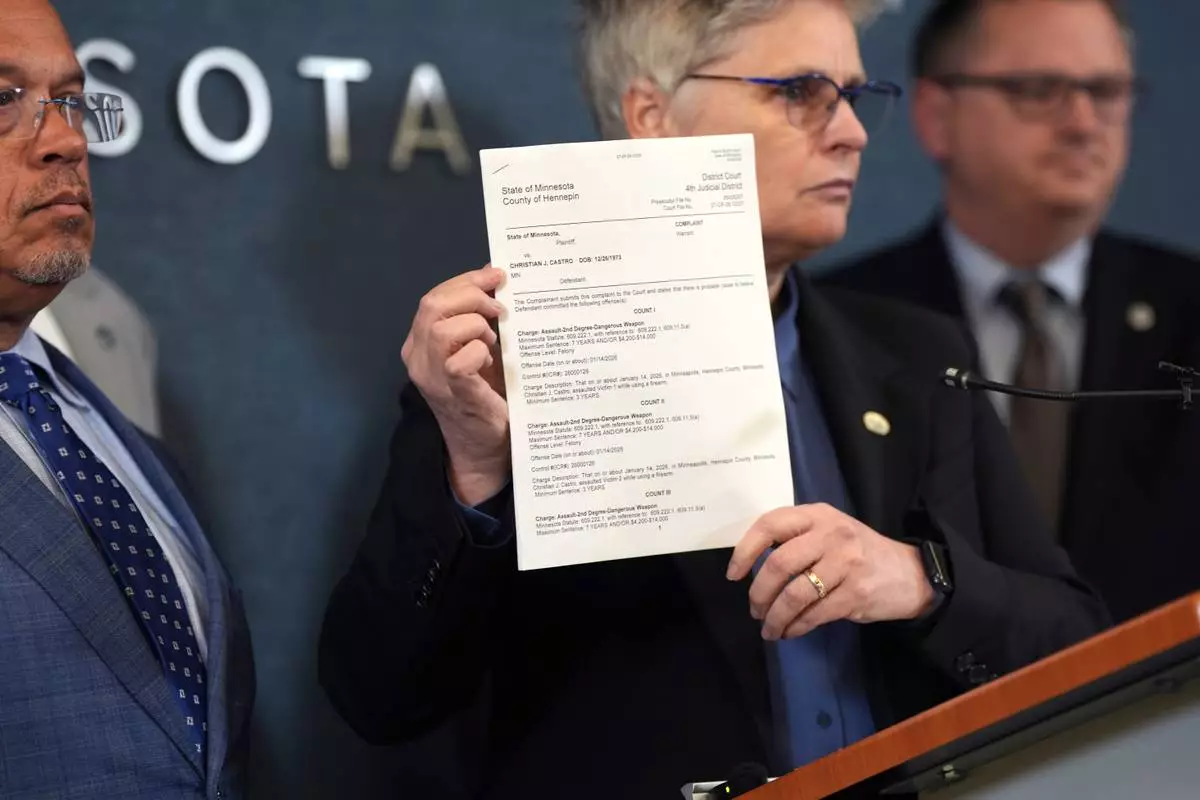
FILE - Hennepin County attorney Mary Moriarty holds up a document containing charges against ICE agent Christian Castro during a news conference at the Hennepin County Government Center in Minneapolis, on Monday, May 18, 2026. (Renée Jones Schneider/Minnesota Star Tribune via AP,File)
FILE - A federal agent wears an Immigration and Customs Enforcement badge in New York, June 10, 2025. (AP Photo/Yuki Iwamura, File)