As the Shanghai Cooperation Organization (SCO) will soon convene for its 25th-anniversary summit, member states are reaffirming their commitment to tackling cross-border and cyber terrorism while championing a multipolar approach to global security.
The 2026 summit promises to reaffirm the bloc's core mission of countering terrorism, extremism, and separatism, with security cooperation remaining a top priority.
Highlighting this enduring challenge, Mushahid Hussain Sayed, a Pakistani senator, emphasized the persistent danger of territorial exploitation by militant groups.
"I would still feel that the SCO, the Shanghai Cooperation Organization, the most pressing security challenge is cross-border terrorism and the use of some countries' soil, where terrorists can use their territory to destabilize neighboring countries under different pretexts. So the threat of terrorism, and especially cross-border terrorism, is a primary security concern of SCO countries in South, Southwest and Central Asia, and China and Russia," he said.
While traditional security remains the fundamental purpose of the organization, the SCO is actively adapting its mandate to address emerging digital threats. The scope of cooperation has expanded to tackle the rapidly evolving landscape of cyber warfare and digital financial crimes.
"Apart from the regular mandate of the SCO, which was like terrorism and extremism, now a new angle has been added, which is cyber terrorism. It has become a very big thing, the cyberattacks and cross-country financial terrorism through cyber initiatives and all those things. So I think now cyber will be another thing where these countries will have to come together and find some solutions for that," said Mohammed Saqib, secretary general of the India China Economic and Cultural Council.
Against the backdrop of thorny challenges and fragmented global security architectures worldwide, the SCO's emphasis on a multipolar security framework is increasingly viewed as a vital alternative vision. By providing a platform for diverse nations to align their strategies, the bloc is strengthening its collective resilience.
Mohammad Marandi, a professor at the University of Tehran, noted that the diverse composition of the bloc is actually its greatest strategic asset in navigating complex global issues.
"The very fact that different countries have different priorities and different problems makes the SCO much more important, and all the more important, because it is a place where these different countries put forward their ideas and explain their challenges. And therefore, this understanding that exists between SCO members is enhanced. And therefore, countries, member states, collectively can better deal with those challenges because they better understand the challenges that member states have," he said.
To actualize this vision, the SCO has already established a robust foundation through specialized security centers, joint border operations, and deepening intelligence networks. In a global landscape characterized by fractured alliances, this steady, incremental cooperation is positioned as a crucial stabilizing force for Eurasia.
Ultimately, this year's summit serves not only as a platform for dialogue and a forum for balancing regional interests, but also as a defining symbol of Eurasian multipolarity.
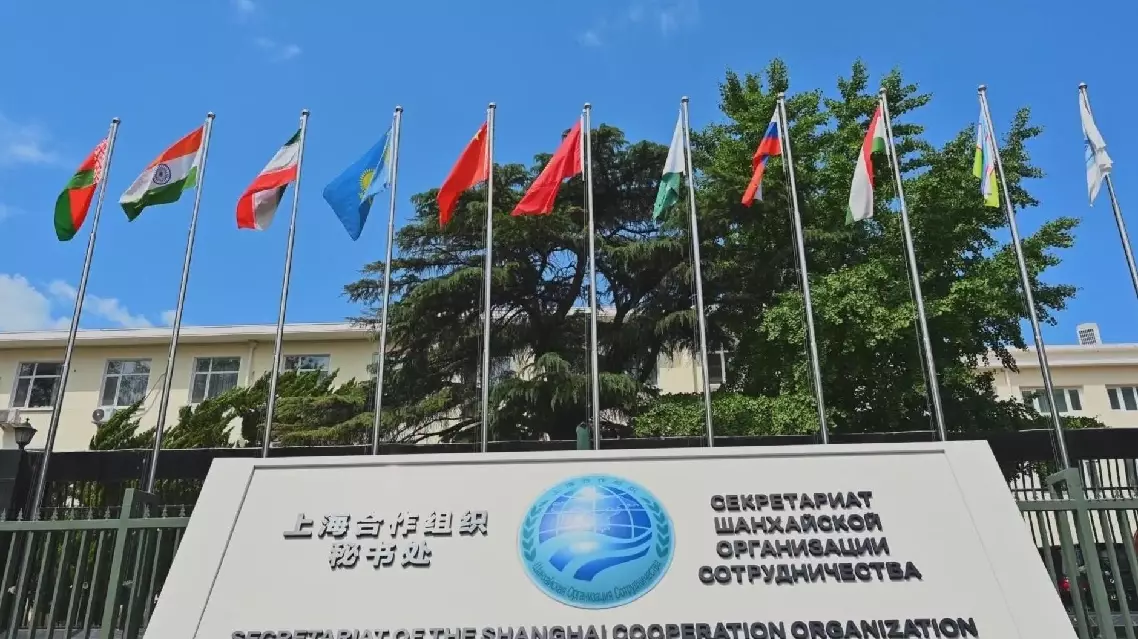
SCO Summit to highlight evolving security cooperation, multipolar vision: experts