LONDON--(BUSINESS WIRE)--Aug 27, 2026--
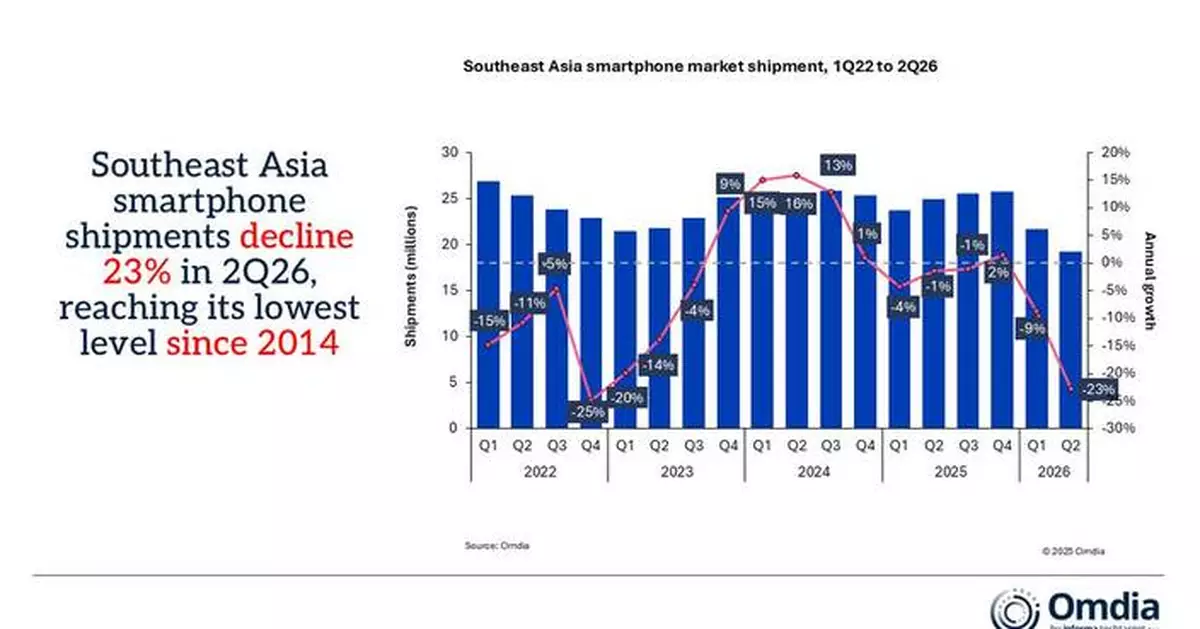
Southeast Asia’s smartphone market declined 23% year-on-year in 2Q26, with shipments falling to 19.3 million units, the lowest quarterly level since 2014, according to the latest research from Omdia. Despite the sharp decline in shipments, market value proved more resilient, reaching $6.6 billion as average selling prices (ASPs) rose 31% year-on-year (YoY) to $342.
Click to Gallery
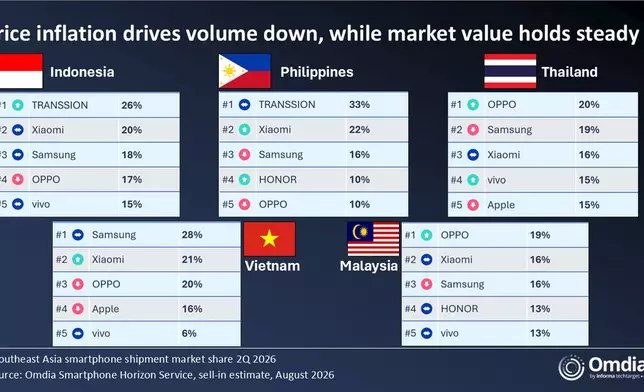
Southeast Asia smartphone shipment market share, 2Q 2026
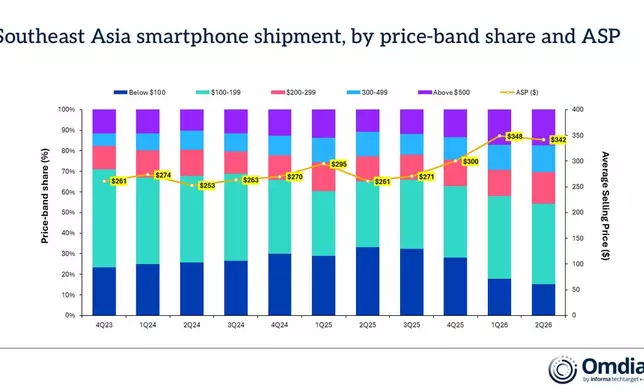
Southeast Asia smartphone shipment, by price-band share and ASP
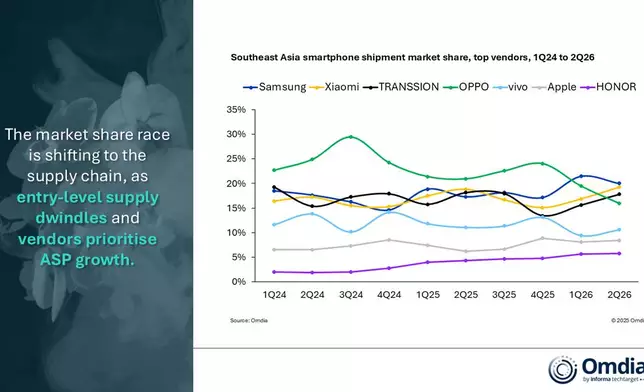
Southeast Asia smartphone shipment market share, top vendors, 1Q24 to 2Q26
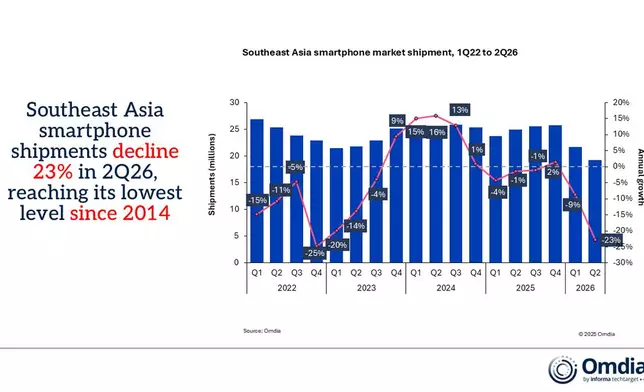
Southeast Asia smartphone market shipment, 1Q22 to 2Q26
This press release features multimedia. View the full release here: https://www.businesswire.com/news/home/20260826318424/en/
Brands split between protecting volume and maintaining prices
- Samsung gained market share despite raising prices. The Galaxy A07 and A17 were repriced upward after launch, reversing the typical pattern of post-launch price declines. This helped lift Samsung’s share of the overall $200–299 segment from 18% in 2Q25 to 32% in 2Q26. It also gained share across the wider sub-$300 market, where competitors were reducing their exposure.
- Xiaomi posted the second-largest ASP increase among the top five vendors at 43.5%, while shipments declined 21%. The increase reflected both post-launch price rises for existing models, including the Redmi Note 15, and higher launch prices for new models such as the 17T and Redmi A7 Pro compared with their predecessors. Xiaomi’s sub-$100 shipments fell 69%, while shipments in the $100–199 segment grew 55%.
- TRANSSION remained the most exposed to the entry-level market. Its sub-$100 shipments declined 47% in 2Q26, while shipments priced at $100–199 grew 12%, making this the group's largest price band. New models including the Infinix Hot 70 and Tecno Spark 50 4G were also launched at significantly higher prices than the models they replaced.
- OPPO almost entirely exited the lowest price band, with sub-$100 shipments falling 96% in 2Q26. The lost volume was not offset by the next price tier, where shipments of $100–199 devices also declined 25%, contributing to the steepest overall shipment decline among the top five vendors.
- vivo moved its entry-level model above $100 in most markets. Its sub-$100 shipments fell 88% in 2Q26 and accounted for just 5% of its total volume, compared with 32% a year earlier.
Sub-$100 segment accounts for most of the market decline
“Much of the entry-level volume has been absorbed into the higher price bands in a domino effect,” said Omdia Senior Analyst, Sheng Win Chow. “When one model is repriced, vendors often need to reposition other devices within their portfolios to avoid cannibalization. However, shipments above $100 still declined 2% overall, showing that the higher price bands have not absorbed all of the displaced volume. Much of that volume has left the market altogether rather than moving upwards.”
The $100–199 segment has absorbed the largest share of the remaining entry-level demand, increasing from 32% to 39% of total shipments. Much of this resilience came from devices that would previously have competed below $100 being repriced into the higher band.
Reduced discounting has also contributed to the shift between price bands. Historically, much of Southeast Asia’s sub-$100 volume came from heavy discounts on models originally launched at higher prices. In 2Q26, that pattern reversed as vendors not only introduced new models at higher prices but also raised prices on existing devices after launch, including Samsung's Galaxy A07 and A17 series and Xiaomi's Redmi Note 15 series.
Southeast Asia smartphone market forecast to decline 25% in 2026
“Southeast Asia is heading for its steepest annual contraction in at least seven years,” said Le Xuan Chiew, Research Manager at Omdia. “Omdia forecasts smartphone shipments in the region will fall 25% YoY to 75.3 million units in 2026. The weakness seen in the first half of the year is expected to continue into the second half, as rising device prices weigh further on shipment volumes. Markets with greater exposure to entry-level devices and open-market retail channels, such as Indonesia and the Philippines, are expected to experience larger declines.
Memory cost pressure will intensify in the second half of the year. Devices shipped in 1H26 reflect memory costs based on a blended average of earlier purchases rather than current market prices. This means current margins do not yet reflect the increase in memory costs. As lower-cost inventory is depleted, vendors will face the full impact of today's higher memory prices.”
ABOUT OMDIA
Omdia, part of TechTarget, Inc. d/b/a Informa TechTarget (Nasdaq: TTGT), is a technology research and advisory group. Our deep knowledge of tech markets grounded in real conversations with industry leaders and hundreds of thousands of data points, makes our market intelligence our clients’ strategic advantage. From R&D to ROI, we identify the greatest opportunities and move the industry forward.
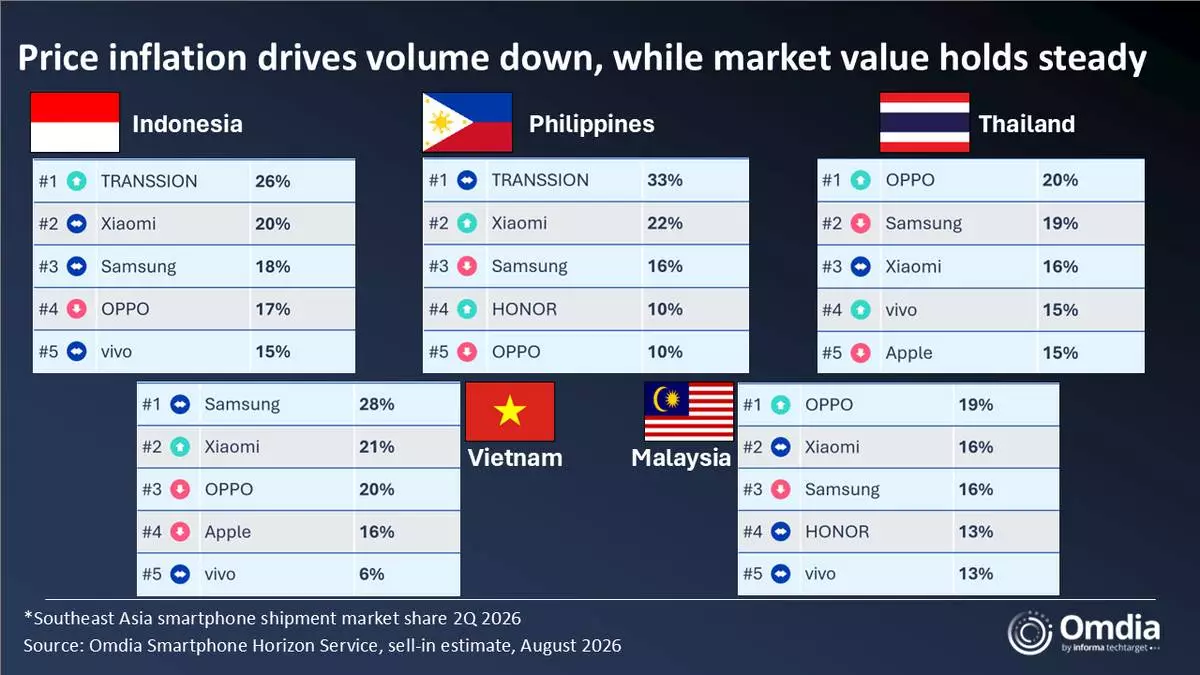
Southeast Asia smartphone shipment market share, 2Q 2026
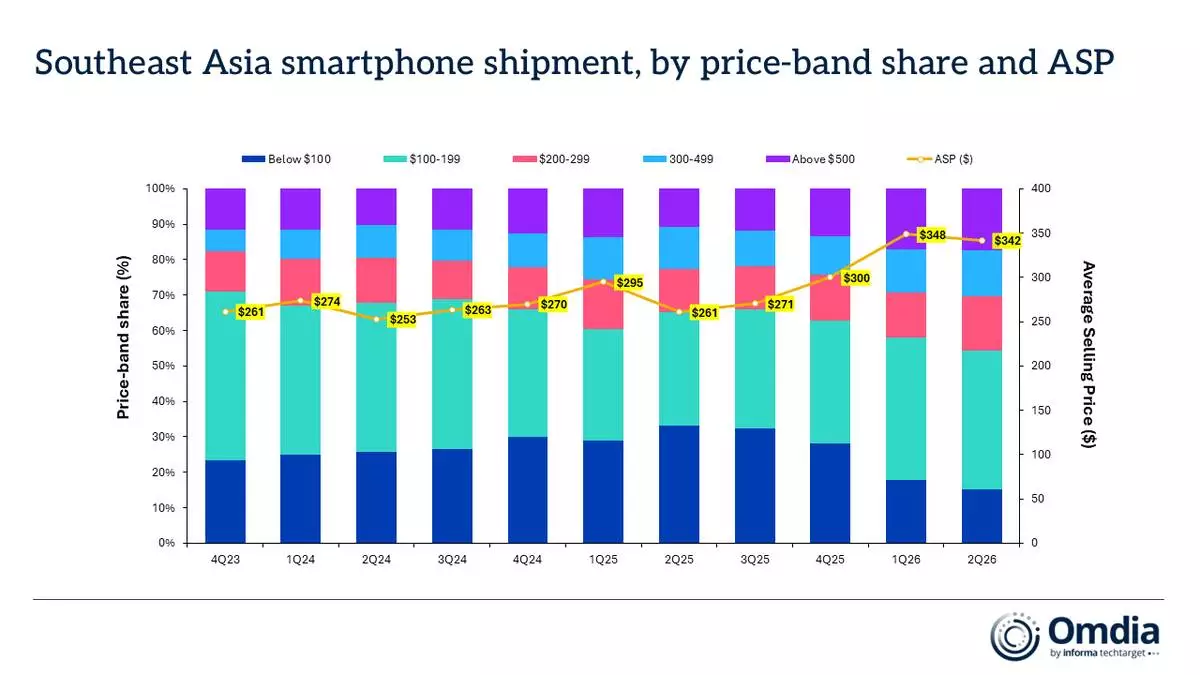
Southeast Asia smartphone shipment, by price-band share and ASP
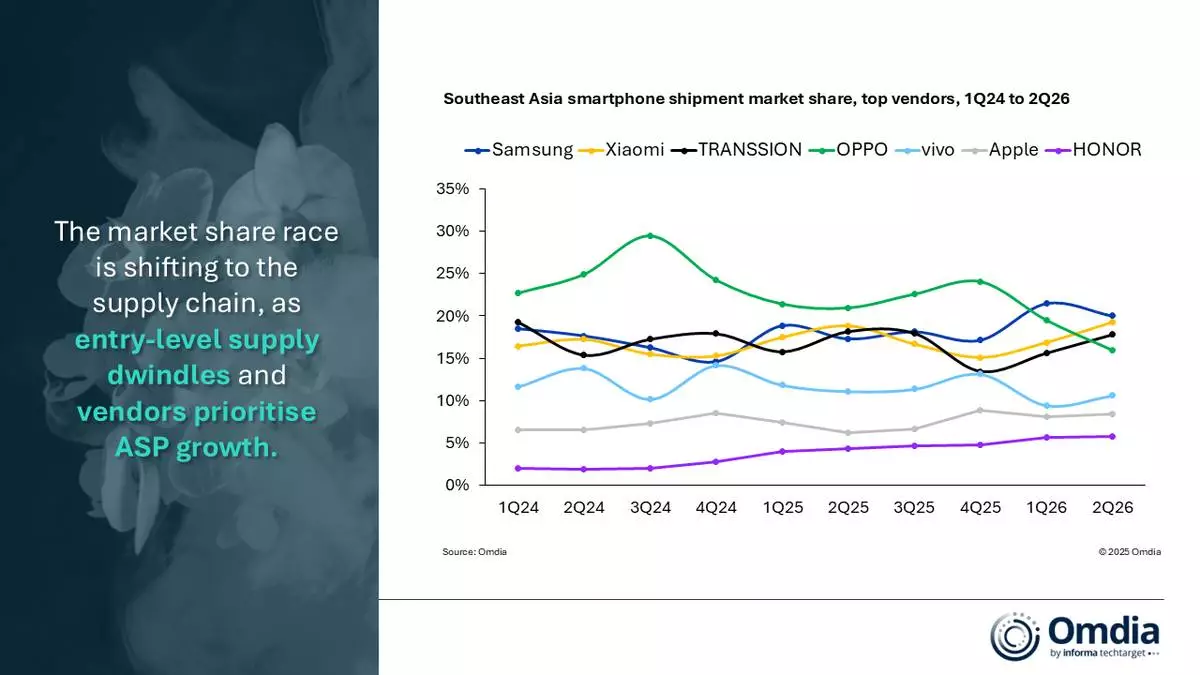
Southeast Asia smartphone shipment market share, top vendors, 1Q24 to 2Q26
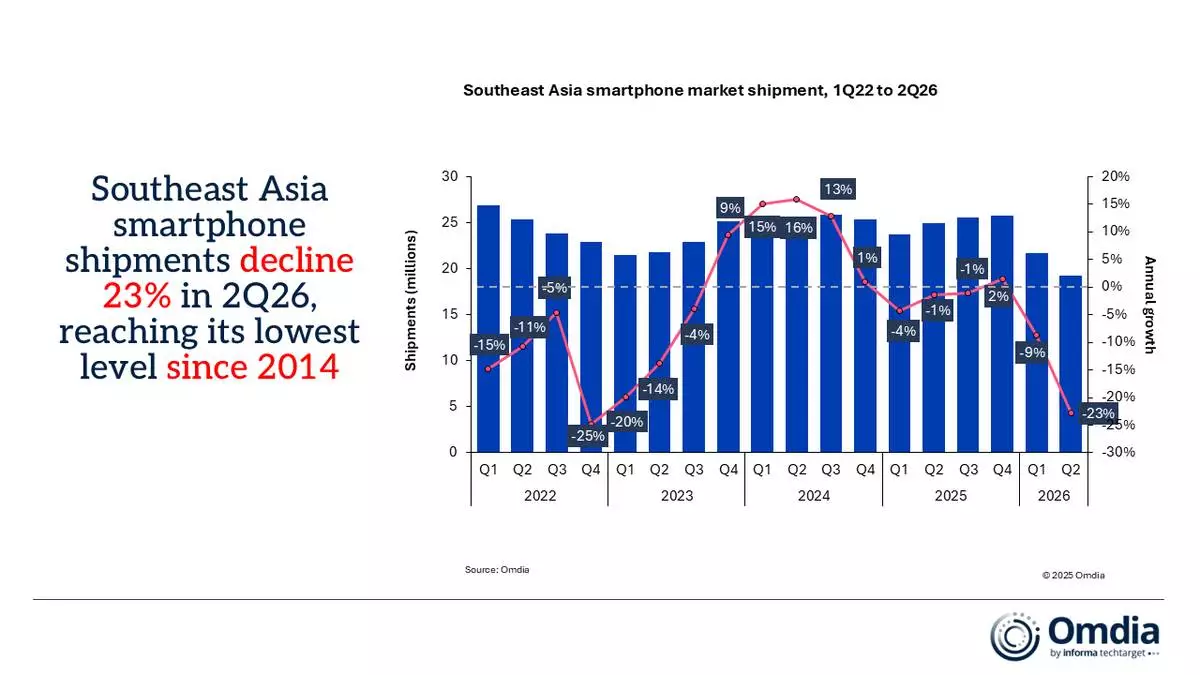
Southeast Asia smartphone market shipment, 1Q22 to 2Q26