A federal judge on Thursday halted — at least for now — attempts to implement President Donald Trump’s executive order limiting mail voting.
The move stalled the directive for a second time only about a week before the first mail ballots are due to be sent out for the rapidly approaching midterm elections. U.S. District Court Judge Indira Talwani blocked the government from implementing the order for two weeks.
The case could soon be appealed back to the Supreme Court, days after the justices handed down a procedural decision that allowed the the administration to move ahead.
The ruling Thursday came after Democrats and voting rights groups refiled their lawsuits to comply with the recent Supreme Court decision. The high court's conservative majority did not rule on the legality of Trump’s executive order, instead saying Talwani had acted too soon.
Now the administration has issued a formal rule governing whether the U.S. Postal Service will deliver states’ mail ballots, effectively restarting the legal fight.
The whipsawing legal battle has major ramifications for the midterms. Nearly one-third of Americans vote by mail and election officials contend there isn’t enough time to revise their systems to comply with the new Postal Service directives.
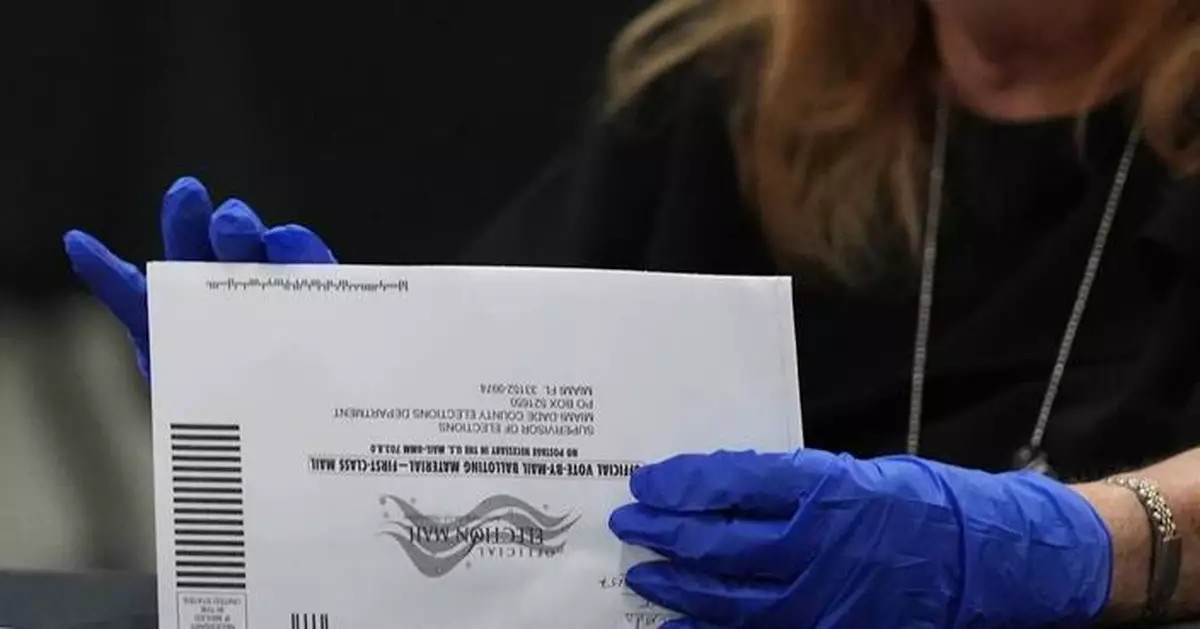
The Postal Service says it won’t deliver mail ballots unless states provide a list of voters who should receive them and format the envelopes in a certain way.
“Plaintiff states have neither time nor funds to design new mail ballots, seek approval of the new designs, order production of mail ballots, update their own election management systems, train election officials to use the USPS portal and upload citizen data to the portal, all before the midterms," Talwani wrote Thursday.
The White House did not immediately respond to a message seeking comment. A hearing in the case is set for Sept. 3.
“This rule is a clear attempt by the federal government to interfere in elections it has no power to control. Today, a federal court halted it before this administration could wreak havoc on our elections,” New York Attorney General Letitia James, one of two dozen Democratic attorneys general who filed one of the suits, said in a statement after the order.
Democrats and voting rights groups contend the Postal Services' demand is unconstitutional. The Constitution, they note, grants states and, in some cases, Congress the power to make election rules — not the president or Postal Service.
That reasoning led courts to block Trump’s first executive order, issued last year, that sought to change election procedures, such as requiring documentary proof of citizenship to register.
The president has long targeted mail voting, which he falsely blames for his 2020 election loss even though he himself uses it to cast his ballot.
A report by the Brookings Institution published in 2025 found that mail voting fraud occurred in only about four cases out of every 10 million mail ballots cast.
Trump issued the executive order targeting mail voting, his second one related to elections since he returned from office, in March.
Opponents quickly sued, but the administration argued the claims were premature because it hadn’t issued rules outlining how it would implement the order. The administration won an initial case in Washington, D.C., with that reasoning, but Talwani placed injunctions against implementing the order for the November midterms in two separate cases she heard in Boston.
The Supreme Court’s conservative majority on Monday struck down one of those holds.
Talwani, nominated to the bench by President Barack Obama, reluctantly removed the second injunction shortly after. The plaintiffs then moved to refile their cases, citing the Postal Service’s publishing of its final rule, in hopes of winning a more durable victory.
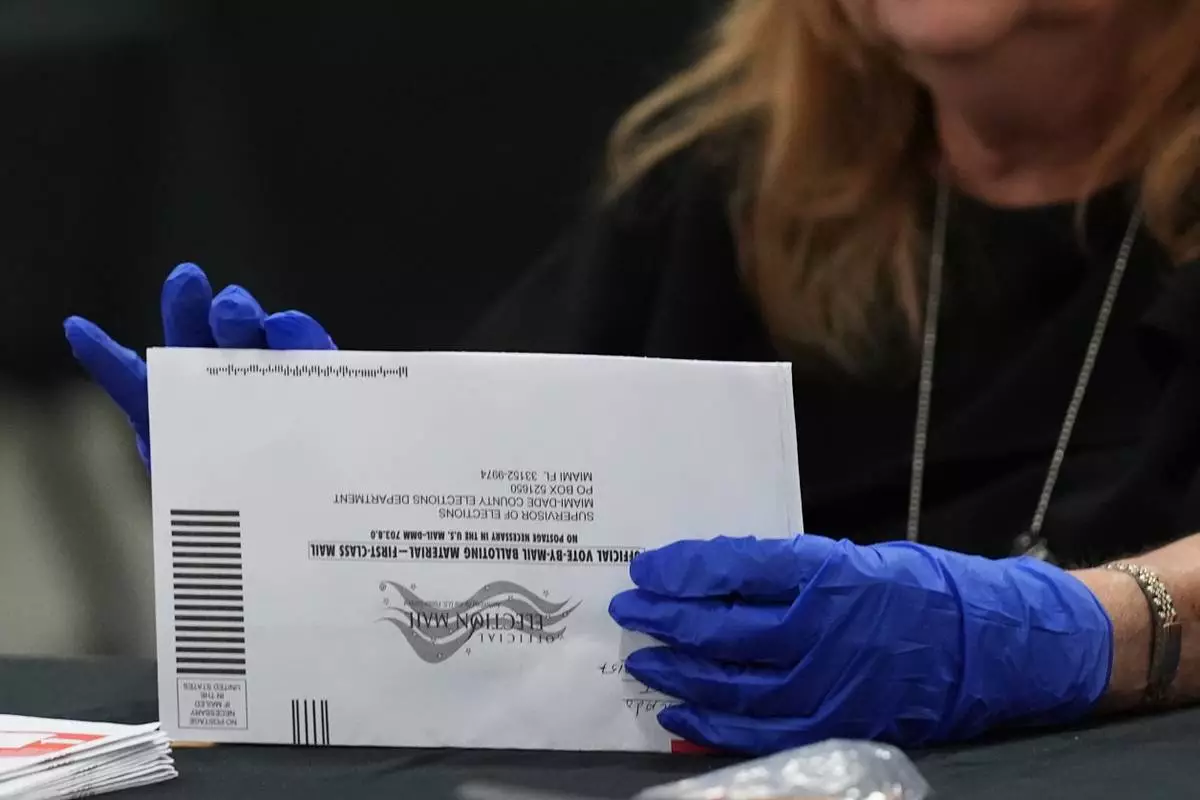
An election worker sorts vote-by-mail ballots at the Miami-Dade County Supervisor of Elections Office for the Florida primary election in Doral, Fla., Tuesday, Aug. 18, 2026. (AP Photo/Lynne Sladky)
NEW YORK (AP) — Major League Baseball proposed limiting free-agent signings to several weeks in December and then from early February on each offseason along with a trade ban during the gap in-between, a plan aimed at creating more of an offseason transaction flurry similar to those in the NFL and NBA.
The plan offered to the players’ association Thursday is contingent on adoption of the salary cap system MLB proposed in May, which the union has vowed never to accept.
“A cap-and-floor system would unlock additional opportunities to improve the game for players and fans, creating more stability in rosters, getting the best players to the major leagues more quickly, and accelerating the pace of the offseason,” MLB spokesman Glen Caplin said in a statement. “In our current economic system, these changes would be too harmful to competitive balance and would not be practical.”
Union head Bruce Meyer immediately criticized the plan.
“Their latest proposals regarding free agency would eliminate player rights by establishing an artificial free agency window, subject to a salary cap, which would reduce player leverage and create a game of musical chairs pitting player vs. player,” he said in a statement. “The suggestion that the only way to limit roster churn, or incentivize earlier free agent signings is with a salary cap is entirely unserious.”
Management's prior cap proposal led to a 7 1/2-month strike in 1994-95 and the first cancellation of the World Series in 90 years.
Under the current rules, players can become free agents starting the day after the World Series but may not negotiate money terms with new teams until the end of the “quiet period” at 5 p.m. Eastern time on the fifth day after the World Series ends.
MLB proposed extending the quiet period until noon Eastern on the Monday of the winter meetings, usually held in early December. Management said the additional time would be needed for revenue and salary cap figures to be finalized ahead of the business season.
MLB would allow negotiations during the quiet period but would not permit any contracts to be finalized.
Free agents could sign through 5 p.m. Eastern on Dec. 21 and then wouldn’t be allowed to until noon Eastern on the first Monday in February, just ahead of spring training.
“In the draft, we used to have no signing limitation. We’ve all seen what that’s done to player values in the draft, which has dramatically cut in at least half the value of drafted players,” agent Scott Boras said. “It’s just another attempt to apply something like that to free-agent major league players. It doesn’t help the game, doesn’t help the competitiveness of the game. The only thing it does, it reduces the value of players in the market. It doesn't allow evaluation, reflection, adjustment for the teams that don’t sign a particular player.”
During the December-to-February period in which players would not be allowed to sign, there would be a prohibition on trades, similar to the current ban from early August through the end of the postseason.
MLB proposed to cap spending in 2027 at $245.3 million, using figures for luxury tax payrolls that include $20.1 million for benefits and the pre-arbitration bonus pool. It also would establish a payroll floor of $171.2 million, forcing some teams to spend more.
Free-agent eligible players would be limited to deals of $265 million and six years. Under the current rules, outfielder Juan Soto negotiated a record $765 million, 15-year deal with the New York Mets after the 2024 season.
“MLB expressly conditioned these proposals on the players’ agreement to a salary cap system, which would drastically reduce overall player compensation, eliminate fully guaranteed contracts through escrow, and turn back the clock on fundamental player rights," Meyer said of Thursday's plan.
MLB also proposed lowering the maximum in-season options to the minor leagues from five to four and adopting a system of weekly rosters. Teams would be allowed 14 pitchers, up from the current limit of 13 when the 26-man roster limit is in effect from the season’s start through Aug. 31.
Players have proposed optional assignments be cut to three.
“The league is not interested in any changes that don’t directly reduce the rights of all players and shift leverage to the owners,” Meyer said.
Teams would be limited to making callups from the minors and demotions to the period after Sunday’s games and before Monday’s contests, with exceptions for injured list decisions and moves to replace those who got hurt.
Option and injured list periods would be changed from 10 days to one week for position players and from 15 days to two weeks for pitchers, but those periods would start with the first full week after a player goes on the IL. For instance, a pitcher going on the IL or optioned on a Wednesday would have to spend at least 19 days on the IL: the five remaining days that week plus an additional 14 days.
MLB proposed what currently is the 60-day IL, which doesn’t count against the 40-man roster, increase to 12 weeks.
MLB would drop the period by one year for having to protect a player from the Rule 5 draft, to the fourth draft for players who signed their initial contract under age 20 and to three for those 20 and over at the time of their first deal.
Management would allow players selected in the draft to be optioned. Under the current rule, a selected player must be offered back to his former team before he can be assigned to the minors.
See AP’s full MLB coverage here
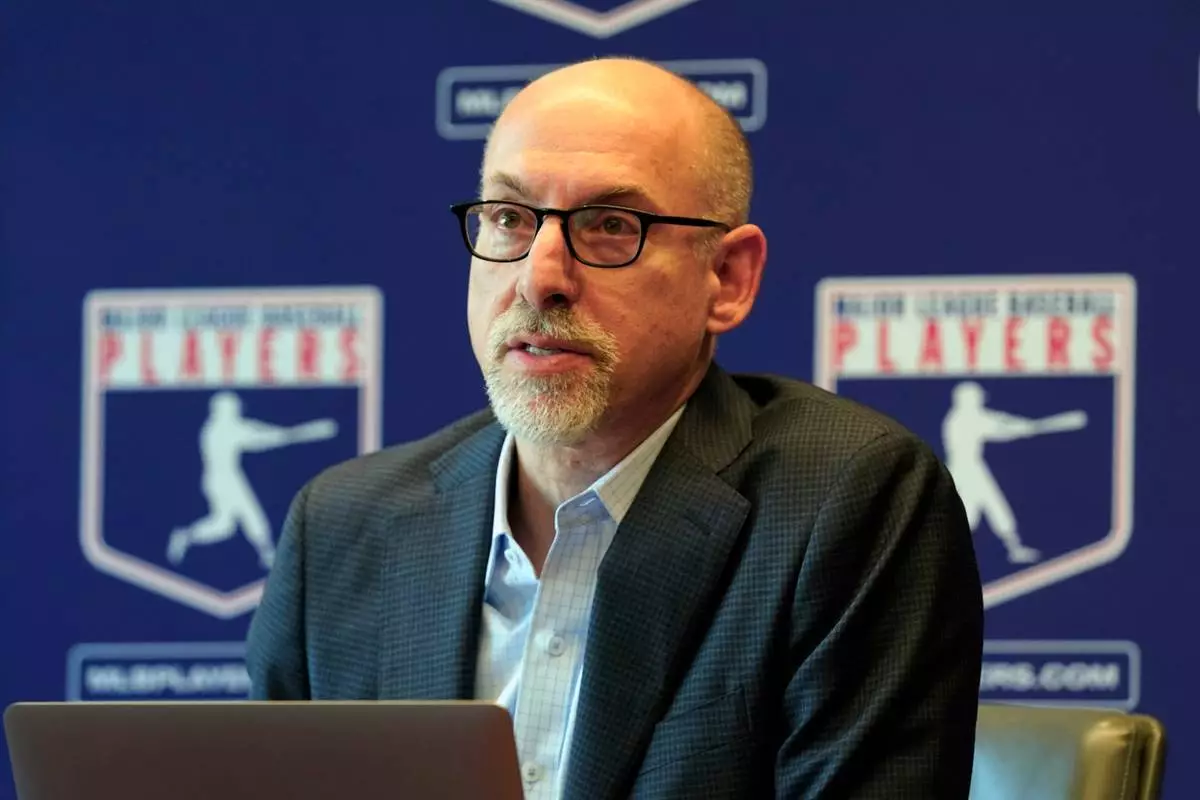
FILE - Attorney Bruce Meyer, the current interim executive director of the Major League Baseball Players Association, speaks at a news conference in New York on March 11, 2022. (AP Photo/Richard Drew, File)

Baseball Commissioner Rob Manfred attends the Little League Classic baseball game between the Milwaukee Brewers and the Atlanta Braves in Williamsport, Pa., Sunday, Aug. 23, 2026. (AP Photo/Gene J. Puskar)