QUEBEC CITY (AP) — Quebec’s governing party launched its election campaign Thursday by naming an unusual adversary: U.S. President Donald Trump.
“My opponent is named Donald Trump,” Coalition Avenir Québec Leader Christine Fréchette said as campaigning began for the Oct. 5 vote to choose Quebec’s National Assembly, the provincial legislature. “He’s the real adversary.”
Click to Gallery
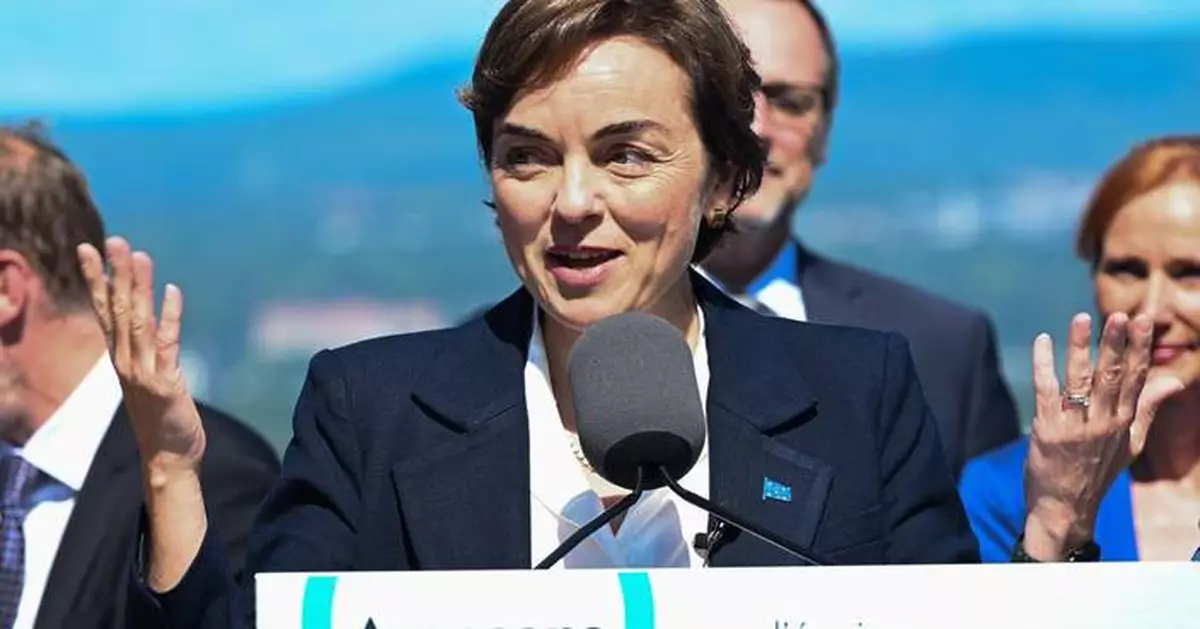
Coalition Avenir Quebec Leader Christine Frechette holds a news conference after calling a general election in Quebec City, on Thursday, Aug. 27, 2026. (Jacques Boissinot/The Canadian Press via AP)
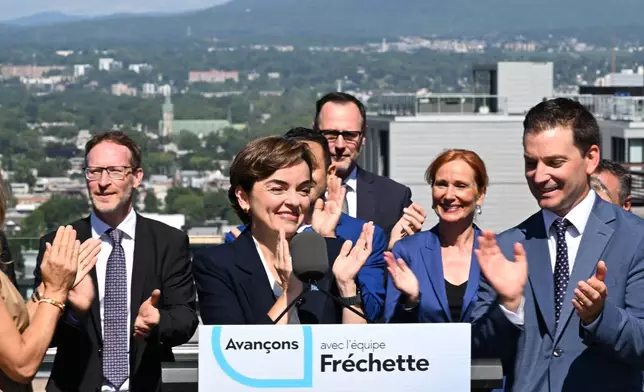
Coalition Avenir Quebec Leader Christine Frechette poses as she walks by her campaign bus after calling a general election in Quebec City, on Thursday, Aug. 27, 2026. (Jacques Boissinot/The Canadian Press via AP)
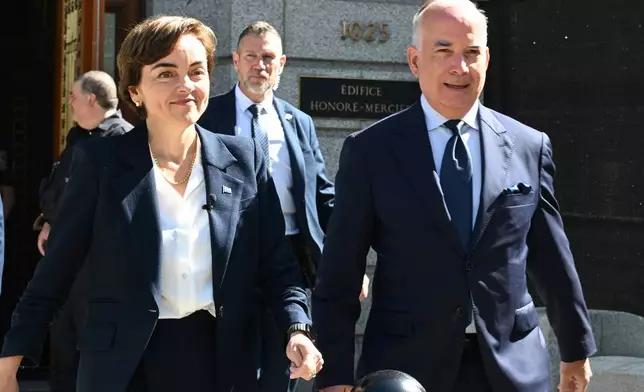
Coalition Avenir Quebec Leader Christine Frechette walks with her spouse Guy Nadeau heading to the Lt. Governor's office to launch a general election in Quebec City, on Thursday, Aug. 27, 2026. (Jacques Boissinot/The Canadian Press via AP)
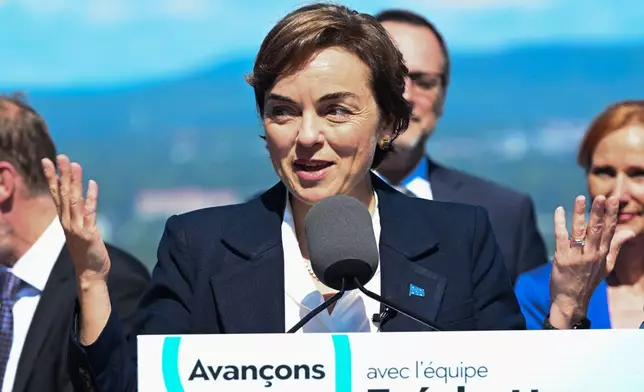
Coalition Avenir Quebec Leader Christine Frechette speaks during a news conference after calling a general election in Quebec City, on Thursday, Aug. 27, 2026. (Jacques B/The Canadian Press via AP)
Trump’s trade war with Canada has become an issue in provincial politics, particularly in Quebec, where U.S. tariffs are hitting major industries and his repeated talk of making Canada the 51st state has complicated a decades-old debate over whether the predominantly French-speaking province should leave Canada.
Fréchette said her government is best positioned to protect Quebec businesses and workers from the economic uncertainty coming from the United States.
“I’m asking for a mandate to move forward through a storm,” she said.
Her main rival is the separatist Parti Québécois, which has promised another referendum on independence if it forms the government.
But its leader, Paul St-Pierre Plamondon, said earlier this month that he would not hold such a vote while Trump remains president, arguing that Quebecers should be able to consider their future without the uncertainty created by Trump.
Trump’s tariffs and 51st-state rhetoric have complicated the separatist argument by stirring Canadian nationalism and giving some French-speaking Quebecers another reason to value the protection that comes with remaining part of Canada.
St-Pierre Plamondon warned Thursday that Trump should not be allowed to dominate Quebec’s election.
“Let’s not let the tariffs of Donald Trump’s administration confiscate this important debate from us; let’s not let him confiscate our election,” he said.
Fréchette took over the Coalition Avenir Québec in April after former Premier François Legault stepped down. The party has governed Quebec for eight years.
Quebec Liberal Leader Charles Milliard made the opposite case from the separatists, arguing that Trump’s trade war shows why Quebec benefits from remaining in Canada.
“In the context of an international trade war, we’re stronger as 41 million people,” he said.
Trump’s tariffs and repeated threats against Canada became a defining issue in the 2025 federal election, helping lift Prime Minister Mark Carney’s Liberals to victory after the party had trailed badly before Trump returned to office.
Quebec, home to 9.1 million people and about 80% French-speaking, has broad autonomy within Canada, including its own income-tax system, immigration policies favoring French speakers and laws giving French priority over English.
The trade dispute has also touched one of Quebec’s most sensitive issues. Canadian Trade Minister Dominic LeBlanc said Thursday that Washington had dropped objections to measures promoting French-language and Canadian cultural content, after Carney said U.S. negotiators had raised them as trade irritants.
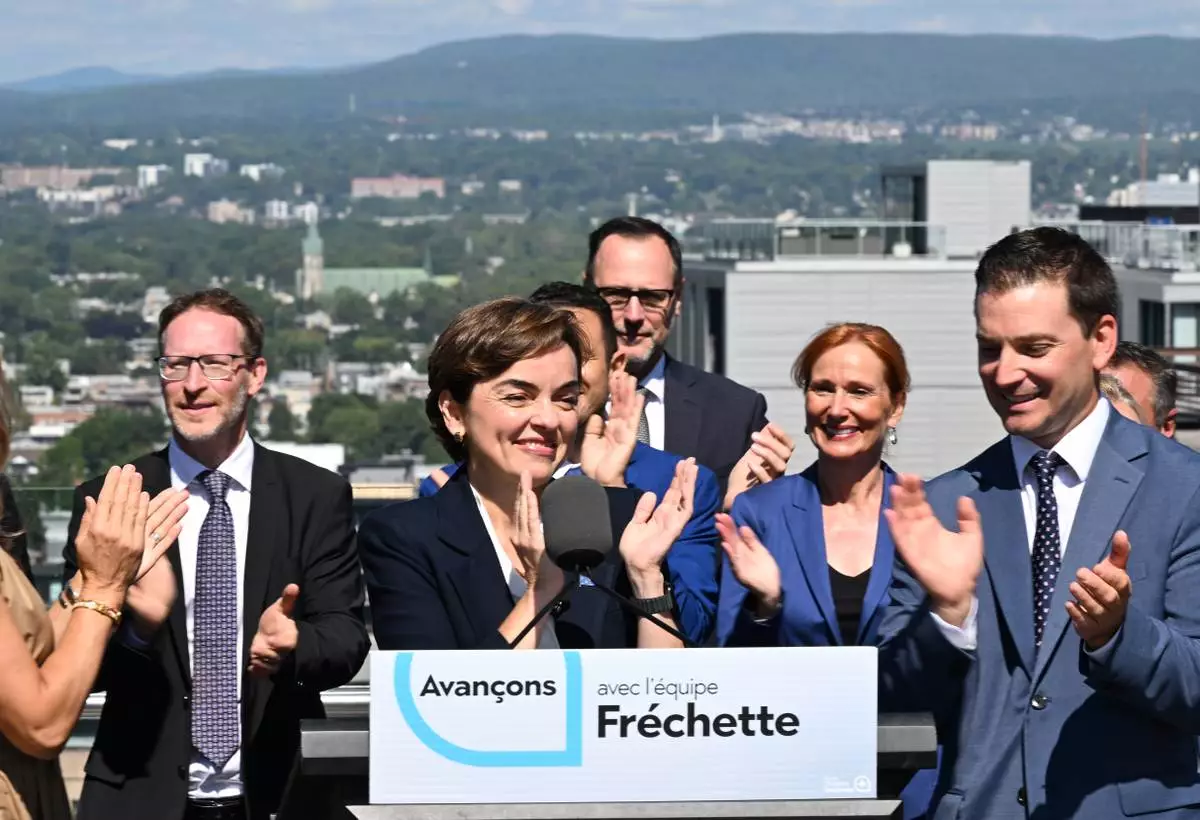
Coalition Avenir Quebec Leader Christine Frechette holds a news conference after calling a general election in Quebec City, on Thursday, Aug. 27, 2026. (Jacques Boissinot/The Canadian Press via AP)
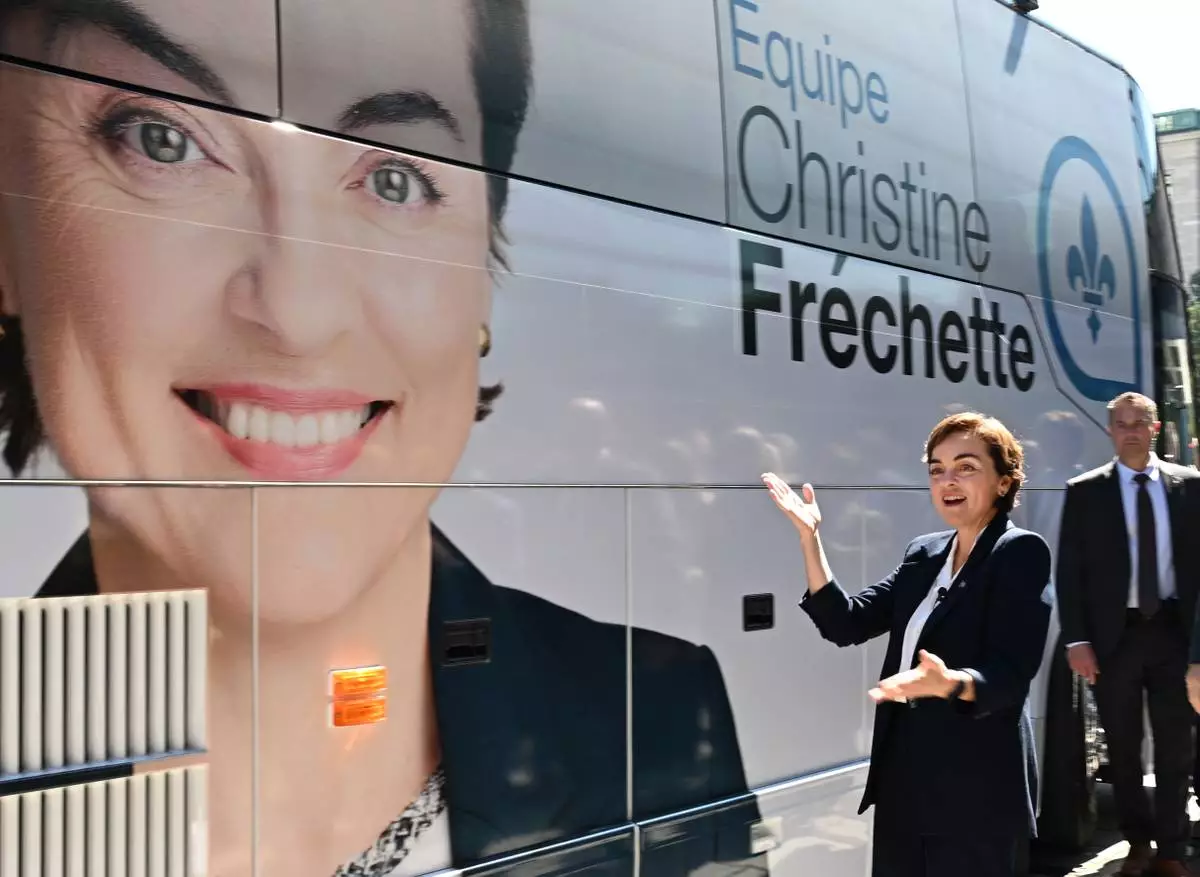
Coalition Avenir Quebec Leader Christine Frechette poses as she walks by her campaign bus after calling a general election in Quebec City, on Thursday, Aug. 27, 2026. (Jacques Boissinot/The Canadian Press via AP)
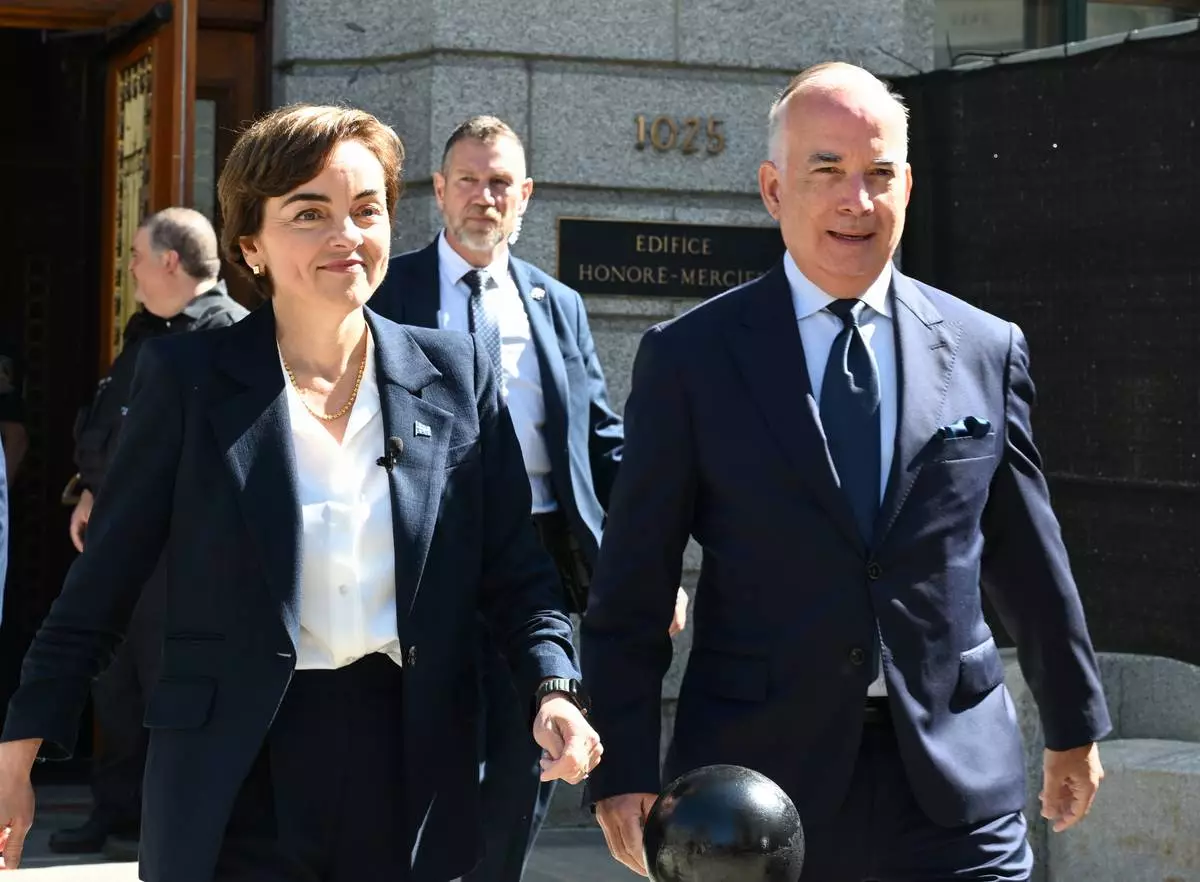
Coalition Avenir Quebec Leader Christine Frechette walks with her spouse Guy Nadeau heading to the Lt. Governor's office to launch a general election in Quebec City, on Thursday, Aug. 27, 2026. (Jacques Boissinot/The Canadian Press via AP)
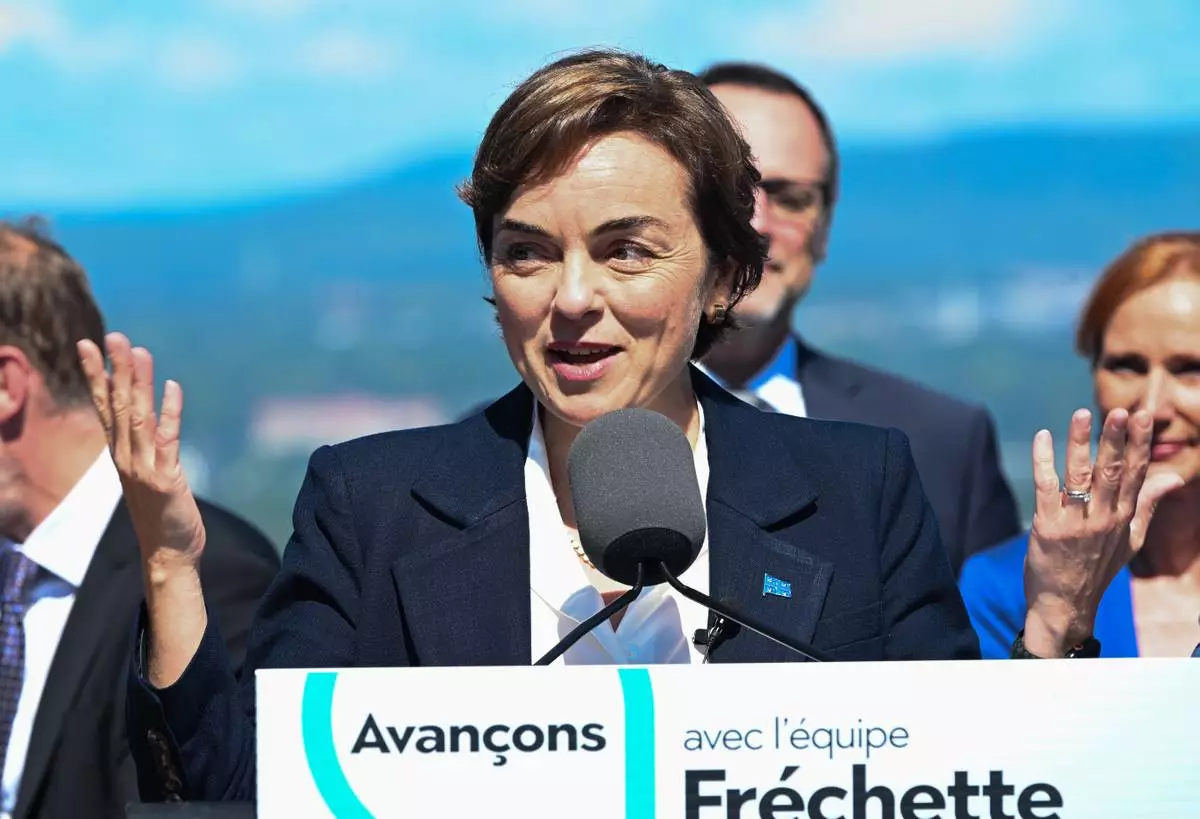
Coalition Avenir Quebec Leader Christine Frechette speaks during a news conference after calling a general election in Quebec City, on Thursday, Aug. 27, 2026. (Jacques B/The Canadian Press via AP)
WASHINGTON (AP) — A judge on Thursday expressed skepticism about the Kennedy Center’s intention to return President Donald Trump’s name to the historic performing arts venue by early next month, challenging the board’s insistence on moving forward even in the face of a court ruling that blocked and reversed a previous effort.
Just seconds after the Trump administration's lawyer, Brantley Mayers, began making his case at a nearly two-hour hearing, U.S. District Court Judge Christopher Cooper interrupted to ask why the center needed to begin inscribing the president's name on the institution's facade as soon as Sept. 8.
“What’s magic about that date?” Cooper asked, quipping that sometimes judges travel over the Labor Day holiday.
Mayers responded that the timeline was in accordance with a vote earlier this month by the Trump-aligned board. As he returned to his arguments that renovations at the Kennedy Center require energy and talent, Cooper interjected again.
“That’s all fine and good,” the judge said. “What does that have to do with what Congress intended in these statutes? That’s really what’s before me.”
By late Thursday, the administration informed the court that it wouldn't proceed with changes at the Kennedy Center before Oct. 8 to allow Cooper more time to consider the case.
Trump has spent much of his second term reshaping Washington to his liking, demolishing the East Wing of the White House to make way for a ballroom, planning a triumphal arch near Arlington National Cemetery and a renovated golf course along the Potomac River. The Kennedy Center is a rare stumbling block in that effort after Cooper ruled in May that Trump's name was added to the building illegally, ordering it to be removed.
Trump and his allies, however, have refused to let that be the final word.
The Trump-aligned board at the Kennedy Center voted earlier this month to inscribe his name on the venue’s facade so it would read “The John F. Kennedy Center for the Performing Arts Restored and Renovated By President Donald J. Trump.” If the Trump Kennedy Center Fund reached $100 million, another inscription would be added reading: “Endowed by the Trump Kennedy Center Fund.”
The plaza in front of the Kennedy Center would also be renamed in Trump's honor.
Mayers argued that the moves amount to a recognition of Trump, not the renaming of the institution that was sought earlier. The institution no longer calls itself the Trump-Kennedy Center or focuses on such branding, and there's no effort to return to that argument.
The government's lawyer also encouraged Cooper not to rule on the inscription related to the endowment because no money has been raised, essentially leaving it a theoretical possibility for now.
Despite Cooper's skepticism about the developments, he also questioned whether he had the authority to block the moves, as the administration appeals his earlier ruling. He pressed a lawyer for Rep. Joyce Beatty on whether that appeal undermined his jurisdiction in the case.
“I want to make sure I have the jurisdiction to do whatever I did,” Cooper said of an eventual ruling in the case.
Beatty is an ex officio member of the board who has led the effort to block Trump's moves to put his stamp on the institution. Her lawyer, Nathaniel Zelinsky, warned Cooper that failing to act “would create this black hole where there’s no way to enforce” the earlier decision.
Hanging over the hearing was the prospect that the administration may seek to demolish the Kennedy Center. In a filing earlier this week, administration lawyers told the court that absent recognition of the president, the Kennedy Center would struggle to raise money for renovations. Without that money, they suggested, the building may need to be demolished, a prospect that alarmed some given Trump’s swift moves last year to dismantle the East Wing.
The Kennedy Center, the lawyers argued, “will deteriorate further into an unsafe, decrepit structure that will be required to be taken down, with a determination to follow on what to build on the site, such as a large outdoor amphitheater overlooking the Potomac River that has been proposed, by some, for many years.”
Commerce Secretary Howard Lutnick, who attended the hearing, seemed to downplay that possibility.
“What was pointed out,” he told reporters, “was that if you do nothing, bad things happen. But they’re not going to happen on Thursday.”
This story has been updated to correct the spelling of the first name of the Trump administration’s lawyer. It is Brantley Mayers, not Bradley.
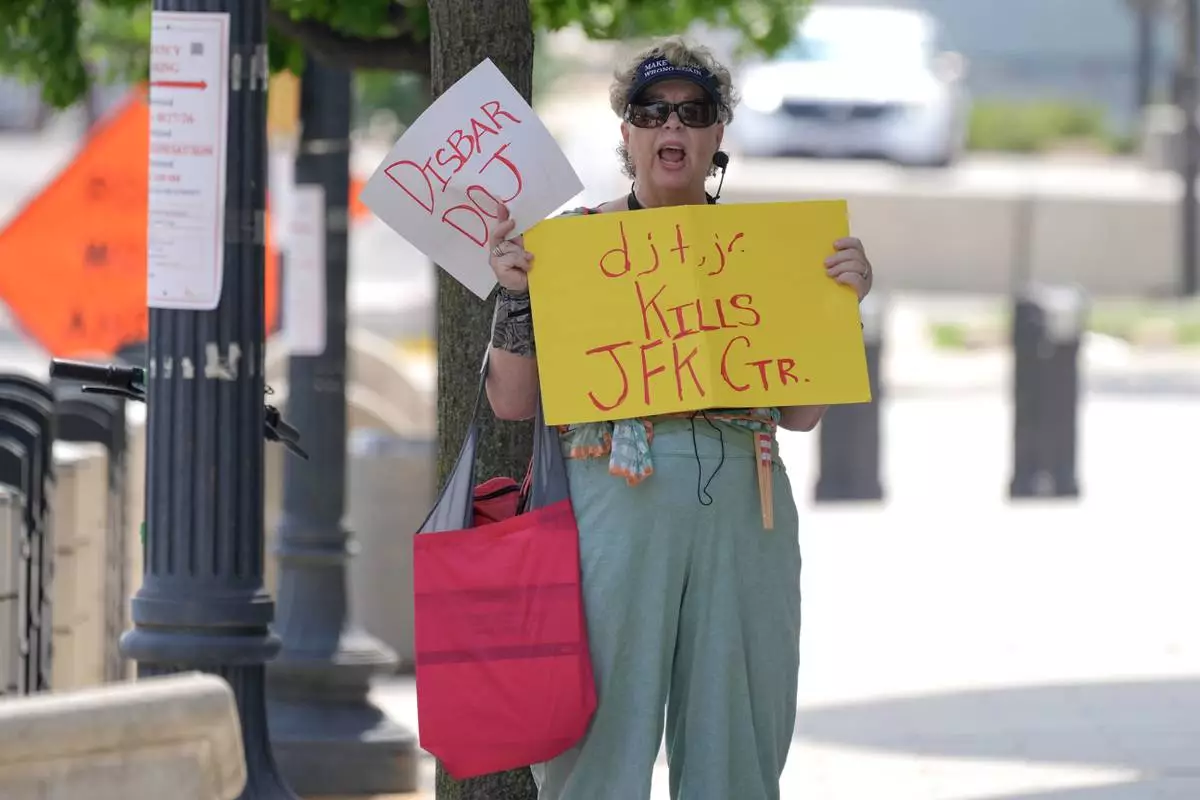
Clara Sachs, protests outside of the Federal Courthouses as Commerce Secretary Howard Lutnick speaks with reporters before a hearing to allow President Donald Trump's name to be on the Kennedy Center, Thursday, Aug. 27, 2026, in Washington. (AP Photo/Mariam Zuhaib)
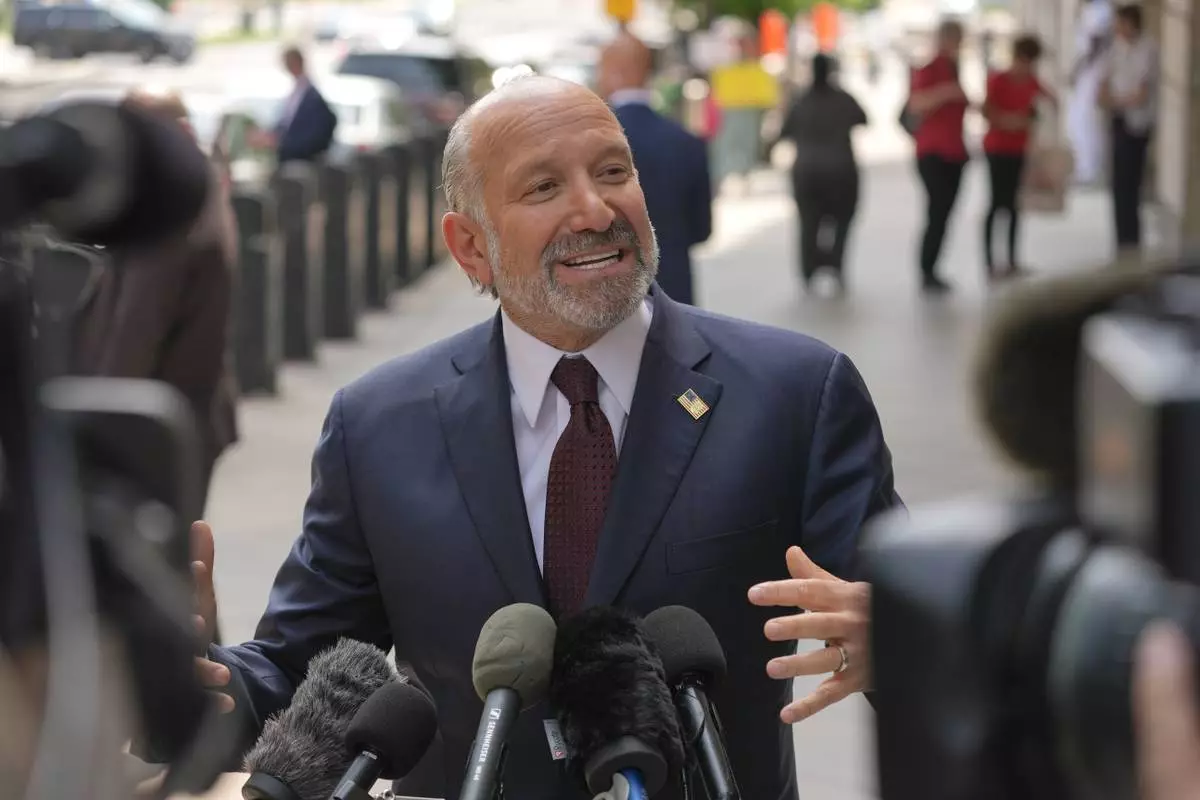
Commerce Secretary Howard Lutnick speaks with reporters outside of the Federal Courthouses before a hearing to allow President Donald Trump's name to be on the Kennedy Center, Thursday, Aug. 27, 2026, in Washington. (AP Photo/Mariam Zuhaib)
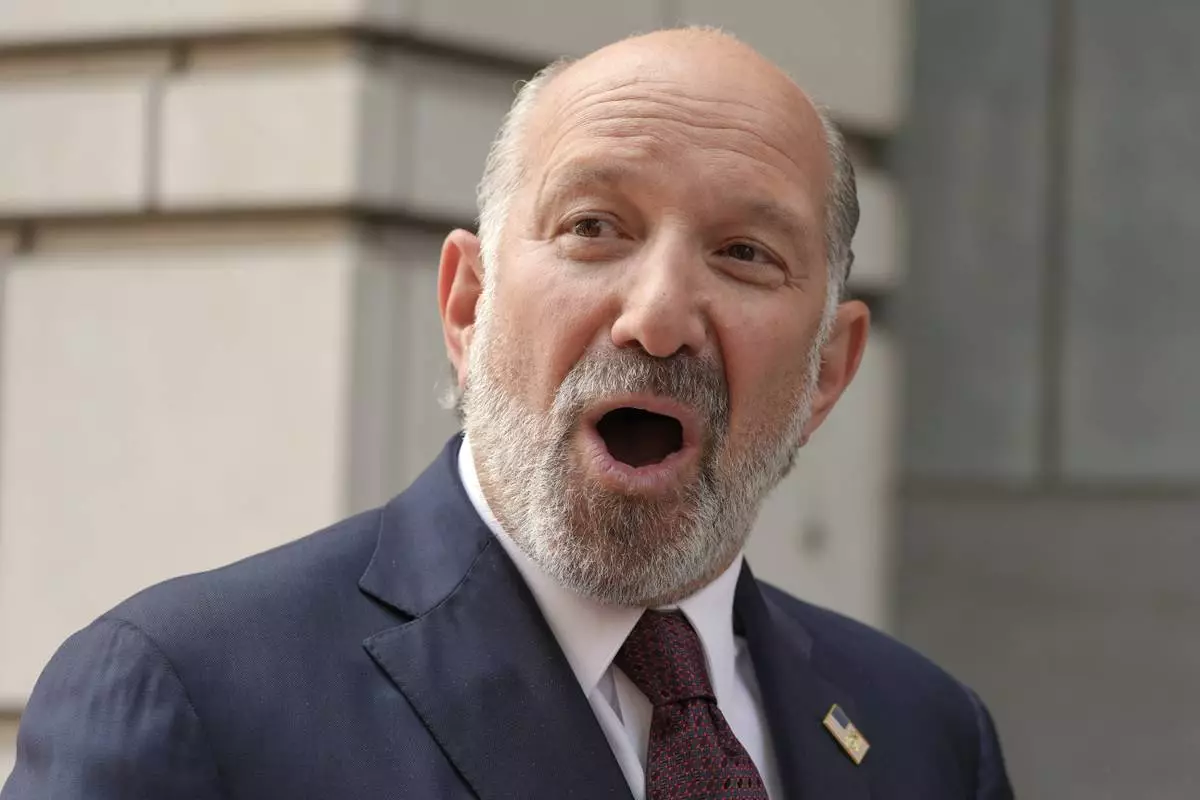
Commerce Secretary Howard Lutnick speaks with reporters outside of the Federal Courthouses before an hearing to allow President Donald Trump's name to be on the Kennedy Center, Thursday, Aug. 27, 2026, in Washington. (AP Photo/Mariam Zuhaib)
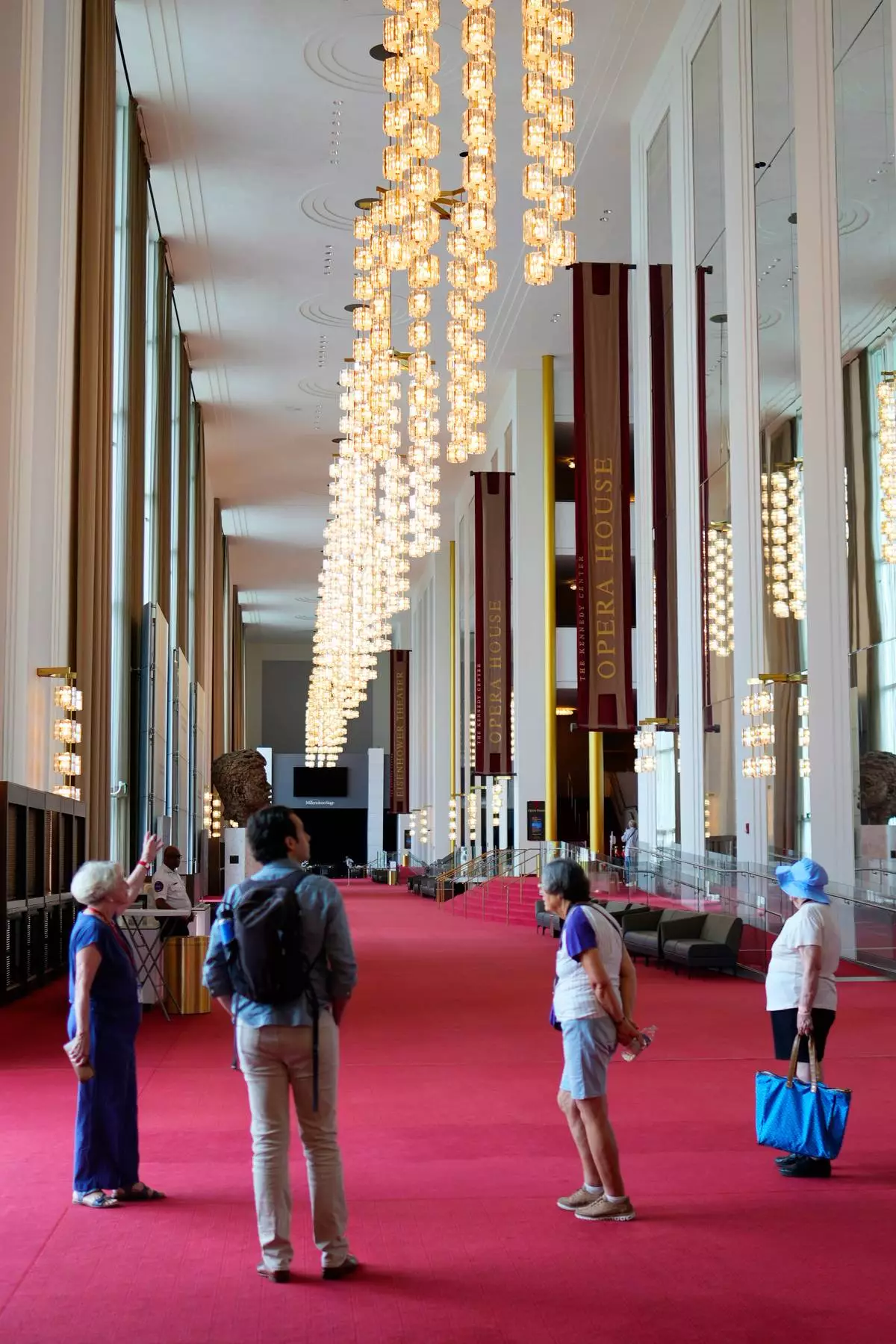
People are seen in the Grand Foyer at the Kennedy Center, Thursday, Aug. 27, 2026 in Washington. (Photo/Pablo Martinez Monsivais)
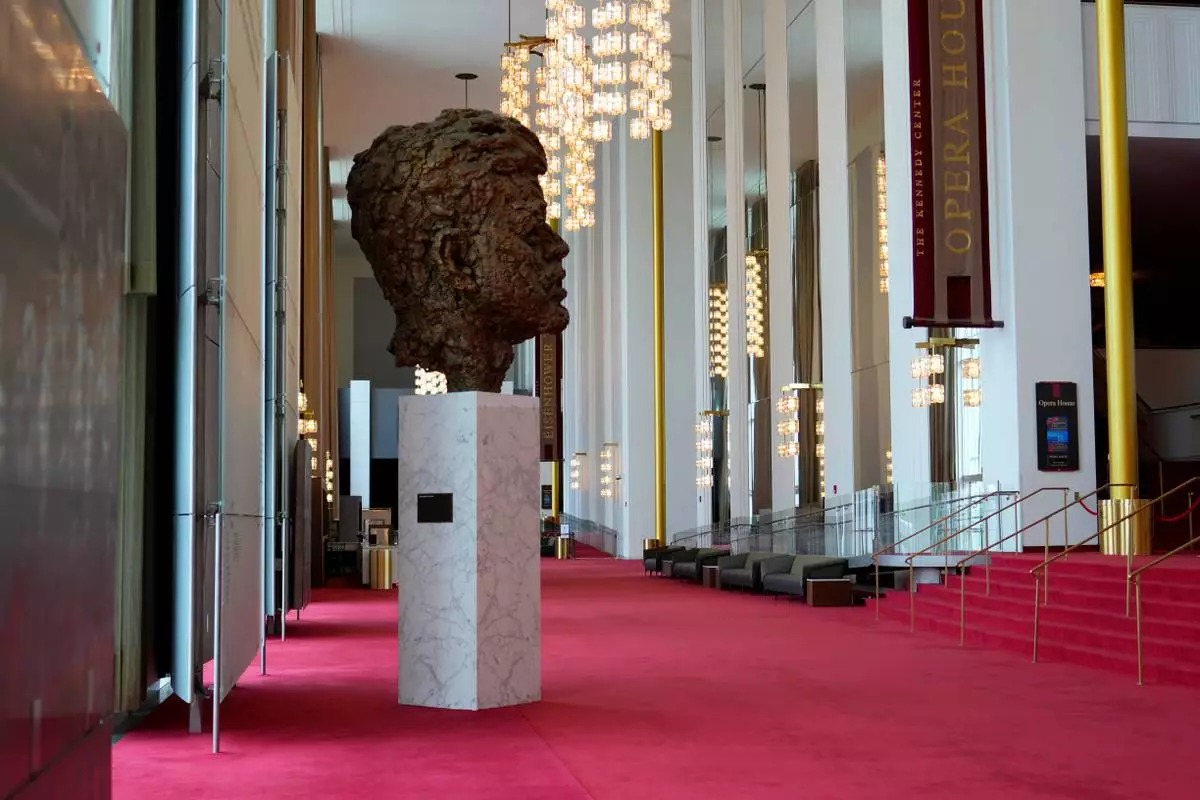
The bust of President John F. Kennedy is displayed in the Grand Foyer at the Kennedy Center, Thursday, Aug. 27, 2026 in Washington. (Photo/Pablo Martinez Monsivais)
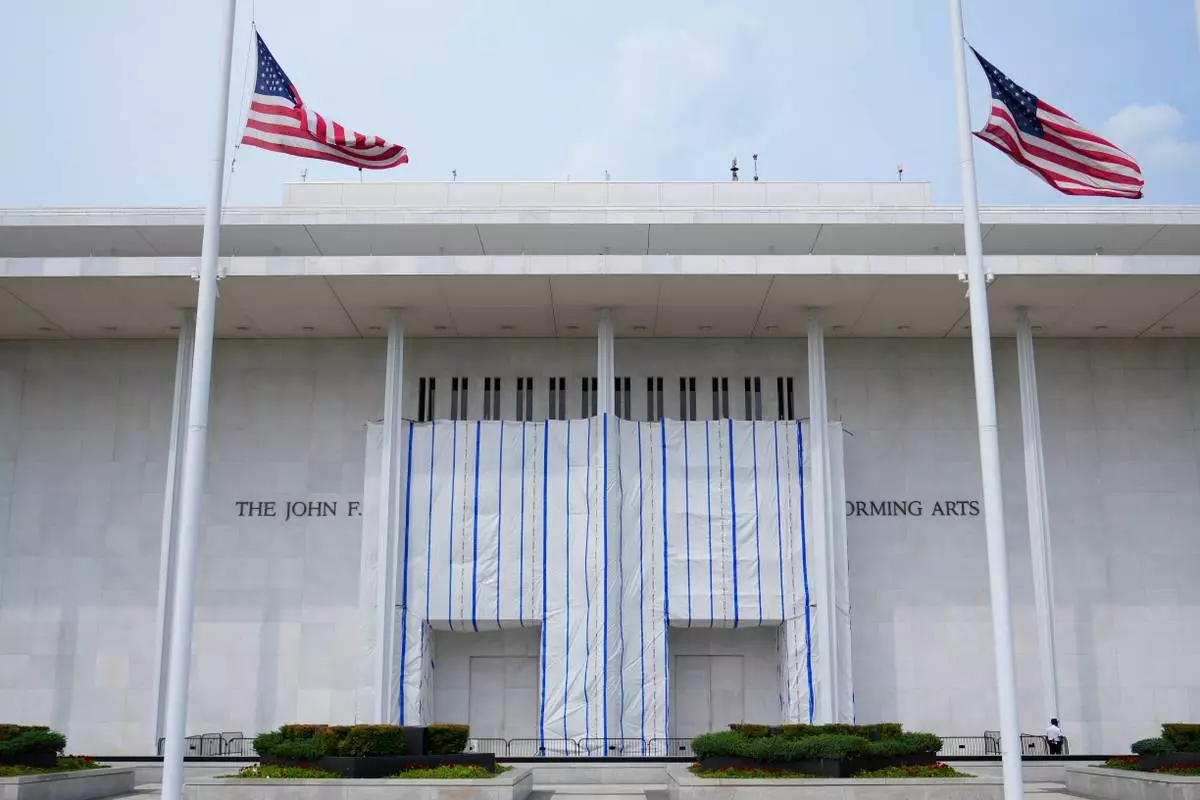
The exterior of the Kennedy Center is seen, Thursday, Aug. 27, 2026 in Washington. (Photo/Pablo Martinez Monsivais)
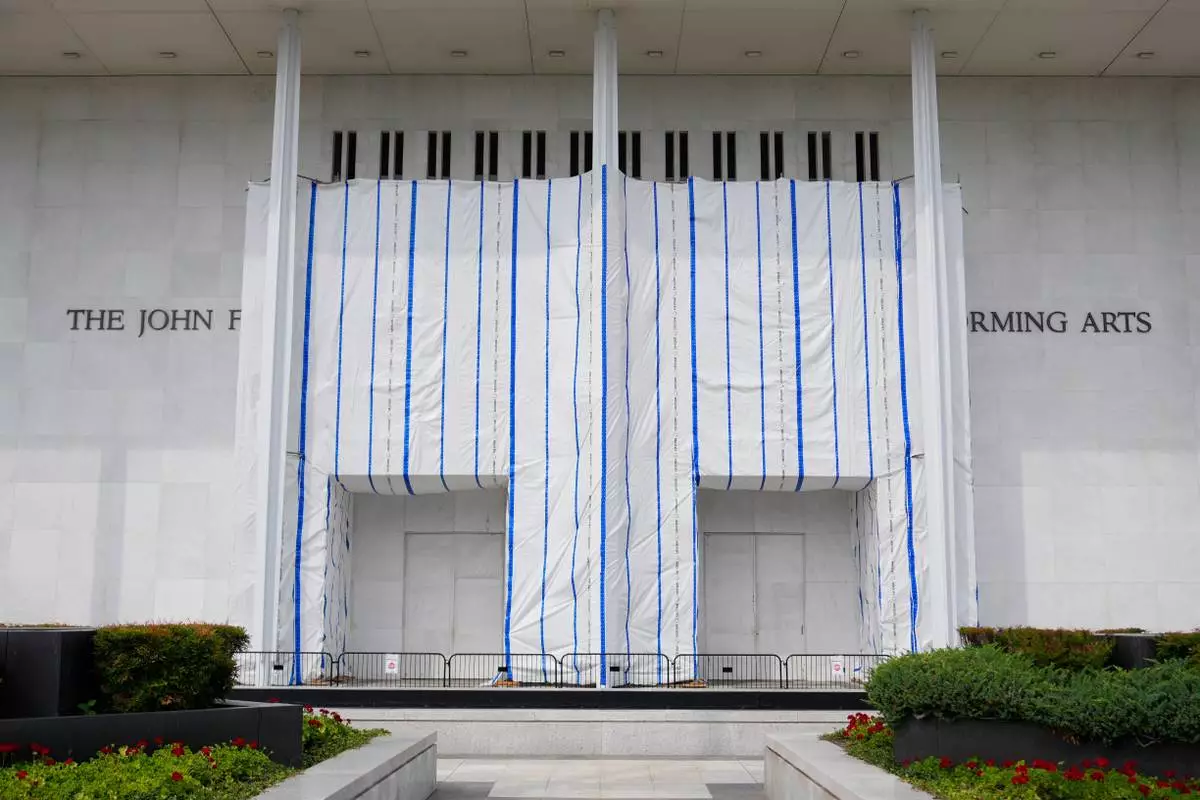
The exterior of the Kennedy Center is seen, Thursday, Aug. 27, 2026 in Washington. (Photo/Pablo Martinez Monsivais)